
Comparison
An ode to the spreadsheet (and its retirement)
The sheet served honorably: every play, every box, every game night, hand-entered for years. This page is about what it earned you — and what it can never do.
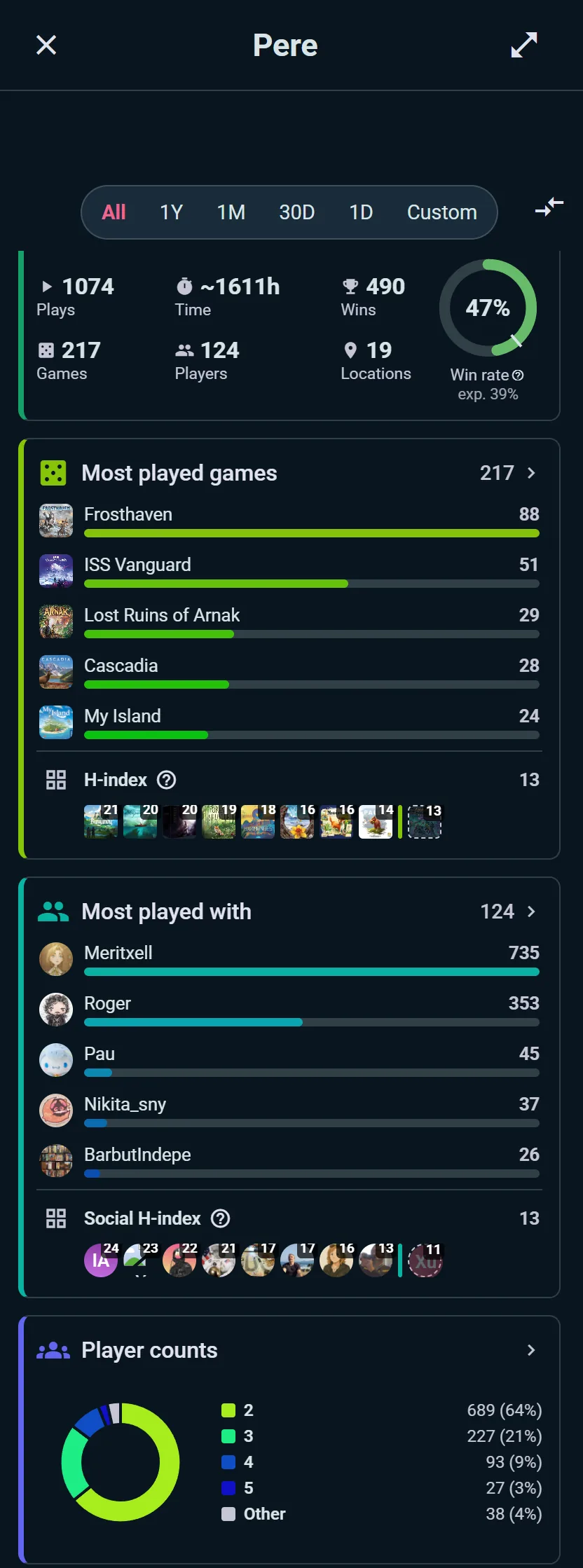
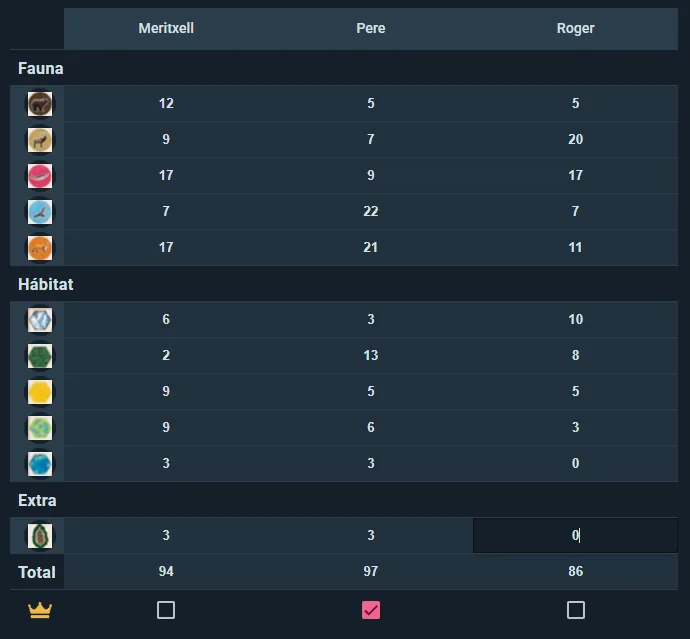
What the sheet was doing
Credit where due
The spreadsheet is unbeatable at three things: it is infinitely flexible, it works with no signal and no account, and it is yours — no company, no format, no lock-in.
A tracker only deserves to replace it if it keeps those virtues: log offline, own your data, export everything. Ludoya does all three — the data port exists precisely so the exit door stays open. What follows is what the sheet cannot do at any price in evenings.
Side by side
The sheet vs the tracker
Sorted by how often the difference actually bites.
| The spreadsheet | Ludoya | |
|---|---|---|
| Log a play | A row per play | 20 seconds |
| Your friends’ stats update too | — | |
| Win rate maths | Your formula | Computed, co-ops excluded |
| Win rate vs expectation | — | |
| Score the game at the table | Calculator, transcribe | Sheet totals and logs |
| Filter shelf for tonight | Sort and squint | |
| BGG stays in sync | Manual | Two-way |
| Works offline | ||
| Your data stays yours | Export any time | |
| Fill an empty seat on Friday | — |
The unpaid job
You were the database. Resign.
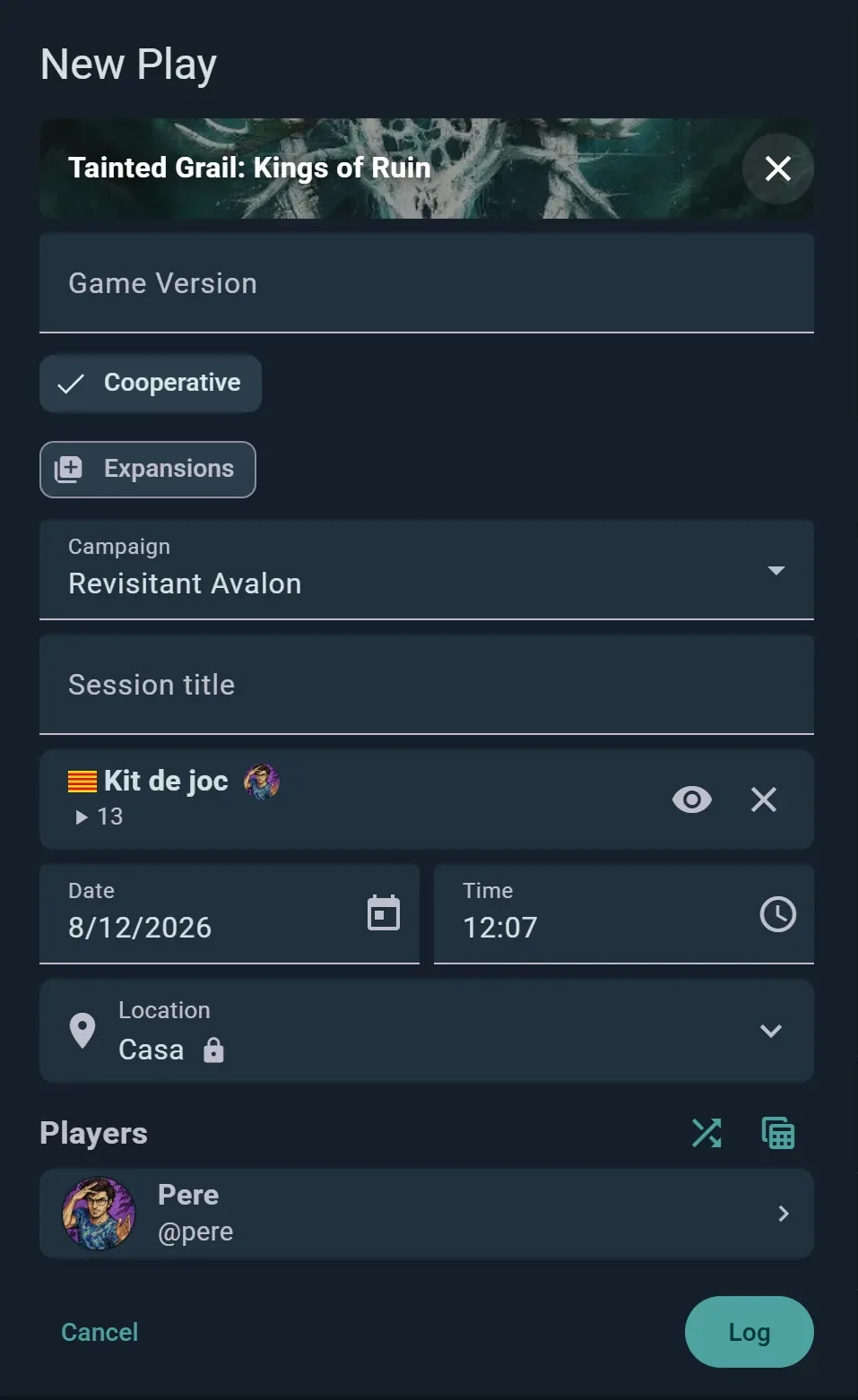
Every row in the sheet was typed by you, at 1am, from memory. Here the play is entered once at the table — players tagged, scores totalled, photo attached — and every number downstream updates itself.
- Twenty seconds. Game, players, scores, done — the dialog knows your group and your last location.
- The table shares one entry. Nobody else keeps a copy; the play lands in every player’s history.
- Photos belong to plays. The final-board photo lives on the play page, not lost in a camera roll.
The payoff
Numbers the sheet could never reach
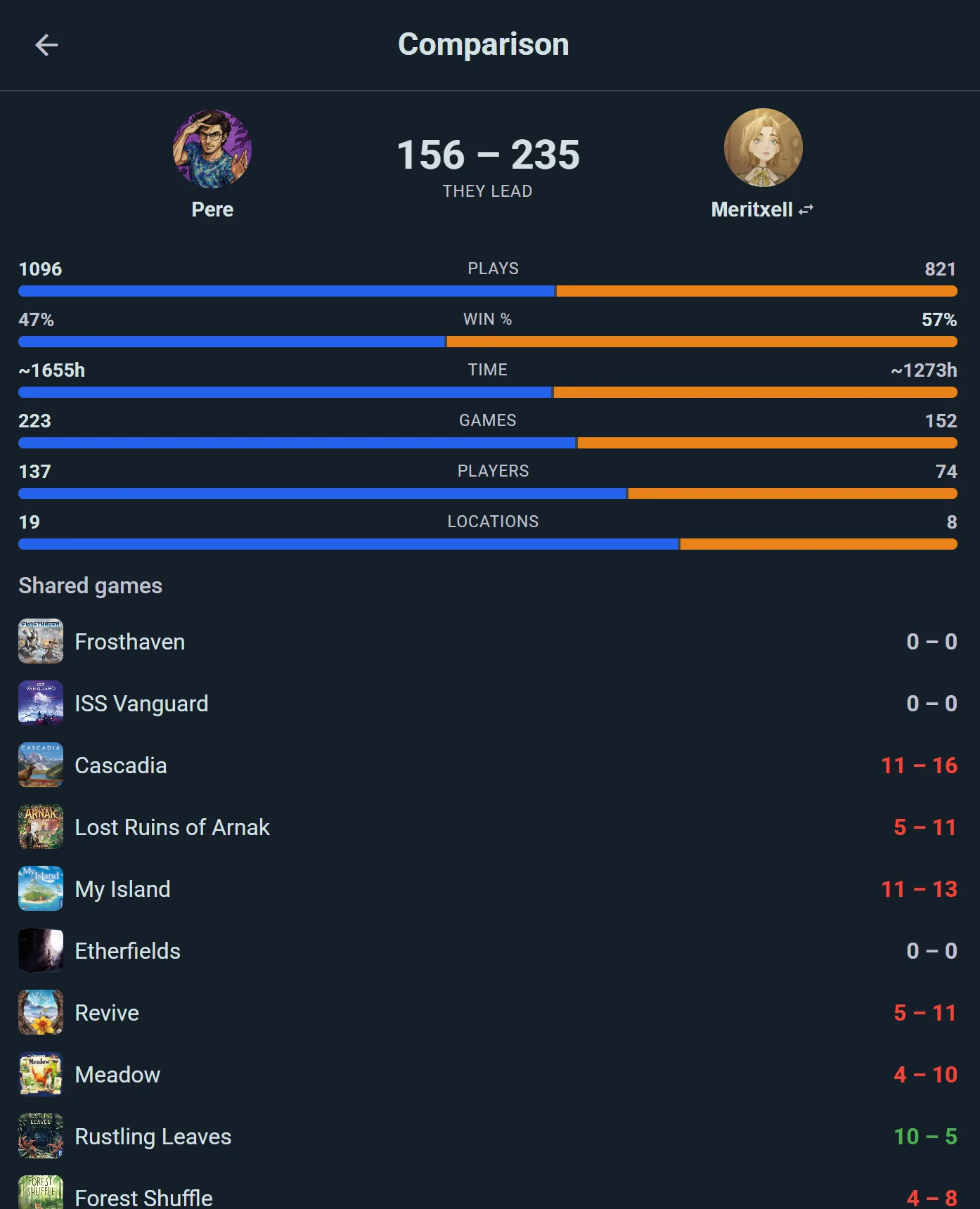
H-index, win rate against seat expectation, head-to-head records per rival per game, player-count breakdowns, a calendar of covers, an animated yearly recap — this is what the data was for.
- Honest by construction. Co-ops and no-result plays stay out of win rates — no formula to remember.
- Rivalries itemised. 156–235 overall, but 10–5 in Rustling Leaves. The sheet never told you that.
- It ends in a show. Ludoya Replay turns each month and year into a shareable recap.
The migration
Years of rows, not lost
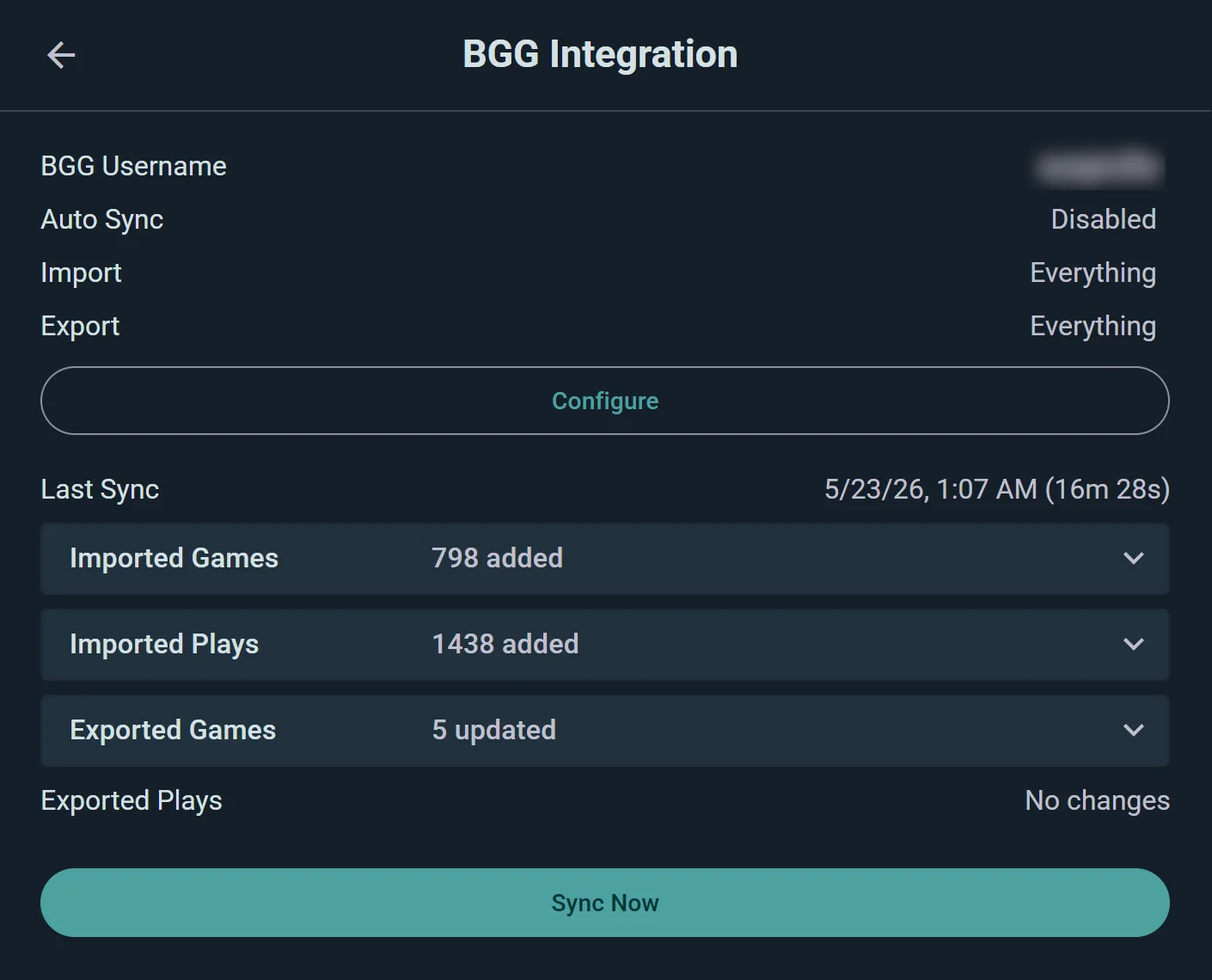
If the sheet fed BGG all those years, one sync brings everything over — games, plays, dates. If it never left the sheet, the history can still come along, and the stats compute over all of it.
- BGG path. 798 games and 1,438 plays in one run — the decade arrives computed.
- The exit stays open. Everything you enter exports back out — the sheet’s ownership virtue, kept.
- Offline, like the sheet. The cellar with no signal is still a supported environment.
What it costs
Nothing — logging, stats, collection, BGG sync and events are the free core, and free is the only fair price when the competitor is a spreadsheet.
The sheet keeps one job: that beautiful custom Kallax-layout tab. For everything else, start with one play.
The sheet earned its retirement
Log tonight’s game in twenty seconds and let the columns compute themselves.
Frequently Asked Questions
Can I import my existing spreadsheet?
The smoothest path is via BGG: if your plays live there (or you upload them there once), one sync imports everything with dates and players. For sheet-only history, the play log accepts backdated plays, so the record can be rebuilt where it matters.
Do I lose the flexibility of my own columns?
Some — a product is opinionated where a sheet is not. In exchange: score sheets with each game’s real categories, custom lists on the collection, and per-play notes and photos cover what most custom columns were doing.
What if Ludoya disappears? The sheet never will.
Fair concern, and the answer is the export: your plays, collection and data can leave at any time, and the two-way BGG sync means your history also lives on a second platform continuously.
Does it really work offline like the sheet does?
Yes — logging and collection edits work with no signal and sync later. The sheet’s best trick is table stakes here.
My group logs in my sheet. How do we switch together?
One person logs each play and tags the others — that single entry is everyone’s record. Friends without accounts appear as named players, and their history waits for them if they join.
Is the free tier actually enough to replace the sheet?
Yes — logging, statistics, collection, BGG sync, events and groups are free without limits. Paid tiers add extras like the AI rules assistant and organizer tooling, none of which the sheet was doing anyway.