
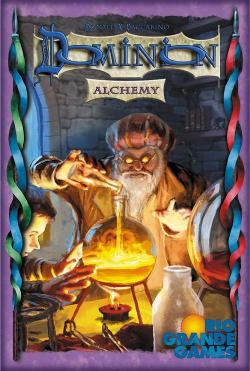
2010 · Expansion for Base-game
Dominion: Alchemy
Players run rival subterranean laboratories experimenting with strange reagents to transmute materials and discover new concoctions. Gameplay centers on drafting and playing Action cards while acquiring Potion currency alongside regular Treasures to buy new cards for the deck. Players build engine chains by combining Actions and curiosities that require Potions to obtain, and aim to assemble efficient combos that generate buys, draws, and victory points. This set functions as an expansion and relies on the base Treasure, Victory, and Curse cards plus standard setup rules from the core game to be playable.
- Players
- 2–4 best 3
- Playing time
- 30 min
- Age
- 13+
- Complexity
- 2.4 / 5
About the game
- Design
- Art
- Publisher






Expansion for
See them in Ludoya
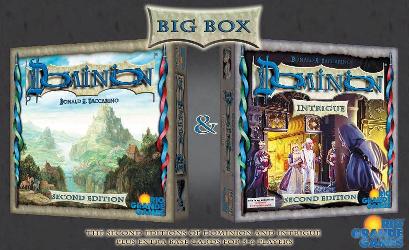
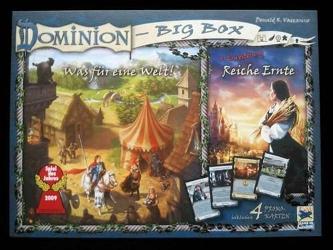
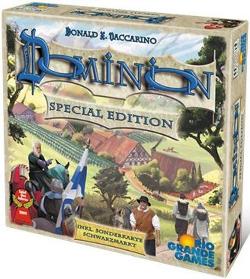
Expansions
See them in Ludoya
Where to buy it
Shop prices and second-hand copies, checked every day.
On Ludoya's tables
Full stats in Ludoya- 35
- Plays logged
- 23
- Players
- 32m 15s
- Average play
- 60
- In collections
- 2
- On wishlists
- 2
- Pre-ordered
6.2/10
from 19 Ludoya reviews
Aarón7.5 MBC

Rules questions
Answered from the rulebook by Ludoya's rules assistant.
Do I need both Potion and coins to buy a card that costs a Potion (e.g., costs Potion+1)?
Yes — a card that lists [Potion]+X requires a Potion plus the listed coins to buy, and you must spend one Potion for each card you buy that has Potion in its cost (you can't buy two Potion-cost cards with only one Potion). (Rulebook p.3–4)
If an effect lets me gain or buy a card “costing up to 5,” can I get a card that costs Potion+1?
No — phrases like “up to N” only include Potion if the specified cost explicitly includes Potion; a card costing Potion+1 is not considered “costing up to 5” in coin terms. (Rulebook p.4)
Can University (or similar effects that gain an Action costing up to 5) gain cards that have Potion in their cost?
No — University cannot gain cards that have Potion in their cost; it only gains Action cards that cost up to the listed coin amount and do not include Potion. (Rulebook p.10)
How does Philosopher's Stone’s coin value get calculated, and can I play it after buying a card?
When played, Philosopher's Stone produces coins equal to floor((your deck + discard pile size) ÷ 5) counted at the moment you play it; you must play Treasures (including Philosopher's Stone) before buying, so you cannot play it after you have already bought a card. (Rulebook p.8; see Treasure-play timing on p.5)
When I play Possession, whose turn is it and what happens to cards trashed during that possessed turn?
The possessed player is taking the turn (you simply make their decisions), and any cards trashed during that Possession turn are set aside and then returned to the possessed player's discard pile at the end of the turn (they still count as having been trashed for relevant effects). (Rulebook p.8–9)
Free, on web, Android and iOS
Play Dominion: Alchemy with Ludoya
- Keep it in your collectionTrack your copy and its expansions, lend it to friends, or put it on your wishlist and get told when the price drops.Add it to your collection
- Log every playScores, winners, timers and photos, then your stats: win rate, favourite player count, best score.Log a play
- Settle rules questionsAsk anything about the rules and get an answer from the rulebook, with the page to check it on.Ask the rules assistant
- Find people to play it withClubs, game nights and events near you that bring this game to the table.See events
Game facts (players, playing time, age, credits) from BoardGameGeek.