
Comparison
Eventbrite sells the ticket. Then what?
For a concert, the ticket is the product. For a games day, the ticket is minute one — then come the tables, the seats, the bracket and the schedule. Sell the ticket where the rest of the event lives.
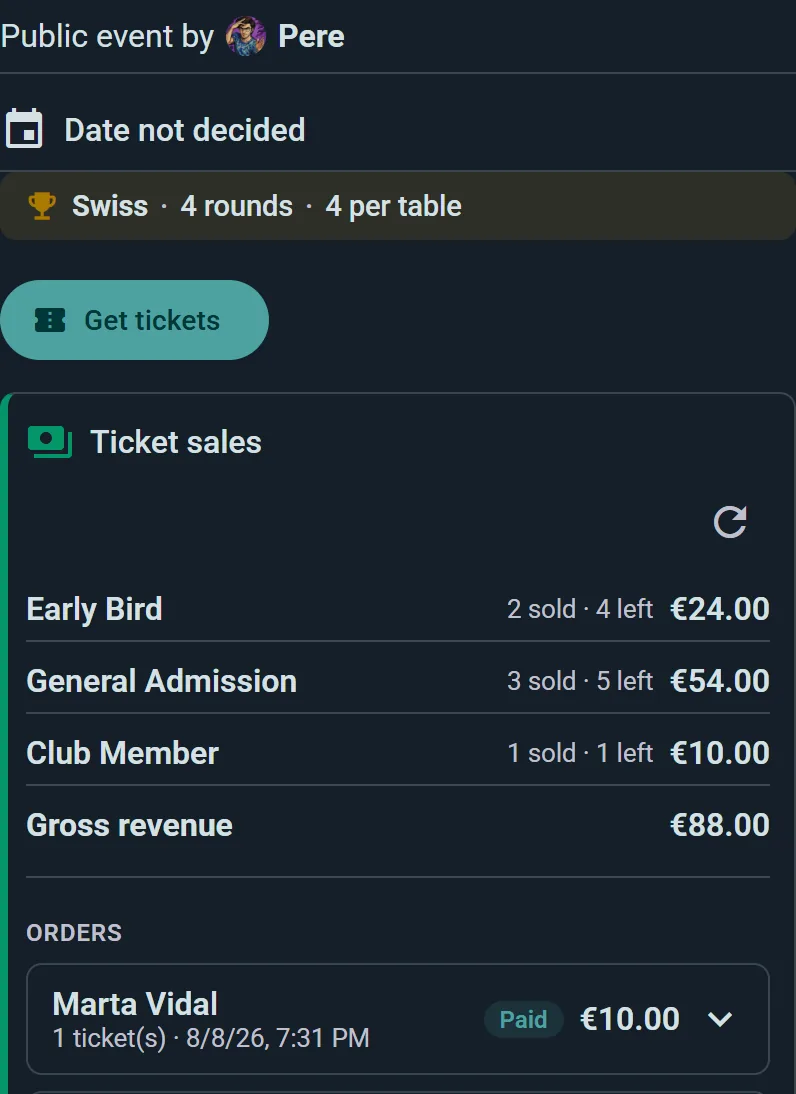
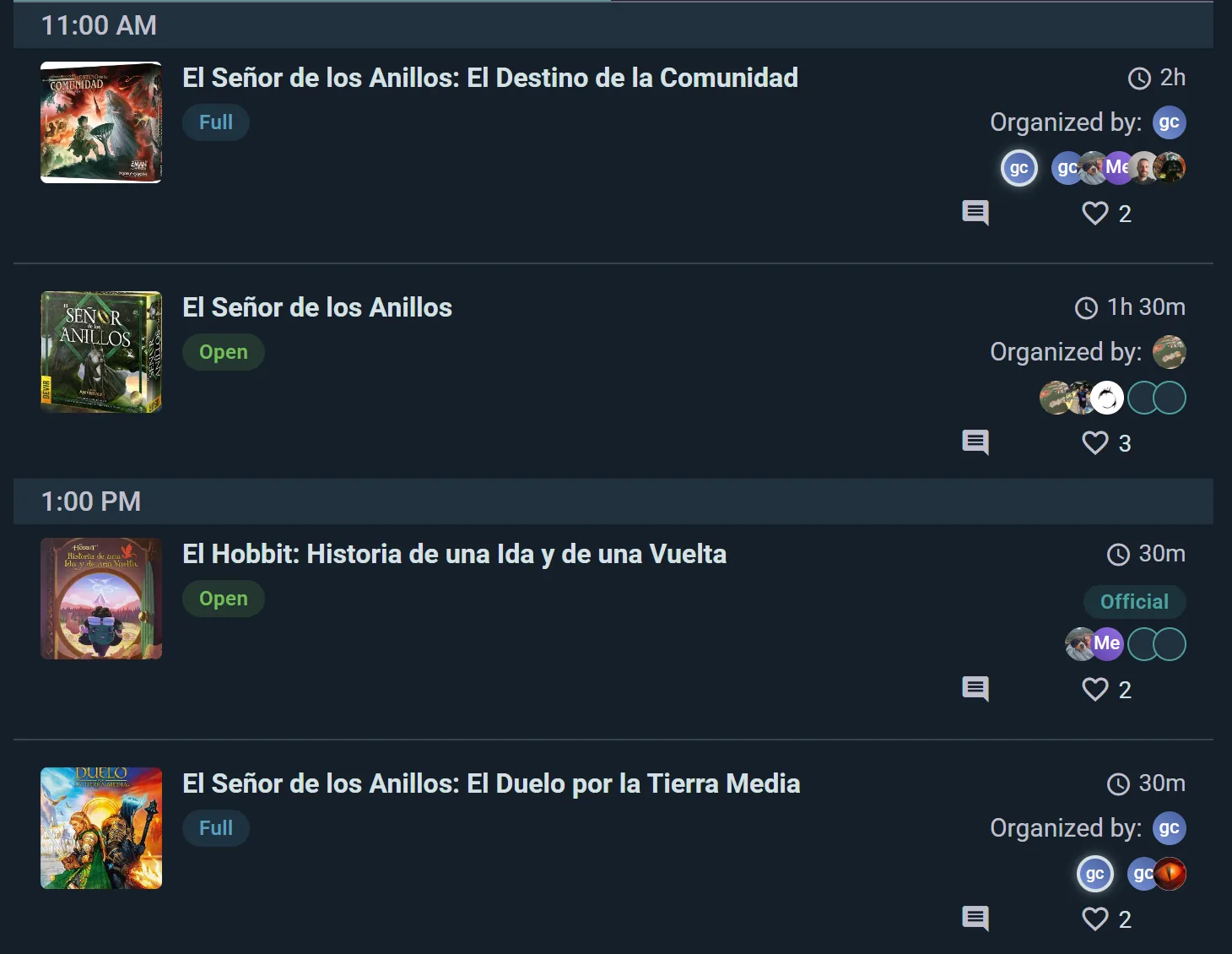
The ticketing part, plainly
Credit where due
Eventbrite is very good at being Eventbrite: enormous consumer reach, name recognition your attendees' parents have heard of, and machinery for any event type from yoga to conferences. If you are selling five hundred tickets to the general public for a one-off show, its marketplace is a real asset.
A board game event is a different animal: the buyer is a board gamer, the "venue" is forty tables that each need a game and seats, and the best marketing channel is the local club scene — which lives in a board game app, not a general ticketing site. That is the comparison that matters below. (Eventbrite's fees vary by country and ticket price — check their pricing page; ours is a flat published 3%.)
Side by side
Selling the ticket
| Eventbrite | Ludoya | |
|---|---|---|
| Ticket types, quotas, sale windows | ||
| Fee structure | Service + processing | 3% flat + Stripe |
| Where the money goes | Eventbrite payouts | Your Stripe, directly |
| QR check-in at the door | Organizer app | Same app |
| Refunds | ||
| Attendee export | Excel / CSV | |
| Free events | Free | Free |
Side by side
Running what the ticket bought
The part that starts when the doors open — and the part Eventbrite was never built for.
| Eventbrite | Ludoya | |
|---|---|---|
| Game schedule with per-table seats | — | |
| Tournaments | — | |
| Floor plans | — | |
| Custom registration forms | Order forms | |
| Who the attendees are | Email addresses | Board gamers with profiles |
| Where they hear about it | Paid reach | Map, feed, clubs |
| After the event | A CSV | Plays, stats, members |
| The audience | Everyone | Board gamers, by distance |

The money
Your Stripe, your payout, one published fee
Connect your own Stripe account once; ticket revenue lands there directly, at Stripe’s standard rates, with Ludoya’s flat 3% as the only platform fee — stated on the pricing page and inside the product.
- No per-ticket cents. A percentage, not a percentage plus cents that quietly dominate cheap tickets.
- No payout schedule. It is your Stripe — the money is yours on Stripe’s terms, not a platform’s.
- Cheap tickets stay viable. 3% of a 5€ club-night ticket is 15 cents. Do that maths on a stacked fee.
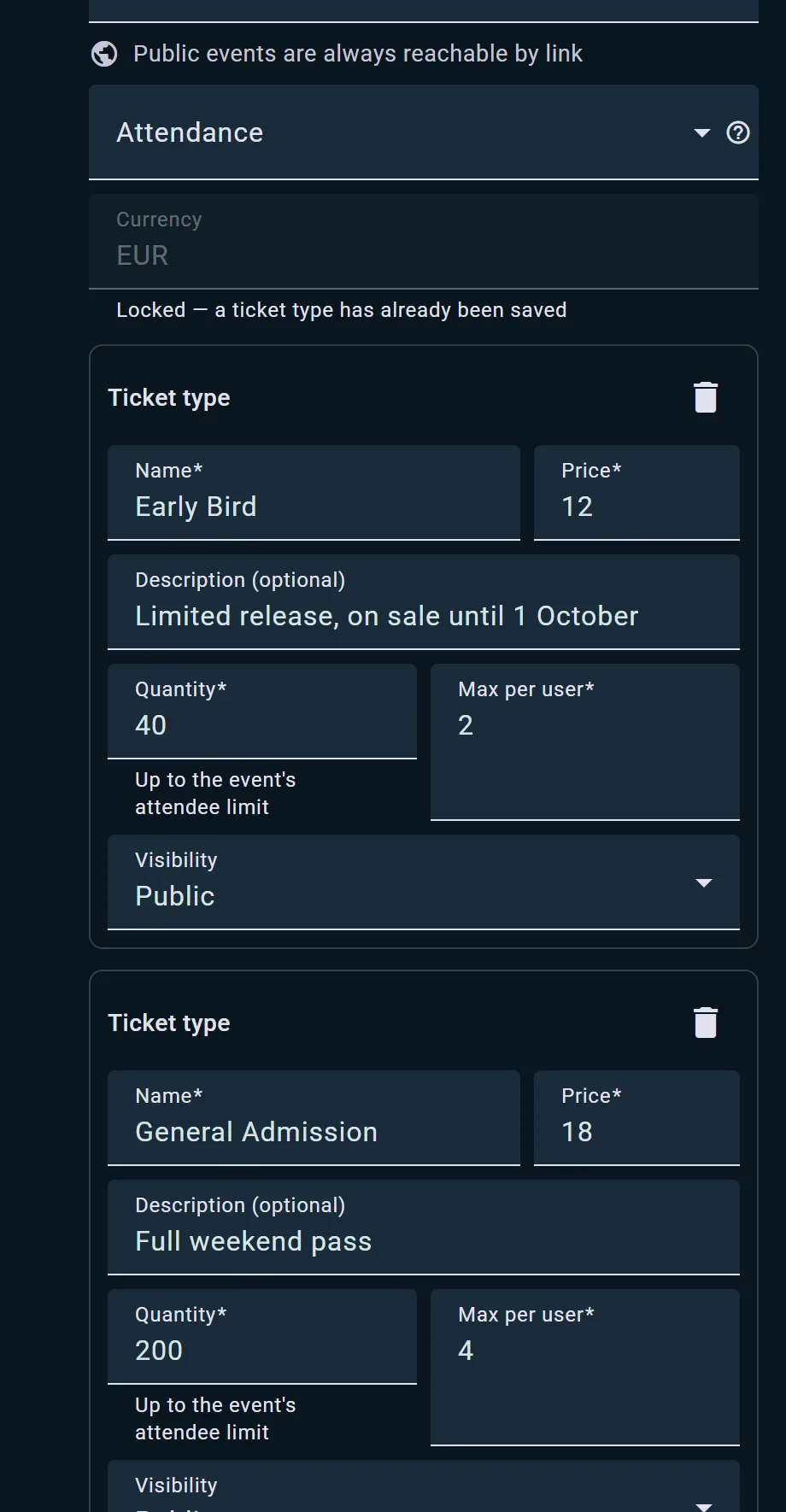
The inside
The event has an inside, and it is the point
Ticket types are table stakes. The schedule of games with seats per table, the tournament with its bracket, the floor plan, the form at the door — that is the event, and it lives in the same place the ticket was sold.
- One link, everything. The attendee’s ticket, the schedule they RSVP’d to and the standings they follow are one page.
- Organizer tools included. QR door, attendee export, forms and floor plans ship with the event, not as add-ons.
- Sub-events and co-hosts. A convention day with a co-hosted tournament inside it is a first-class structure.
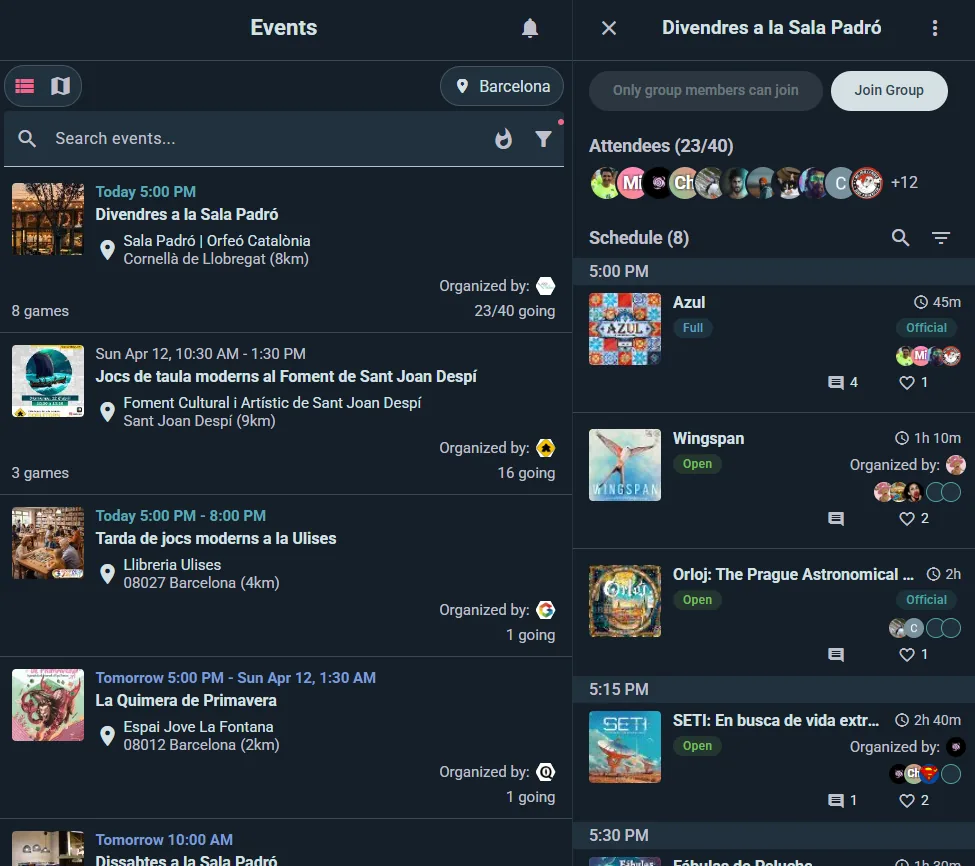
The audience
Distribution to gamers, not to everyone
Eventbrite’s marketplace is vast and general. Ludoya’s discovery is small and exactly right: board gamers browsing a map of game events near them, clubs with followers, feeds where a published event simply appears.
- The map is the marketing. A public event is visible to every gamer browsing the region — no ad budget.
- Clubs carry reach. Your followers see the event in their feed; Telegram announcements go out with it.
- Attendees compound. This year’s attendee follows the club and sees next year’s event automatically.
When Eventbrite might still be right
If your event is aimed at the general public — a city festival where most buyers have never touched a board game app — Eventbrite's reach and familiar checkout are genuine arguments, and some conventions run both: general-public tickets there, the gaming programme and community here.
For a club night, a tournament, a games day or a convention whose audience is the hobby, the whole event — ticket included — does better where the tables, the players and the clubs already are. Pricing for all of it is public.
Sell the ticket where the tables are
Flat 3%, your own Stripe, and the entire event — schedule, bracket, door — in the same place.
Frequently Asked Questions
What does Ludoya ticketing actually cost?
A flat 3% per sold ticket — published on the pricing page and in the product. Payment processing happens on your own Stripe account at Stripe’s standard rates. Free tickets and free events cost nothing.
How is that different from Eventbrite’s fees?
Eventbrite’s pricing stacks service and processing components and varies by country and ticket price — check their current pricing page. The structural difference: Ludoya adds no fixed per-ticket cents, which is what makes 5€ club tickets viable, and the platform fee is a single published number.
When do I get the money?
It lands in your own Stripe account as tickets sell — payout timing is between you and Stripe, not mediated by Ludoya.
Can attendees without a Ludoya account buy tickets?
The event page opens in any browser, and events can accept sign-ups without an account — the QR that gets scanned at the door arrives by email.
Does it handle refunds and door control?
Yes — refunds are supported (including the refund-before-reconfigure guard rails), and QR check-in with attendance confirmation is part of the same app the organizer already has open.
We already sold this year on Eventbrite. Migrate mid-flight?
Run this year hybrid: keep sold tickets where they are, publish the event on Ludoya for the schedule, tournaments and community, and move ticketing next edition. Nothing forces a big-bang switch.
What reach does Ludoya actually give my event?
Public events appear on the map and in discovery for every gamer in the region, in your followers’ feeds, and in Telegram announcements if the club uses them. Smaller than Eventbrite’s marketplace, but every person in it is your audience.