
Ludoya runs the tournament so you can run the room. Pick a format, and it works out who plays whom each round, tracks the standings as results come in, breaks ties the way your community expects, and draws the bracket on screen.
Tournaments are a Club tier feature and need a group to host them. From your group page, choose Organize Tournament.
Choosing a Format
Swiss
Everyone plays every round, and nobody is knocked out. Players are paired against others on a similar score as the tournament goes on, and the winner is whoever tops the table at the end. The default choice for a league night or a store championship where people came to play games, not to watch.
Mixer
Swiss's sociable cousin. The whole schedule is built up front to maximise how many different people you play, rather than to sort the field by skill. Ideal for a club night or a convention where mixing the room matters more than crowning a champion.
Single elimination
A one-versus-one knockout bracket. Lose a match and you're out. Short, dramatic, and over quickly.
Double elimination
The same, but you have to lose twice to go home. It costs more rounds and gives everyone a second chance, which is usually the fairer feel for a title decider.
Phases: Heats, Then a Final
A tournament is a chain of phases, each with its own format, table size, rounds and scoring. Most events need one. A championship usually needs two: Swiss heats to sort the field, then a knockout bracket for the title. Add phases when you set the tournament up; each one starts when the previous one finishes.
Who plays the next phase is the cut rule of that phase:
- Everyone continues — a change of format, not a cut. Swiss rounds followed by a mixer, say.
- The best players overall — the top N of the previous phase's standings. The classic Top 8.
- The best of each table — the top K finishers of every table in the previous phase's final round. In a multi-round Swiss a player sits at a different table each round, so only the last one is a fair basis.
Players who dropped out never advance, whatever their standing.
Carry points over keeps each player's total from the previous phase instead of starting the new one at zero. Leave it off when the second phase is a bracket — a bracket has no points.
Split into two brackets — for an elimination phase, send the top seeds to a championship bracket for the title and everyone below the split to a consolation bracket for the places beneath it. Everyone who played for the title finishes above everyone in the consolation bracket, so the consolation winner is 5th, not 3rd.
Confirming the cut. When a phase finishes, the next one waits for you. Ludoya proposes the qualifiers best first; that order is the seeding, and you can drag to reorder it before you press Confirm and start. Players who did not make it are listed as knocked out. Until you confirm, everyone sees Waiting for the organizer to set up the next phase.
Only the last phase may leave its round count open, so nothing downstream is left waiting.
Setting It Up
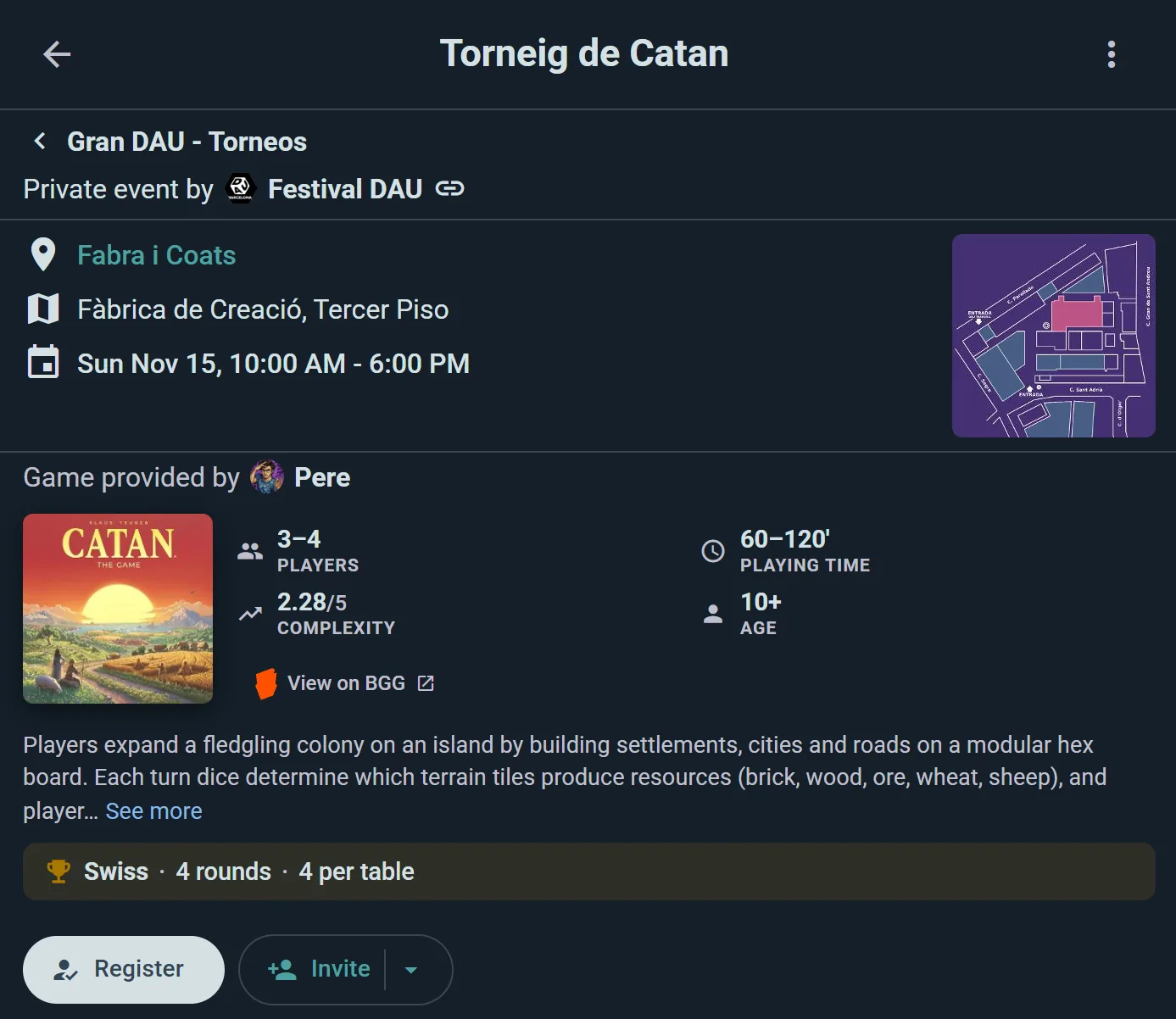
Table size — how many players share a table each round. Swiss and mixer can seat three, four or more per game, which is what makes them work for board games rather than just chess. Elimination brackets are always one-versus-one, so this is fixed at two.
Rounds — Ludoya suggests a sensible number for your field size, and you can override it.
Points per placement — decide what finishing first, second, third and so on is worth. This is what the standings add up.
Bye points — when the numbers don't divide evenly, someone sits a round out. Set what a bye is worth so nobody is punished for the maths.
Shared placements — when players tie at a table, award them all the higher placement's points, or the average of the positions they share.
Tiebreakers
Equal points at the top is the moment a tournament either feels fair or doesn't. Pick the tiebreakers your community accepts, in the order they should apply:
- Head-to-head — who won when the tied players actually met
- Buchholz — the combined score of everyone you faced, so a hard draw counts for something
- Raw score sum — your total in-game points across the tournament
- First places — how many games you won outright
Announce your choice before you start. Nobody minds losing a tiebreak they knew about in advance.
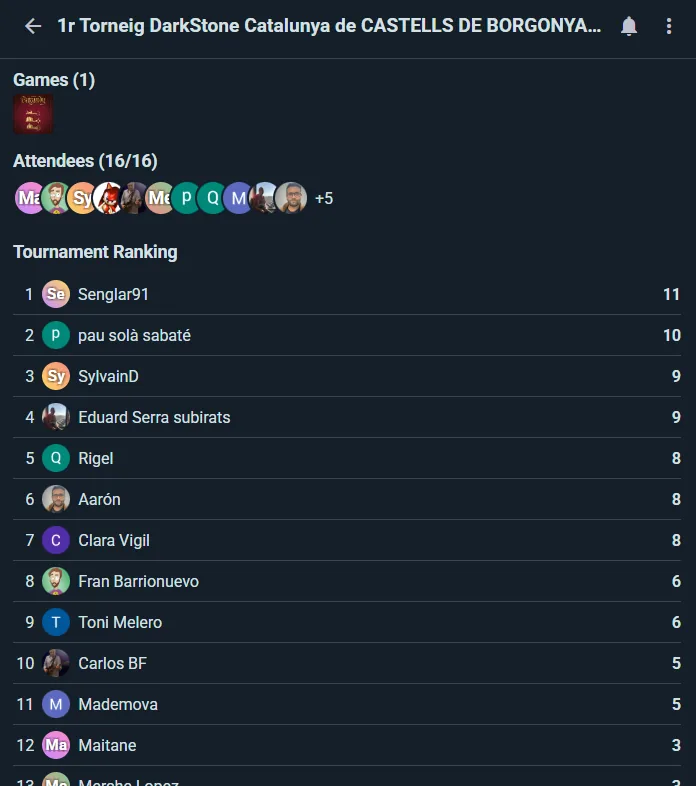
Running the Day
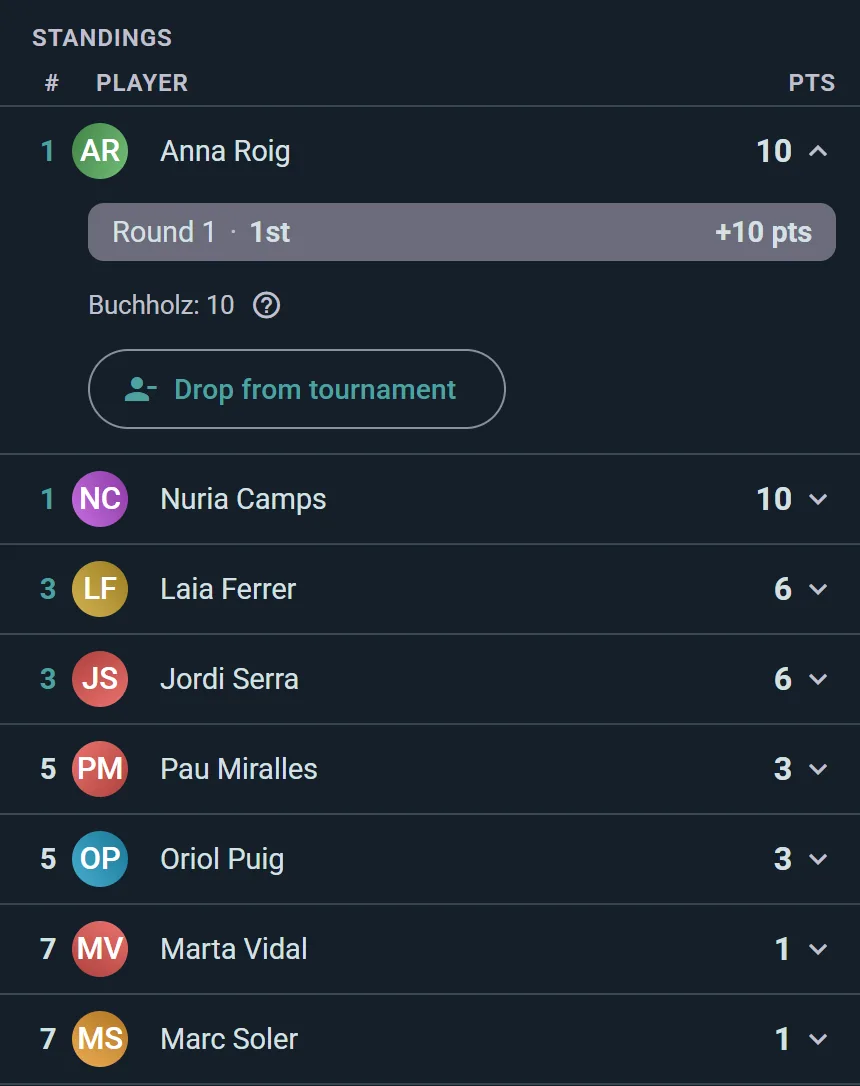
- Build the roster. Players are seeded, and you can drop anyone who leaves partway through — the pairings adapt rather than breaking.
- Generate the round. Ludoya proposes the tables and any byes, and shows you a pair coverage preview: how much of the room is meeting fresh opponents, and how many pairs are repeating. Adjust before you commit.
- Confirm it. Each pairing becomes a real scheduled game, so players report results the way they log any other play.
- Watch the standings. They update as results land, with each player's per-round record and tiebreaker values visible. Put them on a screen — it's the best atmosphere-builder you have.
- Next round. For Swiss and mixer, generate the next one once the current round is in. Elimination brackets advance themselves, byes included: a bye is a walkover that resolves the moment the bracket is confirmed, and a match fed by two byes becomes a real match straight away.
- Next phase. When the last round of a phase is in, review the cut and confirm it. Bracket matches are named for you — Round 2 · Match 1, Losers round 3 · Match 2, Grand final, Reset, Consolation round 1 · Match 2 — so the schedule reads like a programme.
- The overall classification. Besides each phase's own standings, the Overall tab ranks the whole field. The further a player got, the higher they place: a Top 8 bracket decides places 1–8 and the Swiss decides 9th onwards. Inside a bracket there are no points to add up, so places follow the tree — how far you got, and whether you won your last match. A champion who received a bye is never ranked below the player they beat in the final.