

2018 · Ekonomický
CO₂: Second Chance
Players act as CEOs of clean-energy companies bidding to build sustainable power plants and meet government requests while the world’s pollution continues to rise. Through planning and cooperation, players invest money and expertise, purchase and manage carbon emissions permits on a fluctuating market, and construct green infrastructure across regions to satisfy energy demand and UN objectives. Rounds include project funding, plant construction, trading of permits, and global summits where companies share or acquire expertise. Victory is determined by reputation points earned from money, permits, built plants, completed goals, and expertise; a global pollution threshold forces players to prioritize reducing emissions or face collective failure.
- Hráči
- 1–4 nejlépe pro 3
- Herní doba
- 60–120 min
- Věk
- 12+
- Složitost
- 4,1 / 5
O hře
- Autoři
- Publisher



Rozšíření
Zobrazit v Ludoya
Fotky od stolů Ludoya
Všechny fotky v Ludoya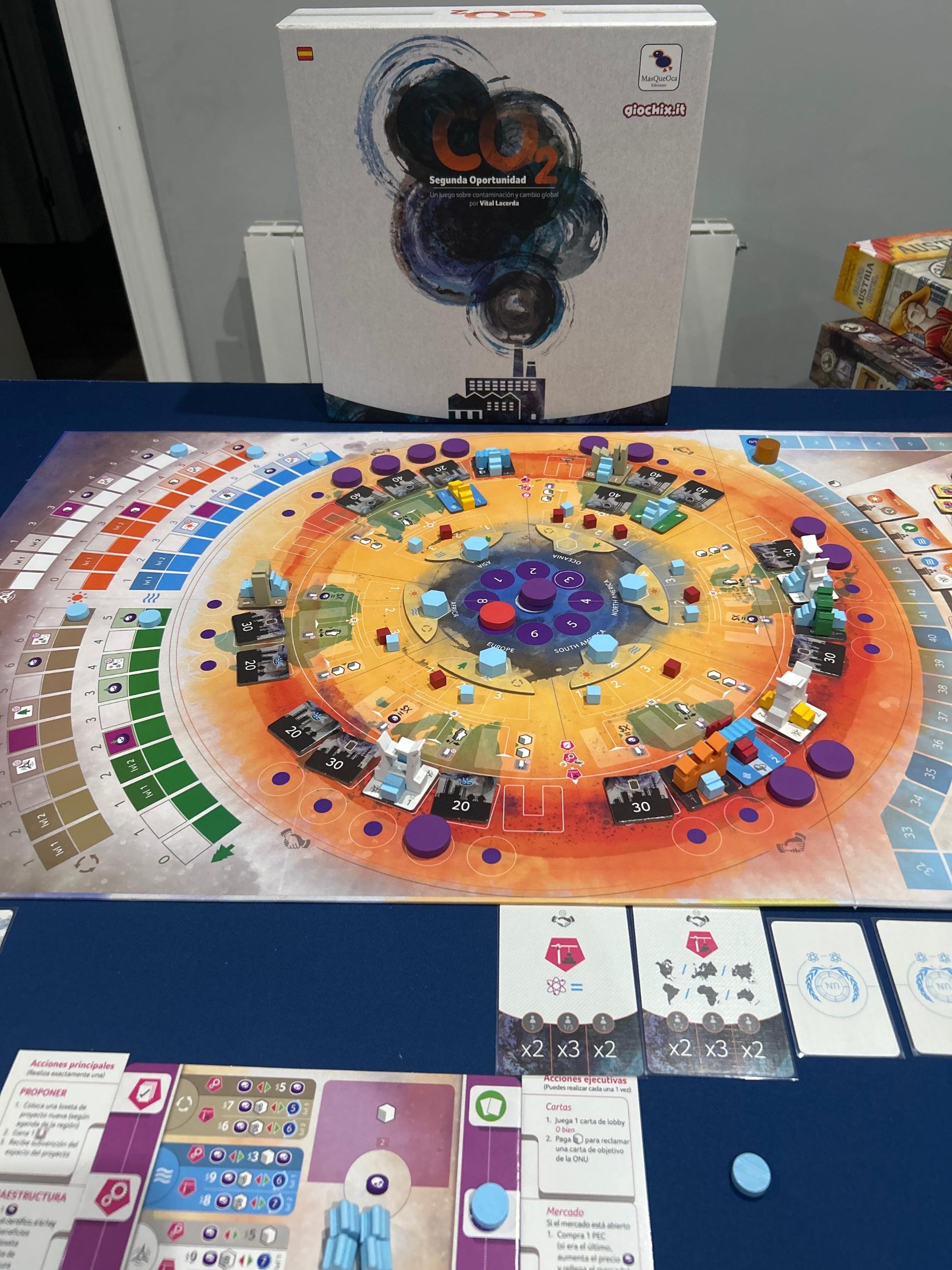
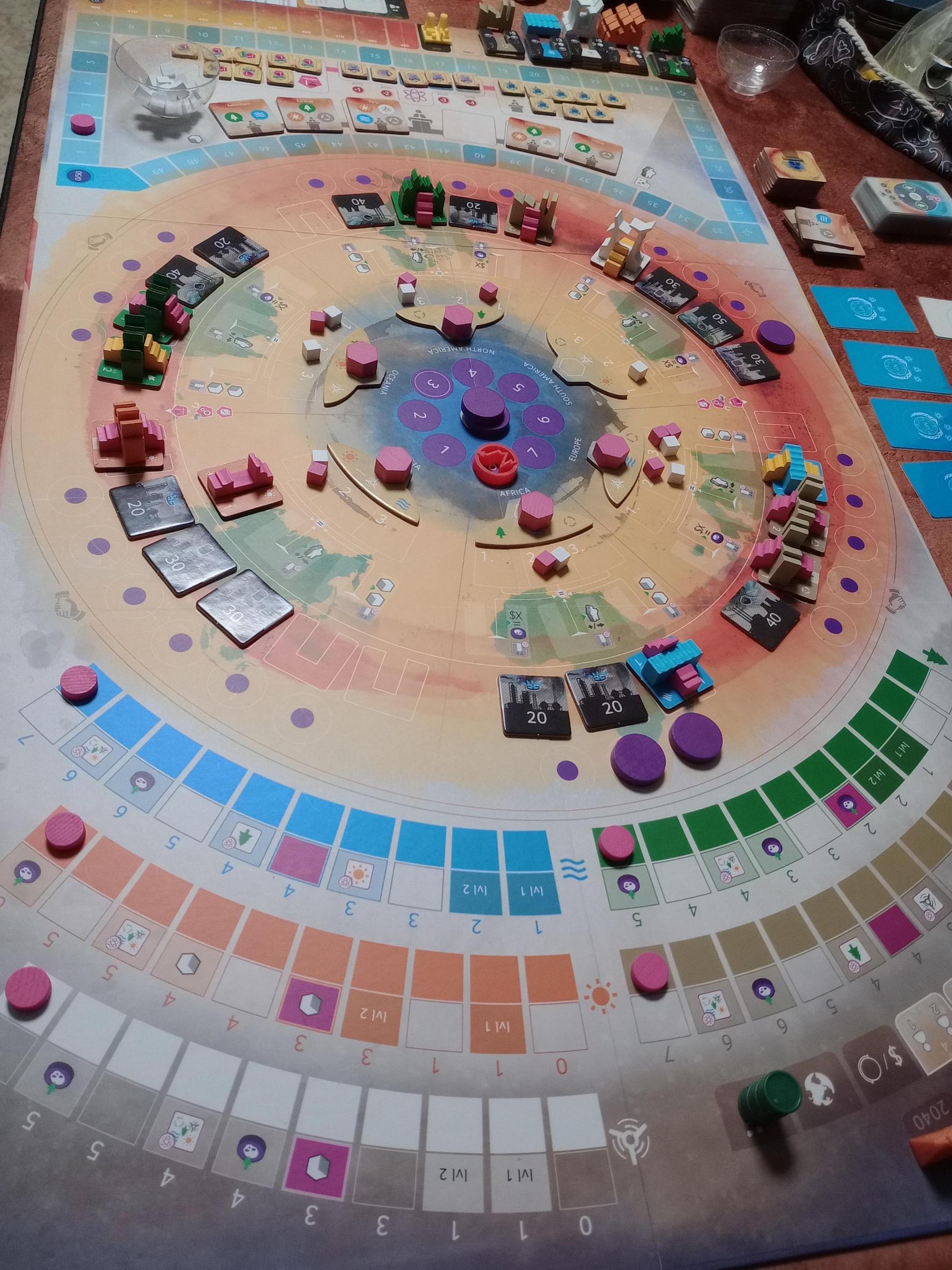
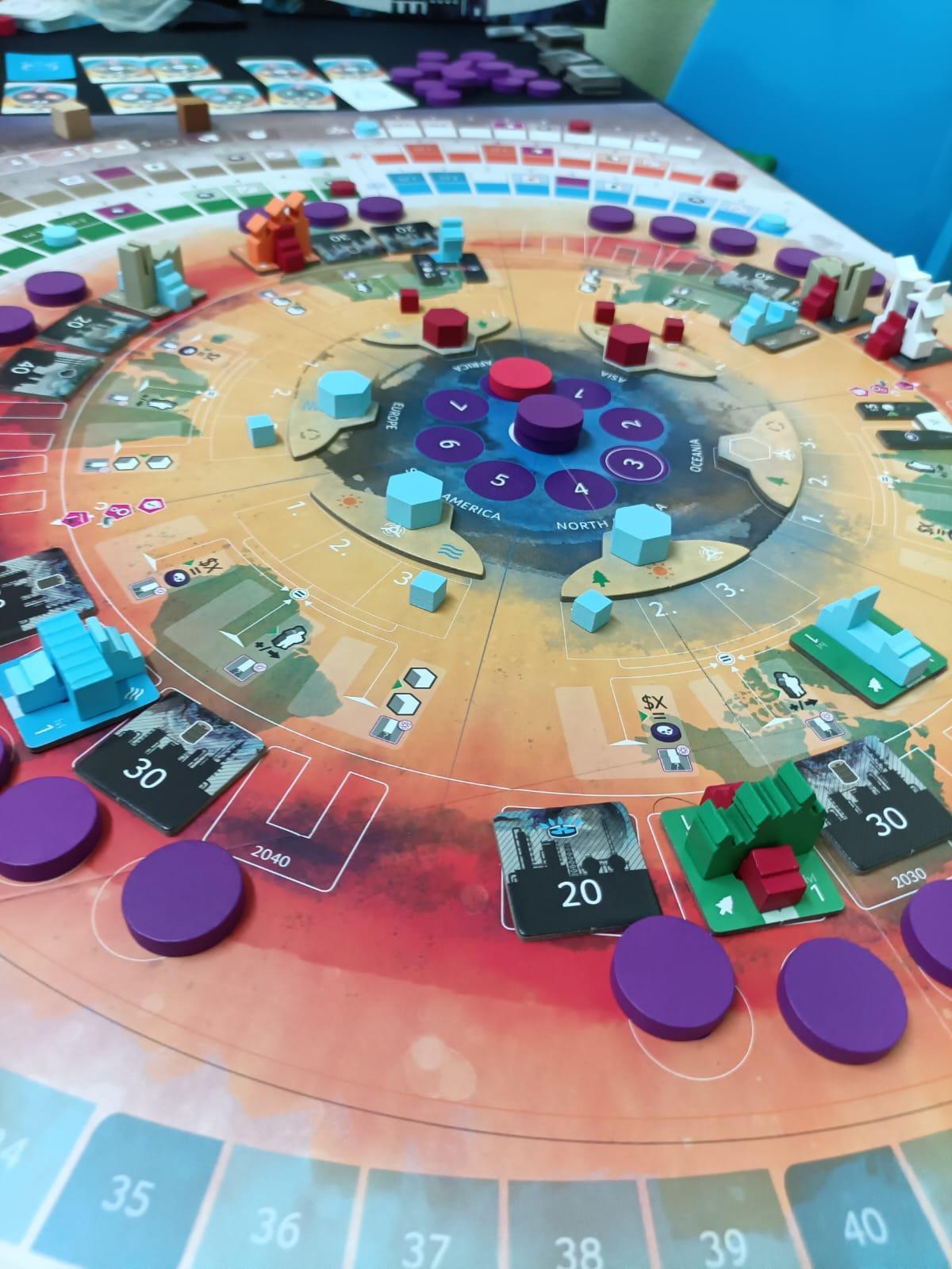
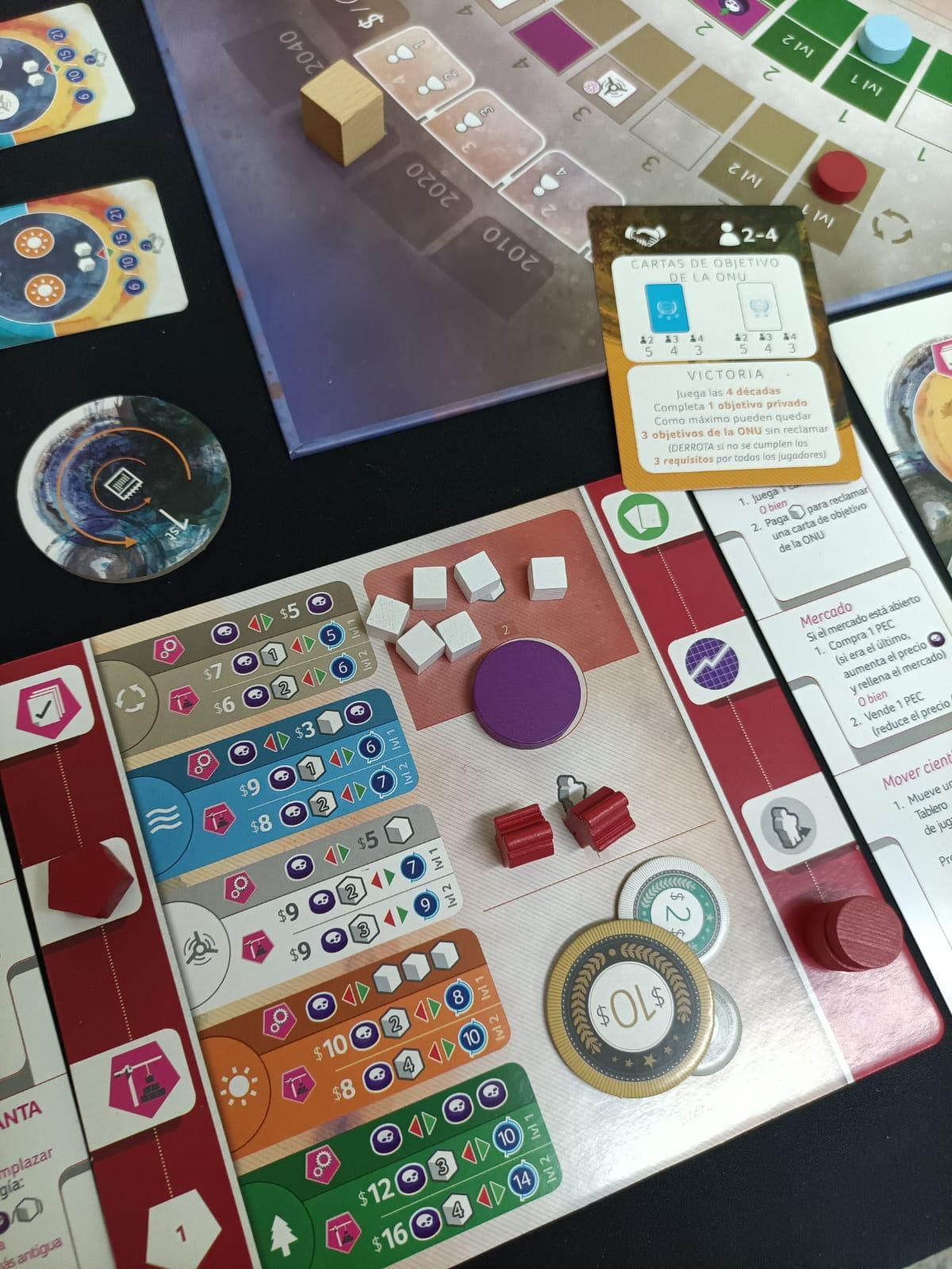
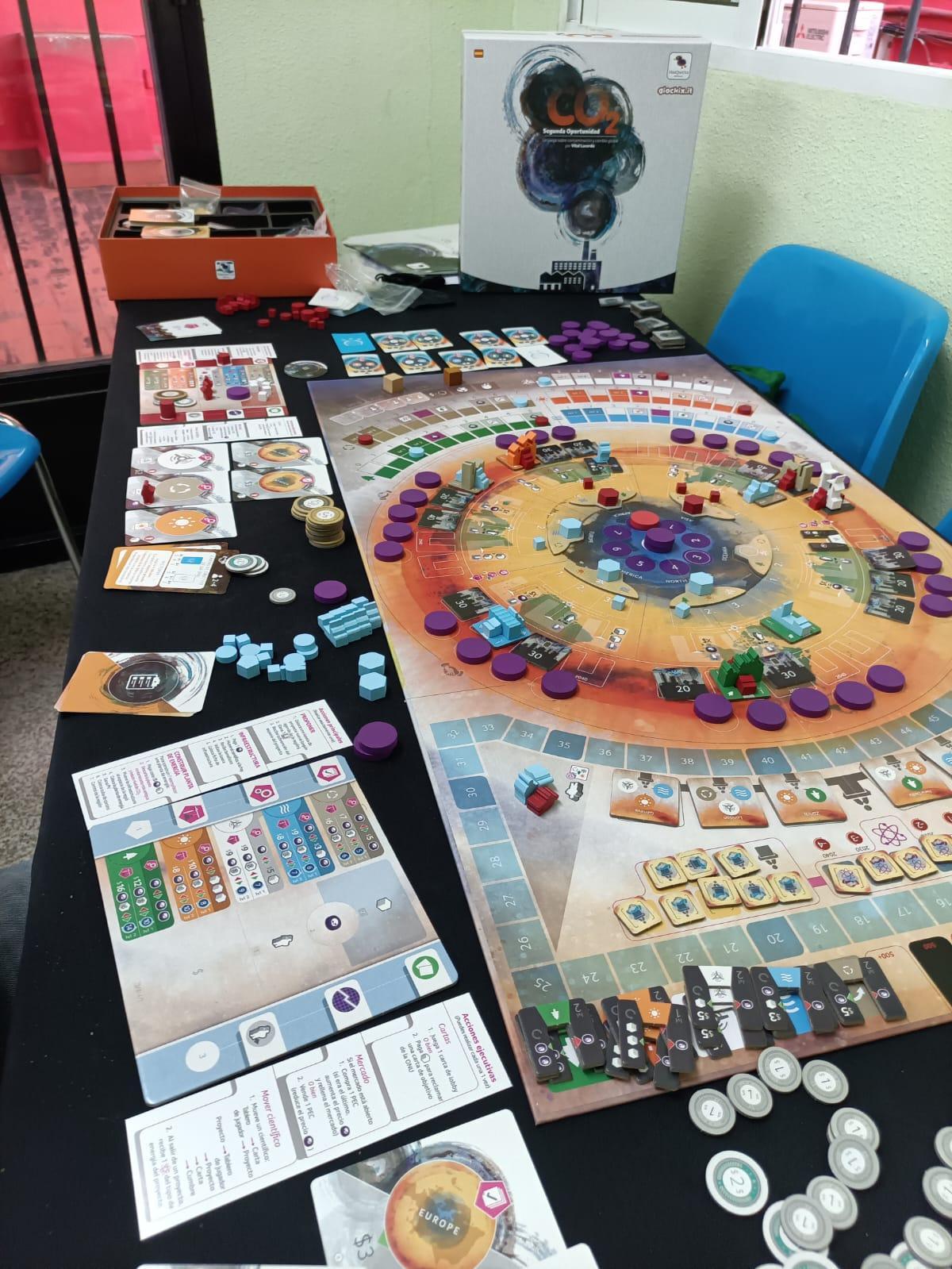
Kde koupit
Ceny v obchodech a výtisky z druhé ruky, kontrolované každý den.
U stolů Ludoya
Kompletní statistiky v Ludoya- 175
- Zapsané partie
- 122
- Hráči
- 1h 32m
- Průměrná partie
- 58
- Ve sbírkách
- 14
- Na seznamech přání
- 1
- Předobjednáno
6,6/10
z 27 recenzí na Ludoya
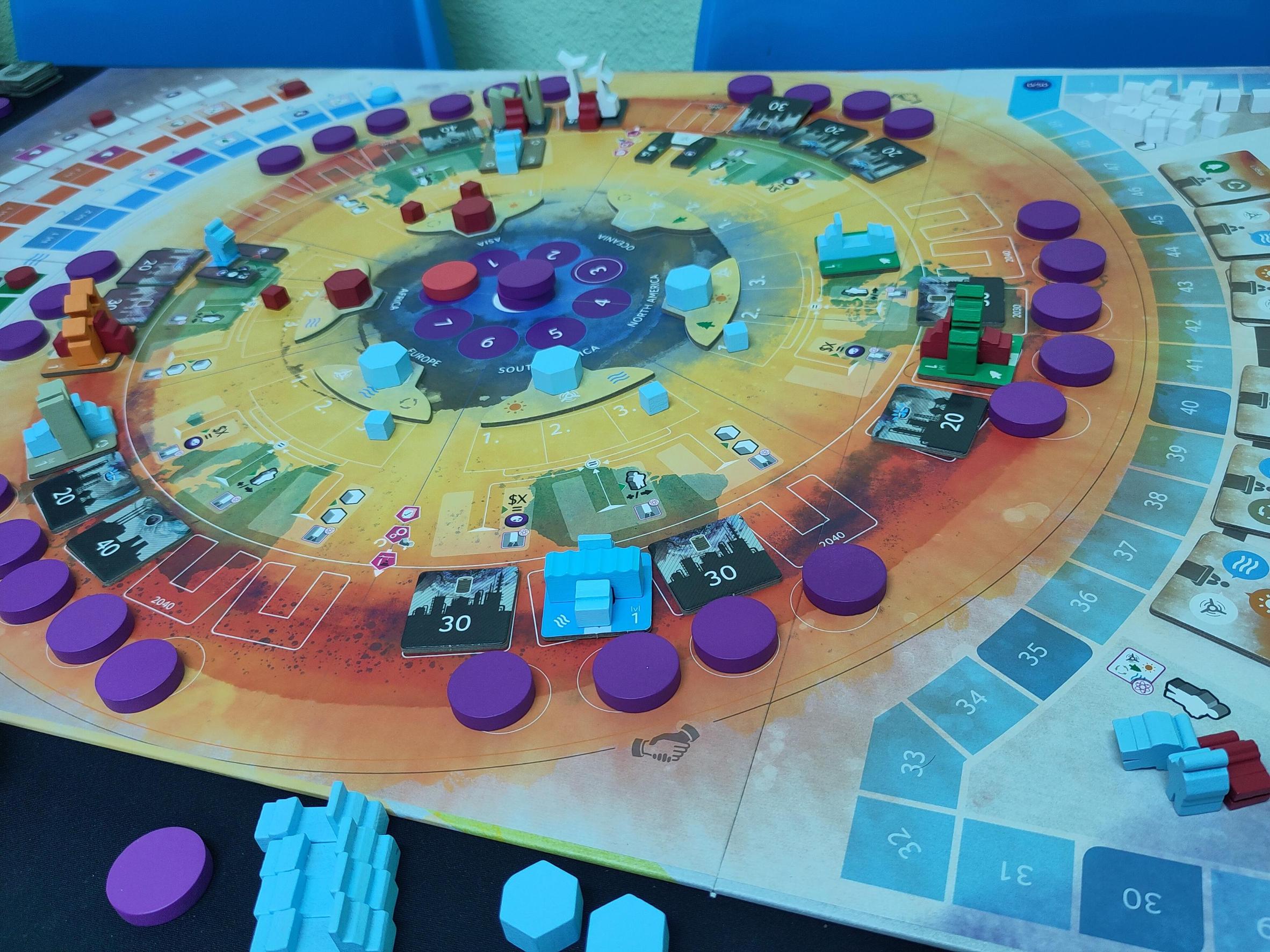
Evan4,6 I'm a person who is regularly crushed by anxiety over things I can't do much about. Global warming is one of those things. I recycle, turn off the lights when I leave a room, try to be energy efficient, but the reality is that a single corporation has a drastically more significant ability to effect the amount of carbon that make it into the air. A big reason I'm drawn to the theme of this game is to roleplay someone who can actually do something about the problem. I had played first edition a few times, and while there were elements of gameplay I really enjoyed at the time, the semi-cooperative game elements never seemed to provide players with enough incentive to work together to actually save the world. In second edition, the primary gameplay mode is fully-co-op so I was excited to give it a try. The look of the game is beautiful, although the publisher made some component errors including printing icons on tokens off center and printing card backs upside down. Generally the game works like this. There are different continents on the map, and each round those locations, if not provided with a power plant tile, will provide their own. Tiles you build for them represent green energy, and won't increase the temperature chart marker. Tiles they build for themselves will push the marker between 2 to 4 spaces (times the round number) depending on what flips. It takes three actions to build a single power-plant. One action to propose the idea, which generates you a reward from the space in the region you place the proposal tile. One action to place your "infrastructure" token on the proposal tile, generating the reward on the tile. Then one action to actually build the power plant generating victory points, and importantly preventing that continent from building their own plant that round. Actions are incredibly tight, as each player gets a very limited number of actions each round, dictated by the number of players. Each step of this process additionally costs different combinations of purple discs, money, and white cubes, all of which are needed for extra side goals such as the secret win requirement cards each player is given, public goal cards that need to be achieved to win, and these progress tokens that sit at the side of the board leeching points from you each round unless you fulfill them. Deciding which plants to build and where to get what rewards is crucial, but ultimately round to round the key decision point is often the income phase. Between rounds you gain income equal to how far you've progressed on the charts representing the different power plant types. You can take this income in either money or victory points, but you do this before you know which polluting power plants will flip. Victory points are really just another currency in the game. If you go below 0 you lose, but generally you can spend VP to stop the temperature from rising, as you also lose if the temperature marker hits the end of it's track. Ultimately what this means is that in this rather long game, each round you are making a guess as to if you will lose or not. Since the plants have a variance of 2-4(x round#), you can average at 3, and take the points you hope you'll need to survive the power plant phase, but if you take too much in points you'll be money poor to buy new plants. It's a bit of a messy math bookkeeping step at the end of the round that I'm not totally thrilled with. This is a true Vital game in that there are probably one too many mechanisms for the rules of the game to sit comfortably in my brain, yet the core aspects of the game are enjoyable enough for me to stick with it despite that it's likely this will be tough to play in the future. Generally my habit with games of this complexity level is that I struggle to understand the how and why with my initial play, then shelf it for a few months, then try to return to it having forgotten everything, suffer again, then shelf it and never play it again despite having a memory of generally liking it. Maybe not, who knows, perhaps the fact that this is fully co-op and offers a usable solo mode will keep me active in it. :star: Art, Iconography and components functional :star: Clever or interesting mechanisms :star: Reasonably low downtime between turns with mildly AP players :nostar: Multiple plays stay interesting :star: Low or mitigatable luck elements :star::star::star::nostar::nostar: Raw enjoyment
Garfield10,0 2.2 The theme is very strong in this one. [c] Theme: :star::star::star::star::star: <!-- size 7]Wow --> Gameplay: :star::star::star::nostar::nostar: <!-- size 7]Not that many choices --> Interaction: :star::star::star::nostar::nostar: <!-- size 7]Make plans with others --> Artwork: :star::star::star::star::nostar: <!-- size 7]My taste of style --> Luck: :star::nostar::nostar::nostar::nostar: <!-- size 7]Almost none --> Strategy: :star::star::star::star::nostar: <!-- size 7]Very strategic --> Components: :star::star::star::star::star: <!-- size 7]Awesome --> Play duration: :star::star::nostar::nostar::nostar: <!-- size 7]A little bit too long --> Easy to teach: :star::star::nostar::nostar::nostar: <!-- size 7]Still ok --> Rules quality: :star::star::star::star::nostar: <!-- size 7]Very good --> Setup time: :star::star::nostar::nostar::nostar: <!-- size 7]Can take 10min --> No downtime: :star::star::nostar::nostar::nostar: <!-- size 7]Ok --> Replay value: :star::star::star::star::nostar: <!-- size 7]It's very dynamic --> [/c]
BWizard8,6 [c] (15x) GAMING EXPERIENCE: :star::star::star::star::star::star::star::star::star::nostar: (5x) DEPTH / WEIGHT: :star::star::star::star::star::star::star::star::star::nostar: (5x) LUCK: :star::star::star::star::star::star::star::nostar::nostar::nostar: (10x) REPLAYABILITY: :star::star::star::star::star::star::star::star::star::nostar: (6x) MECHANICS: :star::star::star::star::star::star::star::star::nostar::nostar: (6x) PLAYER INTERACTION: :star::star::star::star::star::star::star::star::star::star: (3x) SCALABILITY (PLAYER COUNT): :star::star::star::star::star::star::star::star::nostar::nostar: (2x) LENGTH: :star::star::star::star::star::star::star::nostar::nostar::nostar: (2x) CLARITY OF RULES: :star::star::star::star::star::star::star::star::nostar::nostar: (6x) COMPONENT QUALITY: :star::star::star::star::star::star::star::star::nostar::nostar: [/c] KS edition with metal coins. :thumbsup: With translated, edited, printed rulebook. :thumbsup: Language independent. :thumbsdown: Unusable insert.
Otázky k pravidlům
Odpovědi z pravidel od asistenta pravidel Ludoya.
Can I move a scientist anywhere during my "Move a Scientist" Executive action, or are there limits?
You may move one scientist only to the specific spaces listed (from your board to an unoccupied proposed project or Lobbyist card, or from a proposed project to another proposed project, a Lobbyist card, a matching Energy Summit talk, or your board) and various restrictions apply: only one scientist per project/Lobbyist/summit, scientists never move to projects with Infrastructure, a scientist can only go to a summit from a project (not from your board), and once on a summit or Lobbyist card they remain there as stated (page 8).
If I move a scientist onto a Lobbyist card, can it be moved later or can other players use it?
You can move a scientist onto any unoccupied Lobbyist card to gain the card’s minor effect, but once a scientist is on a Lobbyist card it stays there until the end of the game, so it cannot be moved again and blocks that slot for others (page 8); note the rule also explains the card’s minor effect can be used twice in the game if another scientist later moved onto it before it became occupied (page 10).
If the CEP Market becomes empty when I buy the last CEP, can I still visit the market that turn and what happens to the price?
When the market becomes empty you immediately increase the CEP price by 1 (up to $8), add 2 CEPs from the bank to refill, and the market then closes for the remainder of that turn so you may not Visit the CEP Market again that turn (page 10).
If I Prepare Infrastructure for a project, can I also Build that power plant in the same turn?
No — Prepare Infrastructure and Build a Power Plant are separate Main actions and you get only one Main action on your turn (you may also take any Executive actions once each); preparing places Infrastructure and gives the listed benefits but does not construct the plant (pages 7, 13–14).
When I build a green power plant in a region with no empty spaces, what gets removed and does CO₂ change?
If there is no empty energy demand space, you must discard the oldest fossil fuel power plant in that region (not green plants), send that tile to the box, and reduce the global CO₂ by the amount that fossil plant emitted (global CO₂ cannot go below 400 ppm) before placing your new infrastructure (page 14).
How do I take control of a region’s energy supply — is it based on the number of plants I have there?
Control is checked only when a power plant is built and is based on who provides the most different preferred energy source types beneath the Regional Agenda tile (not on number of plants); ties are broken by who provides the more preferred types, then by greater knowledge in the type just built, then by the active player (page 15).















Zdarma, na webu, Androidu i iOS
Hrajte CO₂: Second Chance s Ludoya
- Mějte ji ve své sbírceEvidujte svůj výtisk a jeho rozšíření, půjčujte ho přátelům, nebo si ho dejte na seznam přání a dozvíte se, když cena klesne.Přidat do sbírky
- Zapisujte každou partiiBody, vítězové, časovače a fotky, a pak vaše statistiky: úspěšnost, oblíbený počet hráčů, nejlepší skóre.Zapsat partii
- Vyřešte spory o pravidlaZeptejte se na cokoli k pravidlům a dostanete odpověď z pravidel i se stránkou, kde si ji můžete ověřit.Zeptat se asistenta pravidel
- Najděte lidi, se kterými ji zahrátKluby, herní večery a akce ve vašem okolí, kde se tato hra hraje.Zobrazit akce
Údaje o hře (hráči, herní doba, věk, autoři) z BoardGameGeek.