
2023 · Card Game
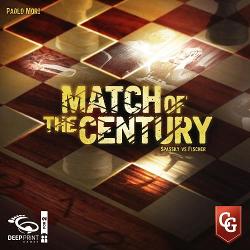
Match of the Century
Two rival grandmasters replay a historic championship through a compact, card-driven match. Players take alternating quick games composed of a few intense turns, resolving chess-like confrontations without a full board. Each player uses an asymmetrical deck of cards with unique effects to influence the opponent’s mental endurance and the result of individual games. Cards often require sacrificing positional advantage to trigger effects, so players balance short-term gains against long-term match strategy as they play a series of games to decide the winner.
- Players
- 2
- Playing time
- 30–45 min
- Age
- 10+
- Complexity
- 2.6 / 5
About the game
- Design
- Publisher



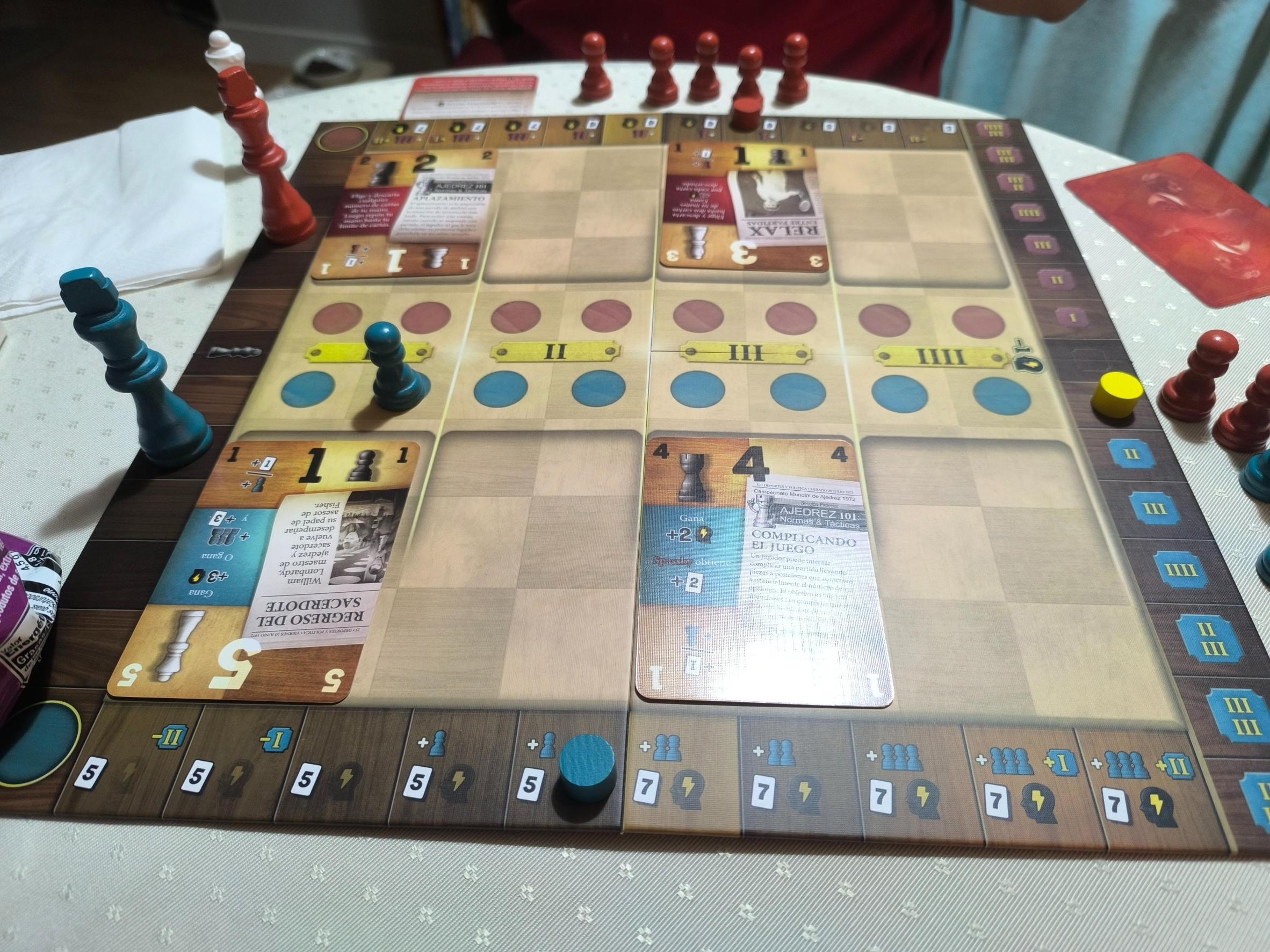
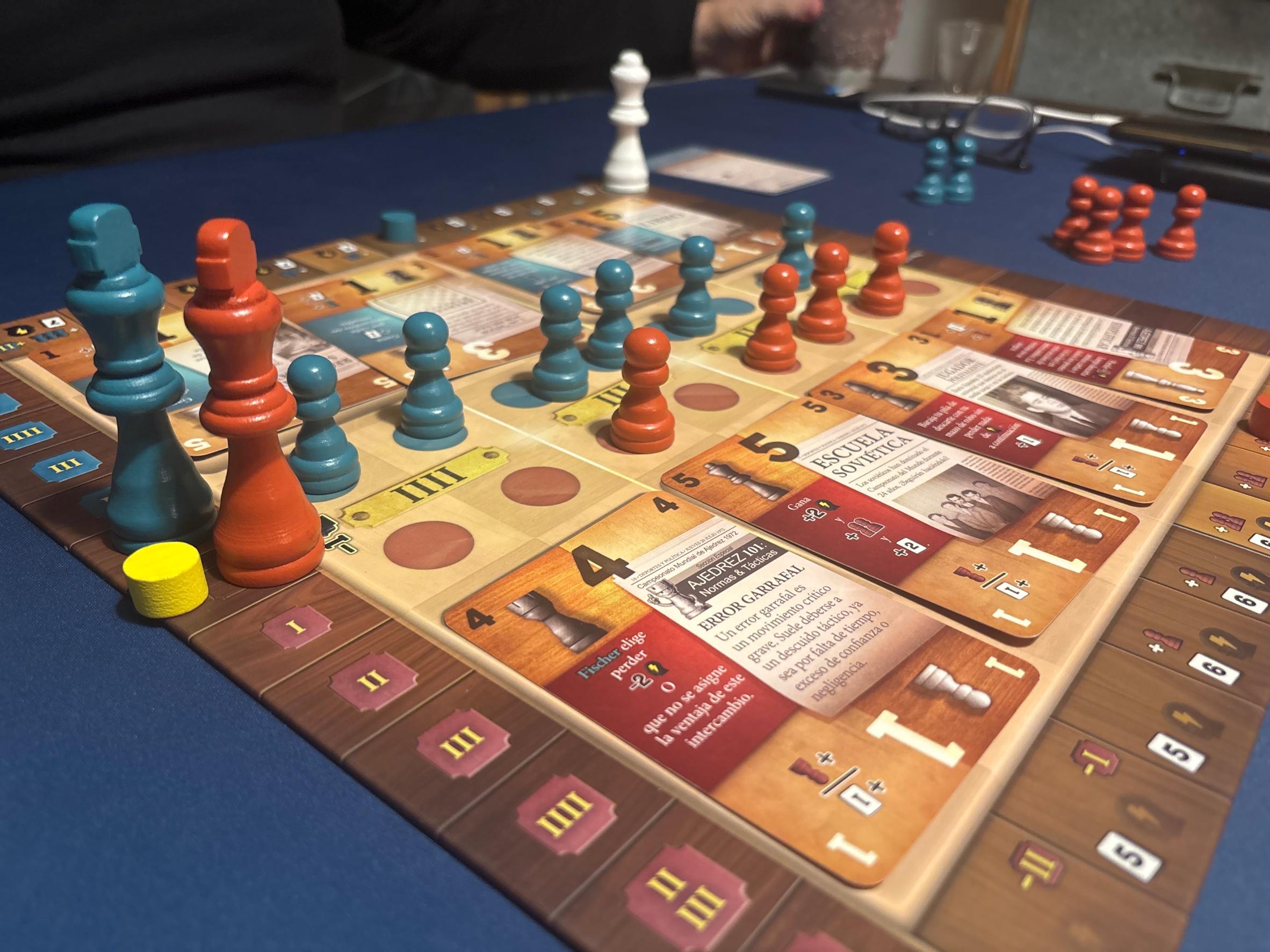
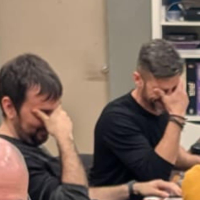
Photos from Ludoya tables
All photos in Ludoya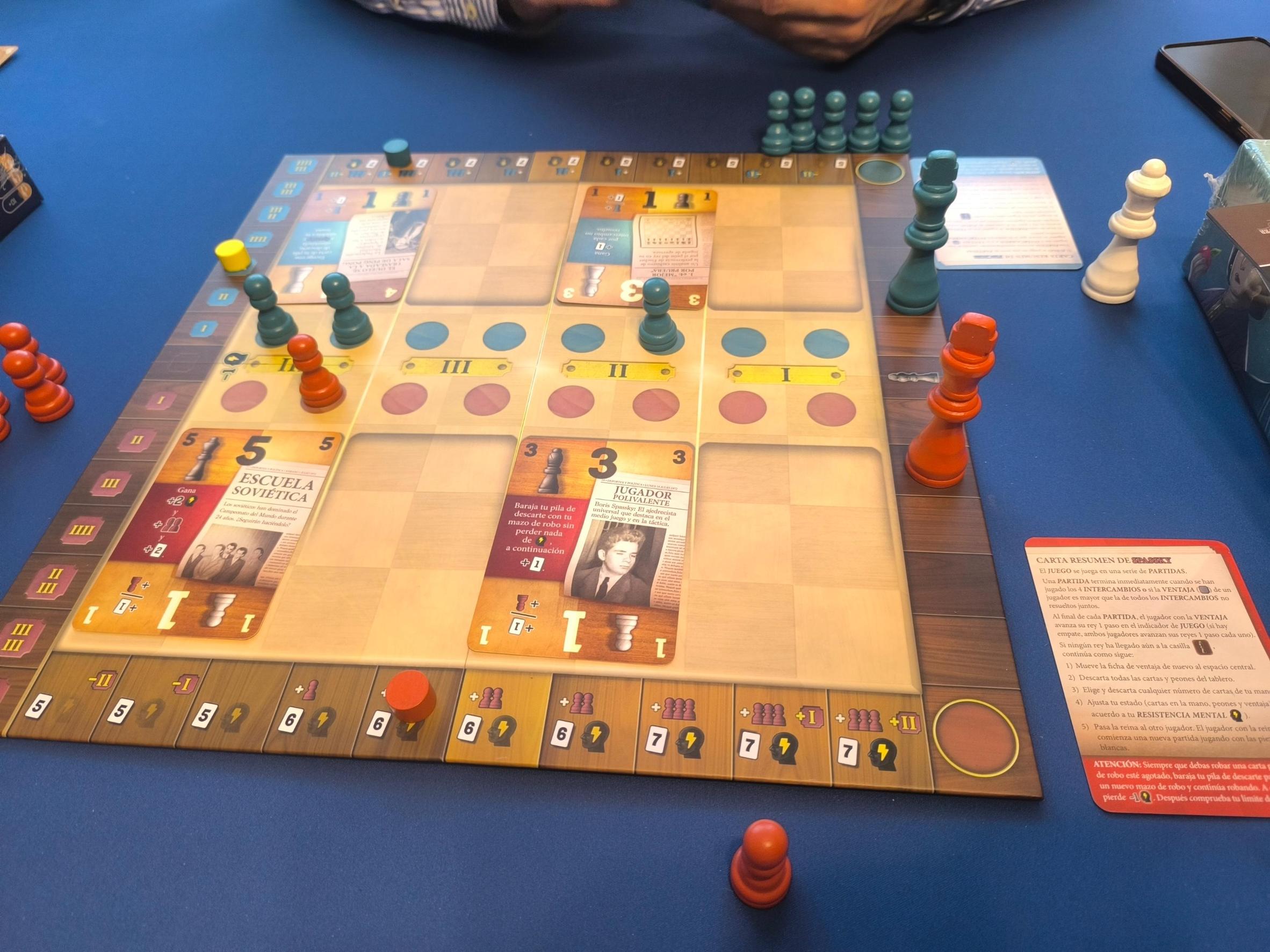
Where to buy it
Shop prices and second-hand copies, checked every day.
On Ludoya's tables
Full stats in Ludoya- 95
- Plays logged
- 110
- Players
- 47m 17s
- Average play
- 78
- In collections
- 13
- On wishlists
- 2
- Pre-ordered
7.2/10
from 18 Ludoya reviews
One of the best 2p games I have ever played. With similar feelings than Watergate, Schotten Totten and Hanamikoji, it succeeds on making an exciting game with lots of decisions and tension that lasts less than 30 minutes. An instant classic for me
Played it 3 times
Rules questions
Answered from the rulebook by Ludoya's rules assistant.
Can I play either side of a card, or only the piece matching my colour?
You may play only the side showing your current colour face up. Players switch colours each game, so the same card may show a different piece for you next game (p. 5).
How many pawns can I add to a card, and how much strength do they give?
You may add up to 2 pawns from your personal reserve when you play a card; each pawn adds +1 strength (pp. 6–7).
What happens if both cards have the same total strength?
The exchange is tied: neither player uses a piece effect, and no advantage is gained. The game then continues unless the game-ending condition is met (p. 7).
Who gets to play first in an exchange?
In the first exchange, the player with white has the initiative. In later exchanges, it goes to the previous exchange’s winner; after a tie, it goes to the player who did not have the initiative in that exchange (p. 6).
Do we have to play all four exchanges before the game ends?
No. After each exchange, add the advantage values of the still-empty sections; if that total is less than the advantage either player already has, the game ends. Otherwise, play another exchange, up to four in total (p. 7).
What happens when I run out of cards in my draw deck?
Reshuffle your discard pile into a new deck and continue drawing; after you finish drawing, lose 1 mental endurance. If your hand is over its current limit, discard down to that limit (p. 9).
Similar games
 Compile: Main 22025
 Compile: Main 12024
 Guardians2018
 Zenith2025
 Rival Cities2025
 Unmatched Adventures: Teenage Mutant Ninja Turtles2025
 Unmatched Adventures: Tales to Amaze2023
 Summoner Wars (Second Edition)2021
 Unmatched: Sun's Origin2024
 Mega Man Pixel Tactics: Mega Man Blue2017
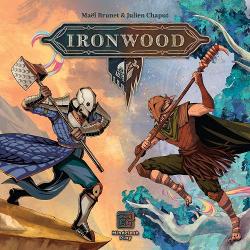 Ironwood2024
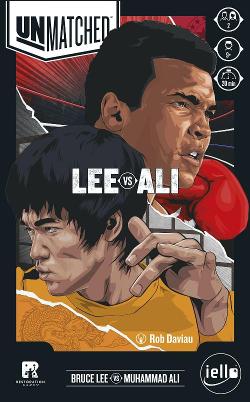 Unmatched: Lee vs Ali2025







Free, on web, Android and iOS
Play Match of the Century with Ludoya
- Keep it in your collectionTrack your copy and its expansions, lend it to friends, or put it on your wishlist and get told when the price drops.Add it to your collection
- Log every playScores, winners, timers and photos, then your stats: win rate, favourite player count, best score.Log a play
- Settle rules questionsAsk anything about the rules and get an answer from the rulebook, with the page to check it on.Ask the rules assistant
- Find people to play it withClubs, game nights and events near you that bring this game to the table.See events
Game facts (players, playing time, age, credits) from BoardGameGeek.