
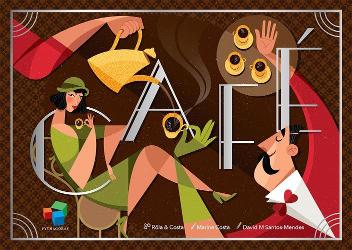
2020 · Card Game
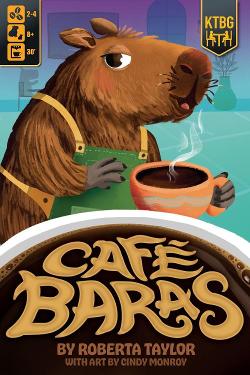
Café
Players run coffee companies in early 20th-century Portugal, building a supply chain from plantation through drying, roasting and distribution. Cards and worker-placement-like actions are used to establish and upgrade production, process coffee beans, and fulfill orders to prestigious cafés. Players manage resources, optimize card placement to chain abilities, and compete for market control and reputation across several rounds.
- Players
- 1–4 best 2
- Playing time
- 20–45 min
- Age
- 8+
- Complexity
- 2.1 / 5
About the game
- Art
- Publisher



Expansions
See them in Ludoya
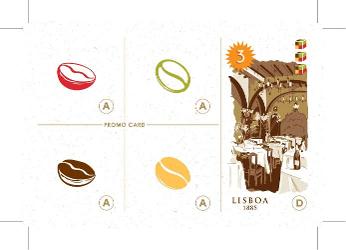
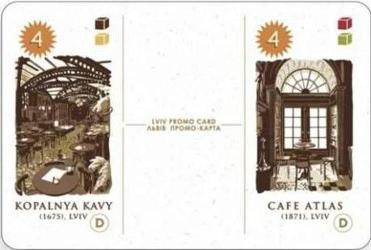
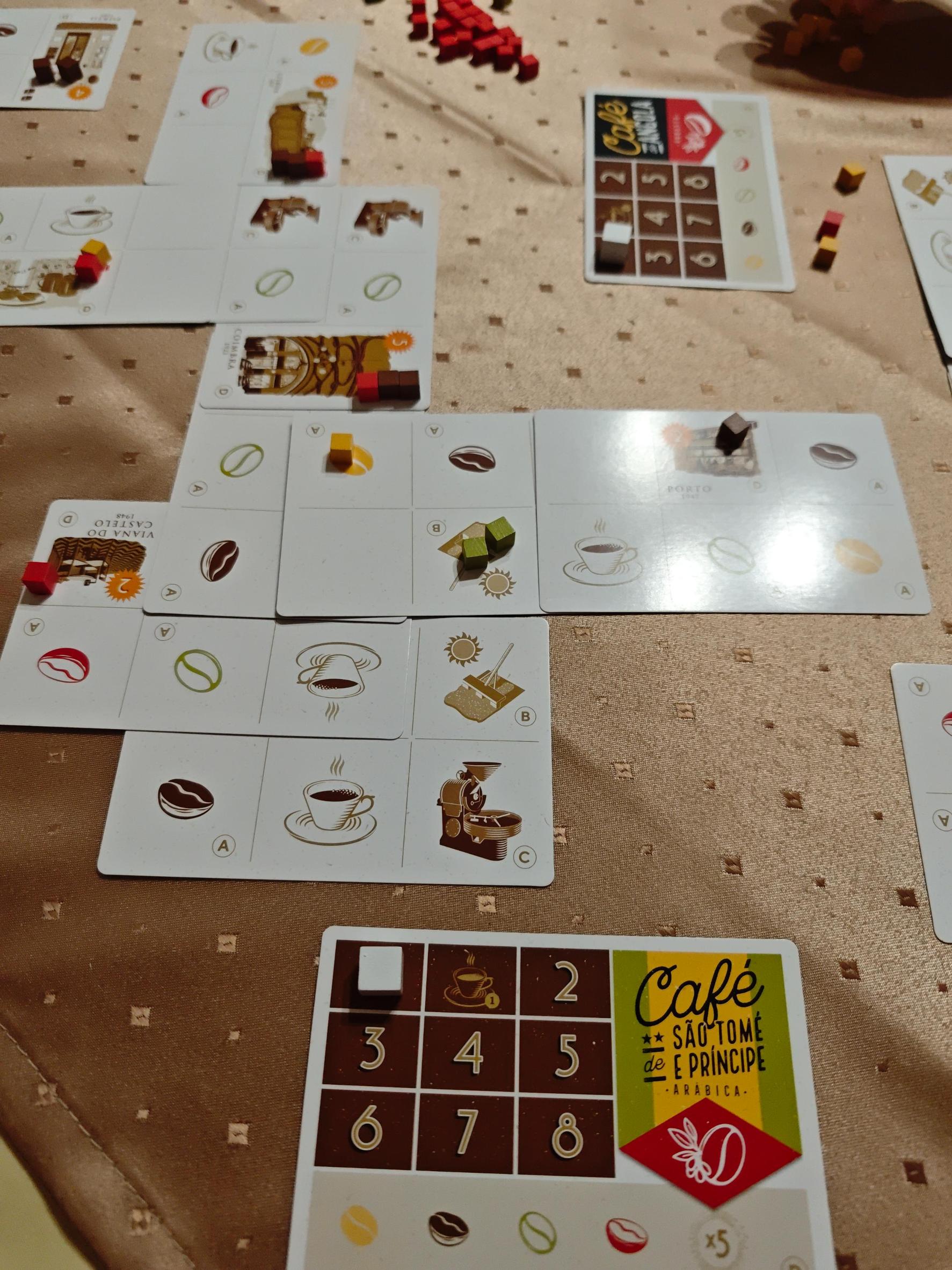
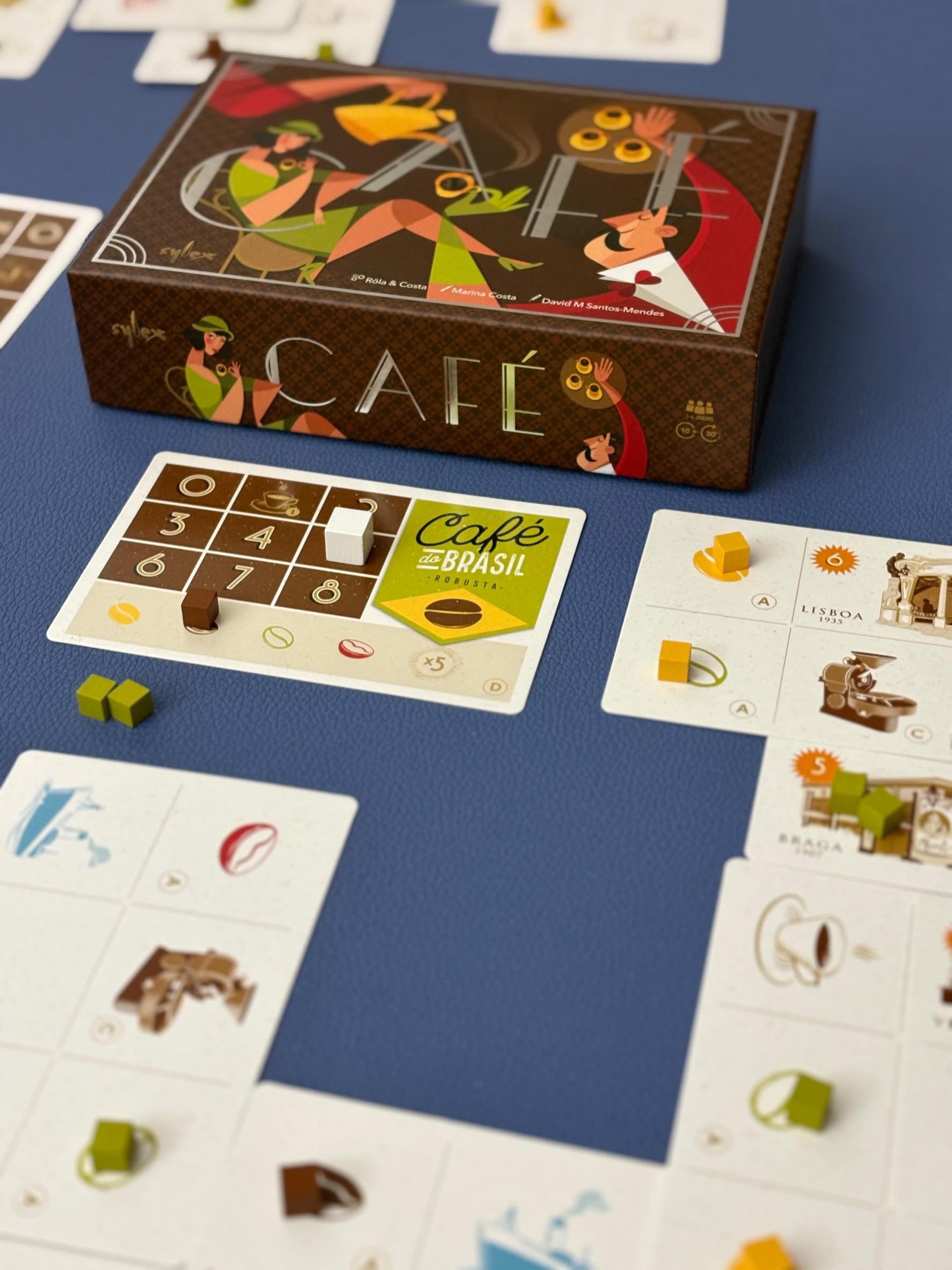
Photos from Ludoya tables
All photos in Ludoya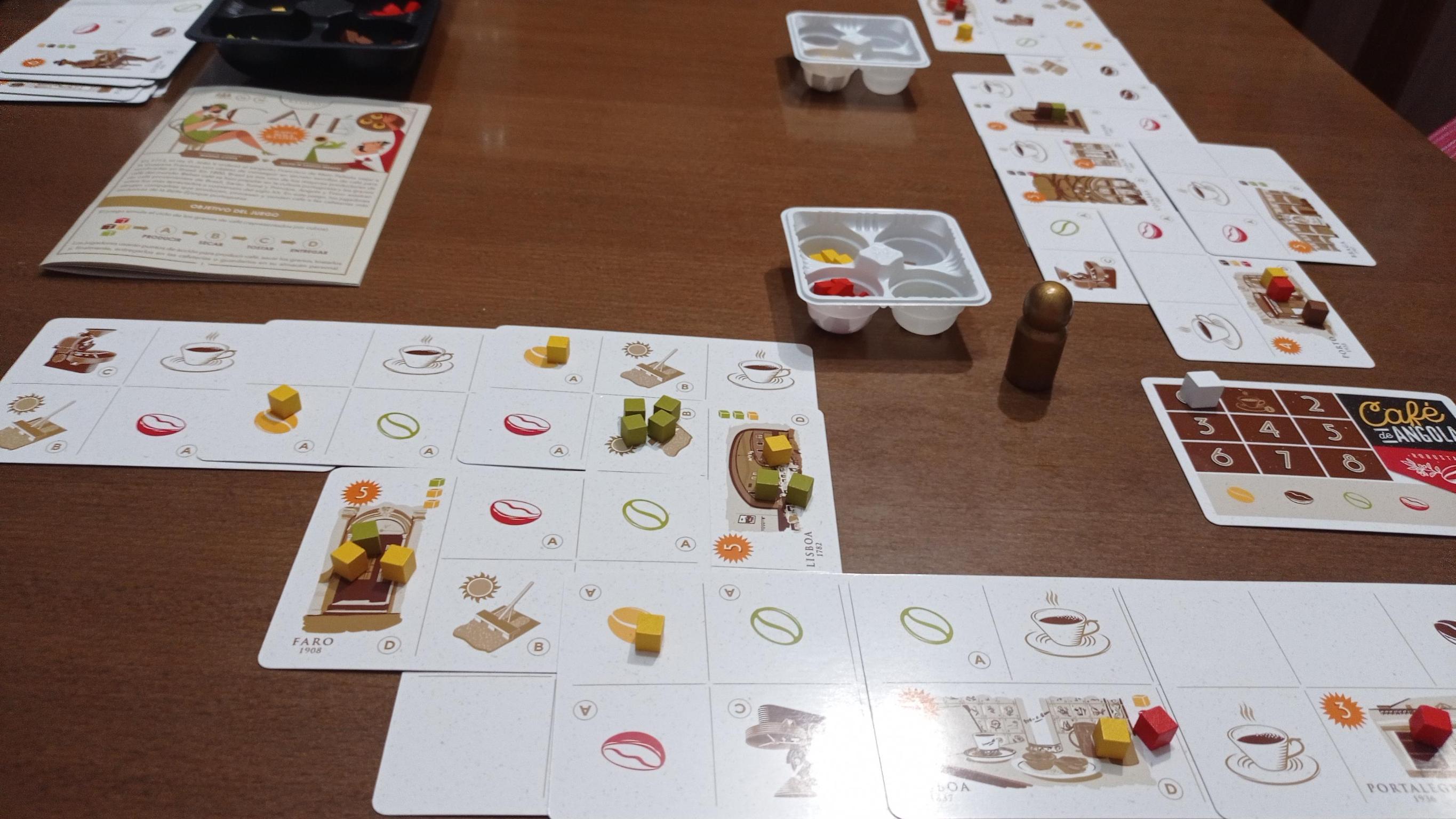
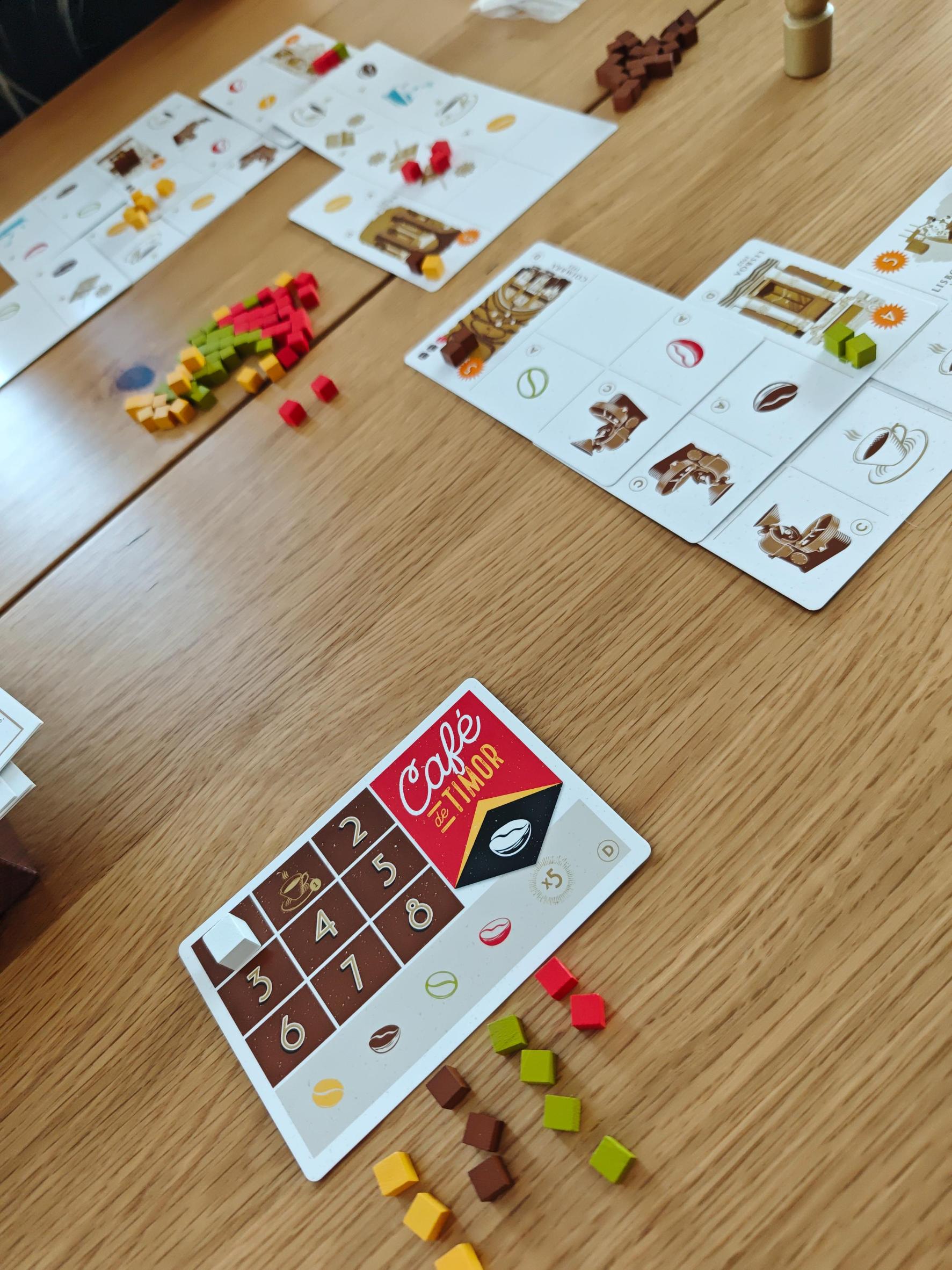
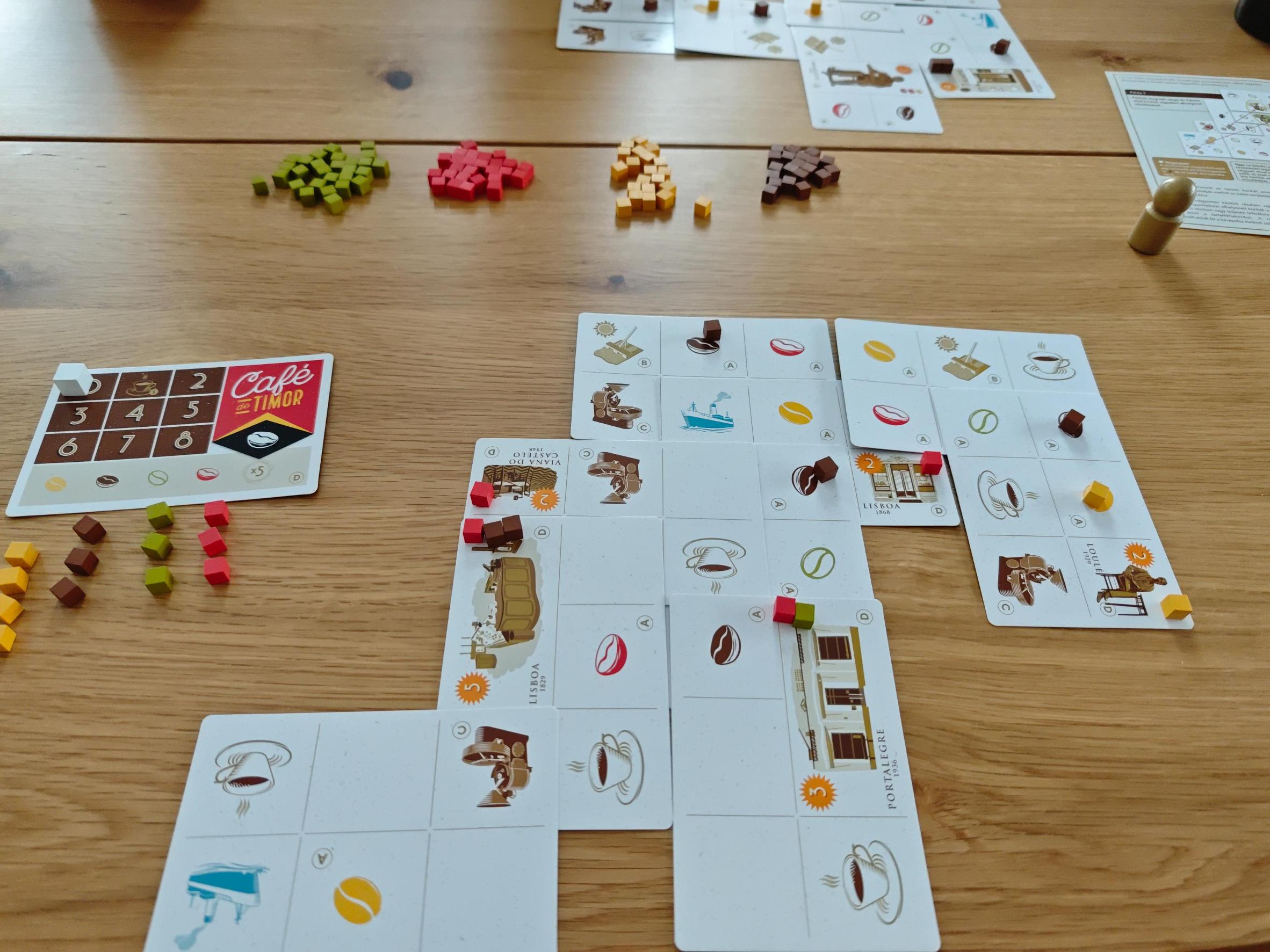
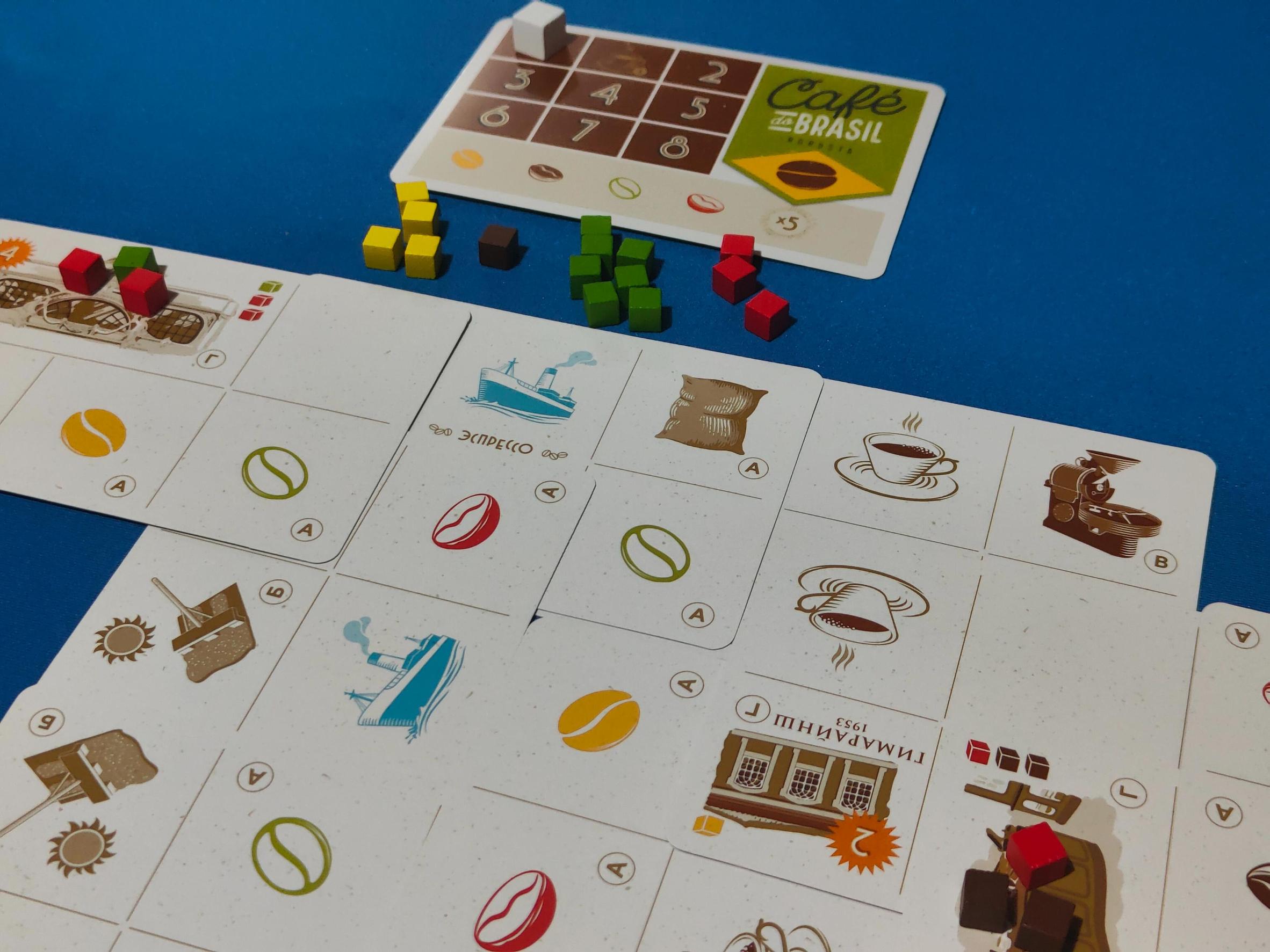
Where to buy it
Shop prices and second-hand copies, checked every day.
On Ludoya's tables
Full stats in Ludoya- 553
- Plays logged
- 372
- Players
- 28m 52s
- Average play
- 123
- In collections
- 15
- On wishlists
7.0/10
from 51 Ludoya reviews
- Base [ 01 ] -
Viciados7.0 Great looking, nice little game for couples too. Haven't played with more people. The theme doesn't really matter in the game, it's the only thing I didn't like.
[FR] Review avec proposition de modification légère de règles pour moins de hasard : https://www.adayagame.fr/jeux-familiaux/373-test-du-jeu-cafe



Rules questions
Answered from the rulebook by Ludoya's rules assistant.
Do Plan cards have to be placed on consecutive spaces, and can they overlap other cards?
Plan cards are placed sequentially covering 2–4 squares in your tableau and must follow the placement rules shown in the examples; you do not overlap existing cards when placing them (see p.5).
Can I buy a Plan card I can’t currently afford or ‘bank’ discounts for a later purchase?
You may only buy Plan cards if you can pay their cost after applying any discounts; you cannot reserve or buy cards you cannot afford (see p.4).
When I take a Produce action, do I also produce cubes on adjacent/connected spaces (the cluster)?
Producing places cubes on the chosen production space and also affects connected production spaces as a cluster—cluster production rules and examples explain how multiple cubes are produced together (see p.6).
If I dry or roast one cube, does that affect nearby cubes in the cluster too?
Drying and roasting can apply to clusters: the rules and examples show how drying/roasting actions convert cubes in connected clusters according to the cluster rules (see p.7–p.8).
What’s the difference between delivering roasted cubes to a coffee shop versus to the warehouse?
Delivering to a coffee shop places roasted cubes for immediate scoring on that shop’s scale, while sending cubes to the warehouse stores them for end‑game scoring under different warehouse scoring rules (see p.8–p.11).
When does the game end and how is final scoring, especially for the warehouse, calculated?
The game ends after the final round, then you perform final scoring: score coffee shops immediately and then score the warehouse using the warehouse score scales and examples provided (see p.10–p.11).














Free, on web, Android and iOS
Play Café with Ludoya
- Keep it in your collectionTrack your copy and its expansions, lend it to friends, or put it on your wishlist and get told when the price drops.Add it to your collection
- Log every playScores, winners, timers and photos, then your stats: win rate, favourite player count, best score.Log a play
- Settle rules questionsAsk anything about the rules and get an answer from the rulebook, with the page to check it on.Ask the rules assistant
- Find people to play it withClubs, game nights and events near you that bring this game to the table.See events
Game facts (players, playing time, age, credits) from BoardGameGeek.