
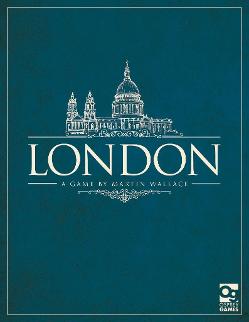
2017 · Card Game
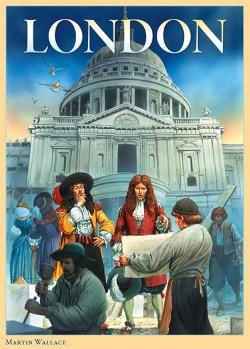
London (Second Edition)
Players draft and play cards to develop a city in the decades after a great disaster, choosing buildings and improvements that shape future actions. Cards are later “run” together so that all played card effects trigger simultaneously, creating engine-driven turns and timing decisions about which combos to assemble. Money is managed through loans that must be repaid by game end, while players also track poverty level relative to opponents as a scoring factor. Strategic planning, card selection, and balancing short-term needs against long-term development determine the outcome.
- Players
- 2–4 best 3
- Playing time
- 60–90 min
- Age
- 14+
- Complexity
- 2.7 / 5
About the game
- Design
- Publisher


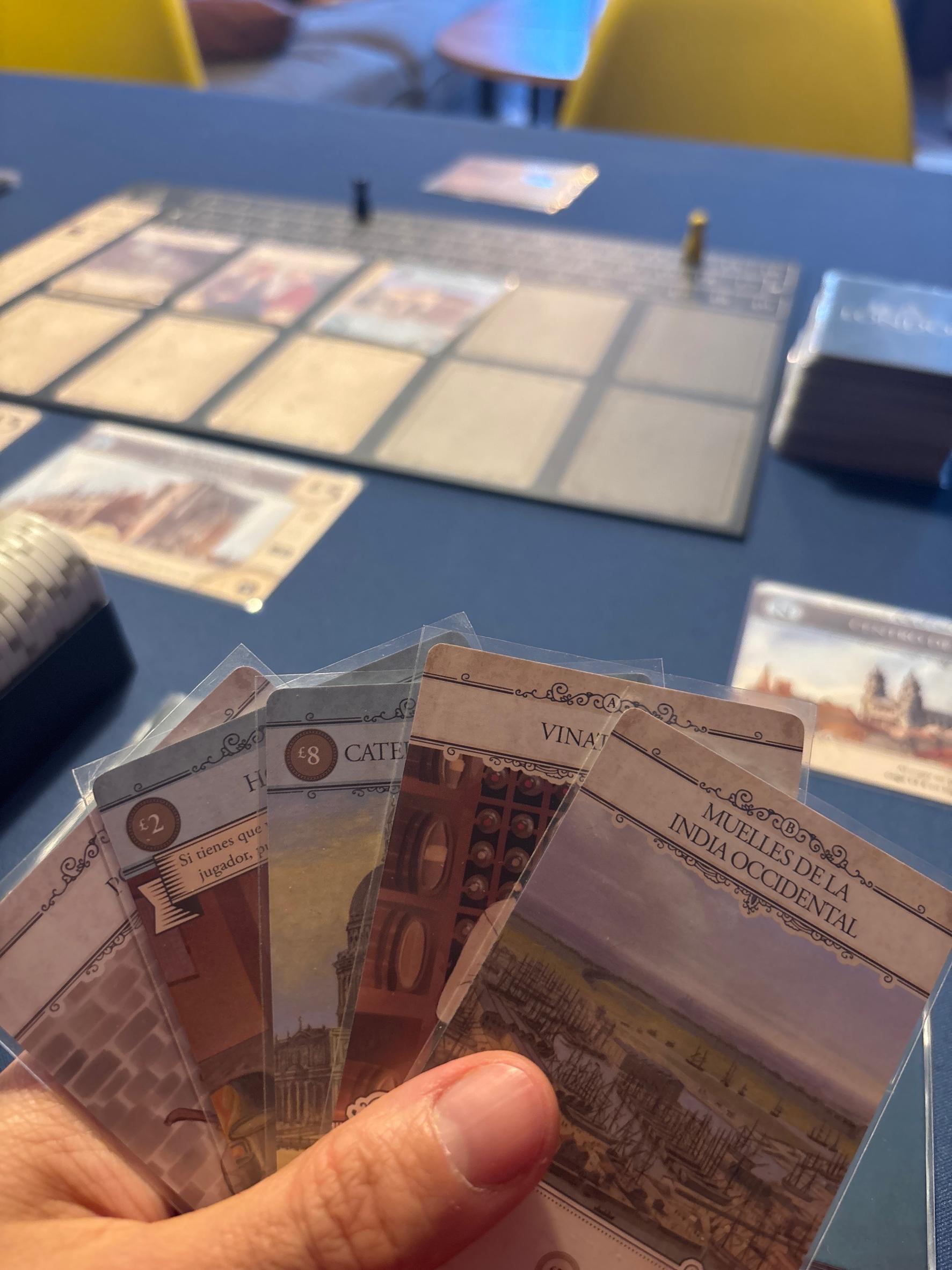
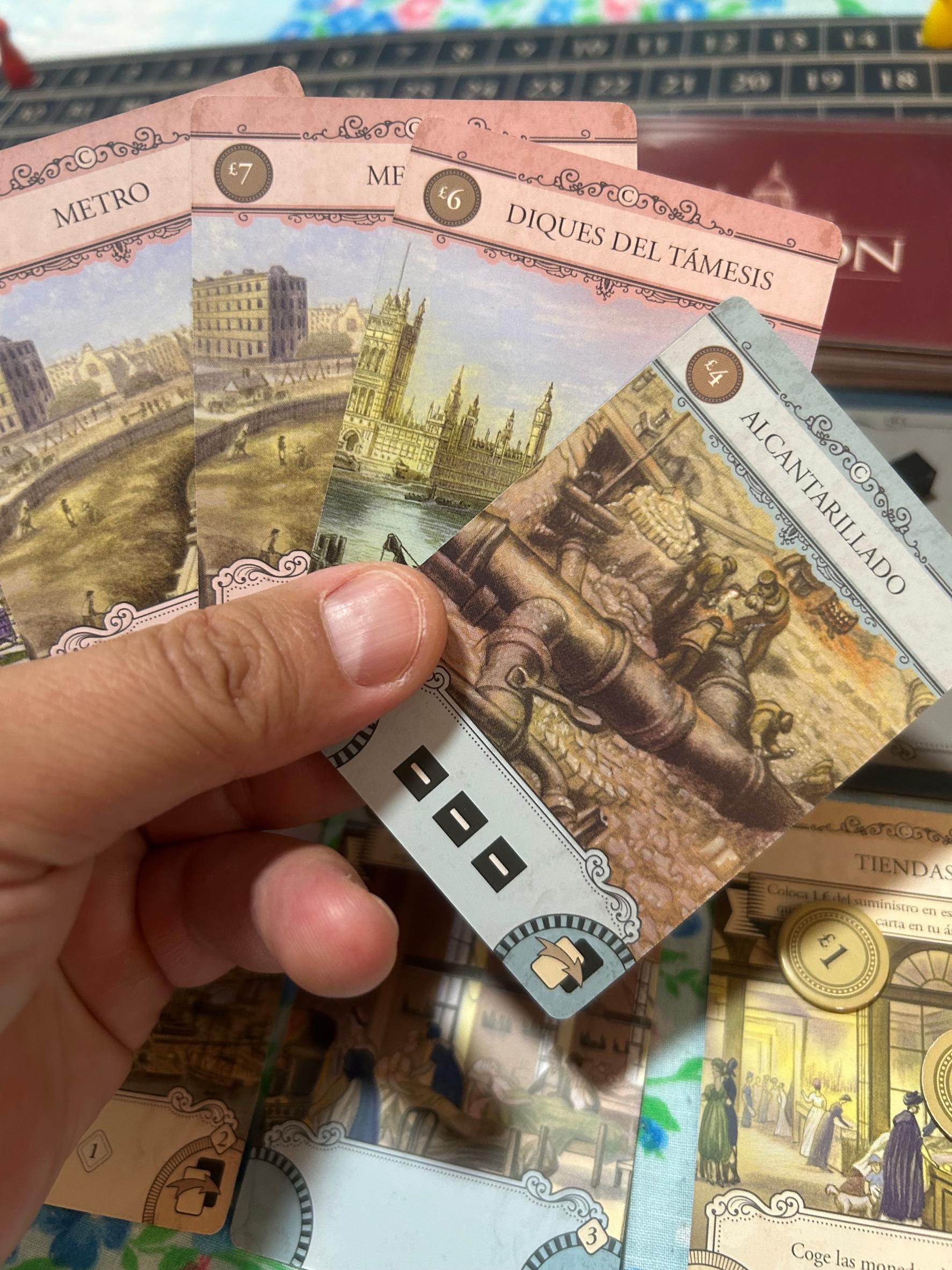
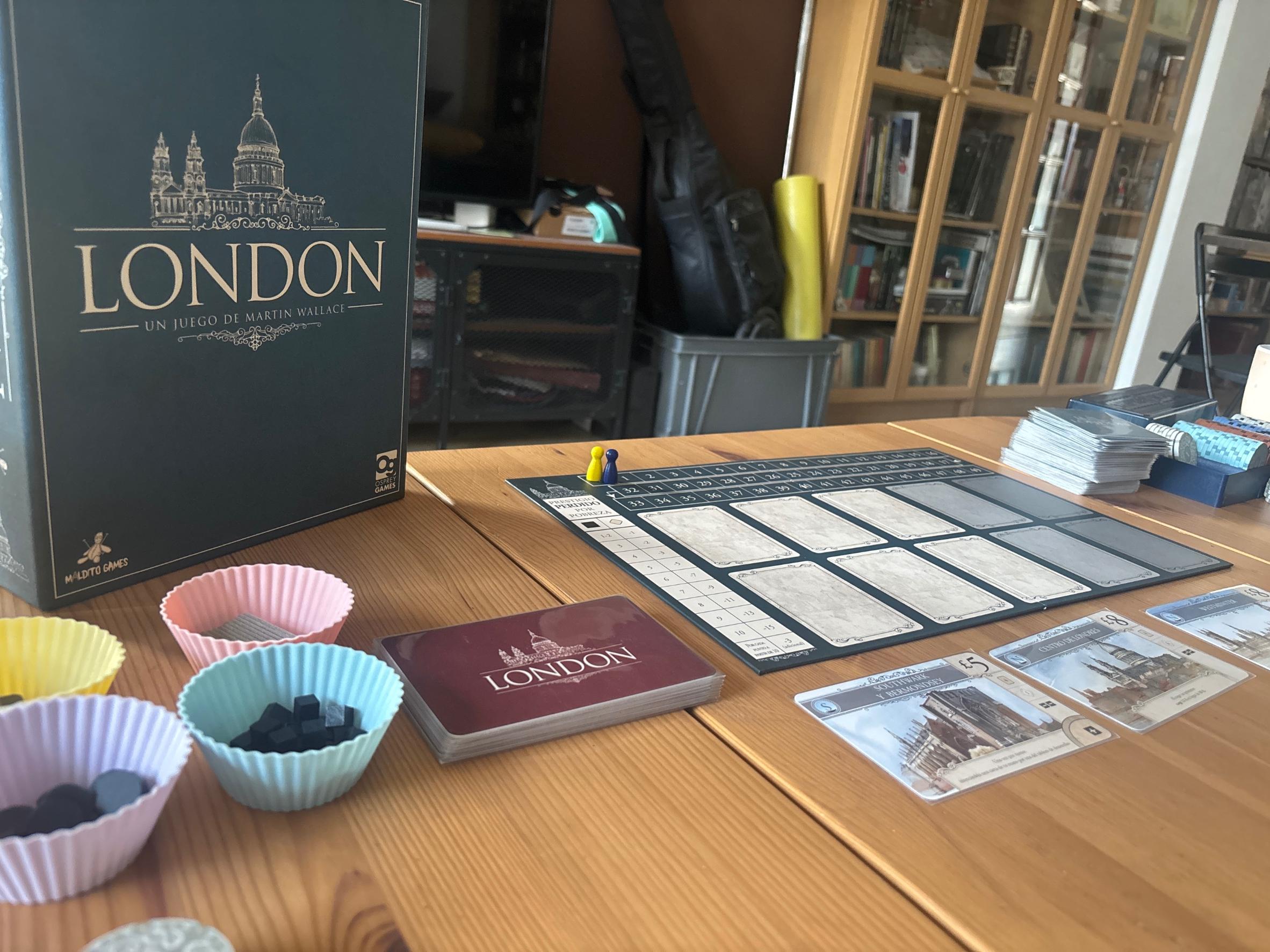
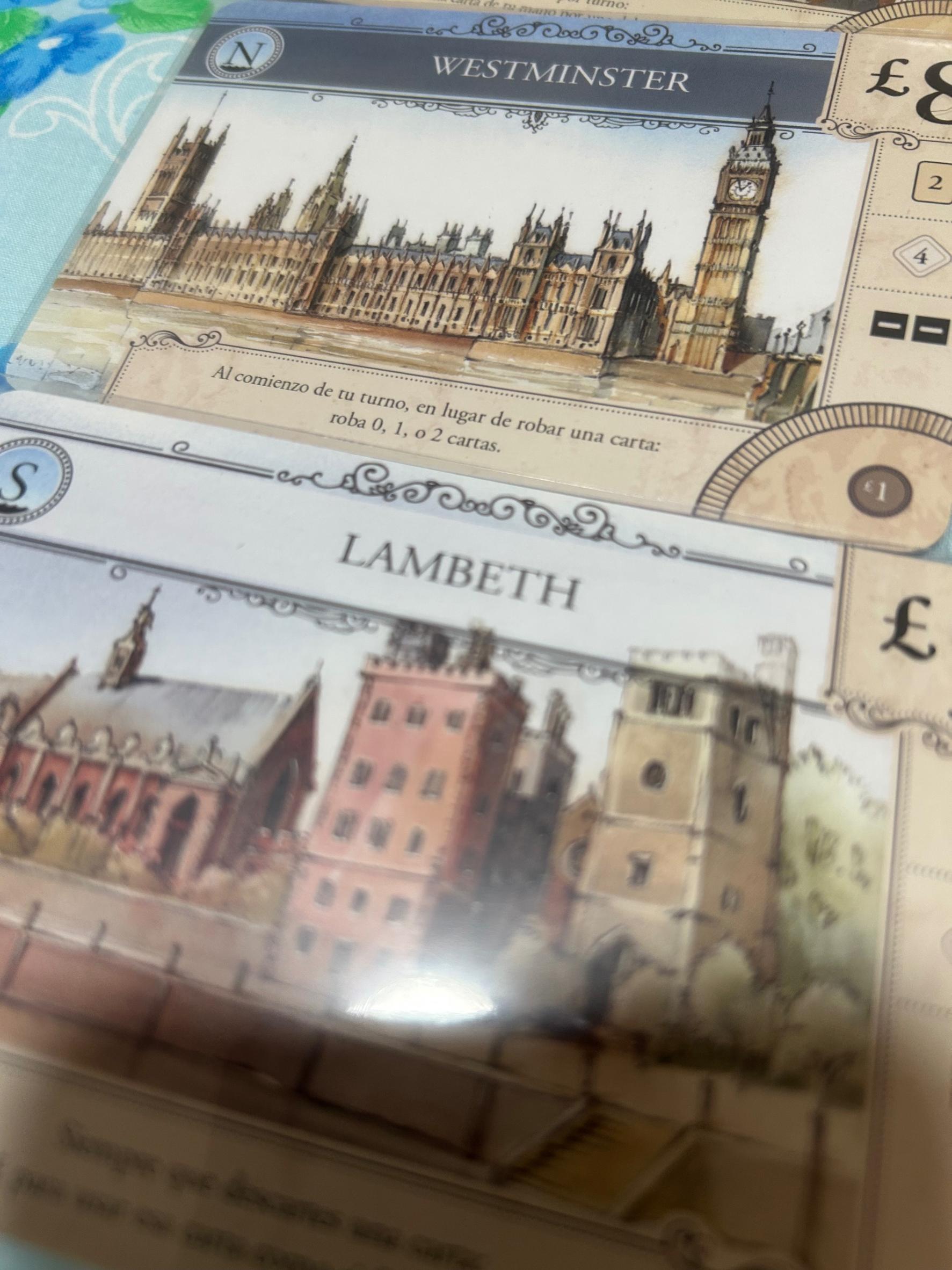
Photos from Ludoya tables
All photos in Ludoya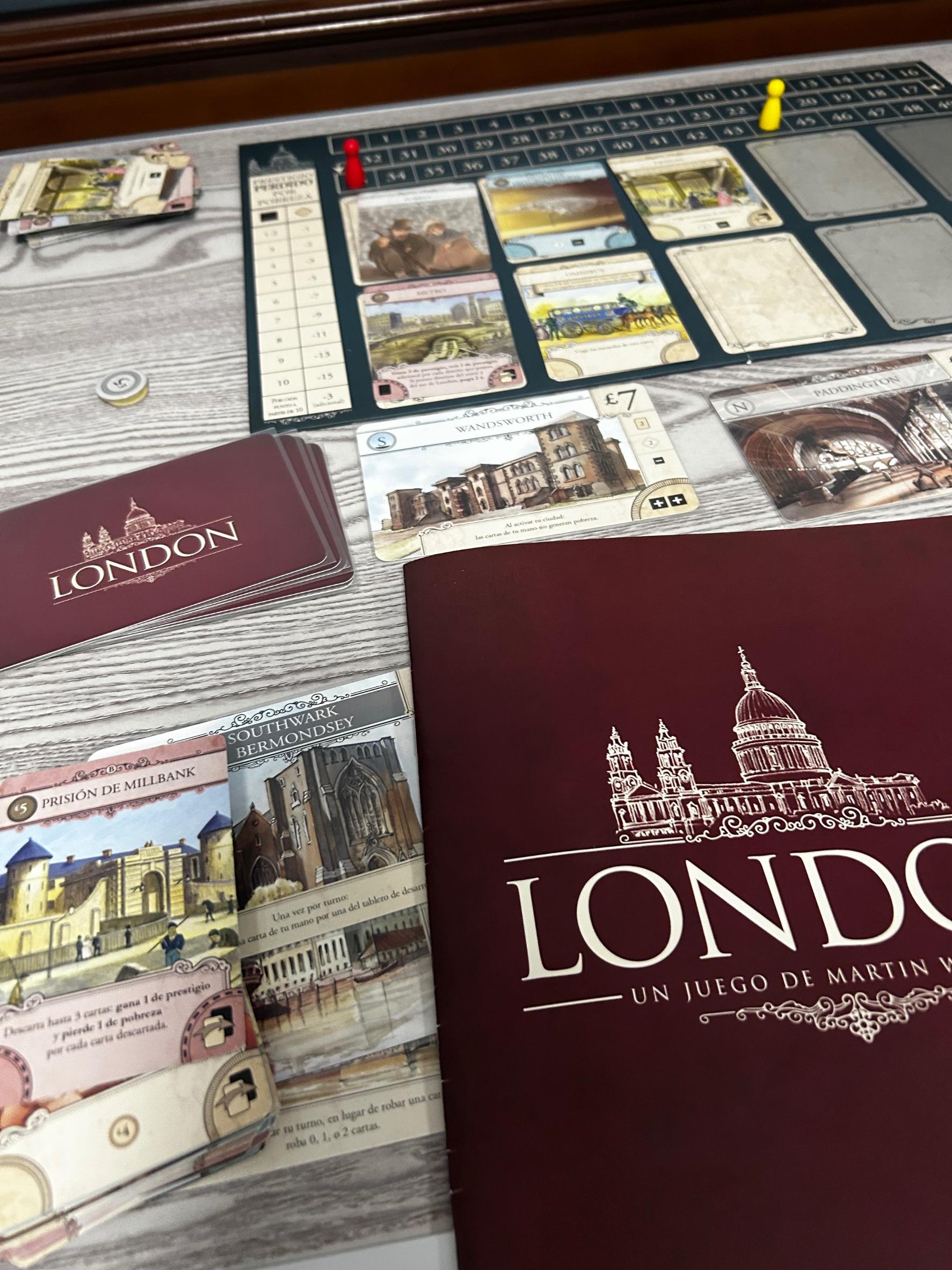
Where to buy it
Shop prices and second-hand copies, checked every day.
- GameplayCheck stock 49.95 €
On Ludoya's tables
Full stats in Ludoya- 530
- Plays logged
- 570
- Players
- 1h 23m
- Average play
- 167
- In collections
- 14
- On wishlists
- 1
- Pre-ordered
7.6/10
from 99 Ludoya reviews
Carlos7.8 Small game with interesting economical dynamics.
- Base -
Steel Armour Premium Stándar 66 x 91 mm. Steel Armour Premium Dixit 82 x 122 mm.



Rules questions
Answered from the rulebook by Ludoya's rules assistant.
Do I have to activate my top borough when I Run your city?
Yes — if your topmost borough card has an activation effect it must be activated during the Run Your City action (it can be activated before or after other cards); boroughs are never flipped. (Rulebook, p.9)
How exactly is poverty counted when I run my city?
After activating cards you receive one poverty token for each stack in your display, one for each £10 loan you have, and one for each card in your hand. (Rulebook, p.9; example p.11)
What happens if I can’t pay a cost — how do loans work and what are the penalties?
If you must pay but can’t (or choose), you take a £10 loan token and £10 cash; each £10 loan generates poverty every time you run your city; you may repay a loan by paying £15 at the start of your turn, and at game end you lose seven prestige for each loan you cannot repay. (Rulebook, p.5)
Can I play or discard pauper cards like normal cards when developing?
No — pauper cards cannot be added to your building display or be discarded to play a card unless a card ability explicitly allows it; they may only be discarded via specific card abilities, when used to activate cards in your city as stated, or when you must discard down at the end of your turn. (Rulebook, p.8)
When do I draw cards and can I take from the development board?
At the start of your turn you must first draw one city card, and whenever you draw one or more city cards you may take either the top card of the city deck or any available card from the development board (you may mix choices one at a time); the Draw Three action draws exactly three cards under the same option rules. (Rulebook, pp.5,7,9)
What happens if I end my turn with more than nine cards in hand?
If you have more than nine cards at the end of your turn you must discard any excess cards down to nine; pauper cards may be discarded in this way. (Rulebook, pp.7,8)










Free, on web, Android and iOS
Play London (Second Edition) with Ludoya
- Keep it in your collectionTrack your copy and its expansions, lend it to friends, or put it on your wishlist and get told when the price drops.Add it to your collection
- Log every playScores, winners, timers and photos, then your stats: win rate, favourite player count, best score.Log a play
- Settle rules questionsAsk anything about the rules and get an answer from the rulebook, with the page to check it on.Ask the rules assistant
- Find people to play it withClubs, game nights and events near you that bring this game to the table.See events
Game facts (players, playing time, age, credits) from BoardGameGeek.