
2011 · City Building
Ora et Labora
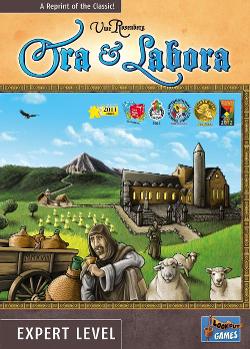
Each player runs a medieval monastery, acquiring land and constructing buildings and enterprises that produce resources and goods. Players place three workers to activate actions in buildings, using their own structures or paying others to use opponents’ buildings, and must leave workers in place until all three are placed. A shared rondel tracks available resources; turning it each round adjusts supply levels for everyone. Players gather materials, clear terrain, expand plots, and upgrade two-sided resource tiles to manufacture higher-value items like books, ceramics, ornaments, and relics. Building placement and terrain purchases shape production chains and determine final scoring.
- Players
- 1–4 best 3
- Playing time
- 60–180 min
- Age
- 13+
- Complexity
- 3.9 / 5
About the game
- Design
- Publisher


Expansions
See them in Ludoya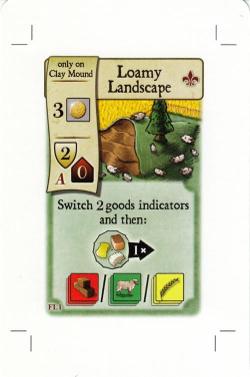
Photos from Ludoya tables
All photos in Ludoya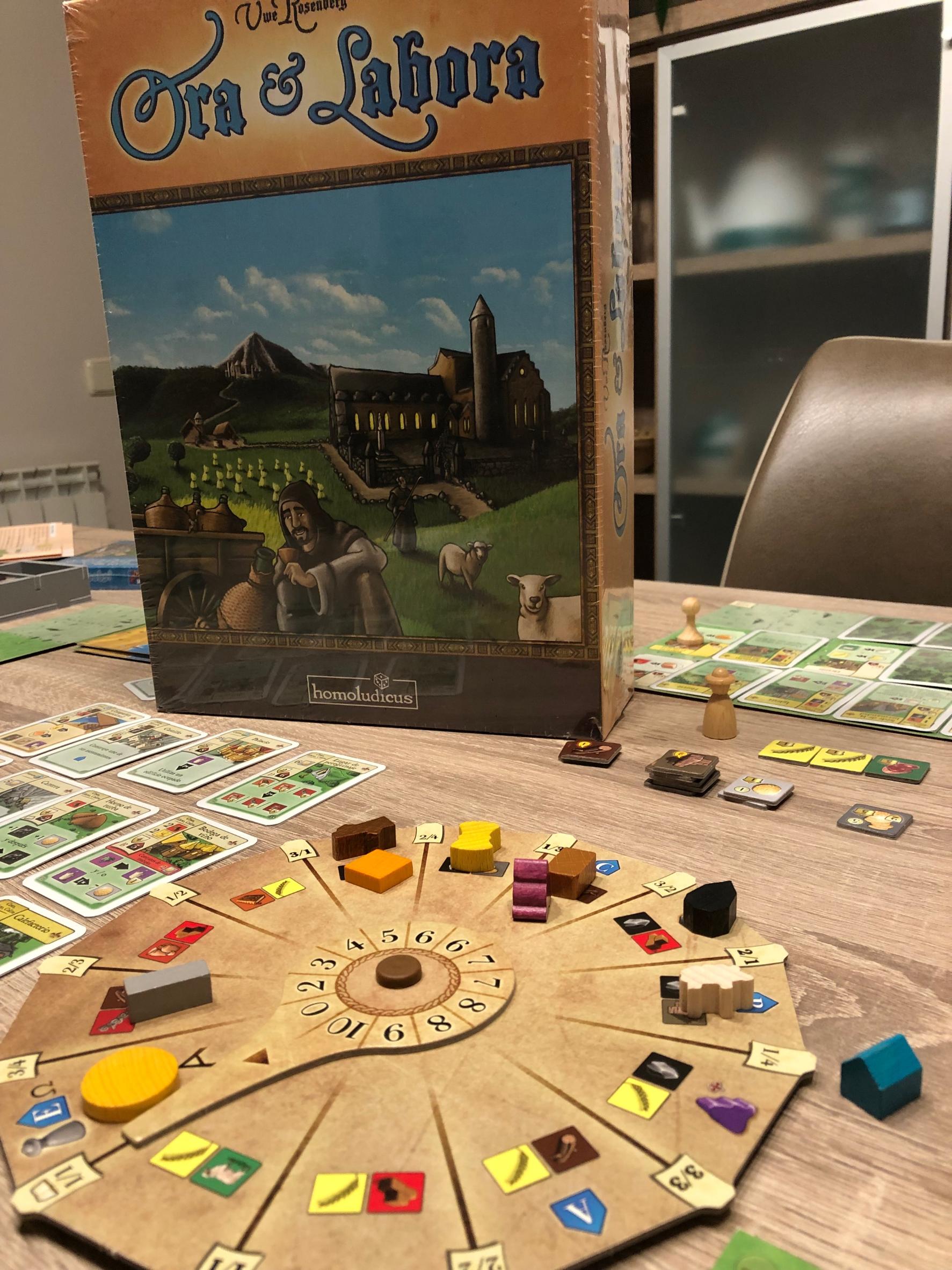
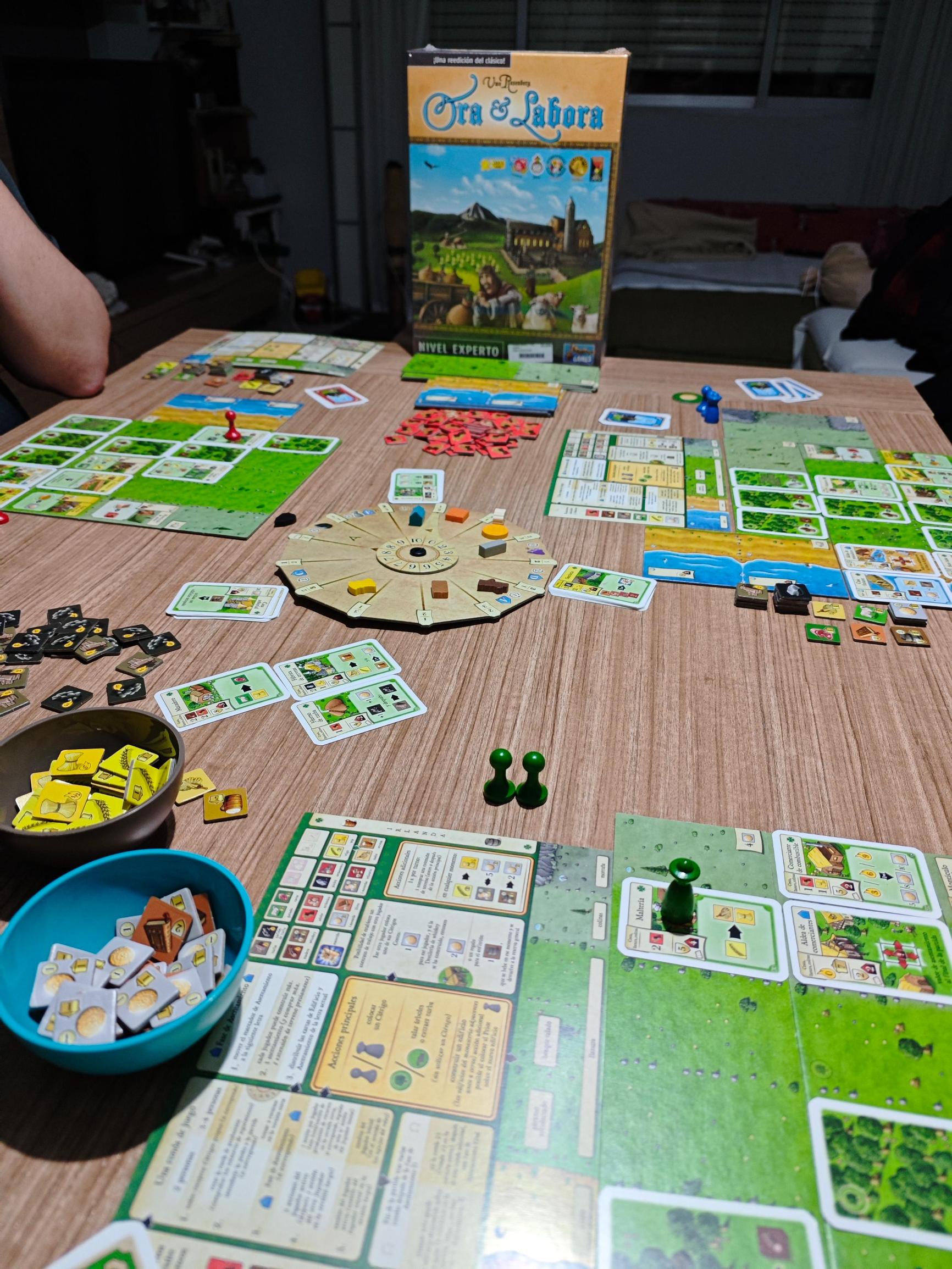
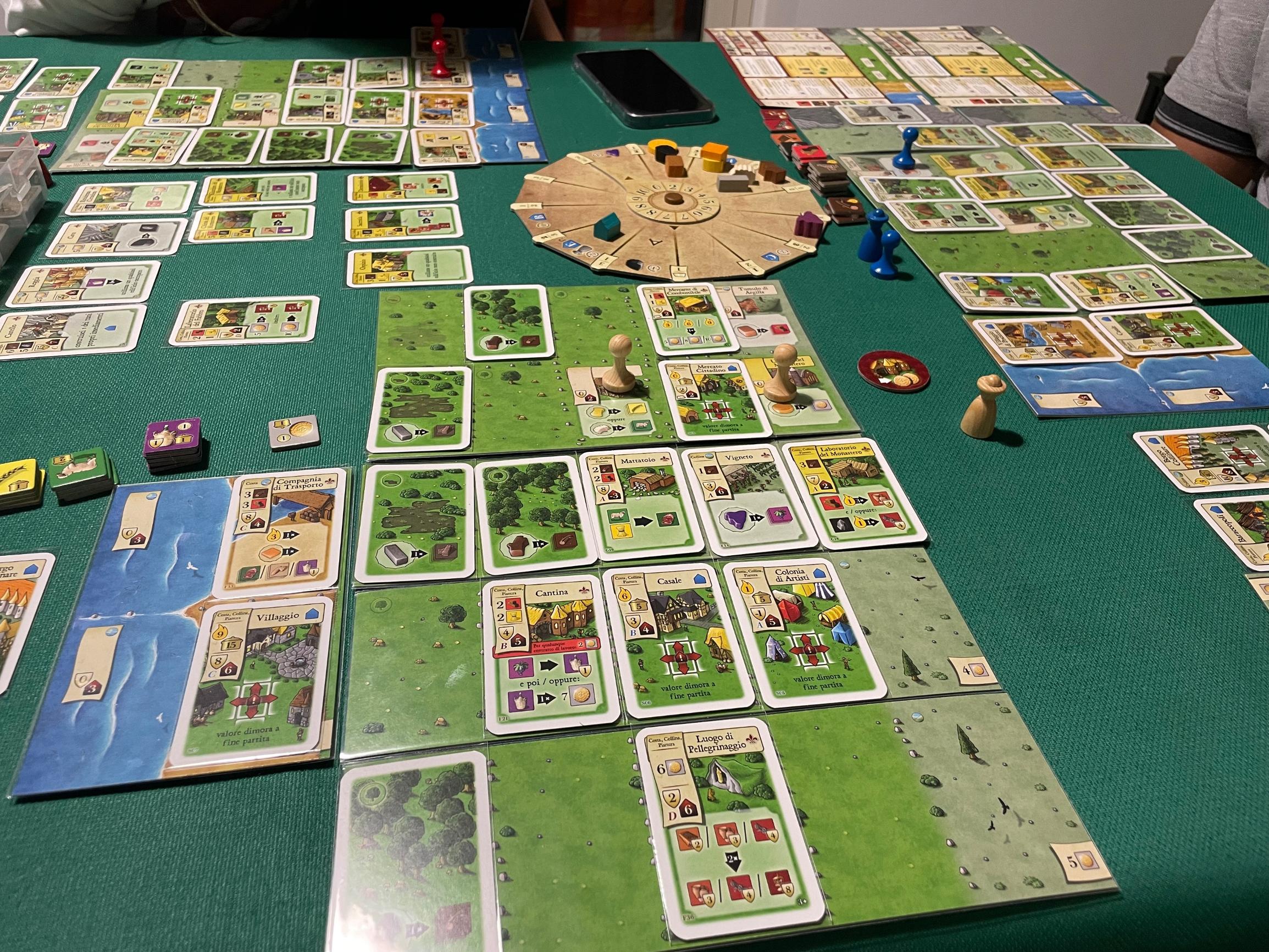
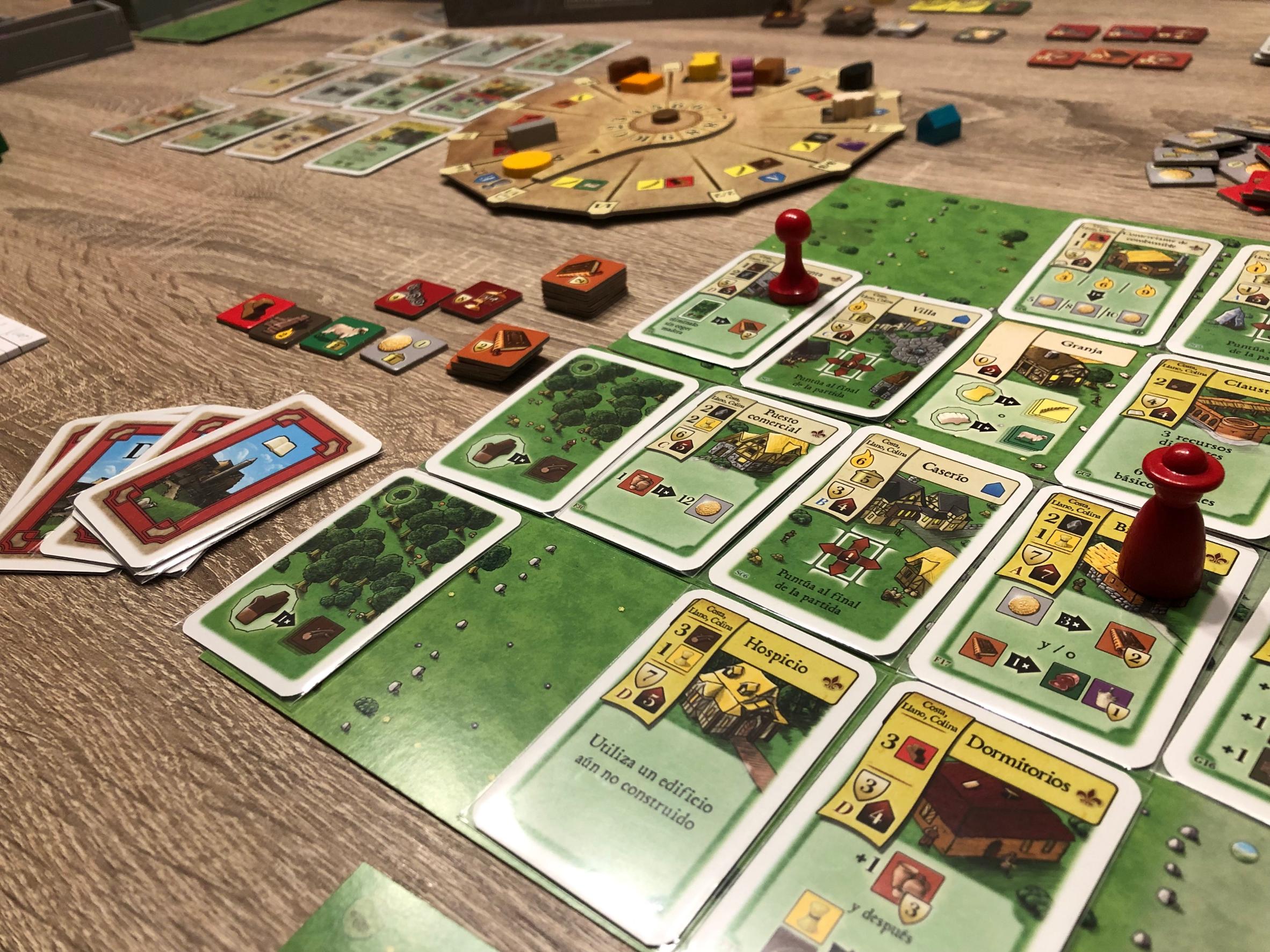
Where to buy it
Shop prices and second-hand copies, checked every day.
On Ludoya's tables
Full stats in Ludoya- 144
- Plays logged
- 146
- Players
- 2h 30m
- Average play
- 113
- In collections
- 17
- On wishlists
- 1
- Pre-ordered
6.3/10
from 32 Ludoya reviews
Mestremuten8.0 Rating: 4/5 Production value: 3/4 Is the game in my collection/Love to have?: 1/1
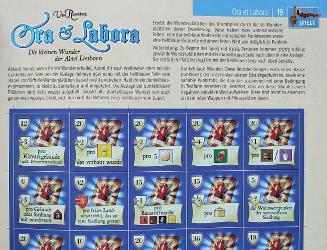
Evan3.5 This is a pretty easy game with a really tough rule book. On your turn you either build a building paying the cost, or place a worker on a building to activate the ability of that building. Most of the time it produces X resources, where X is equal to the matching resource marker on the ever rotating wheel of available resource goods. Every turn the wheel clicks one spot, which changes the quantity of each good's availability. Much of the game is turning basic resources into advanced resources by flipping them over, and positioning the buildings on your board cleverly to score points. You can expand your board, and use opponent's action spots by paying them. The text on the building cards is very small, so playing with higher player counts gets hard to track very quickly. It also becomes more difficult to predict when a resource from the wheel will flush out. The puzzle is good, but the game lacks excitement. There aren't many paths through the game, and it has only two different sets of cards. This isn't always an issue for a game, when there's enough meaningful player interaction to keep things tense, but this doesn't quite hit that mark to my taste. :nostar: Art, Iconography and components functional :star: Clever or interesting mechanisms :nostar: Reasonably low downtime between turns with mildly AP players :nostar: Multiple plays stay interesting :star: Low or mitigatable luck elements :star::star::star::nostar::nostar: Raw enjoyment
Garfield2.0 #56 Ugly material. Too many buildings. Too much multiplayer solitaire. Just not interesting and entertaining enough.
Rules questions
Answered from the rulebook by Ludoya's rules assistant.
How does the production wheel work when goods are produced, and how do I use the joker?
At the start of each round the production wheel is rotated which changes how many of each good are produced; when a good is produced its goods indicator is moved back to the 0 space (page 2). You may choose to use the joker indicator instead of a regular goods indicator when using a building that references the wheel; the joker is moved to 0 and may even be used for goods whose normal indicator isn’t yet in the game (e.g. stone or grapes) (page 3).
When do my clergymen return — do I get them back if I only used one or two?
At the start of each round only players who have all three of their clergymen on buildings get them back; if you used only one or two you do not retrieve them (page 2).
What happens when I pay to use an opponent’s building (work contract)?
Paying a work contract obliges the opponent to choose and place one of their available clergymen on the building, you must pay immediately and the contract cannot be refused or issued to a player who has already placed all clergymen (page 3). The work-contract price increases from 1 to 2 coins once someone builds the Winery or Whiskey Distillery, and you may instead return 1 wine or 1 whiskey as a ‘present’ in place of coins (page 3).
Are there special placement rules when building cloisters or other buildings?
Cloister buildings must always be placed adjacent (horizontally or vertically) to other cloister buildings, and each building card shows which landscape types it may be built on (e.g., only Quarries or the Castle on mountain spaces; only the Houseboat on water) (page 4). After building you may use your prior to immediately activate that building by placing the prior on it, if your prior is available (page 4).
When and where can I buy and place landscape tiles (districts and plots)?
You may buy a landscape once per turn and once per settlement phase and must place it immediately; districts must be placed above or below your heartland following its orientation (not offset), while coastal plots attach to the left and mountain plots to the right with at least one matching-space adjacency required (page 5).
When do settlement phases occur and what are the basic rules for building a settlement?
A settlement phase occurs whenever the production-wheel beam passes the next pile of building/settlement cards (and there is a final settlement phase after the bonus round) (page 5). During a settlement phase each player may build at most one settlement by paying its food and energy costs with goods tiles and placing it on a legal empty landscape space (you may not build on mountain or water spaces and you may buy one landscape immediately before building) (page 6).





Free, on web, Android and iOS
Play Ora et Labora with Ludoya
- Keep it in your collectionTrack your copy and its expansions, lend it to friends, or put it on your wishlist and get told when the price drops.Add it to your collection
- Log every playScores, winners, timers and photos, then your stats: win rate, favourite player count, best score.Log a play
- Settle rules questionsAsk anything about the rules and get an answer from the rulebook, with the page to check it on.Ask the rules assistant
- Find people to play it withClubs, game nights and events near you that bring this game to the table.See events
Game facts (players, playing time, age, credits) from BoardGameGeek.