
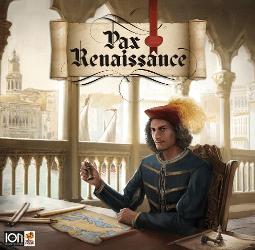
2021 · Religious
Pax Renaissance: 2nd Edition
Players act as influential bankers in late 15th–early 16th century Europe, financing states, sponsoring voyages, joining secret cabals, or instigating religious and military conflicts. Play revolves around buying and allocating influence, managing finances and concessions, and using special abilities to shape political, economic, and cultural outcomes. Multiple victory conditions represent competing historical trajectories — imperial expansion, global trade, religious domination, or artistic and scientific advancement — and player actions push Europe toward one of those outcomes. Components include player boards, tokens for concessions and serfs, miniatures for naval and military forces, and modular map cards for a compact setup. Solo and expanded variant rules are included.
- Players
- 1–4 best 2
- Playing time
- 60–120 min
- Age
- 12+
- Complexity
- 4.6 / 5
About the game
- Design
- Publishers





Expansions
See them in Ludoya
Where to buy it
Shop prices and second-hand copies, checked every day.
On Ludoya's tables
Full stats in Ludoya- 145
- Plays logged
- 84
- Players
- 1h 45m
- Average play
- 35
- In collections
- 11
- On wishlists
- 1
- Pre-ordered
8.3/10
from 16 Ludoya reviews
Balleflass10.0 Paladin double matte (new style).
andycted8.9 An excellent game, only slightly marred (after many plays and with some players) by calculations and possible kingmaking of the three player game
2-4 Players (best with 2) Weird game with wildly deep strategy once you know what you're doing. This is just so dang complicated. You'll need to legit study before trying it out.Learn to Playhttps://www.youtube.com/watch?v=JDMWjdHwPr0

Rules questions
Answered from the rulebook by Ludoya's rules assistant.
When does the Comet end the game and how do I win when it appears?
The Comet card activates a Victory Square that allows players to declare victory immediately according to its conditions; consult the endgame triggers and victory types (Holy, Imperial, Globalization, Renaissance) for how each win is scored and ties handled (see pages 3 and 36).
When I buy a card from the Market, do I put my florins on the card or take them, and what's the hand limit?
When you purchase a Market card you pay the cost by placing florins on the card and then take that card plus any florins on it; market purchases, costs, and the hand limit are described in the Market Purchase rules (pages 14–15).
Can I both use a card's Ops and also use its One‑shot effect in the same action/turn?
No — a card is either used for its Ops or used as a one‑shot when discarded; you cannot get both effects from the same card in the same activation (see the Sequence of Play and single‑activation rules on pages 12 and 17).
Can I move or activate an agent separately from its tableau card?
Yes — agents are independent and may be placed or moved separately, but each tableau card may only be activated once per applicable limitation (see the agent and single‑activation rules on page 17).
How does the Inquisitor (bishop) movement, pacify and silencing work?
The Inquisitor (bishop) moves per the Religious Op rules and can pacify or kill Repressed tokens and silence abilities on map/tableau elements; silenced abilities remain inactive until unsilenced and the bishop’s movement and effects are detailed on pages 18–19. {
How do Trade Fairs distribute profits and where are Levies placed?
Trade Fairs resolve by paying profits in the prescribed order and placing levies on eligible cities/emporia according to the Trade Fair and Levy placement rules; detailed mechanics and examples are on pages 24–27.
Similar games
 Pax Renaissance2016
 Here I Stand: 500th Anniversary Edition2017
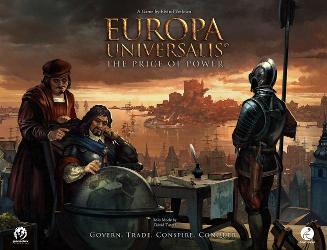 Europa Universalis: The Price of Power2023
 Europa Universalis: The Price of Power (Deluxe Edition)2023
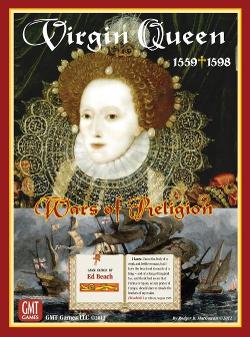 Virgin Queen2012
 Pax Pamir: Second Edition2019
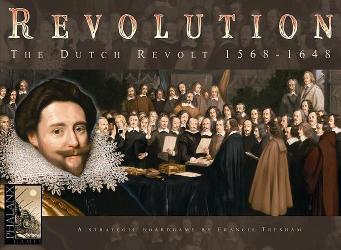 Revolution: The Dutch Revolt 1568-16482004
 Amsterdam2022
 Here I Stand2006
 Tanto Monta: The Rise of Ferdinand & Isabella 1470-15162024
 Boże Igrzysko2010
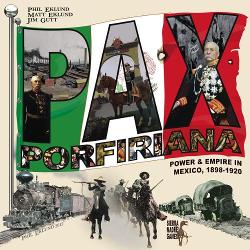 Pax Porfiriana2012
People who own it also own
 John Company: Second Edition2022
 Napoleon's Triumph: The Battle of Austerlitz, 2 December 18052007Pax Pamir: Second Edition2019
 Versailles 19192020Pax Porfiriana2012
 Maria2009
 Turncoats2021
 All Bridges Burning: Red Revolt and White Guard in Finland, 1917-19182020
 Twilight Struggle: Red Sea – Conflict in the Horn of Africa2022
 Gandhi: The Decolonization of British India, 1917 – 19472019
 Kingmaker1974
 Liberty or Death: The American Insurrection2016
Free, on web, Android and iOS
Play Pax Renaissance: 2nd Edition with Ludoya
- Keep it in your collectionTrack your copy and its expansions, lend it to friends, or put it on your wishlist and get told when the price drops.Add it to your collection
- Log every playScores, winners, timers and photos, then your stats: win rate, favourite player count, best score.Log a play
- Settle rules questionsAsk anything about the rules and get an answer from the rulebook, with the page to check it on.Ask the rules assistant
- Find people to play it withClubs, game nights and events near you that bring this game to the table.See events
Game facts (players, playing time, age, credits) from BoardGameGeek.