
2016 · Educational
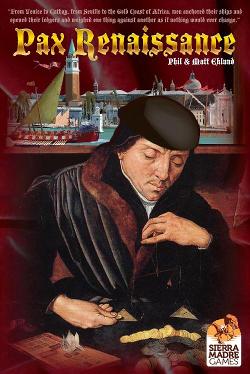
Pax Renaissance
Players act as Renaissance financiers influencing 15th–16th century European powers through loans, sponsorships, and secret allegiances. Each turn grants two actions: acquire cards from a market, sell cards out of the game, play cards into a personal tableau, or stimulate the economy via trade fairs and voyages for Oriental goods. A map of Europe with trade routes from Portugal to Crimea tracks discovery and shifting importance of ten empires. Player choices drive four competing victory tracks—imperial expansion, commercial globalization, religious dominance, or artistic and scientific advancement—shaping the continent’s historical trajectory.
- Players
- 2–4 best 3
- Playing time
- 60–120 min
- Age
- 12+
- Complexity
- 4.5 / 5
About the game
- Design
- Art
- Publisher



Expansions
See them in Ludoya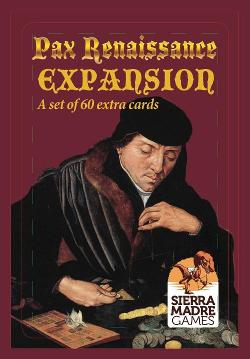
Where to buy it
Shop prices and second-hand copies, checked every day.
On Ludoya's tables
Full stats in Ludoya- 318
- Plays logged
- 160
- Players
- 1h 10m
- Average play
- 48
- In collections
- 7
- On wishlists
7.2/10
from 18 Ludoya reviews
Este juego es difícil para mi de puntuar, por un lado el juego es una evolución de los Pax y quizás sea hasta ahora el mejor de los publicados, Un juego muy táctico y situacional que se desarrolla rápidamente, aquí Eklund ha mejorado mucho el tema de las condiciones de victoria. Es un juego muy temático con un montón de cartas que te ayudan a poner en situación. A mi no me gusta la mecánica de Draft y es mi mayor gripe con este juego, muchos lo han acusado de que es un ataque al líder continuo y que estás chequeando condiciones de victoria todo el rato, pero la verdad es que no es algo que lleva mucho tiempo y golpear al líder en este caso hace del juego interesante, al final es una decisión que debes tomar durante la partida: Me convierto en Punching Ball o espero un poco. El problema del draft es que convierte el juego en algo muy oportunista y táctico, no puedes crear una estrategia a largo plazo o yo no la he visto, tienes que adaptarte a las cartas que puedes obtener del display y trabajarlo como puedas lo cual puede hacer que tu partida tome derroteros no queridos debido a las cartas que van saliendo. La suerte también es importante y por supuesto gestionarla, pero tengo la impresión de que entre jugadores experimentados gana quien más suerte tiene.
setropo10.0 ECDE #15 Mi Pax favorito. La edición de MQPatosos ha quedado anticuada, pero sigue siendo totalmente funcional.

Rules questions
Answered from the rulebook by Ludoya's rules assistant.
If I buy a face-up Market card, do I trigger its One‑shot or just put it in my hand?
A purchased face‑up Market card goes into your Hand; One‑shots (the bomb icon) only occur when you PLAY that card into your Tableau (E2). The only exception is a Comet, which is played immediately when purchased (L1). (pp.14–15, 36)
How do I pay for a Market card — where do the florins go and can I use florins already on the card?
You pay by placing 1 Florin on each card to the left in the same Market row equal to the card’s column cost; you then take any Florins already on the card but may not use those Florins toward its purchase, and placing a Florin on a card prevents you from buying that card that turn. (pp.14–15)
What happens if I run out of Tokens during the game — can I take them from Repressed Tokens?
Yes — if you run out of Tokens you may take them from any Repressed Tokens (or from any position if no Repressed Tokens are available) as part of token recovery. (p.13; see definition of Repressed Token p.42)
When I place an Agent onto a city or border that already has a Concession or Token, do I have to pay to repress it?
Yes — placing a Rook/Knight into an occupied City or a Pawn into a Border with an existing Concession forces you to repress that token and pay 1 Florin to China per token repressed; repressing via Agent placement costs 1 Florin (see Repress rules). (p.14; p.42)
If I convene a Trade Fair, who gets the profits and when does the voyage stop?
You add profits from China to the facedown card and the initiator immediately takes 1 Florin, then the voyage traces the route paying 1 Florin to each Concession owner (or to China for a Pirate) until profits run out; the voyage ends at the route arrowhead or when the last profit is taken, and Levies are placed along the route up to that termination point. (pp.24–26)
Can I create a Republic by coronation, campaign, or claiming a vassal?
No — a Republic can only be created by a successful self‑inflicted (Strawman) attack on a King already in your own Tableau (via a vote, Civil War, or Religious War); coronations and campaigns do NOT create Republics. (p.16; p.42)
Similar games
 Pax Renaissance: 2nd Edition2021
 Pax Pamir: Second Edition2019
 Firenze2010
 Here I Stand: 500th Anniversary Edition2017
 Through the Ages: A New Story of Civilization2015
 Europa Universalis: The Price of Power (Deluxe Edition)2023
 Through the Ages: A Story of Civilization2006
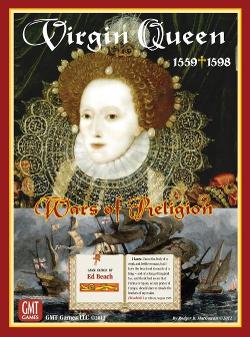 Virgin Queen2012
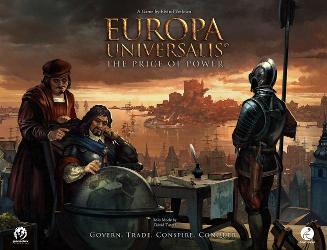 Europa Universalis: The Price of Power2023
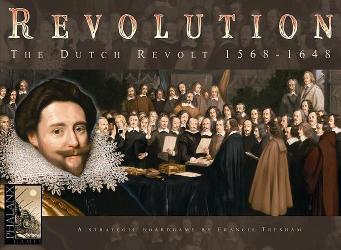 Revolution: The Dutch Revolt 1568-16482004
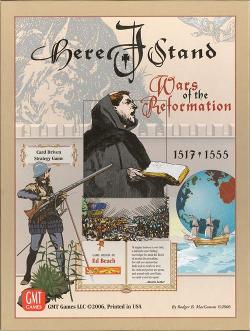 Here I Stand2006
 Boże Igrzysko2010





Free, on web, Android and iOS
Play Pax Renaissance with Ludoya
- Keep it in your collectionTrack your copy and its expansions, lend it to friends, or put it on your wishlist and get told when the price drops.Add it to your collection
- Log every playScores, winners, timers and photos, then your stats: win rate, favourite player count, best score.Log a play
- Settle rules questionsAsk anything about the rules and get an answer from the rulebook, with the page to check it on.Ask the rules assistant
- Find people to play it withClubs, game nights and events near you that bring this game to the table.See events
Game facts (players, playing time, age, credits) from BoardGameGeek.