
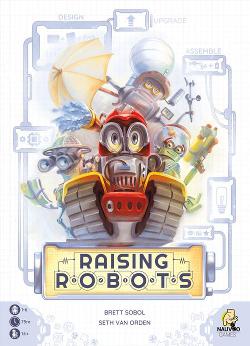
2023 · Science Fiction
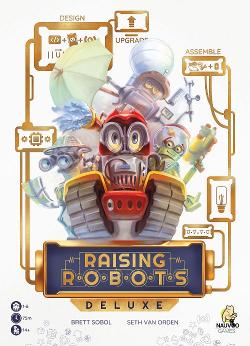
Raising Robots
Players take on the role of inventors assembling a collection of robots over eight rounds. Each round, players simultaneously assign power to and perform multiple actions—upgrade, assemble, design, fabricate, and recycle—with higher power improving the action’s effect but also benefiting opponents. Players build and improve an engine of robot parts and abilities through these choices, aiming to score the most points by optimizing action power and timing while managing shared consequences on rivals.
- Players
- 1–6 best 4
- Playing time
- 60–90 min
- Age
- 14+
- Complexity
- 3.2 / 5
About the game
- Publisher




Expansions
See them in Ludoya

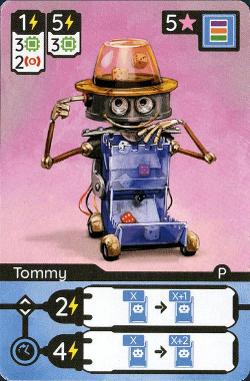
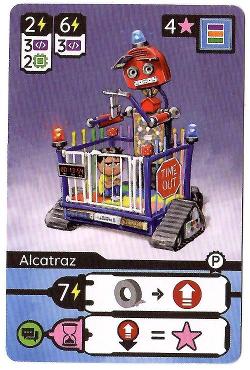
Photos from Ludoya tables
All photos in Ludoya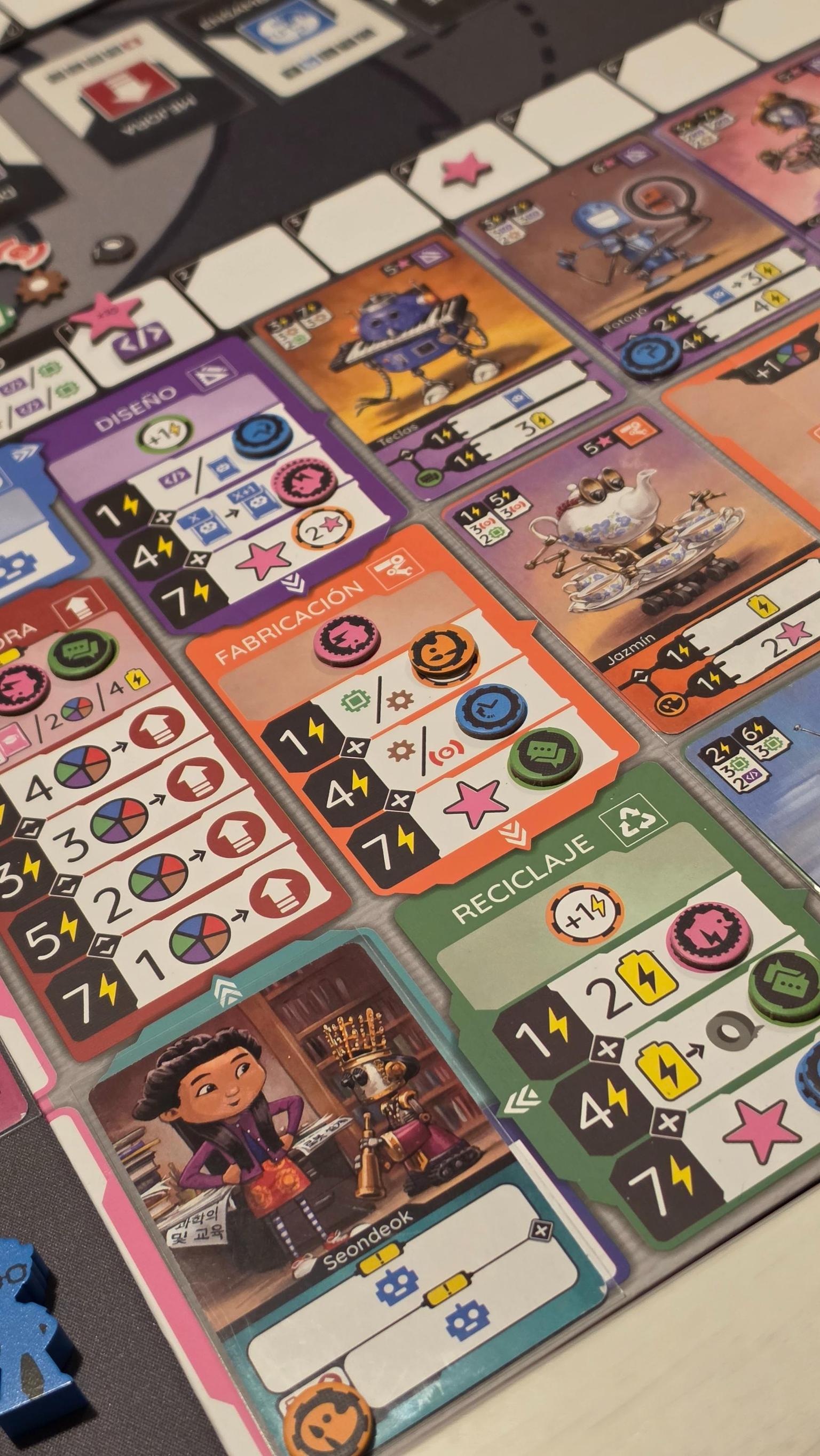
Where to buy it
Shop prices and second-hand copies, checked every day.
On Ludoya's tables
Full stats in Ludoya- 58
- Plays logged
- 107
- Players
- 1h 37m
- Average play
- 32
- In collections
- 14
- On wishlists
7.2/10
from 9 Ludoya reviews
- Base -
Sleeved
Ressenya en català [aquí](https://www.instagram.com/p/DGvdkOqtZYq)



Rules questions
Answered from the rulebook by Ludoya's rules assistant.
Do I have to perform the phases in the order on the central board, or can I skip/reorder them?
Phases are always performed in the printed order each round (Upgrade → Assemble → Design → Fabricate → Recycle), and each phase must be completed before moving to the next; you may only perform a phase if you assigned its Phase Card or there is an Energy Cube on that phase (pages 11, 28).
How do Wilds work — can I save them or spend them as any resource?
Each Wild is immediately converted into a Sensor, Gear, Program, Microchip, or a Robot Card when gained or spent and Wilds are not tracked in your Inventory, so you cannot save unconverted Wilds (page 7); note that Robot Cards count as a Wild option and Duct Tape can be spent as a Wild but cannot be gained from one (pages 7, 26).
When I assemble a robot do I pay the full assembly cost right away, and can I split my energy to build multiple robots in the same Assemble phase?
When assembling you pick one of the two Assembly Cost columns and pay the energy and resource costs immediately (including any Extra Resource Cost), and you may split your Total Energy to assemble multiple Robot Cards in the same Assemble Phase (pages 14–15, 26).
If I place an Upgrade Token onto a card, can I move or remove it later?
No — once an unlocked Upgrade Token is placed onto a Robot Card, Class Card, or Inventor Card, it cannot be moved again (page 13).
How many Class Cards can I hold, and when do they score?
You may have a maximum of 3 Class Cards (you start with 1 and pick another at the Break Period, and can gain more via Inspiration but must replace or discard if over the limit), and each Class Card is scored at game end by counting items that meet its objective and applying the grade table (pages 19–20).
How do Batteries affect a phase’s Total Energy — can Batteries let me perform a phase I didn’t assign?
Each Battery you spend adds +1 to that phase’s Total Energy and Batteries stack with Energy Cards, Energy Cubes, and upgrades when calculating Total Energy, but Batteries do not let you perform a phase you are not eligible for (you still must have assigned the Phase Card or have an Energy Cube there), and you must determine Total Energy before taking phase actions (pages 9–10, 26).
















Free, on web, Android and iOS
Play Raising Robots with Ludoya
- Keep it in your collectionTrack your copy and its expansions, lend it to friends, or put it on your wishlist and get told when the price drops.Add it to your collection
- Log every playScores, winners, timers and photos, then your stats: win rate, favourite player count, best score.Log a play
- Settle rules questionsAsk anything about the rules and get an answer from the rulebook, with the page to check it on.Ask the rules assistant
- Find people to play it withClubs, game nights and events near you that bring this game to the table.See events
Game facts (players, playing time, age, credits) from BoardGameGeek.