
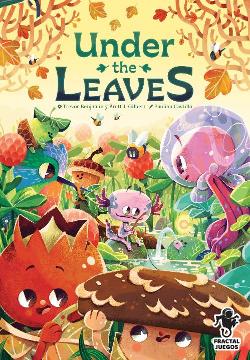
2025 · Territory Building
Under the Leaves
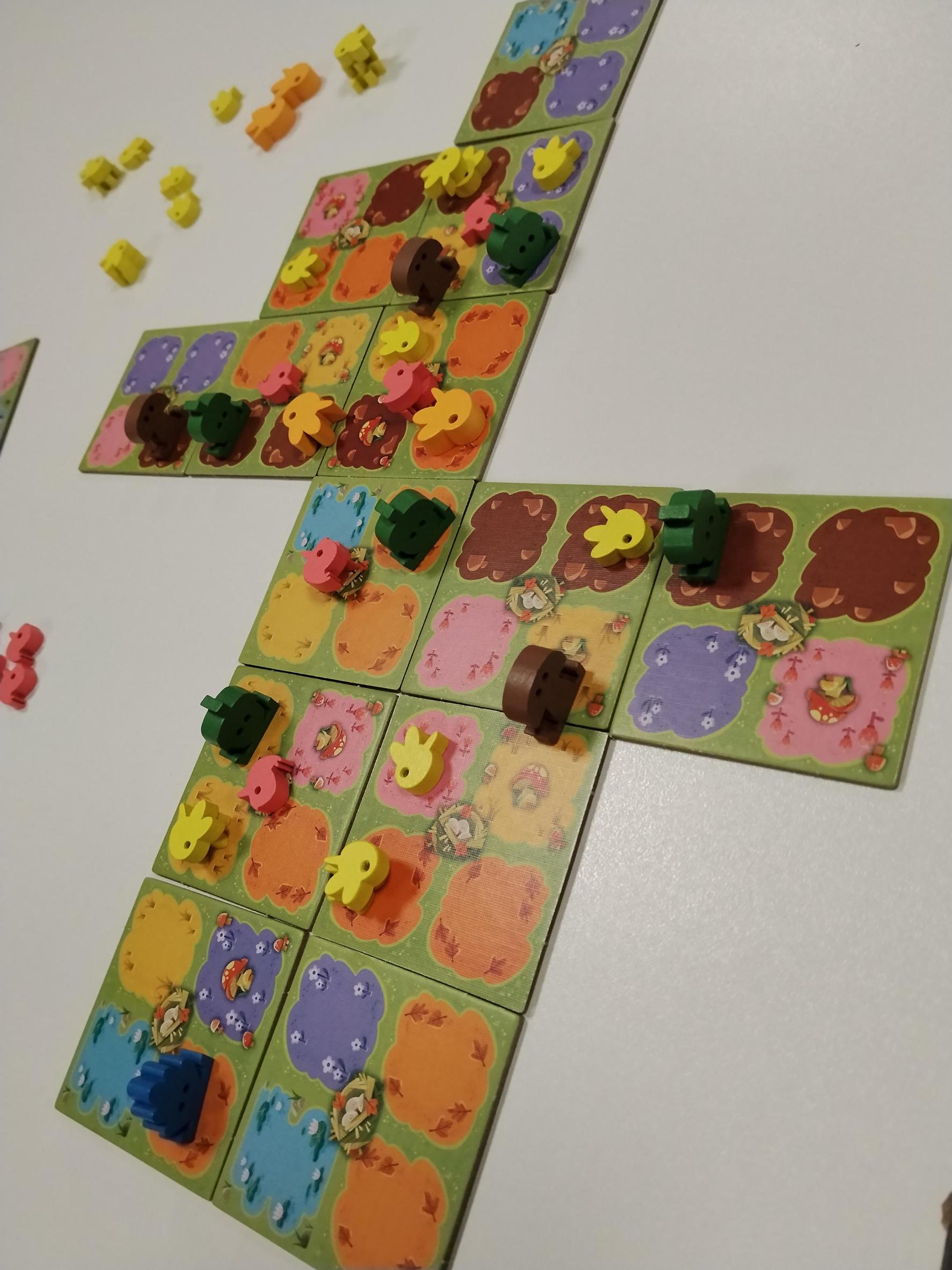
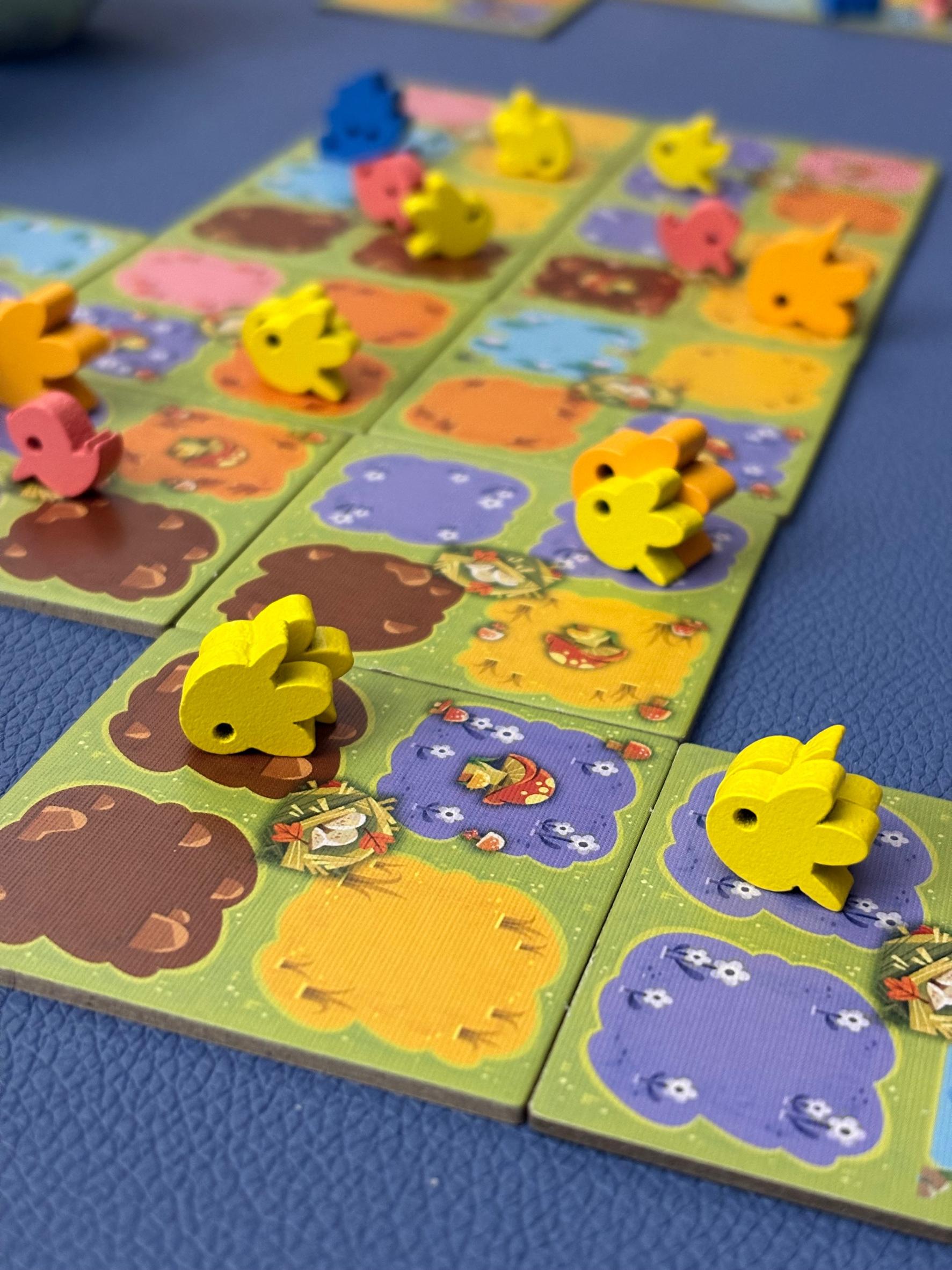
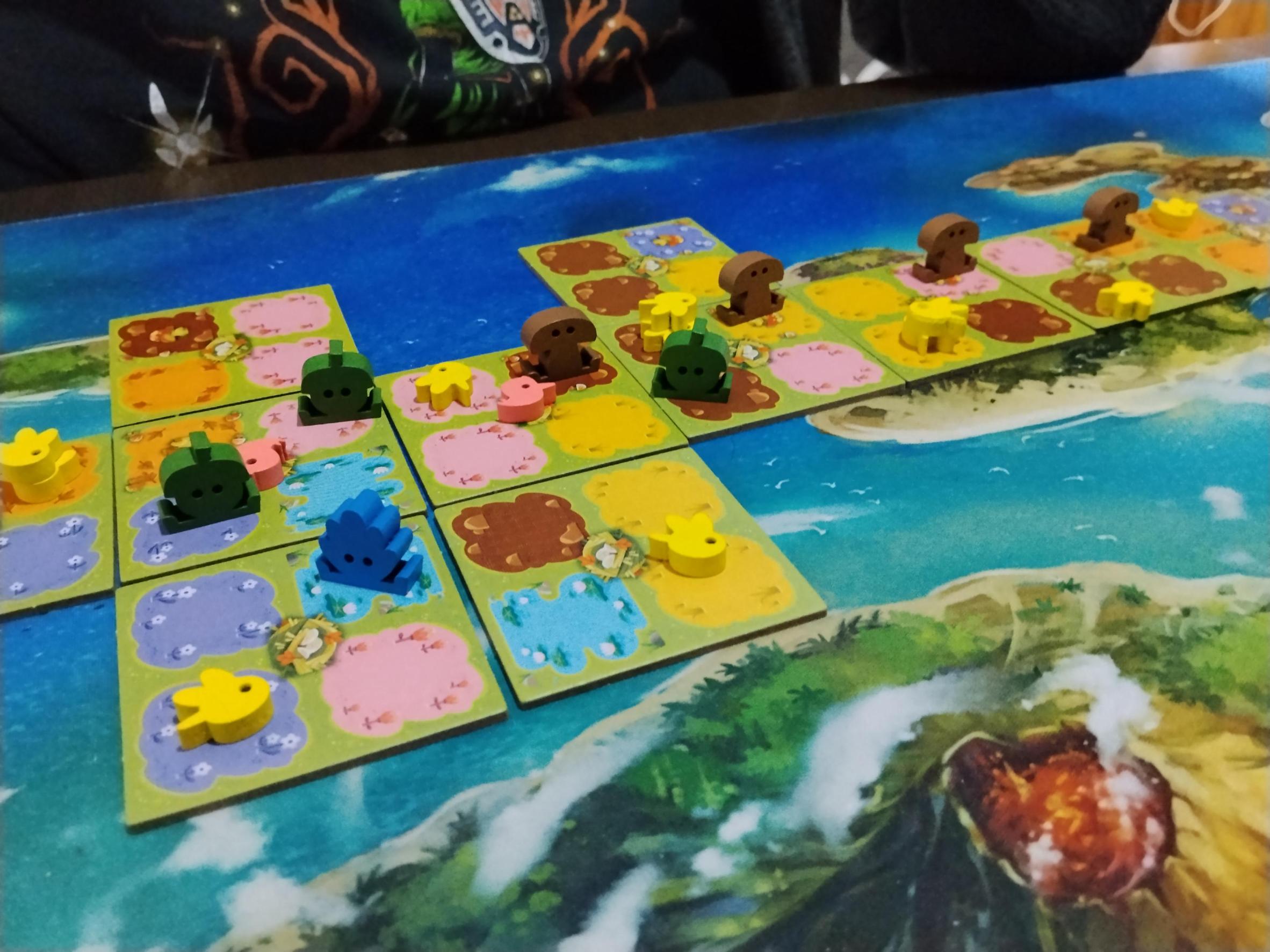
Players cultivate a garden by placing tiles to build habitats that attract wildlife. Each turn consists of laying a garden tile and then resolving potential arrivals of creatures drawn to the new environment. Small and hidden organisms appear in mushrooms, puddles, and foliage while visible visitors like hummingbirds and bees populate the air; players collect these being tokens and manage habitat diversity to encourage more arrivals. The player with the most creatures and tokens at the end of the game wins.
- Players
- 2–4 best 2
- Playing time
- 25–40 min
- Age
- 8+
- Complexity
- 2 / 5
About the game
- Publisher



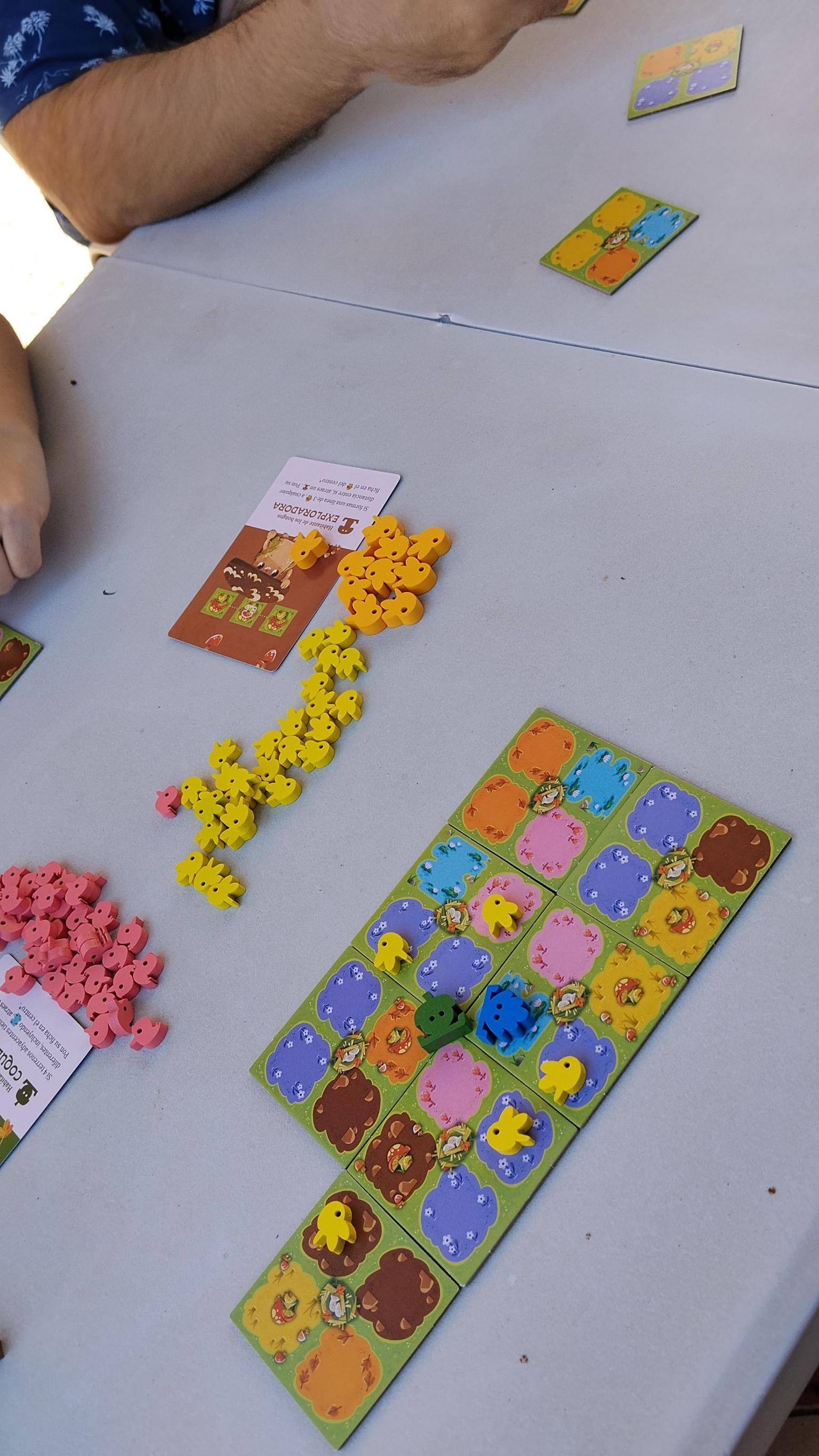
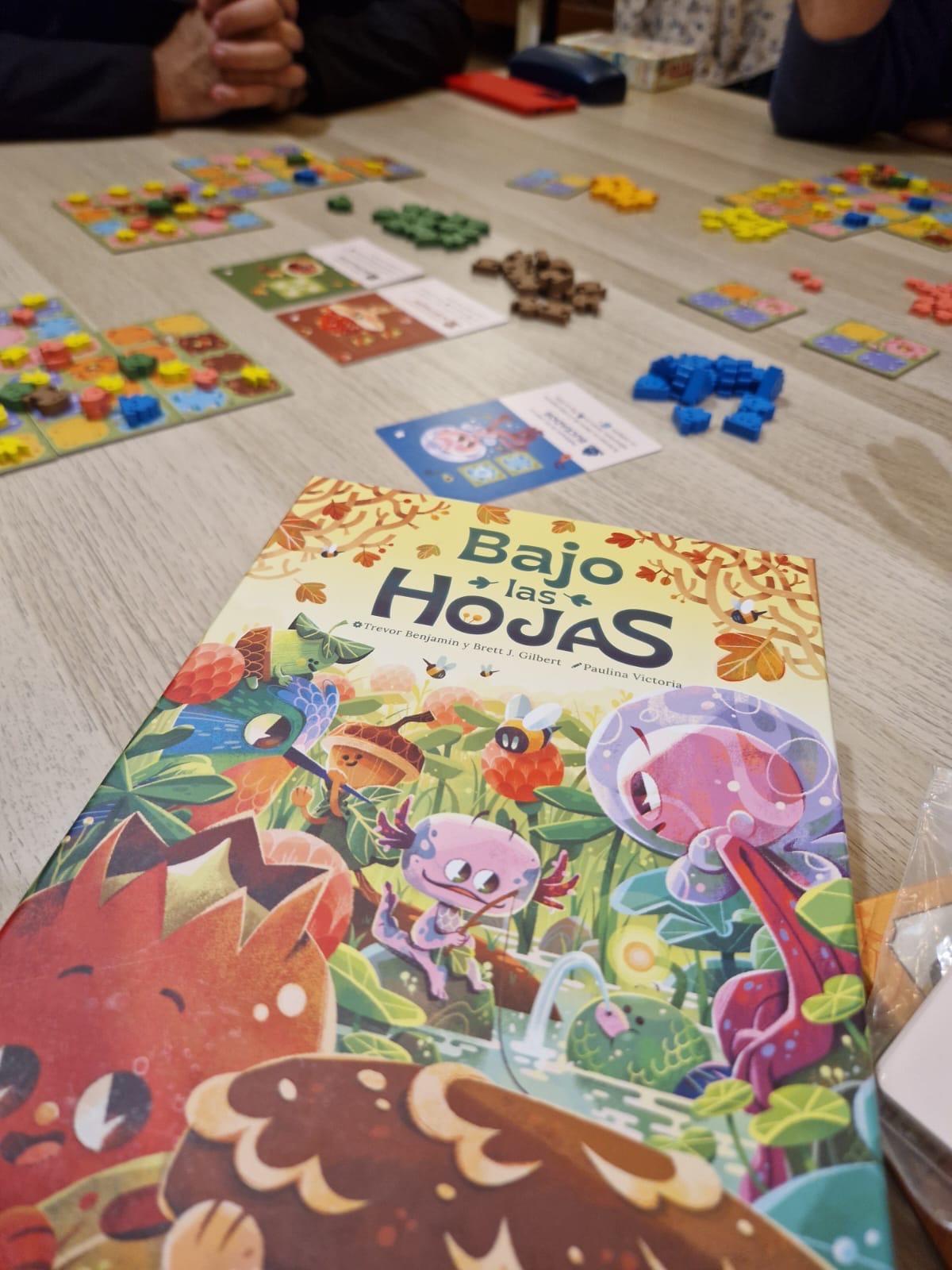
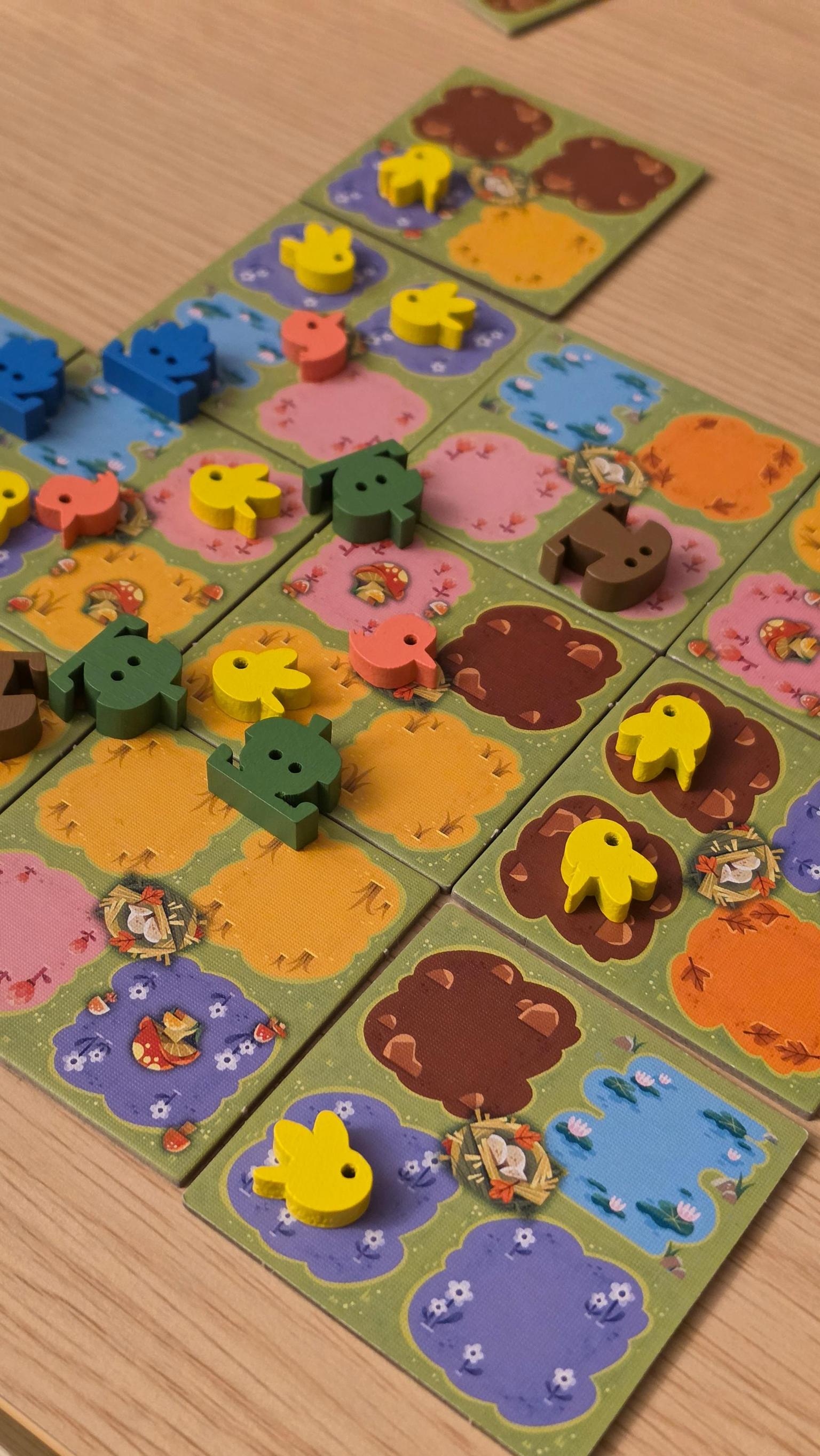
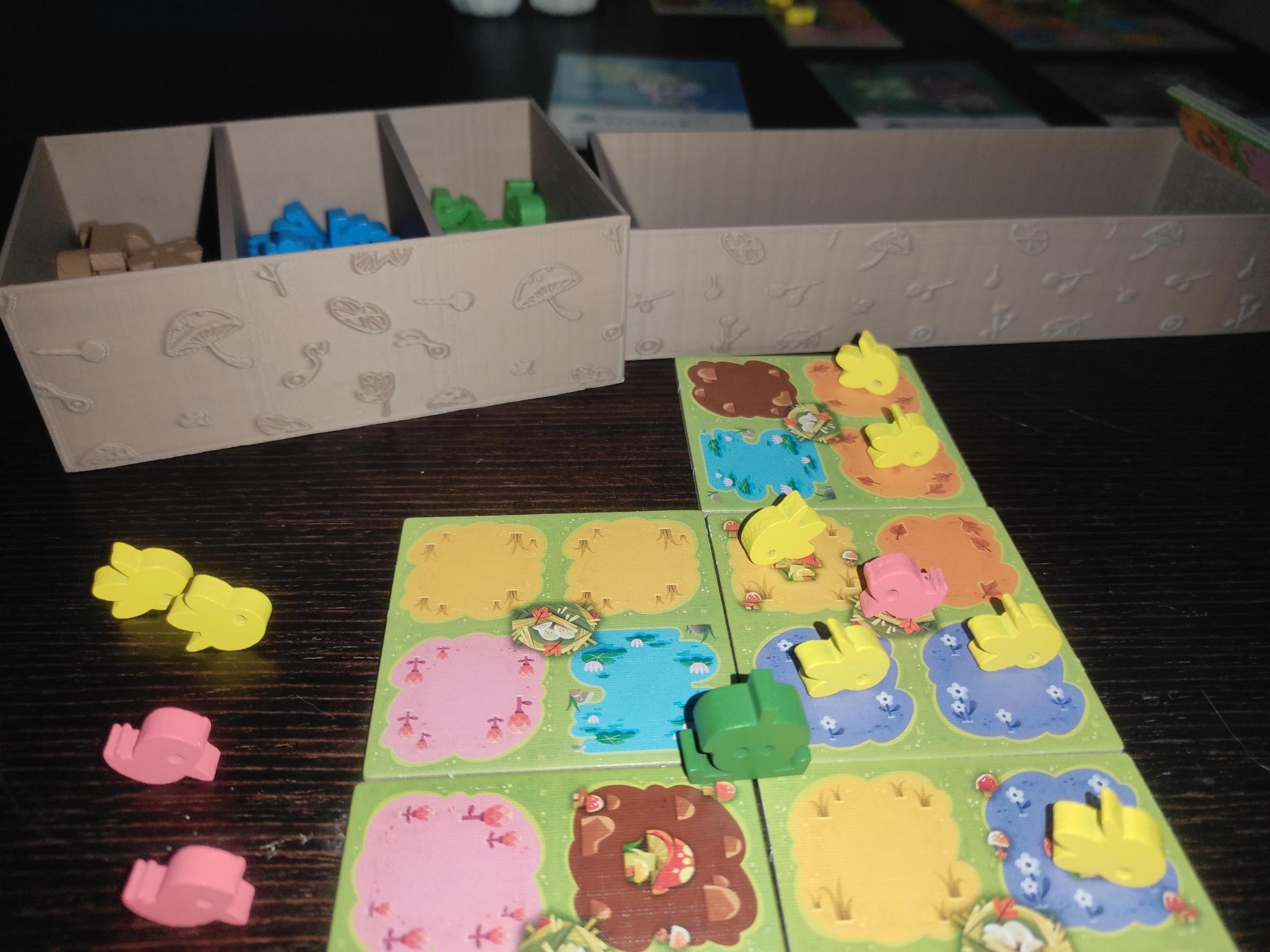
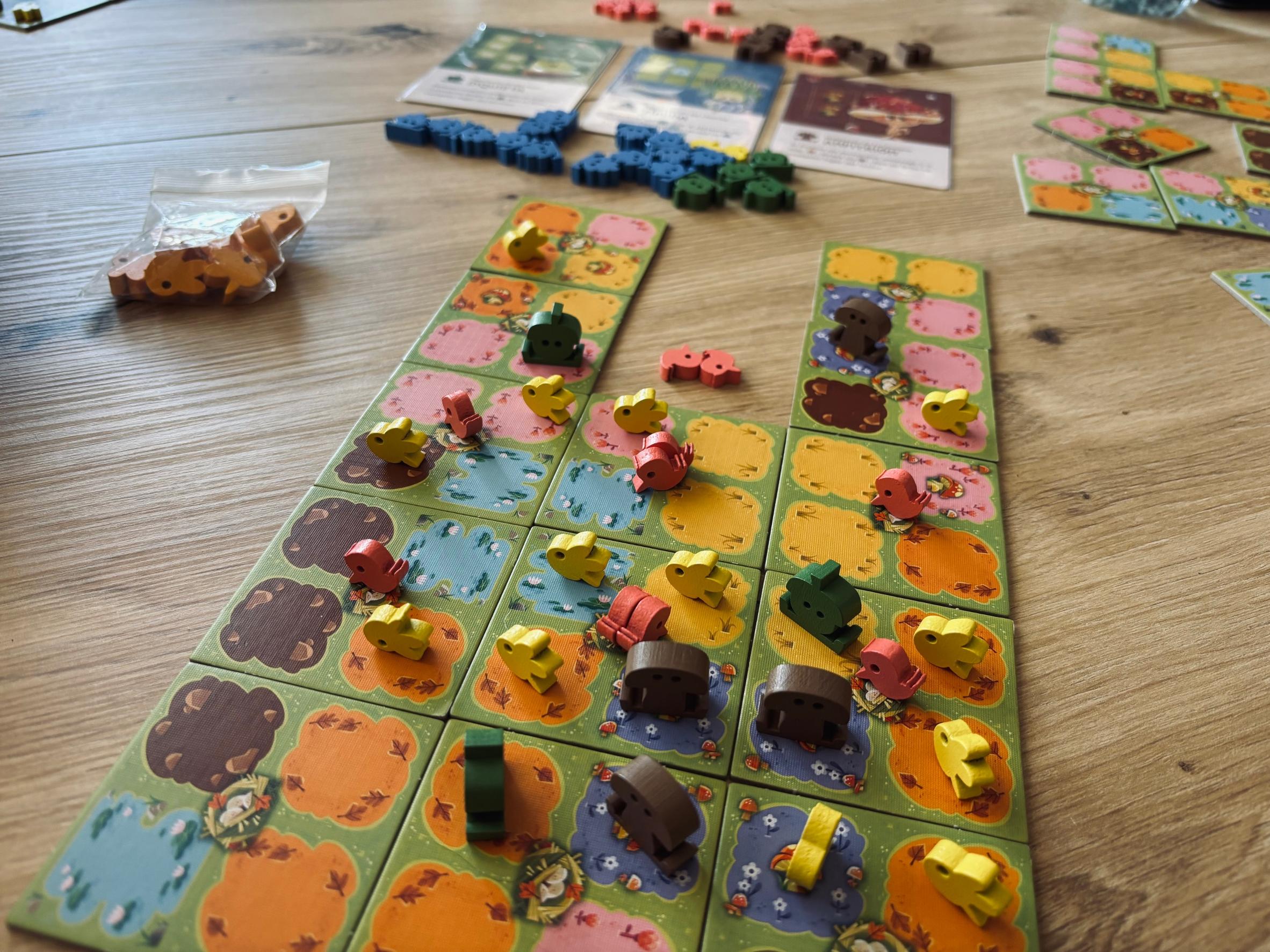
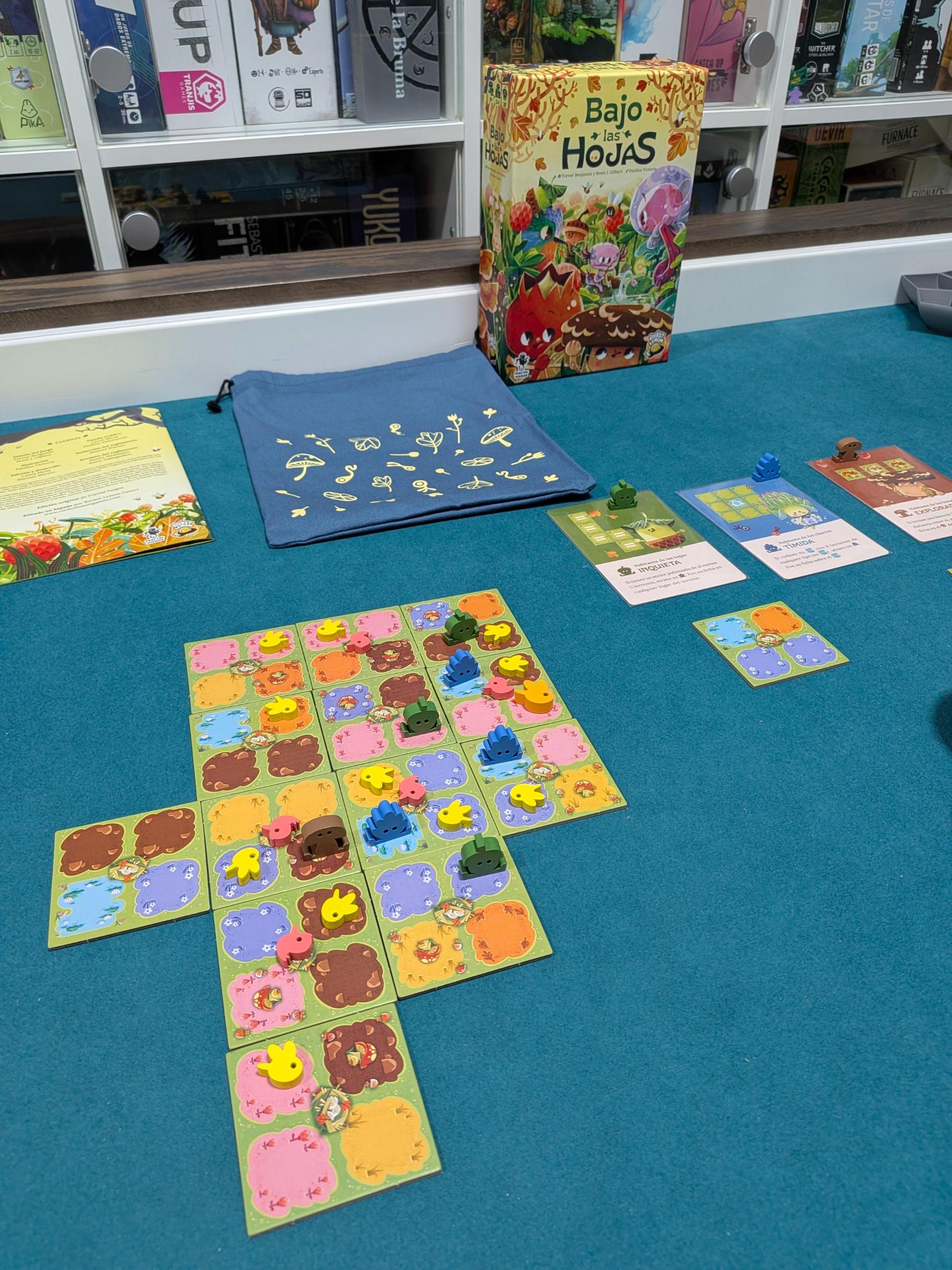
Photos from Ludoya tables
All photos in Ludoya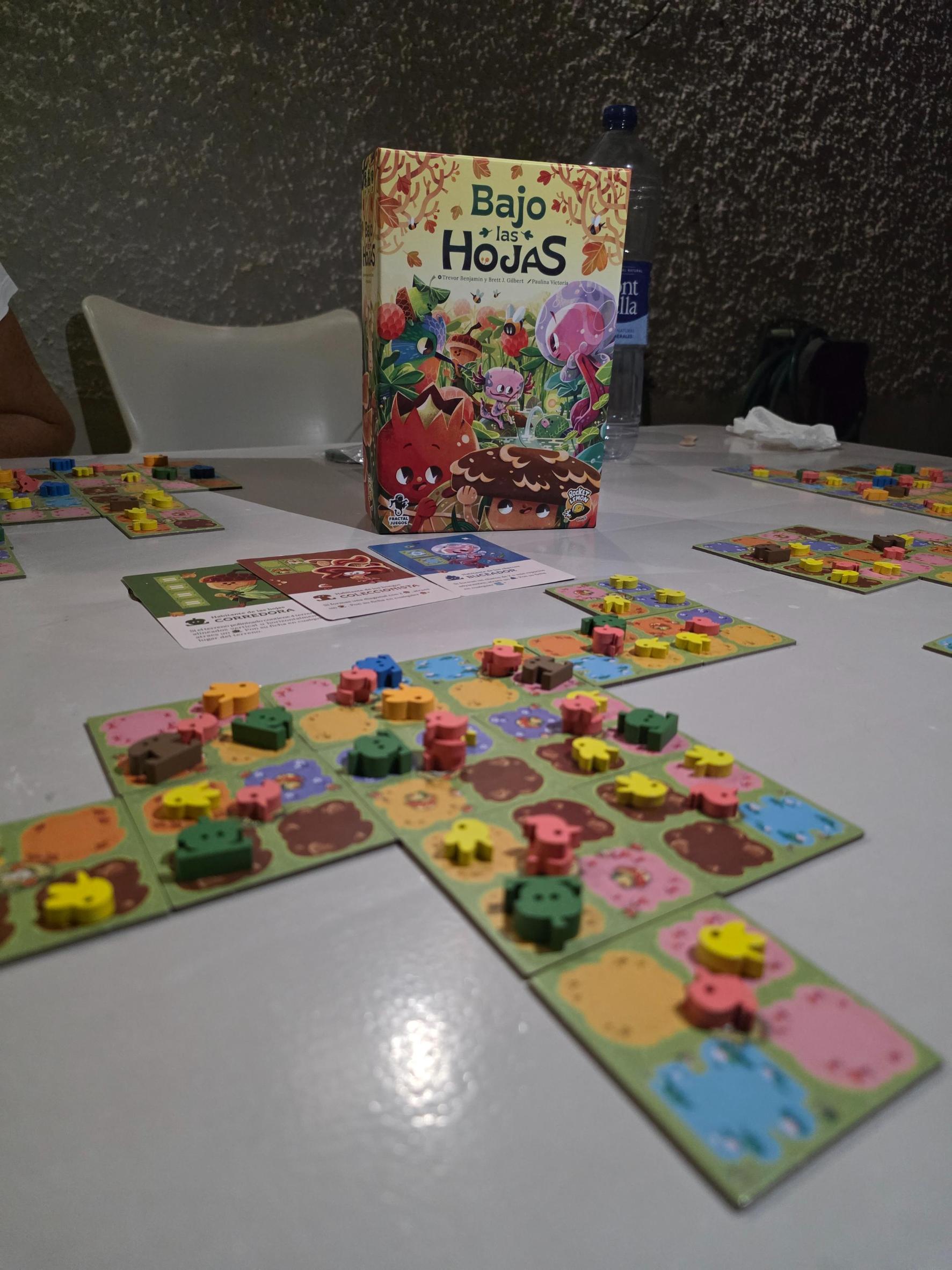
Where to buy it
Shop prices and second-hand copies, checked every day.
On Ludoya's tables
Full stats in Ludoya- 163
- Plays logged
- 205
- Players
- 29m 41s
- Average play
- 42
- In collections
- 6
- On wishlists
7.5/10
from 12 Ludoya reviews
- Base -

Rules questions
Answered from the rulebook by Ludoya's rules assistant.
Do terrain colors have to match when I place a tile, or can I put any tile next to mine?
You may place any market tile so that at least one full side is adjacent to a tile you already placed; terrain colors or puddles do not have to match (tiles form a grid and must touch one full side) (page 3).
When do bees come to my garden — do I add bees when I enlarge an existing pollinated area?
Bees arrive when you create a pollinated area of 3 or more continuous same‑color terrain spaces; place a bee in that newly created pollinated area and in any other pollinated areas of that same color you already have, but you do not add bees when you merely enlarge an existing pollinated area (page 4).
How exactly do hummingbirds get placed — do puddles count, and what about row/column bonuses?
A tile attracts a hummingbird when all its terrain spaces are part of pollinated areas (if the tile has a puddle, only the three terrain spaces are considered); additionally, forming a row or column of three tiles that have attracted at least one hummingbird gives the middle tile an extra hummingbird, for up to three hummingbirds on a single tile (page 4).
Can the same terrain spaces be used to attract more than one leaf dweller or to trigger the same dweller twice?
Each combination of terrains can fulfill a leaf‑dweller criterion only once unless the card says otherwise, but a single terrain space may host different types of dwellers simultaneously (page 5).
Do mushroom and puddle dwellers require pollination, and are there cases where growing a feature later won’t attract new dwellers?
Some mushroom dwellers (e.g., HOST) do not require pollination and are attracted by mushroom patterns, while puddle and mushroom cards list their own specific conditions; note that some effects (for example DIVER) only trigger when the puddle is first created and will not attract new dwellers if the puddle merely grows later (pages 5–6).
When does the game end and how are majority bonuses and tiebreakers handled?
The game ends when the bag runs out and the market cannot be refilled (after 12 rounds / 13 tiles each); players with a majority of a dweller type each take two extra pieces of that type (ties give the bonus to all tied players), and final ranking is by total creature pieces with ties broken by hummingbirds, then bees (page 5).



Free, on web, Android and iOS
Play Under the Leaves with Ludoya
- Keep it in your collectionTrack your copy and its expansions, lend it to friends, or put it on your wishlist and get told when the price drops.Add it to your collection
- Log every playScores, winners, timers and photos, then your stats: win rate, favourite player count, best score.Log a play
- Settle rules questionsAsk anything about the rules and get an answer from the rulebook, with the page to check it on.Ask the rules assistant
- Find people to play it withClubs, game nights and events near you that bring this game to the table.See events
Game facts (players, playing time, age, credits) from BoardGameGeek.