

2011 · Дополнение к базовой игре
Ticket to Ride: Азия
Две двусторонние карты предлагают разные испытания на азиатском континенте. На одной карте используется командная игра: четыре или шесть игроков формируют команды по два человека, у каждого — свои закрытые карты, а механики с картами и билетами общие; очки начисляются команде в целом, пока напарники координируют захват маршрутов. На другой карте добавлены горные маршруты, которые при захвате требуют размещать резервные поезда в области Mountain Crossing; за это дают очки, но эти поезда больше нельзя использовать в будущем. Также даётся бонус за самую большую связанную сеть городов. Для игры требуется базовая Ticket to Ride (или Ticket to Ride: Europe).
- Игроки
- 2–6 лучше всего 4
- Время игры
- 30–60 мин
- Возраст
- 8+
- Сложность
- 2 / 5
Об игре
- Иллюстрации
- Издательство





Дополнение к
Смотреть в Ludoya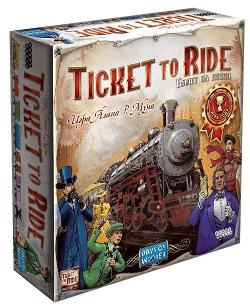

Дополнения
Смотреть в Ludoya

Фото со столов Ludoya
Все фото в LudoyaГде купить
Цены в магазинах и экземпляры с рук, проверяются каждый день.
За столами Ludoya
Полная статистика в Ludoya- 104
- Записано партий
- 132
- Игроки
- 39m 41s
- Средняя партия
- 64
- В коллекциях
- 6
- В списках желаний
- 2
- Предзаказов
7,5/10
по 17 отзывам в Ludoya
Mestremuten6,0 Rating: 3/5 Production value: 3/4 Is the game in my collection/Love to have?: 0/1
Вопросы по правилам
Ответы по книге правил от помощника Ludoya по правилам.
When I draw train cards, which card goes to my hand and which goes to the team's shared pile? What about locomotives?
When you draw two train cards you must place one in your hand and the other in your team's common Train cardholder; after revealing the first card you immediately decide whether it goes to your hand or the cardholder and the second card goes to the other location. If you draw a single face-up Locomotive, it must be placed in the common cardholder. (page 2)
Can I use cards from my teammate's hand to claim routes, or only cards in the shared cardholder?
You may use any combination of Train cards from your own hand and/or those in your team's common cardholder to claim a route, but you cannot use cards kept privately in your teammate's hand. (page 2)
How do Destination Tickets work with teams—what do we keep and what do we share at the start and when drawing more?
At game start each player is dealt 5 Tickets and must keep at least 3; once both teammates have chosen, they simultaneously place 1 kept Ticket into the team's common Tickets cardholder so the team starts with 2 shared Tickets. When drawing mid-game a player draws 4 Tickets, must keep at least 1, and then places 1 of the newly kept Tickets into the team's common cardholder while keeping the others secret; rejected Tickets go to the bottom of the deck. (page 2)
Can teammates freely tell each other what they have or pass cards to one another?
Teammates may make light talk but may not exchange game information except as allowed by the cardholder rules; the only formal sharing is placing cards into the team's common cardholders, and a player may spend a whole turn to place up to 2 Destination Tickets from his hand onto the common Tickets cardholder (and do nothing else that turn). (page 2)
How do tunnels work—what counts as a match, what if I can't pay extra cards, and how do locomotives behave?
To claim a Tunnel you first lay down the required cards, then reveal the top 4–6 cards (as indicated); for each revealed card that matches the color used to claim the Tunnel (including locomotives) you must play an additional card of that color or a locomotive from your hand or shared cards, otherwise you may take your played cards back and end your turn; the revealed cards are discarded. Locomotives are wild and count as matches; if you claimed the Tunnel using only locomotives, only additional locomotives drawn count as matches; if there are too few cards to reveal, reveal what exists and if none can be revealed the Tunnel can be claimed without extra risk. (page 2)
Бесплатно, в браузере, на Android и iOS
Играйте в Ticket to Ride: Азия с Ludoya
- Держите её в своей коллекцииОтслеживайте свой экземпляр и его дополнения, давайте его друзьям или добавьте в список желаний и узнайте, когда цена упадёт.Добавить в коллекцию
- Записывайте каждую партиюОчки, победители, таймеры и фото, а затем ваша статистика: процент побед, любимое число игроков, лучший результат.Записать партию
- Решайте споры о правилахСпросите что угодно о правилах и получите ответ по книге правил с номером страницы, где это можно проверить.Спросить помощника по правилам
- Найдите, с кем в неё сыгратьКлубы, игровые вечера и мероприятия рядом с вами, где играют в эту игру.Смотреть мероприятия
Сведения об игре (игроки, время партии, возраст, авторы) взяты с BoardGameGeek.