

2020 · Deduction
MicroMacro: Crime City
Players study a large, detailed city map to reconstruct crimes by locating tiny visual clues and following people's movements across streets and buildings. Each scenario presents a set of illustrated case cards that ask players to find specific evidence on the map, trace routes, and connect appearances of characters over time to deduce what happened. Play proceeds either step-by-step through the case cards or by using only a starting prompt and solving the whole incident independently. The edition includes case-difficulty markings to guide age-appropriate selection.
- Players
- 1–4 best 2
- Playing time
- 15–45 min
- Age
- 12+
- Complexity
- 1.1 / 5
About the game
- Design
- Publisher


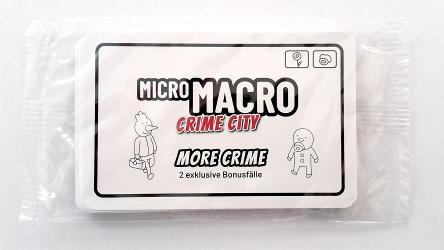
Expansions
See them in Ludoya

Photos from Ludoya tables
All photos in Ludoya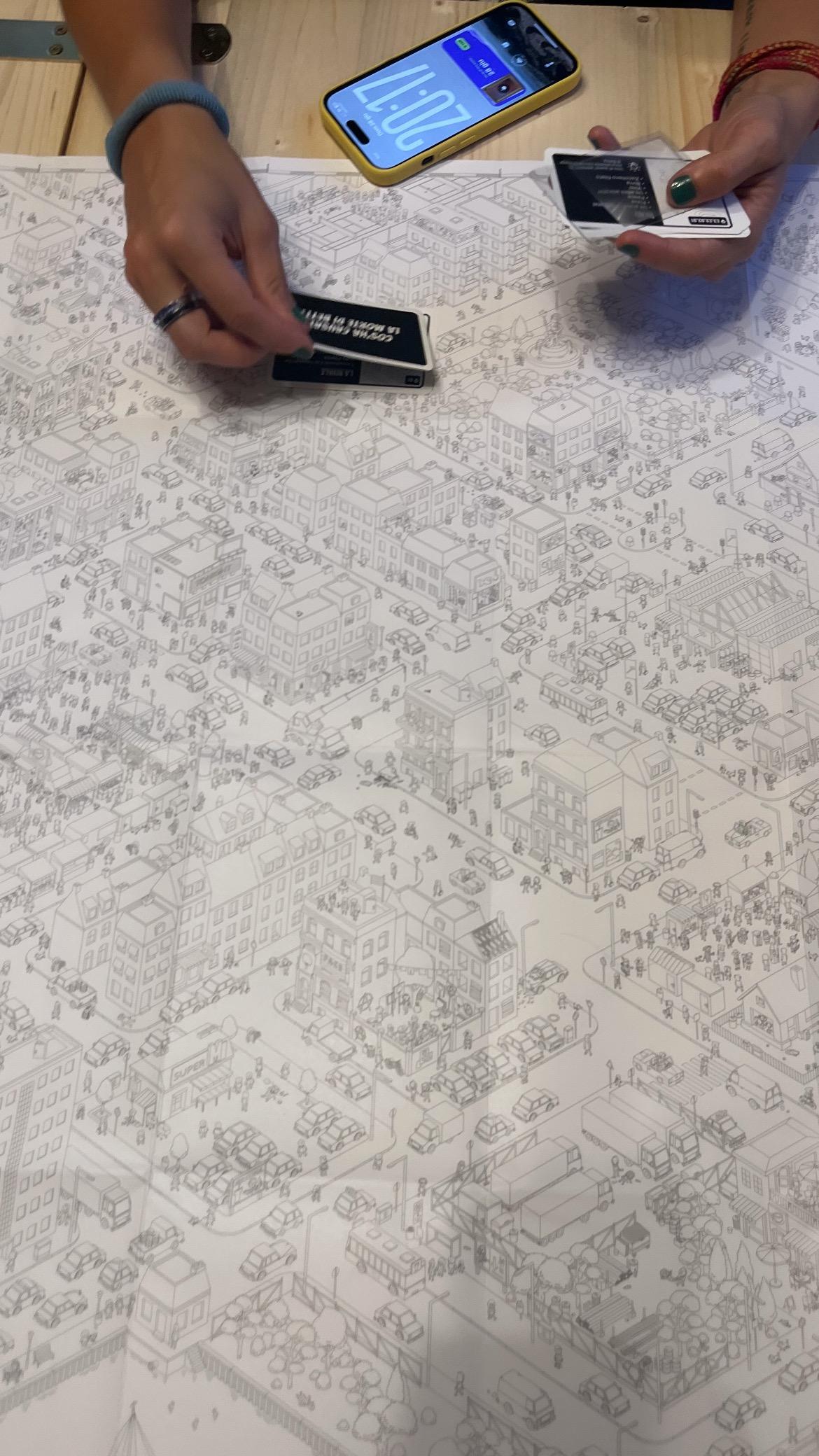
Where to buy it
Shop prices and second-hand copies, checked every day.
On Ludoya's tables
Full stats in Ludoya- 1,181
- Plays logged
- 467
- Players
- 19m 59s
- Average play
- 291
- In collections
- 29
- On wishlists
- 2
- Pre-ordered
7.5/10
from 98 Ludoya reviews
Vic Granell8.5 Super innovative!
[Gracze] 1-4 (najlepiej 2) [Czas] 45m [Wiek] 8/12+ S: Full I: -
Daniel8.0 A casa els papes


Rules questions
Answered from the rulebook by Ludoya's rules assistant.
How should we place the map and set up the table so everyone can see details?
Lay the city map flat on the table and make sure the play area is well lit so players can spot small details on the map; follow the setup placement instructions in the rulebook (page 1).
Who is the Lead Investigator and what do they do?
The Lead Investigator is one player who reveals the start card, reads the tasks aloud, and coordinates the team's search as you locate and verify scenes on the map (page 2).
When do we reveal the start card and begin the case?
At the start of a case the Lead Investigator reveals the start card and reads the tasks aloud to begin the search on the map (page 2).
How do we know when we've correctly found a scene or clue on the map?
A scene is found by locating the matching spot on the map and then verifying it against the case information as described in the start/verification steps — you must both find and verify on the map (page 2).
What do the symbols on the cards and map mean?
The meanings of the game symbols are explained in the symbols section; consult that chart to interpret icons used in cases and tasks (page 3).
Do we have to play cases in a specific order or can we pick any case?
The rulebook provides a recommended case list ordered by difficulty (star ratings) to guide progression, but this is a recommendation rather than a mandatory order (page 3).
Similar games
 MicroMacro: Crime City – Showdown2023
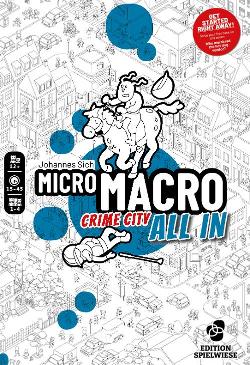 MicroMacro: Crime City – All In2022
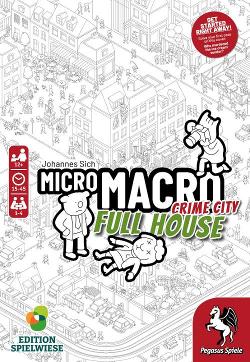 MicroMacro: Crime City – Full House2021
 MicroMacro: Kids – Crazy City Park2025
 Hidden Games Crime Scene: The Midnight Crown2020
 Medical Mysteries: Miami Flatline2024
 Hidden Games Crime Scene: Green Poison2020
 Hidden Games Tatort: Ein Drahtseilakt2021
 Hidden Games Crime Scene: The New Haven Case2019
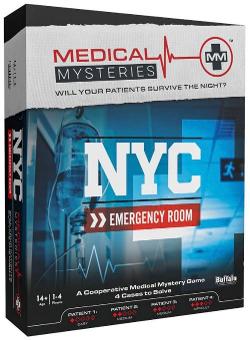 Medical Mysteries: NYC Emergency Room2024
 Chronicles of Crime2018
 Chronicles of Crime: 14002020






Free, on web, Android and iOS
Play MicroMacro: Crime City with Ludoya
- Keep it in your collectionTrack your copy and its expansions, lend it to friends, or put it on your wishlist and get told when the price drops.Add it to your collection
- Log every playScores, winners, timers and photos, then your stats: win rate, favourite player count, best score.Log a play
- Settle rules questionsAsk anything about the rules and get an answer from the rulebook, with the page to check it on.Ask the rules assistant
- Find people to play it withClubs, game nights and events near you that bring this game to the table.See events
Game facts (players, playing time, age, credits) from BoardGameGeek.