
2007 · Card Game
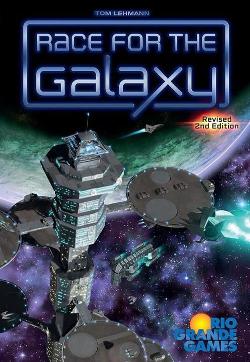
Race for the Galaxy
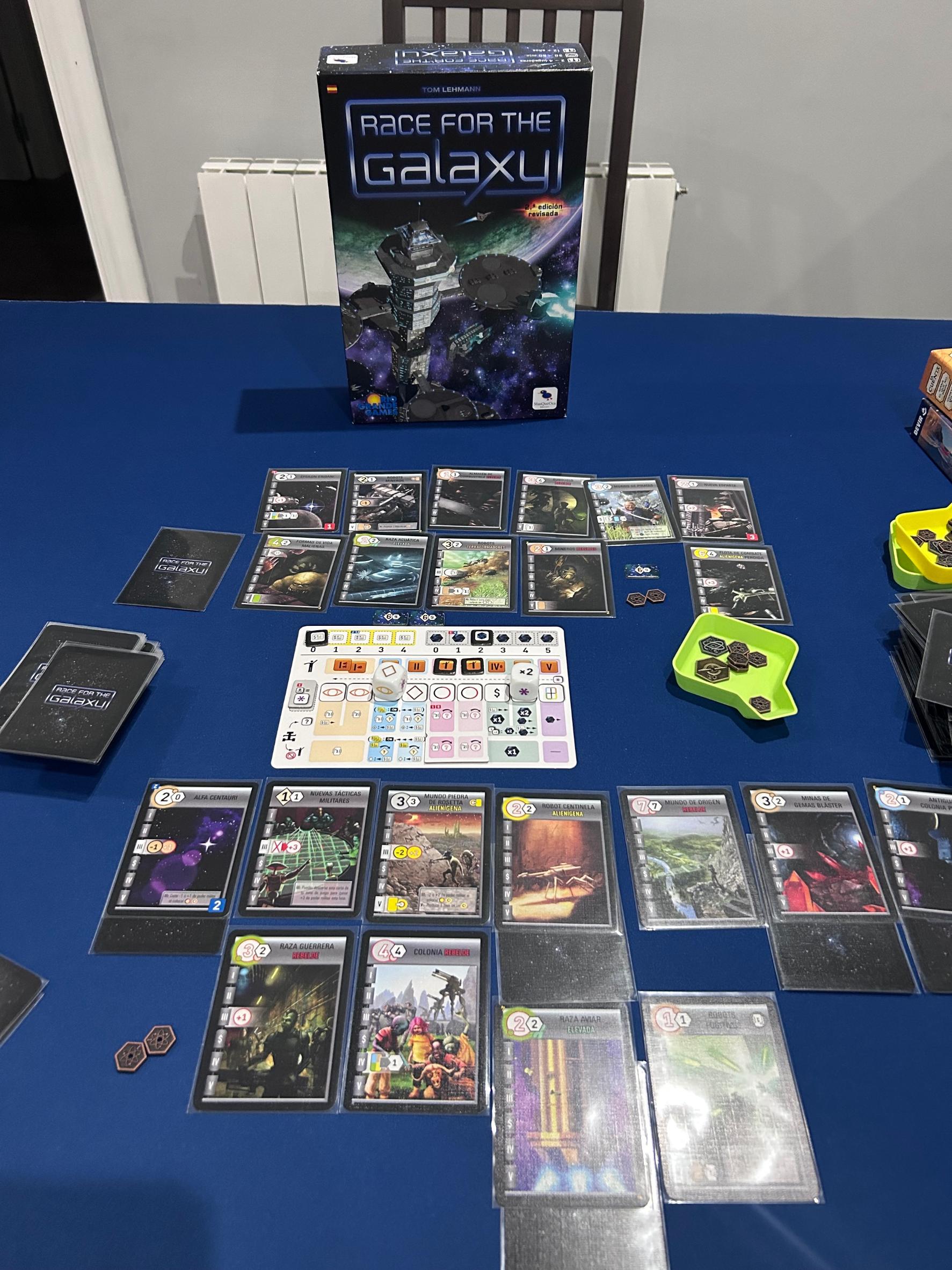
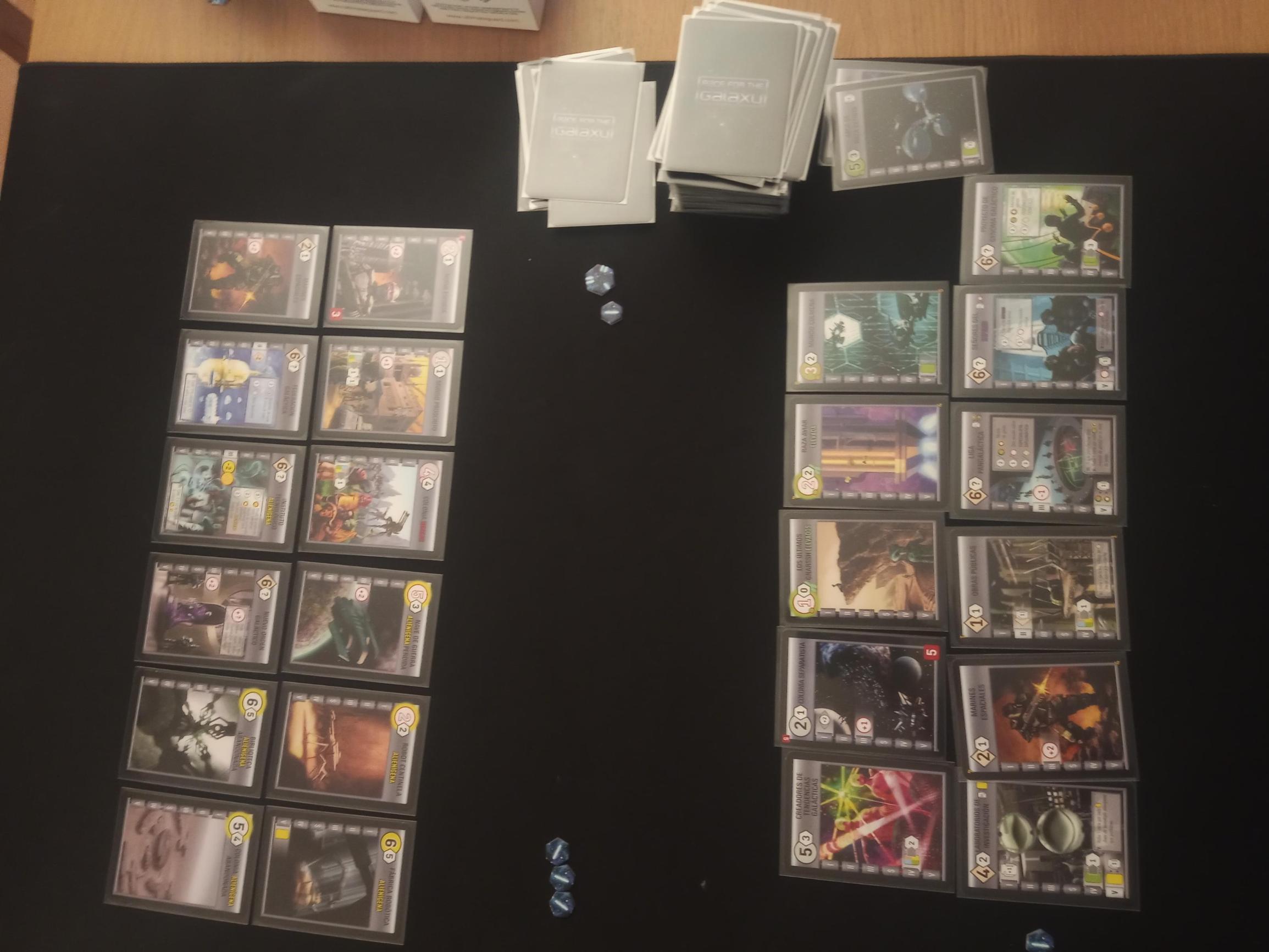
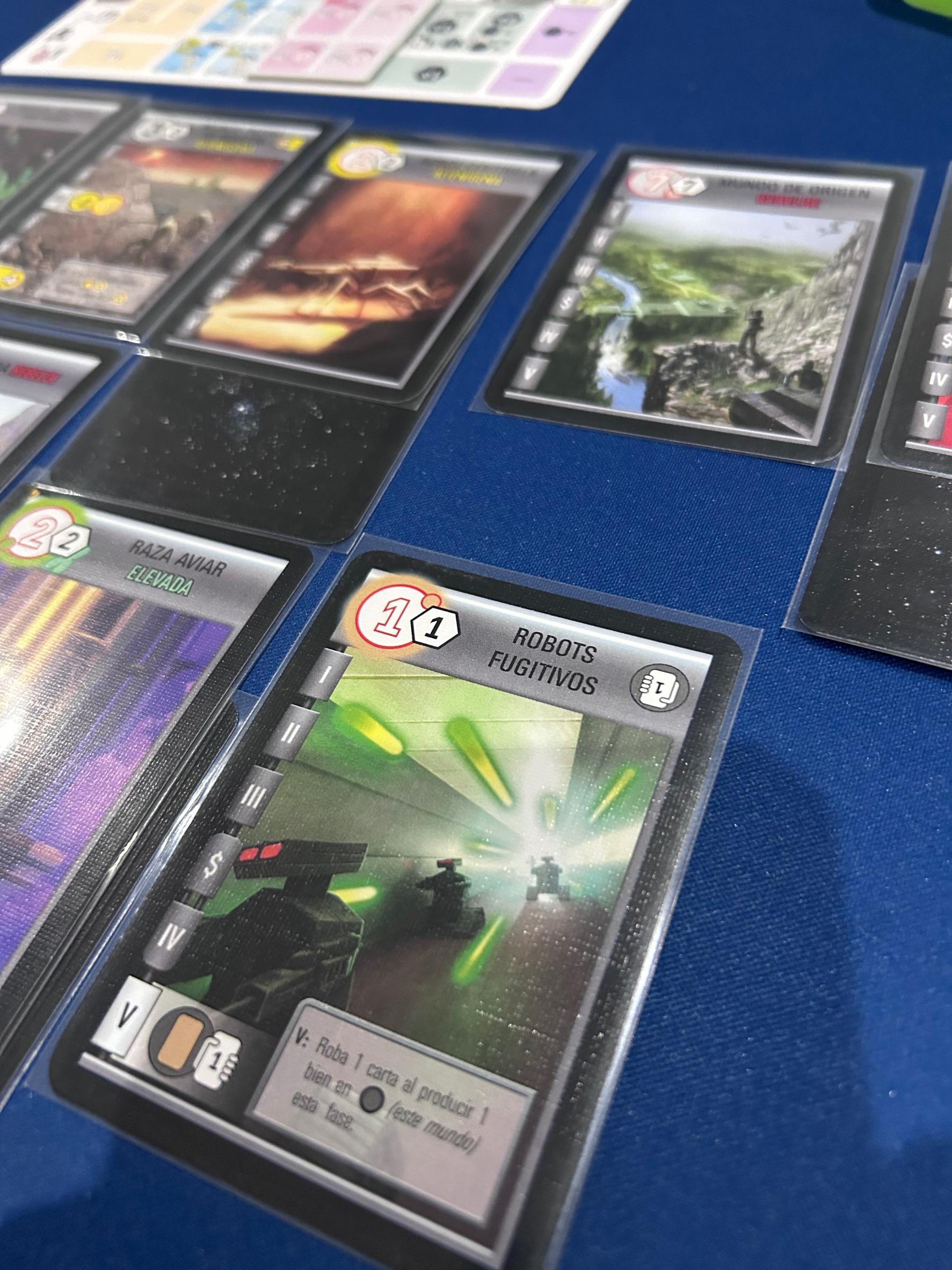
Players build a galactic civilization by playing cards that represent worlds and technological or social developments. Each round, everyone secretly and simultaneously selects one action phase; only the chosen phases occur but every player participates in those phases, with selecting players receiving bonuses. Actions include exploring to draw cards, developing or settling to add cards to a tableau, producing goods on worlds, trading goods for cards, and consuming goods for victory-point chips. Cards placed in the tableau grant powers, produce goods, and provide end-game victory points. Play ends when a player has twelve tableau cards or the VP chip pool is exhausted; highest total VPs wins.
- Players
- 2–4 best 2
- Playing time
- 30–60 min
- Age
- 12+
- Complexity
- 3 / 5
About the game
- Design
- Publisher


Expansions
See them in Ludoya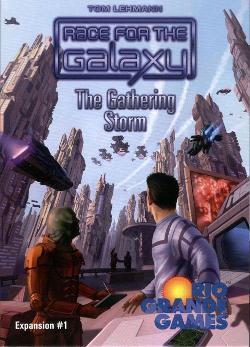 Race for the Galaxy: The Gathering Storm2008
 Race for the Galaxy: Rebel vs Imperium2009
 Race for the Galaxy: The Brink of War2010
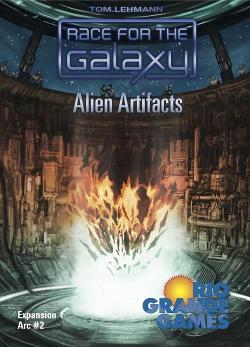 Race for the Galaxy: Alien Artifacts2013
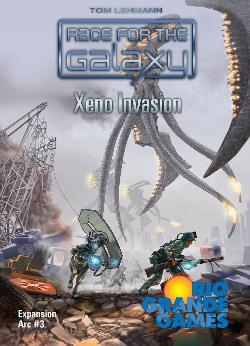 Race for the Galaxy: Xeno Invasion2015
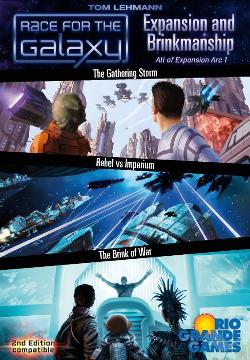 Race for the Galaxy: Expansion and Brinkmanship2022
 Race for the Galaxy: New Worlds Promo Cards2017
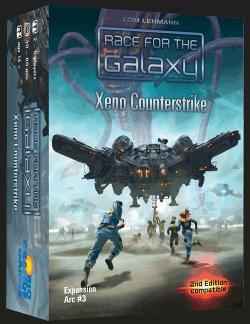 Race for the Galaxy: Xeno Counterstrike2026
 Patronage (fan expansion for Race for the Galaxy)2013
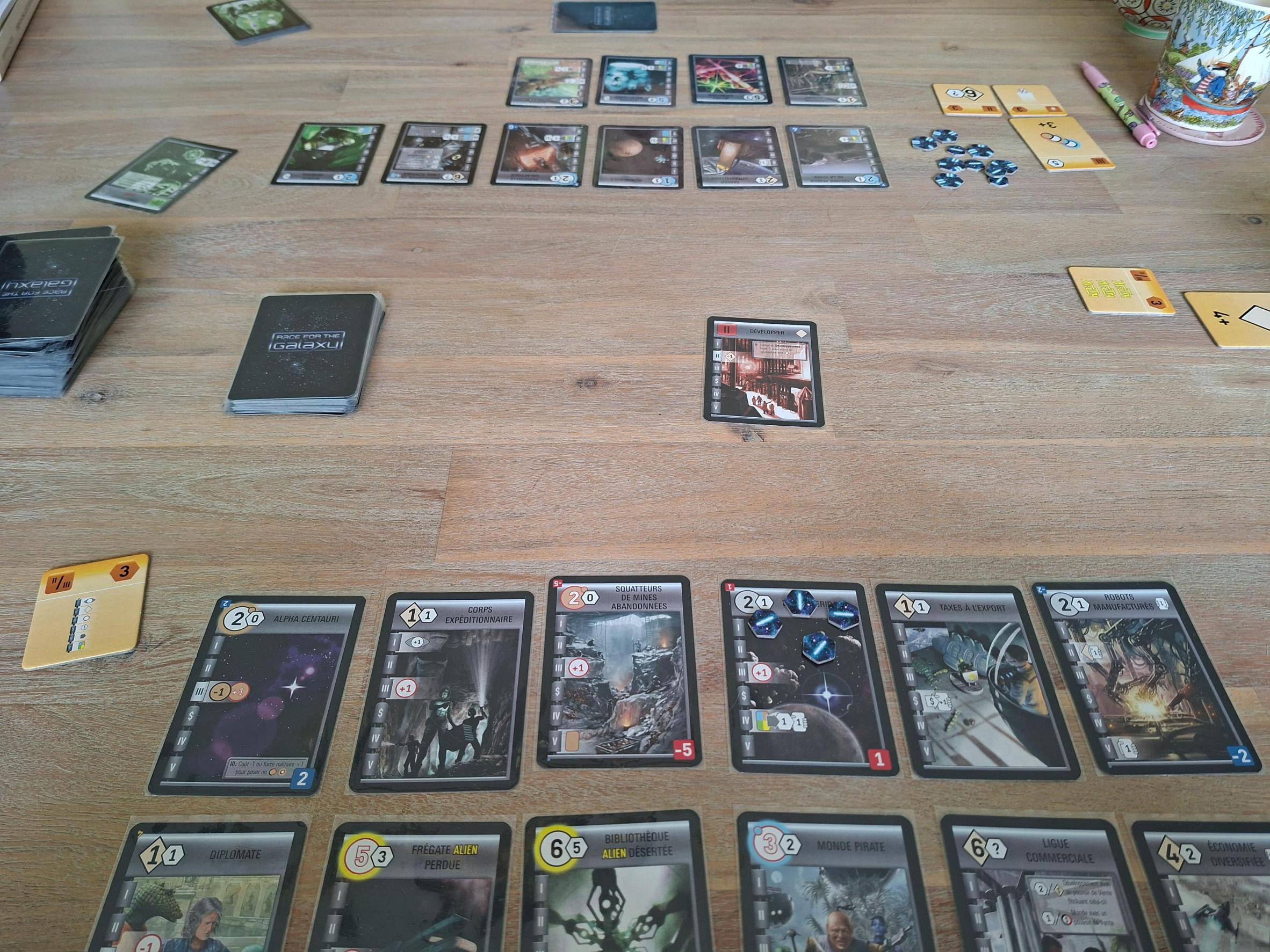
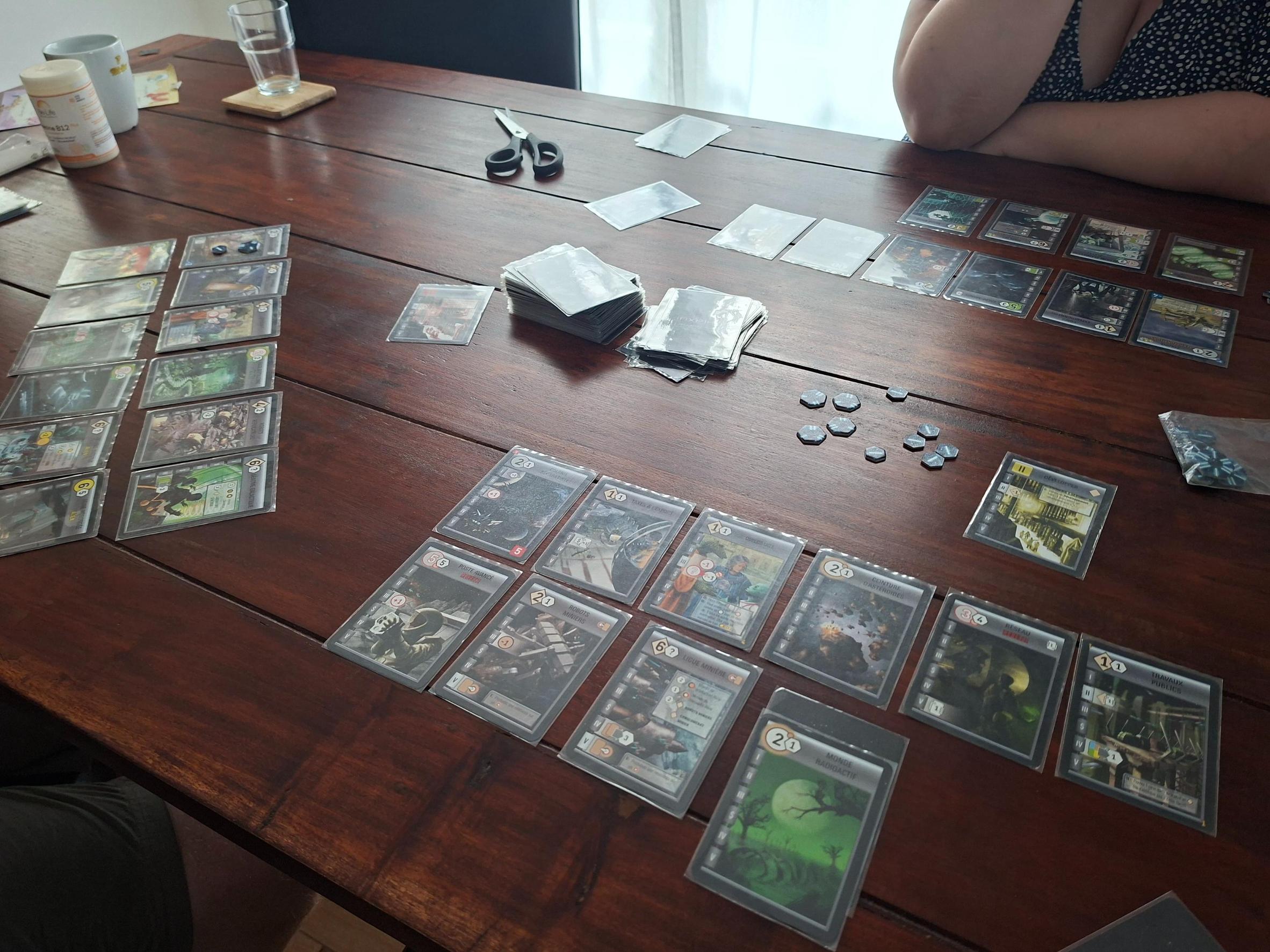
Photos from Ludoya tables
All photos in Ludoya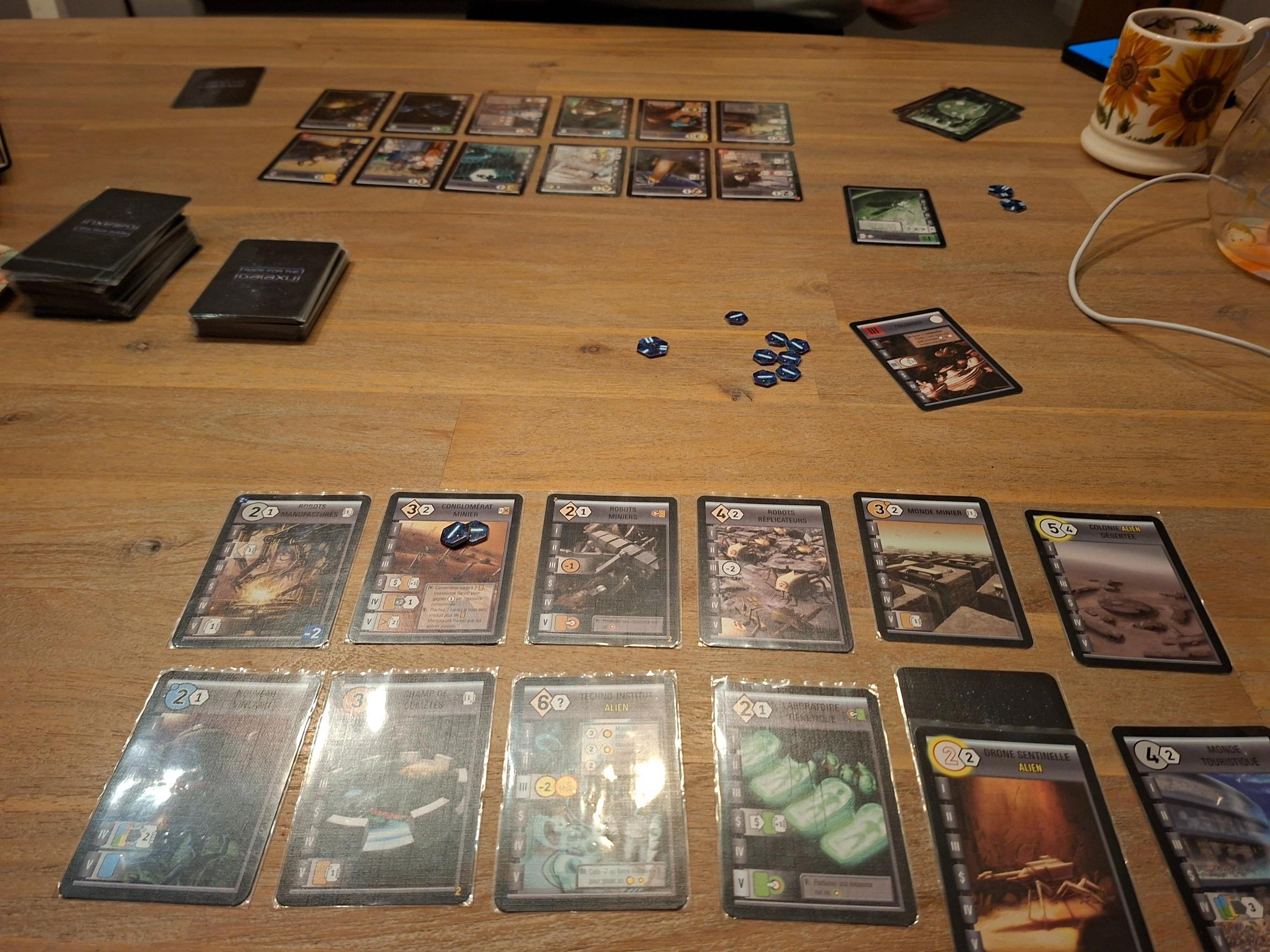
Where to buy it
Shop prices and second-hand copies, checked every day.
On Ludoya's tables
Full stats in Ludoya- 5,588
- Plays logged
- 995
- Players
- 14m 10s
- Average play
- 277
- In collections
- 44
- On wishlists
7.3/10
from 157 Ludoya reviews
Vic Granell8.0 Complex symbolism but worth learning to play. Second Spanish edition. Playing often on Board Game Arena since I got the physical edition!
Pero que mierda es esta??? Quiero salir de aquí Mamaaaa...!!!
Martin Peral7.8 Revisado 27/05/2025



Rules questions
Answered from the rulebook by Ludoya's rules assistant.
How do I tell which cards are Alien Artifact cards and which are regular cards?
Alien Artifact cards are identified by the gray/gold artifact marks on the cards; follow the expansion’s start-world and non-orb component setup when adding them (see page 2).
In the Orb (Explore) step, how does priority and passing work for Move / Play Orb / Draw Orb actions?
The Orb step uses a priority order; the player with priority may take one Orb action (Move up to 4, Play an Orb, or Draw an Orb), and passing gives priority to the next player in order (see pages 3–4).
Can my survey team cross beam barriers or mismatched edges, and when does a survey team become stranded?
Orb perimeter rules require an overlapping edge to be the same or worse (you cannot change a wall into a beam, etc.), so survey teams cannot move across incompatible edges; a survey team is stranded if it has no legal moves (see pages 5–6).
When and how do I pick up artifact tokens and what do they do?
Survey teams pick up artifact tokens by moving onto artifact locations; tokens provide specific powers, cost reductions, and scoring modifiers (including Genes/Uplift effects) and are used/scored according to the artifact token rules (see pages 7–8).
If the Orb deck runs out, does the game end immediately?
Deck exhaustion triggers the Orb-game end condition—follow the deck-exhaustion/end-of-deck procedure to end the game as described in the rules (see page 7 and the Orb reminders on page 12).
Score sheets and play helpers
- Hoja de Puntuación
- Race for the galaxy + extensions
- Race for the Galaxy V.



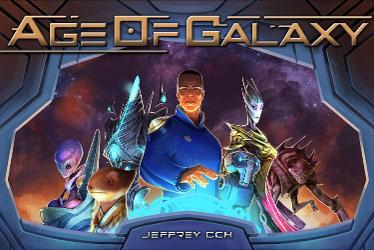
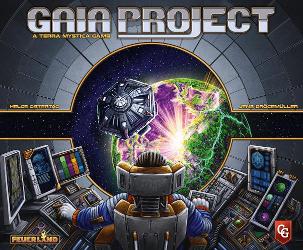
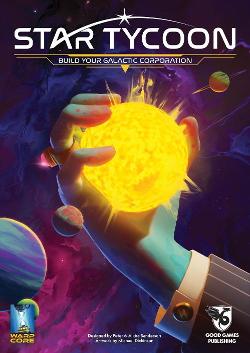
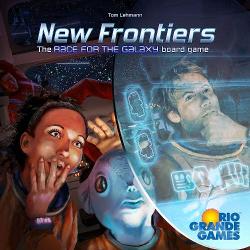


Free, on web, Android and iOS
Play Race for the Galaxy with Ludoya
- Keep it in your collectionTrack your copy and its expansions, lend it to friends, or put it on your wishlist and get told when the price drops.Add it to your collection
- Log every playScores, winners, timers and photos, then your stats: win rate, favourite player count, best score.Log a play
- Settle rules questionsAsk anything about the rules and get an answer from the rulebook, with the page to check it on.Ask the rules assistant
- Find people to play it withClubs, game nights and events near you that bring this game to the table.See events
Game facts (players, playing time, age, credits) from BoardGameGeek.