
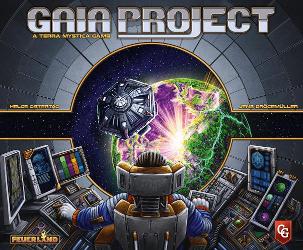
2017 · Science Fiction
Gaia Project
Players take one of fourteen alien factions and expand across a modular galactic map by colonizing and terraforming different planet types to suit their home environment. Factions upgrade along six technology tracks—Terraforming, Navigation, Artificial Intelligence, Gaiaforming, Economy, and Research—to unlock abilities, buildings, and bonuses. Gaia planets serve as shared colonization targets, and Transdimensional planets can be converted into Gaia planets to open new options. Gameplay emphasizes area control, engine building, and asymmetric faction powers as players develop infrastructure, research technologies, and compete for resources and strategic positions across variable sector layouts.
- Players
- 1–4 best 3
- Playing time
- 60–150 min
- Age
- 12+
- Complexity
- 4.4 / 5
About the game
- Publisher




Expansions
See them in Ludoya
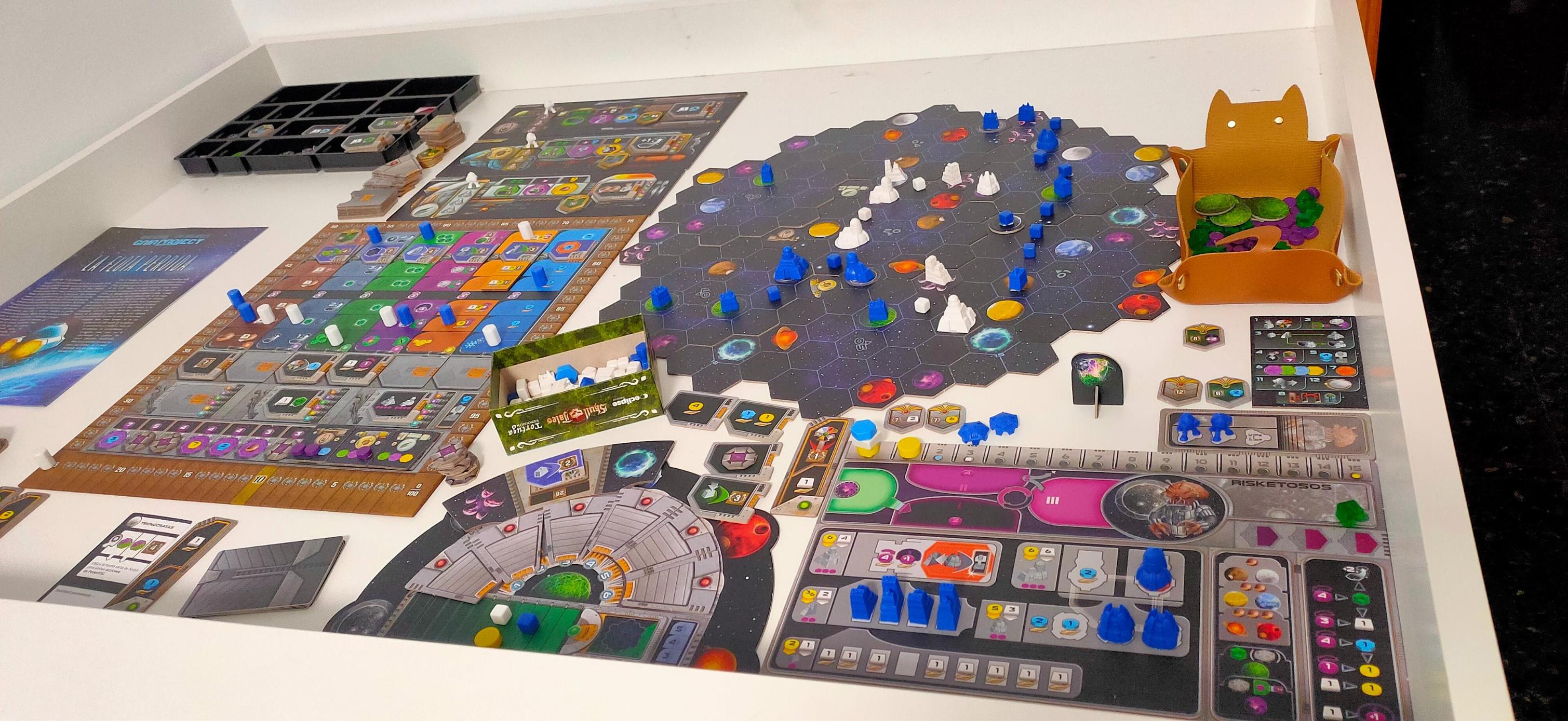
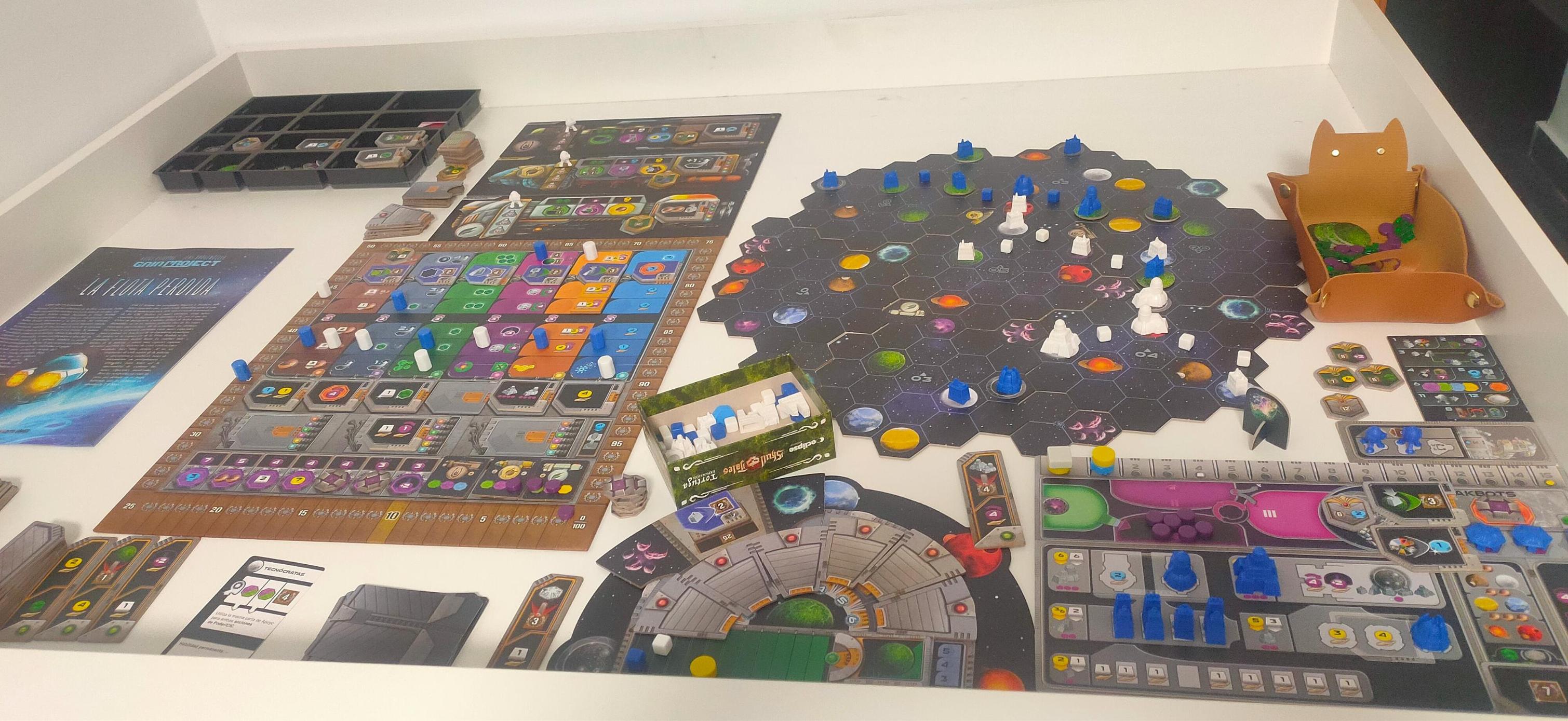
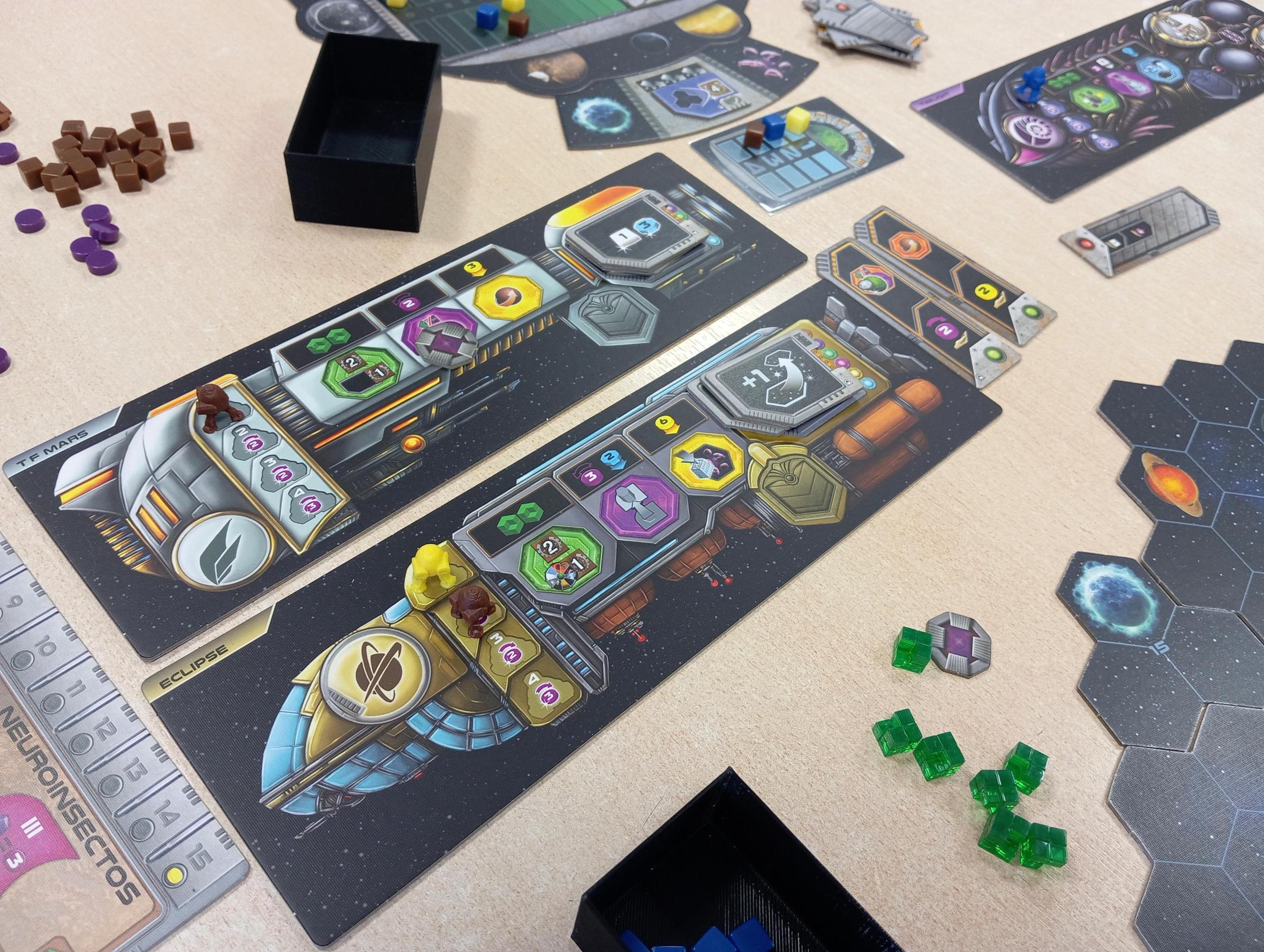
Photos from Ludoya tables
All photos in Ludoya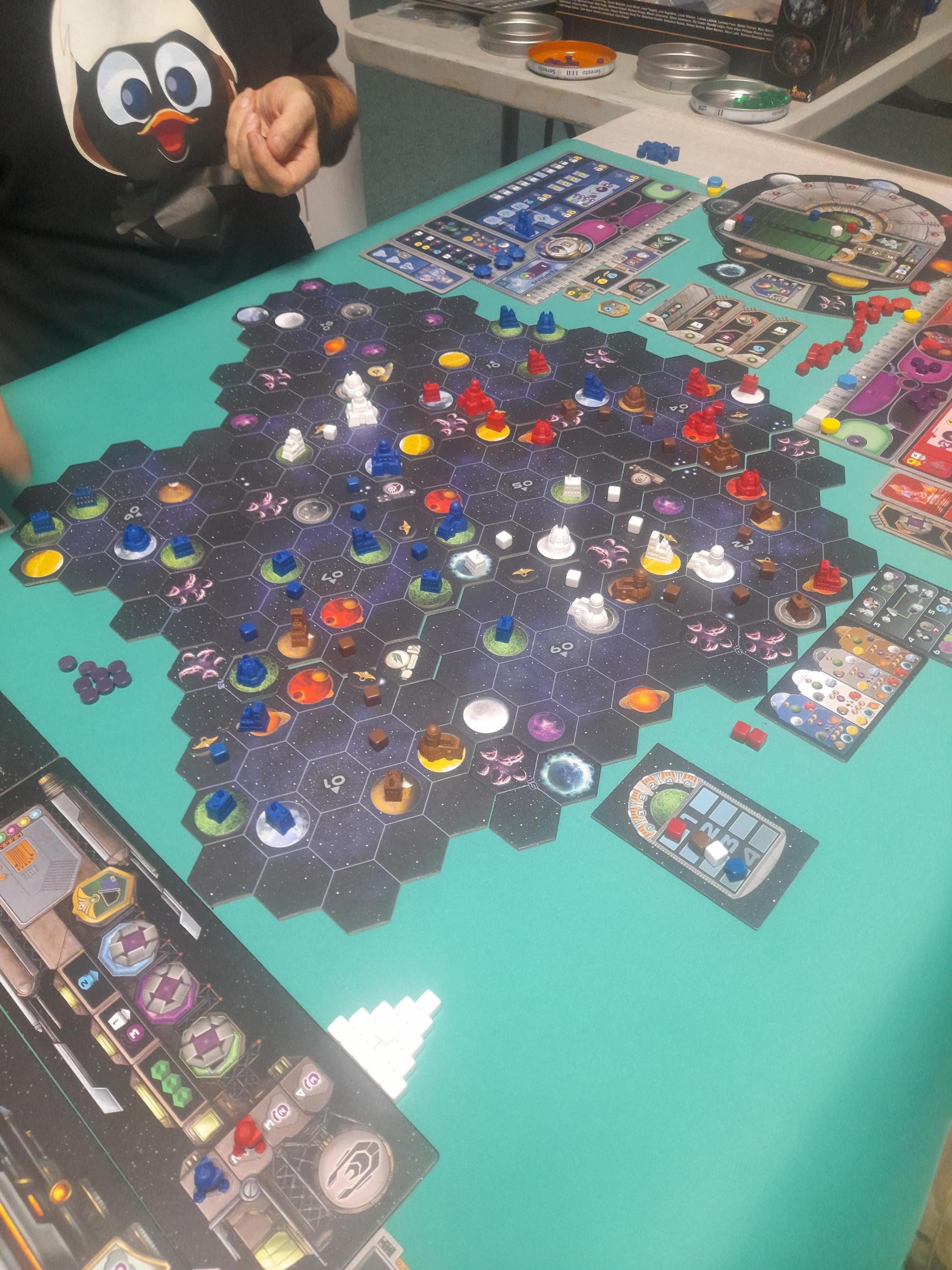
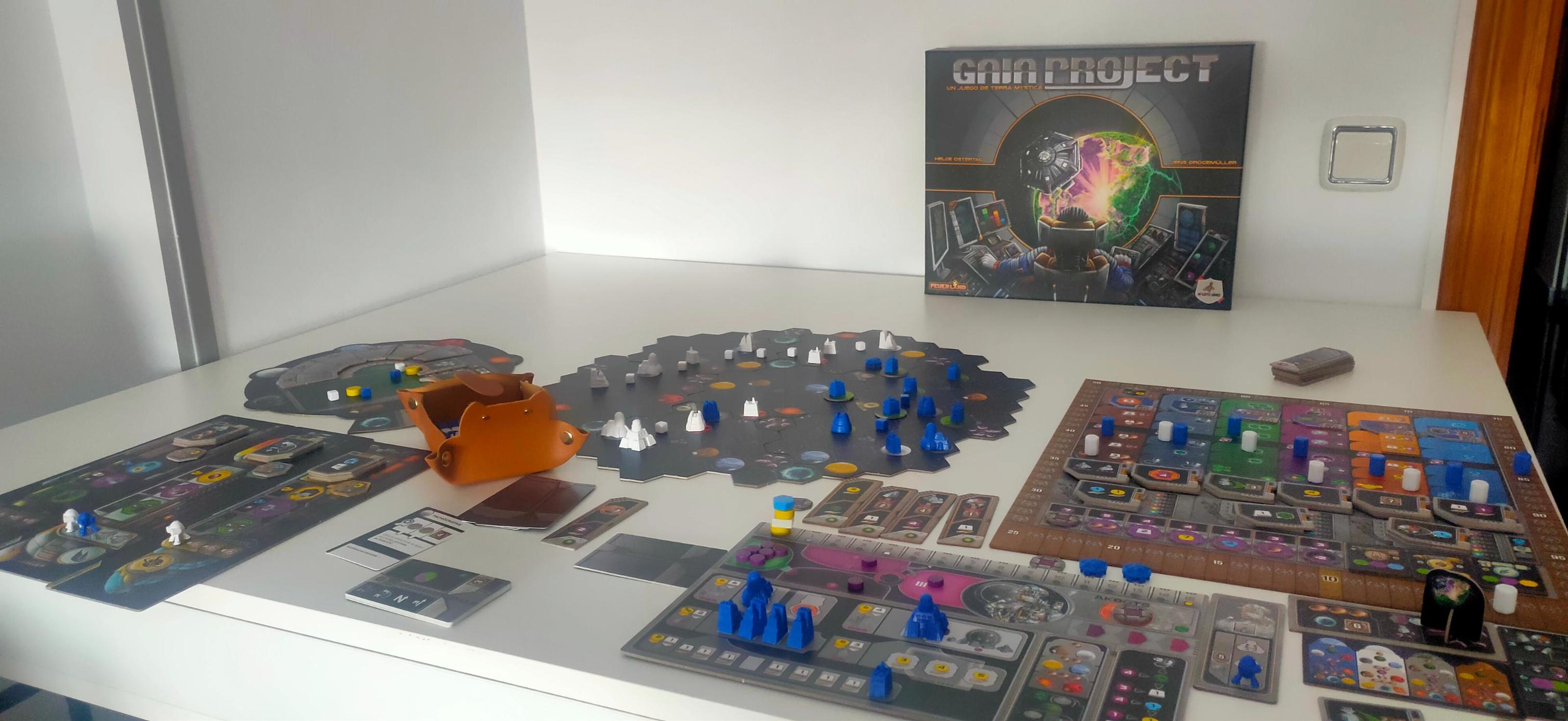
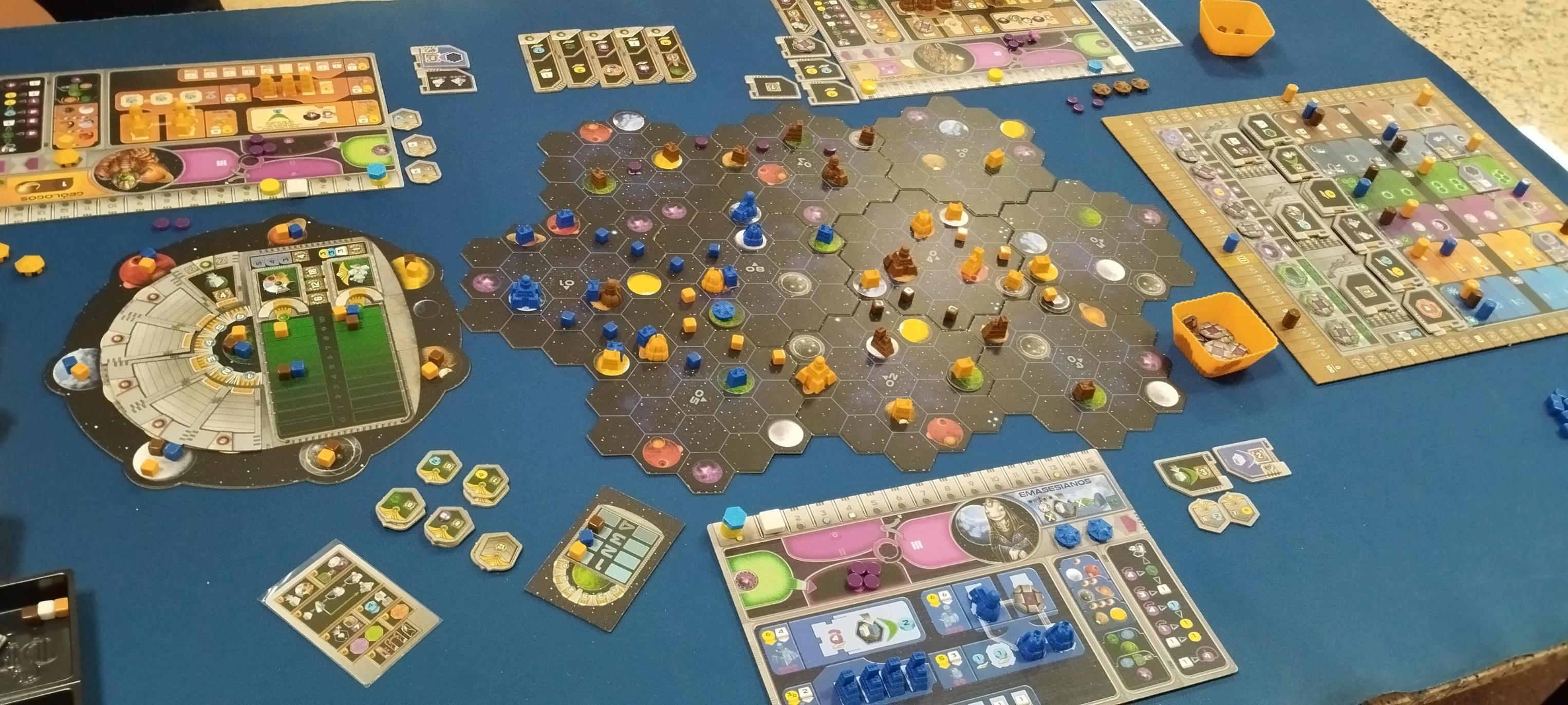
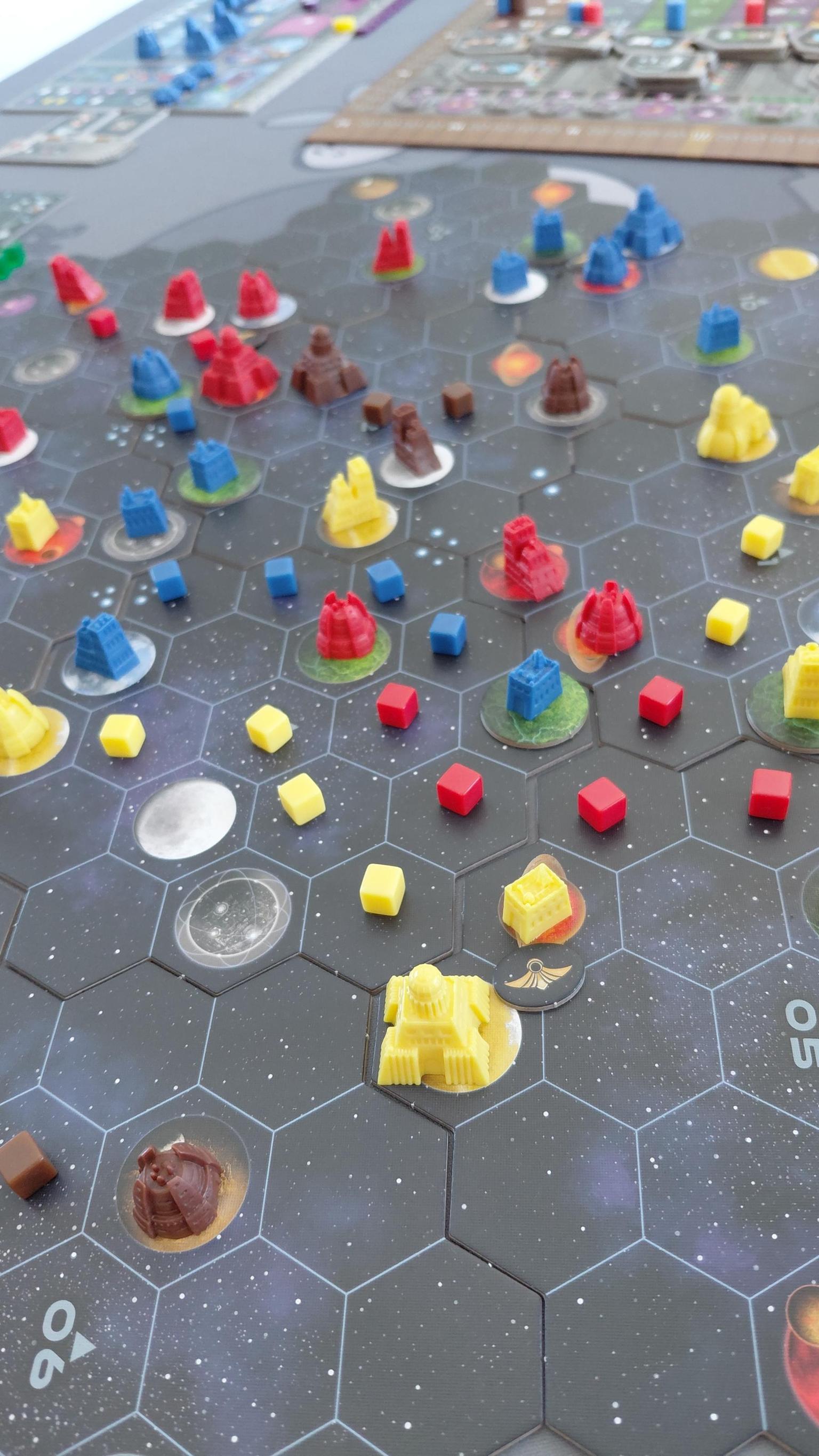
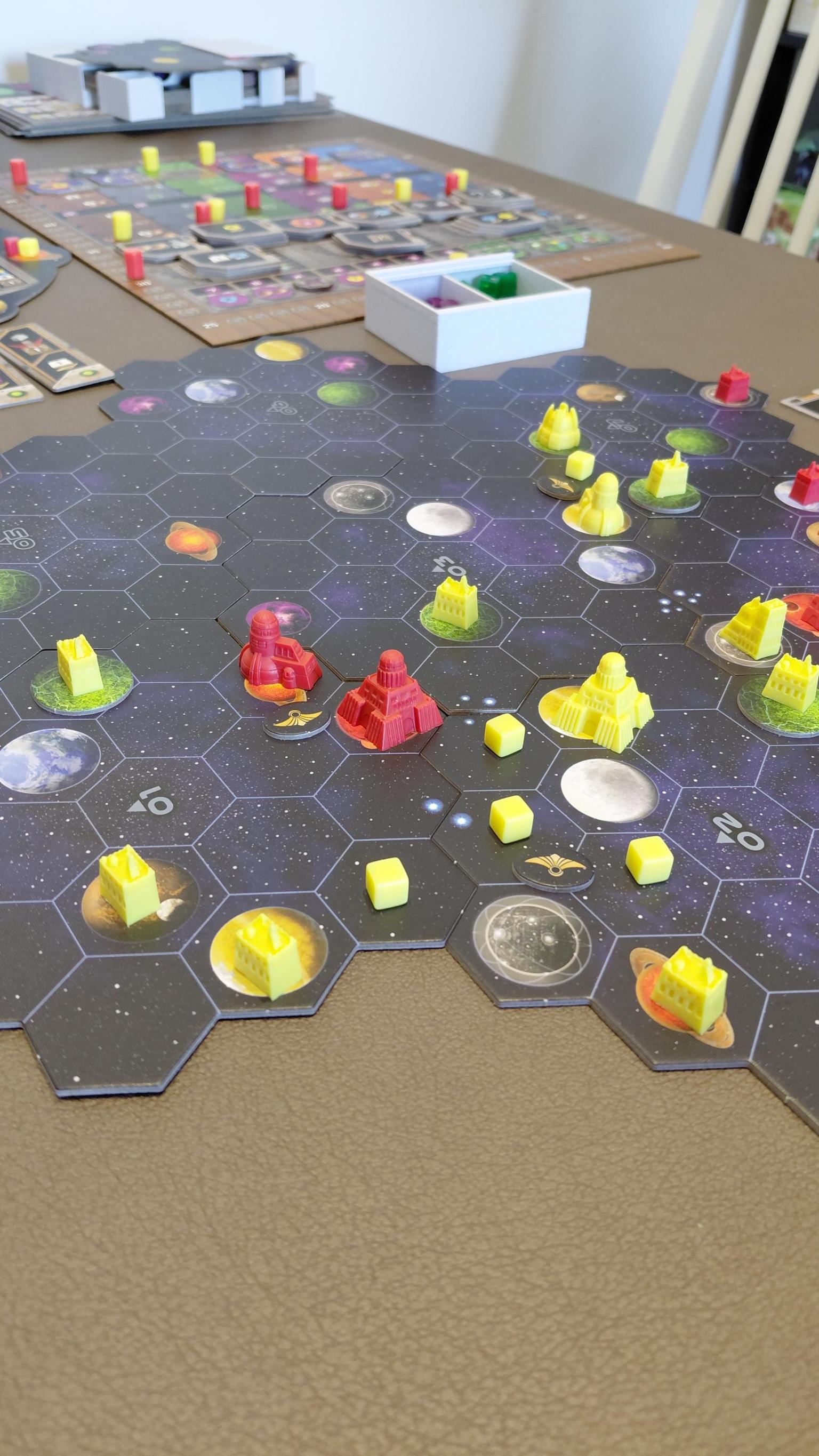
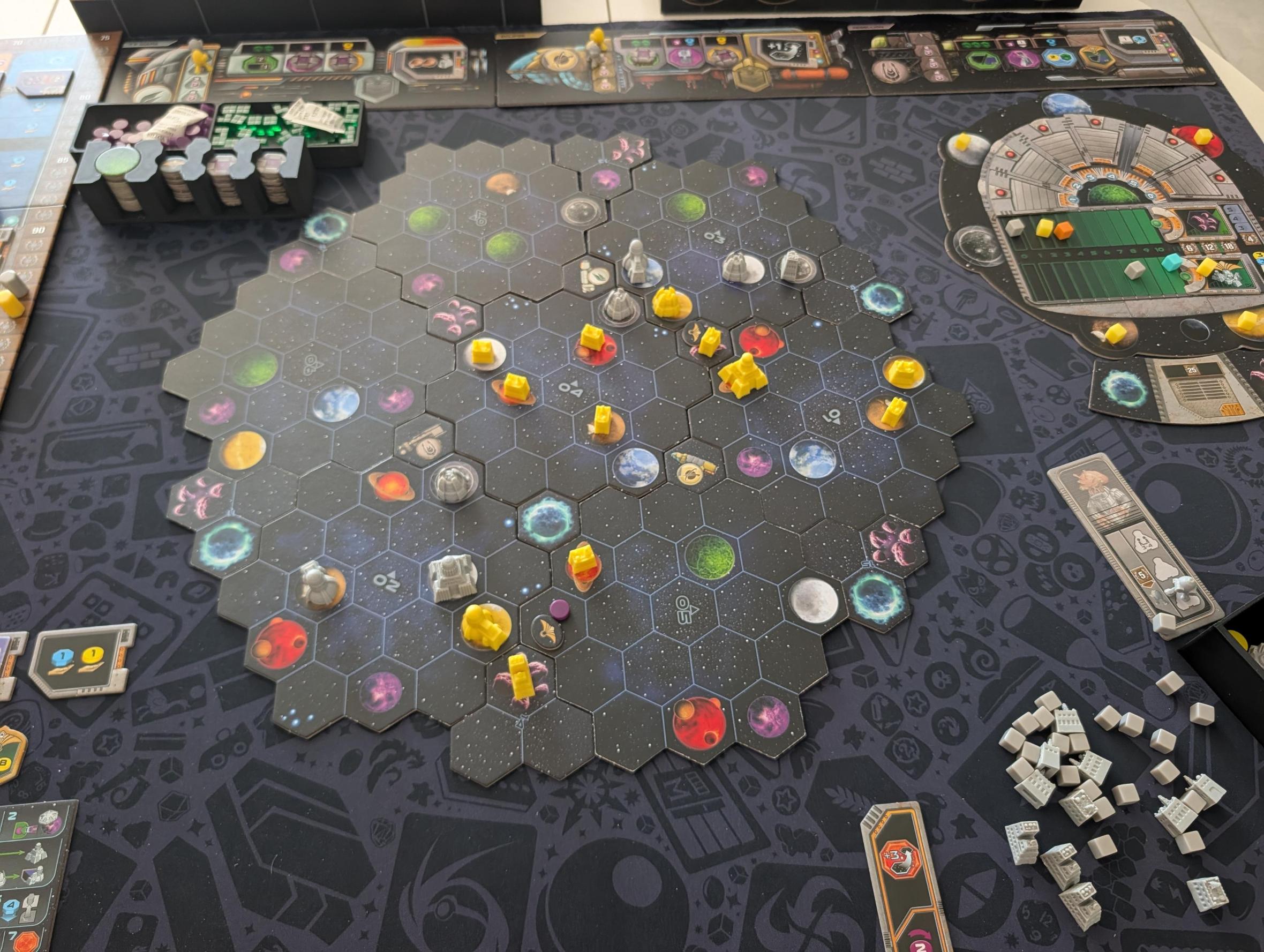
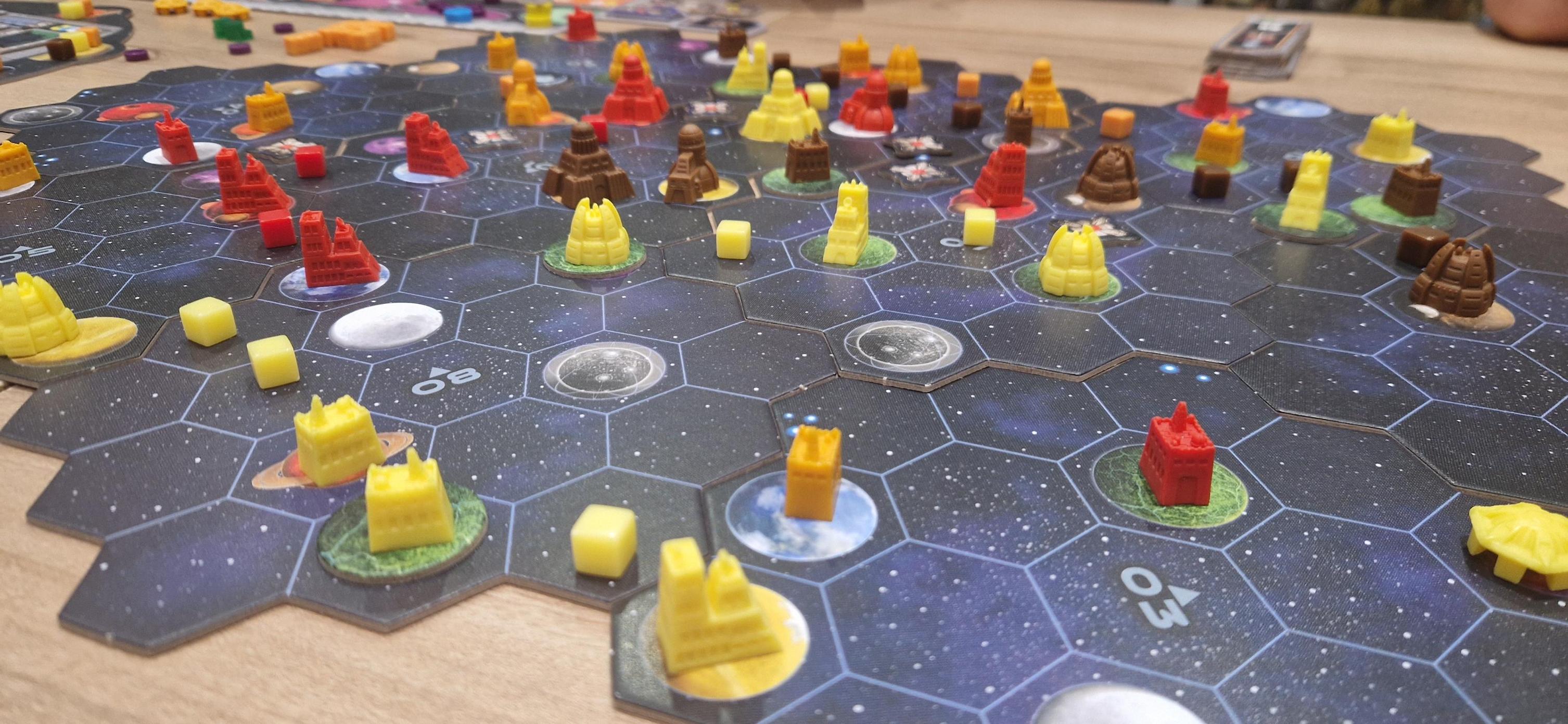
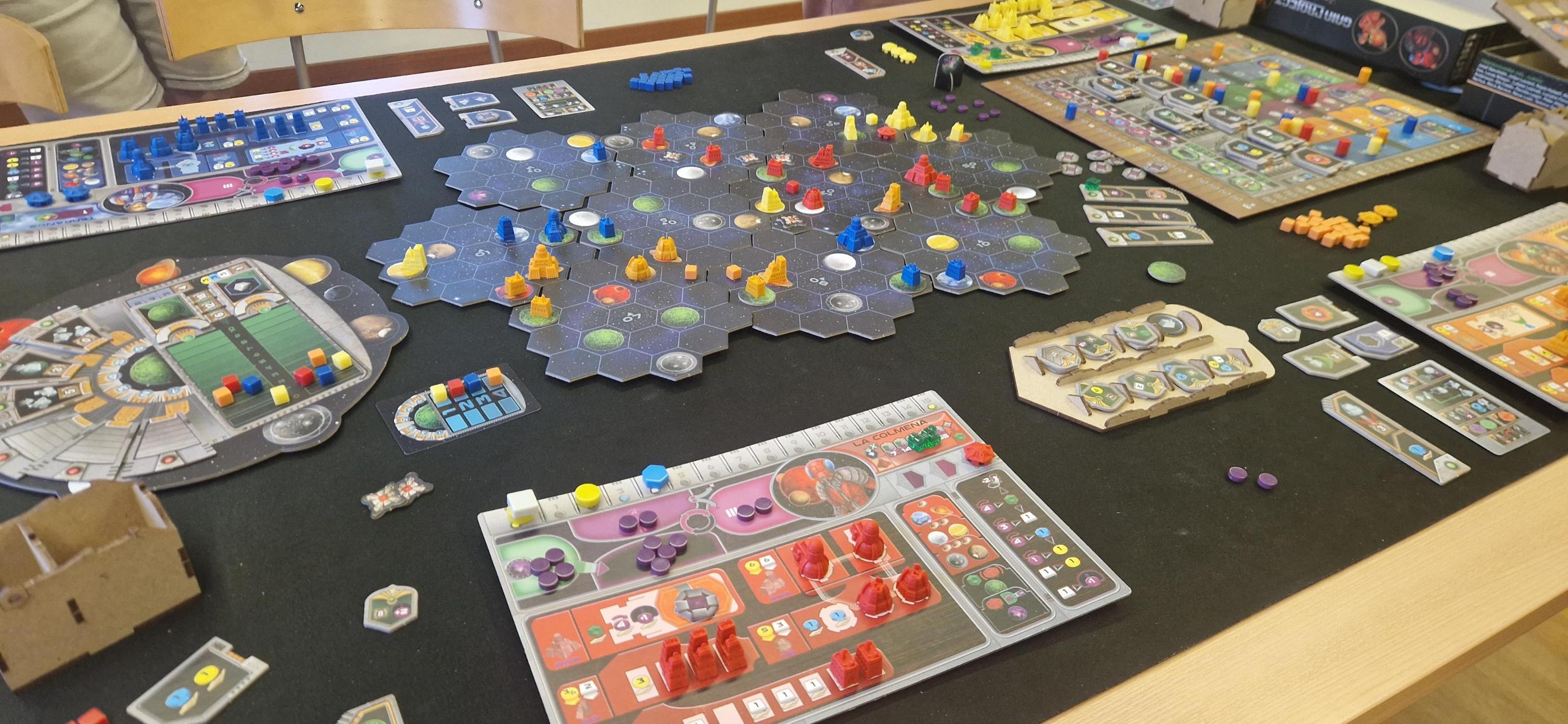
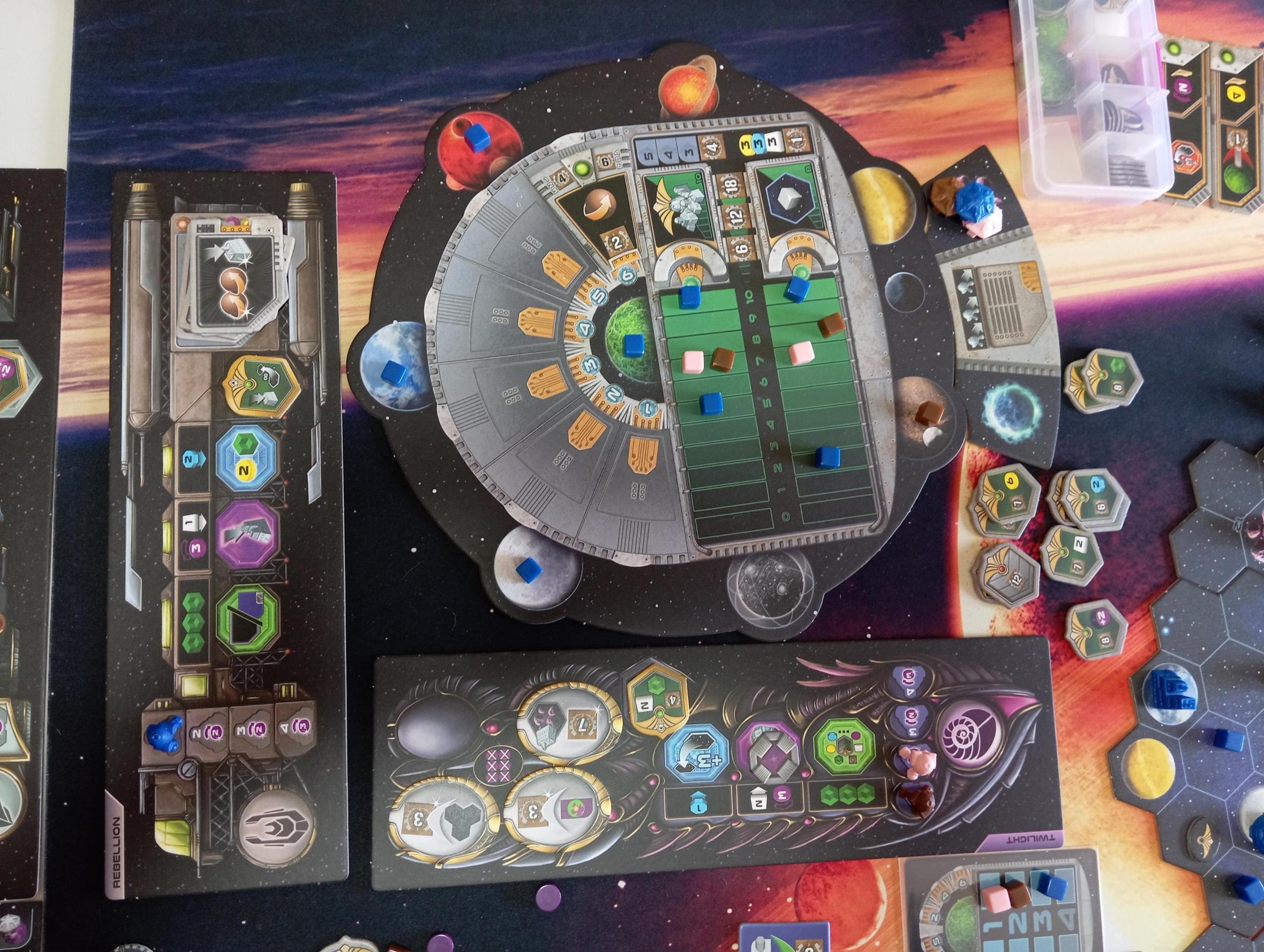
Where to buy it
Shop prices and second-hand copies, checked every day.
On Ludoya's tables
Full stats in Ludoya- 1,406
- Plays logged
- 852
- Players
- 2h 15m
- Average play
- 296
- In collections
- 69
- On wishlists
- 2
- Pre-ordered
8.4/10
from 171 Ludoya reviews
By player count
zim zhang9.0 10 with expansion
No plays logged
Mestremuten9.0 Rating: 5/5 Production value: 3/4 Is the game in my collection/Love to have?: 1/1
Played it 4 times
Carlos9.0 Very deep brain burner game. Need to play more.
First impressions · 2 plays


Rules questions
Answered from the rulebook by Ludoya's rules assistant.
Can I spend power from any area of my power cycle?
No. You can spend only power tokens in area III, moving each spent token to area I. To charge power, move tokens from area I to II when possible; only when area I is empty do you move tokens from II to III (p. 9).
How far away can I build a mine, and can I use Q.I.C. to reach farther?
Your basic range depends on Navigation: 1 at levels 0–1, 2 at levels 2–3, 3 at level 4, and 4 at level 5. When building a mine, each Q.I.C. you spend adds 2 spaces to your range; the route is the shortest path and may cross occupied or unoccupied planets (p. 11).
Can I build on a Transdim Planet right away, or does my Gaiaformer stay there?
You cannot build directly on a Transdim Planet: first start a Gaia Project, and the planet becomes a Gaia Planet during the following round’s Gaia phase. The Gaiaformer stays on it until you build a mine there; only its owner can colonize that planet, and that owner pays no Q.I.C. to make it habitable (pp. 10–12).
How much do I need to connect for a federation, and can I include extra planets or satellites?
Your connected planets’ structures must total at least 7 power value, and you must use as few planets and satellites as possible while meeting that threshold; each satellite costs one discarded power. A mine is worth 1, a trading station or research lab 2, and a planetary institute or academy 3 (p. 14).
Once I pass, can I still take actions or keep my round booster?
No. Passing ends your turns for the rest of the round; when you pass, take a different available booster and return the one you started with (in the final round, return yours without taking another). You may take free actions before passing, but not after (p. 16).
When another player builds or upgrades near me, do I charge power for free?
You may charge power if you have a structure within two spaces, but you must spend VP: charging 1, 2, 3, or 4 power costs 0, 1, 2, or 3 VP, respectively. You can charge for only your highest-power-value nearby structure, and you either charge the full amount or as much as your power cycle or available VP permits (p. 17).
Official score sheet
Gaia Project score sheet
Every scoring category, from the Ludoya kit. On your phone the totals add up by themselves.
Score sheets and play helpers
- Full Game Kit
- CAT ✶ Gaia Project
- EN ✶ Gaia Project



People who own it also own


Free, on web, Android and iOS
Play Gaia Project with Ludoya
- Keep it in your collectionTrack your copy and its expansions, lend it to friends, or put it on your wishlist and get told when the price drops.Add it to your collection
- Log every playScores, winners, timers and photos, then your stats: win rate, favourite player count, best score.Log a play
- Settle rules questionsAsk anything about the rules and get an answer from the rulebook, with the page to check it on.Ask the rules assistant
- Find people to play it withClubs, game nights and events near you that bring this game to the table.See events
Game facts (players, playing time, age, credits) from BoardGameGeek.