

2014 · Card Game
Red7
Players compete over quick rounds where the current rule determines which cards win. Each card has a color (seven colors) and a number (1–7), and playing or discarding cards can change the active rule or the current winning condition. On a turn, a player draws or plays to try to be winning under the present rule; if a player is not winning at the end of their turn, they are eliminated. Rounds end when only one player remains. The deck is 49 color-number cards and games resolve in a few minutes.
- Players
- 2–4 best 4
- Playing time
- 5–30 min
- Age
- 9+
- Complexity
- 1.7 / 5
About the game
- Design
- Publisher



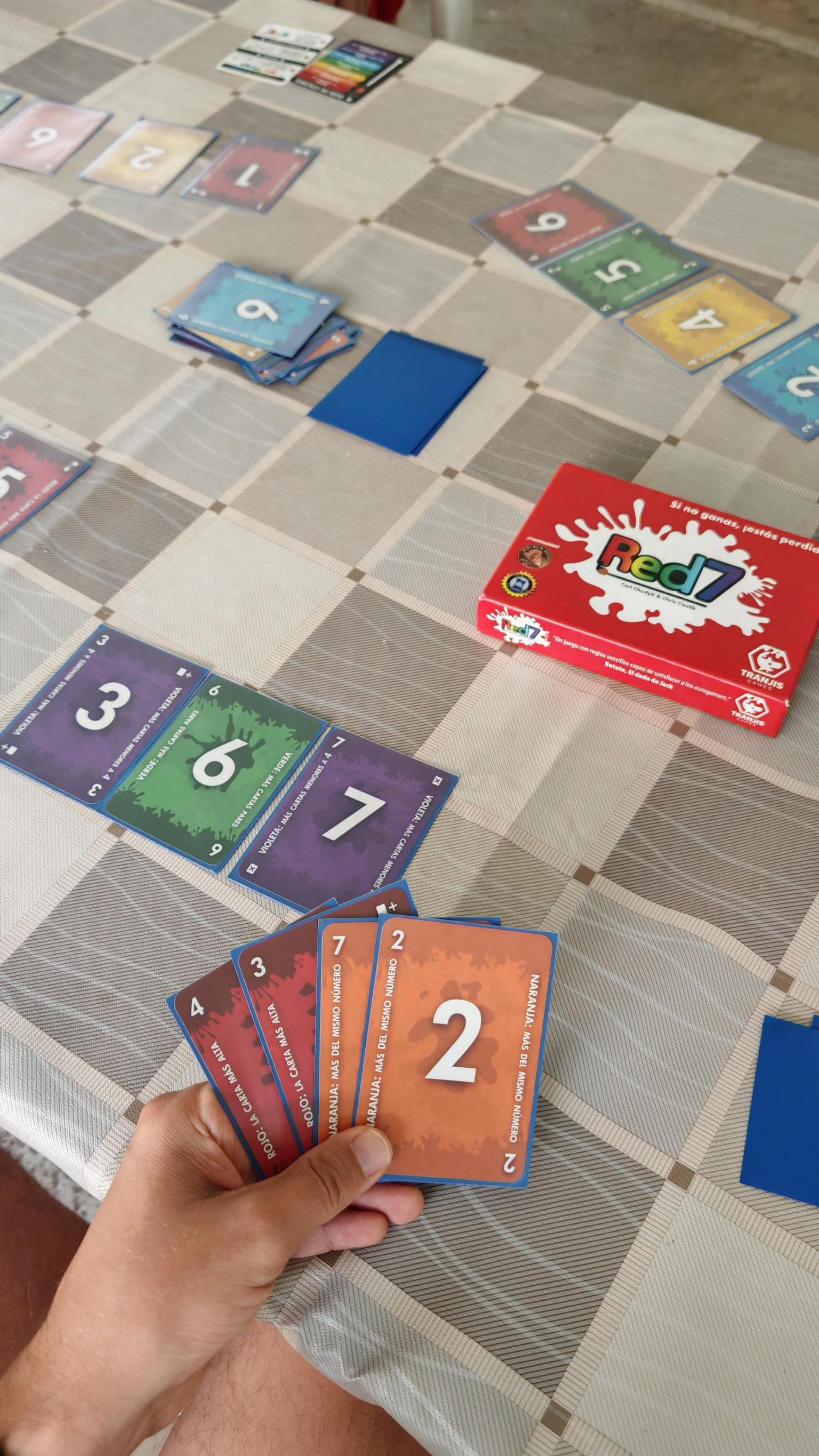
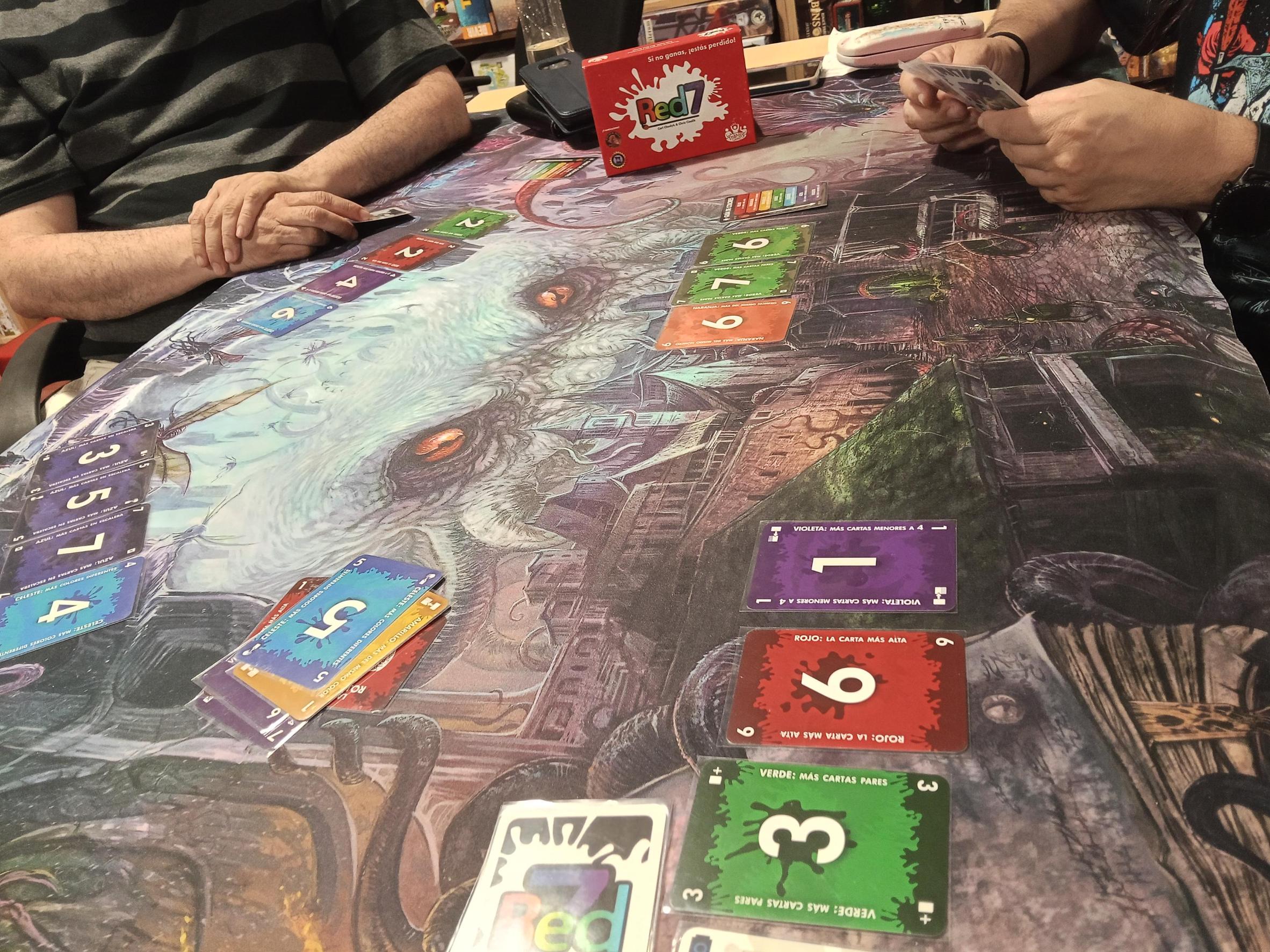
Photos from Ludoya tables
All photos in Ludoya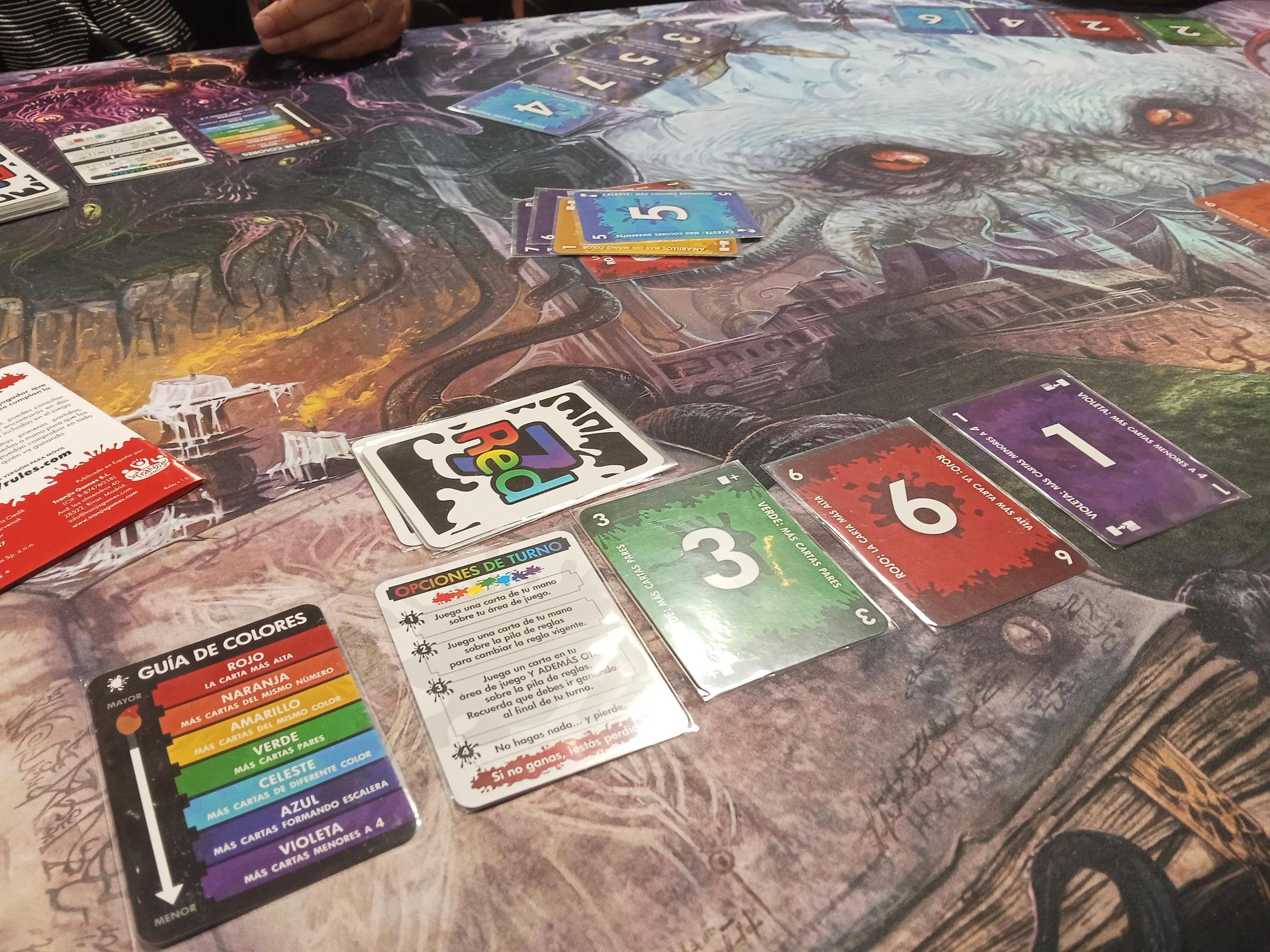
Where to buy it
Shop prices and second-hand copies, checked every day.
On Ludoya's tables
Full stats in Ludoya- 1,349
- Plays logged
- 743
- Players
- 22m 41s
- Average play
- 236
- In collections
- 5
- On wishlists
- 1
- Pre-ordered
6.3/10
from 121 Ludoya reviews
Mestremuten5.0 Rating: 3/5 Production value: 2/4 Is the game in my collection/Love to have?: 0/1
Jan Solo6.5 FILLER
Mohasz7.0 While the game is very unique and offers interesting gameplay, I rarely feel like playing it for some reason.

Rules questions
Answered from the rulebook by Ludoya's rules assistant.
How many cards do I get and who goes first?
Each player is dealt a seven‑card hand and one faceup card to start their Palette; the Canvas starts with the ‘You are Playing Red’ card, and the player to the left of whoever has the highest Palette card goes first (page 2).
Do I have to be winning at the end of my turn?
Yes—if you are not winning the current game at the end of your turn you lose and are out of the round (page 3).
What exactly does ‘winning the game’ mean and how are ties broken?
You are winning if your Palette contains more cards that meet the Canvas rule than any other player; in a tie, the highest card among the cards that meet the rule wins, using the color order if needed (Red→Violet) (pages 3 and 2).
Can I discard a card to the Canvas to change the rule even if that leaves me not winning?
No—when you discard a card to the Canvas to change the rule, you must be winning the new game after you do this (page 3).
What if my hand is empty or I choose to do nothing on my turn?
If your hand is empty at the start of your turn you lose and are out of the round; doing nothing is also a legal action that causes you to lose (page 3).
What do the icons on the 1, 3, 5, and 7 mean—are those actions mandatory?
The corner icons are an optional Action Rule set; if you use them then when you play a 1, 3, 5, or 7 to your Palette you MUST perform that card’s action if you can (page 4).




















Free, on web, Android and iOS
Play Red7 with Ludoya
- Keep it in your collectionTrack your copy and its expansions, lend it to friends, or put it on your wishlist and get told when the price drops.Add it to your collection
- Log every playScores, winners, timers and photos, then your stats: win rate, favourite player count, best score.Log a play
- Settle rules questionsAsk anything about the rules and get an answer from the rulebook, with the page to check it on.Ask the rules assistant
- Find people to play it withClubs, game nights and events near you that bring this game to the table.See events
Game facts (players, playing time, age, credits) from BoardGameGeek.