

2018 · Economic
Smartphone Inc.
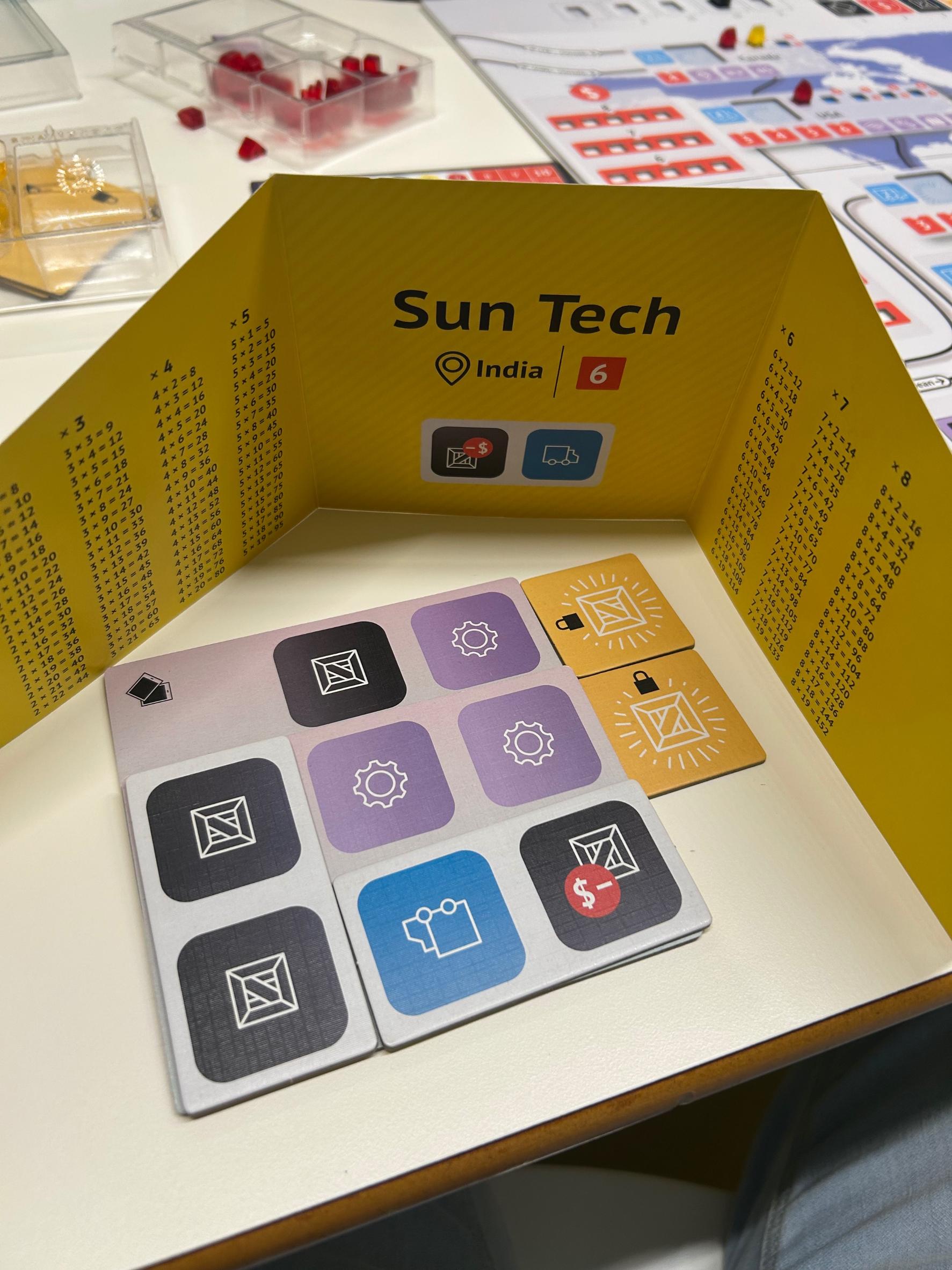
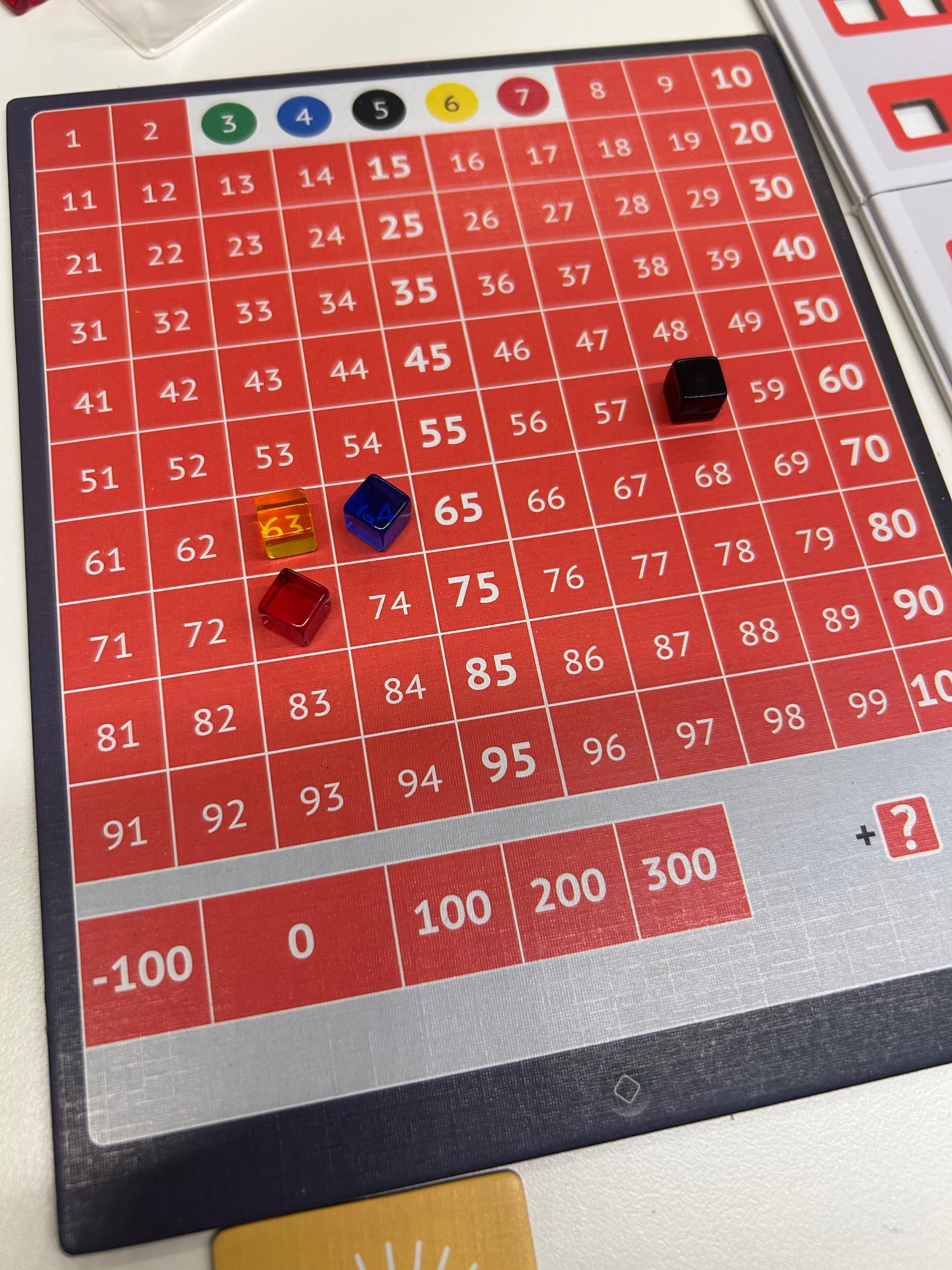
Players act as CEOs of early smartphone companies and compete to build the most profitable global business over five rounds. Each round, players simultaneously plan their actions by overlaying two plan cards and development tiles, then set prices, produce phones, develop new capabilities, research technologies, expand offices into neighboring regions, and sell into markets where they have presence. Pricing affects market access and order of sales; regions have limited space so lower-priced rivals can block higher-priced offers. Income is collected from sold phones and regional bonuses, and the richest player after five rounds wins.
- Players
- 1–5 best 5
- Playing time
- 60–90 min
- Age
- 14+
- Complexity
- 2.8 / 5
About the game
- Design
- Publisher


Expansions
See them in Ludoya

Photos from Ludoya tables
All photos in Ludoya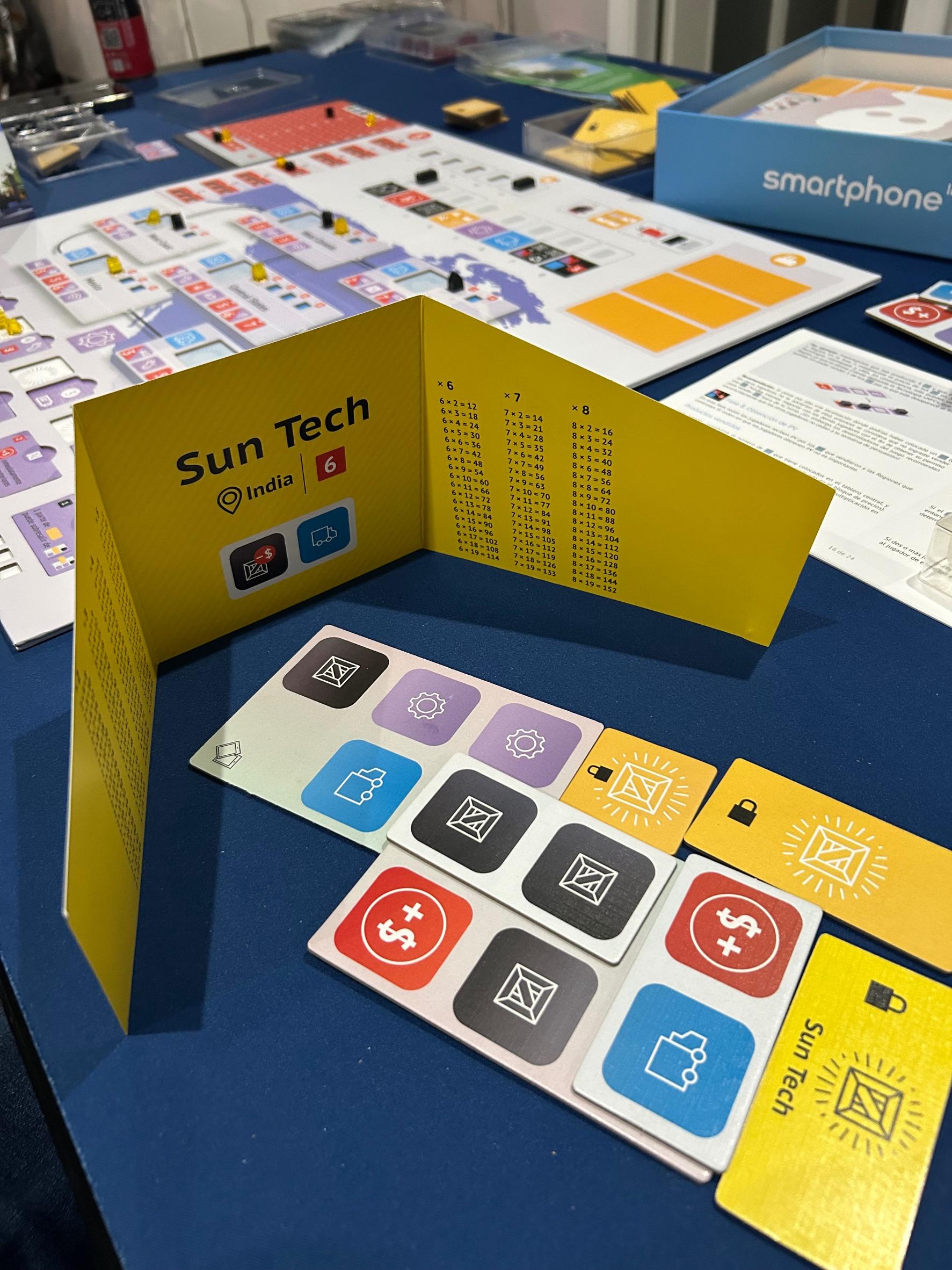

Where to buy it
Shop prices and second-hand copies, checked every day.
On Ludoya's tables
Full stats in Ludoya- 273
- Plays logged
- 433
- Players
- 1h 25m
- Average play
- 95
- In collections
- 20
- On wishlists
7.7/10
from 46 Ludoya reviews
Garfield9.0 #41 Great economic game! Outstanding action selection mechanism. Very hard competition as in real life... [c] Theme: :star::star::star::star::star: <!-- size 7]You feel the competition --> Gameplay: :star::star::star::star::star: <!-- size 7]Interesting and meaningful decisions --> Interaction: :star::star::star::star::star: <!-- size 7]Competition all the time --> Artwork: :star::star::star::star::nostar: <!-- size 7]Very nice and elegant --> Luck: :star::nostar::nostar::nostar::nostar: <!-- size 7]No --> Strategy: :star::star::star::star::nostar: <!-- size 7]Pure strategy --> Components: :star::star::star::star::nostar: <!-- size 7]Very good --> Play duration: :star::star::star::star::nostar: <!-- size 7]Very good --> Easy to teach: :star::star::star::nostar::nostar: <!-- size 7]Ok (30min) --> Rules quality: :star::star::star::star::nostar: <!-- size 7]Ok(12 questions) --> Setup time: :star::star::star::nostar::nostar: <!-- size 7]Ok --> No downtime: :star::star::star::star::nostar: <!-- size 7]Plays fast --> Replay value: :star::star::star::star::nostar: <!-- size 7]Different action tiles, technologies, starting location --> [/c]
Vic Granell8.0 Very solid strategy euro game!!! I was a bit hesitant because of the theme, but I'm glad I got it!
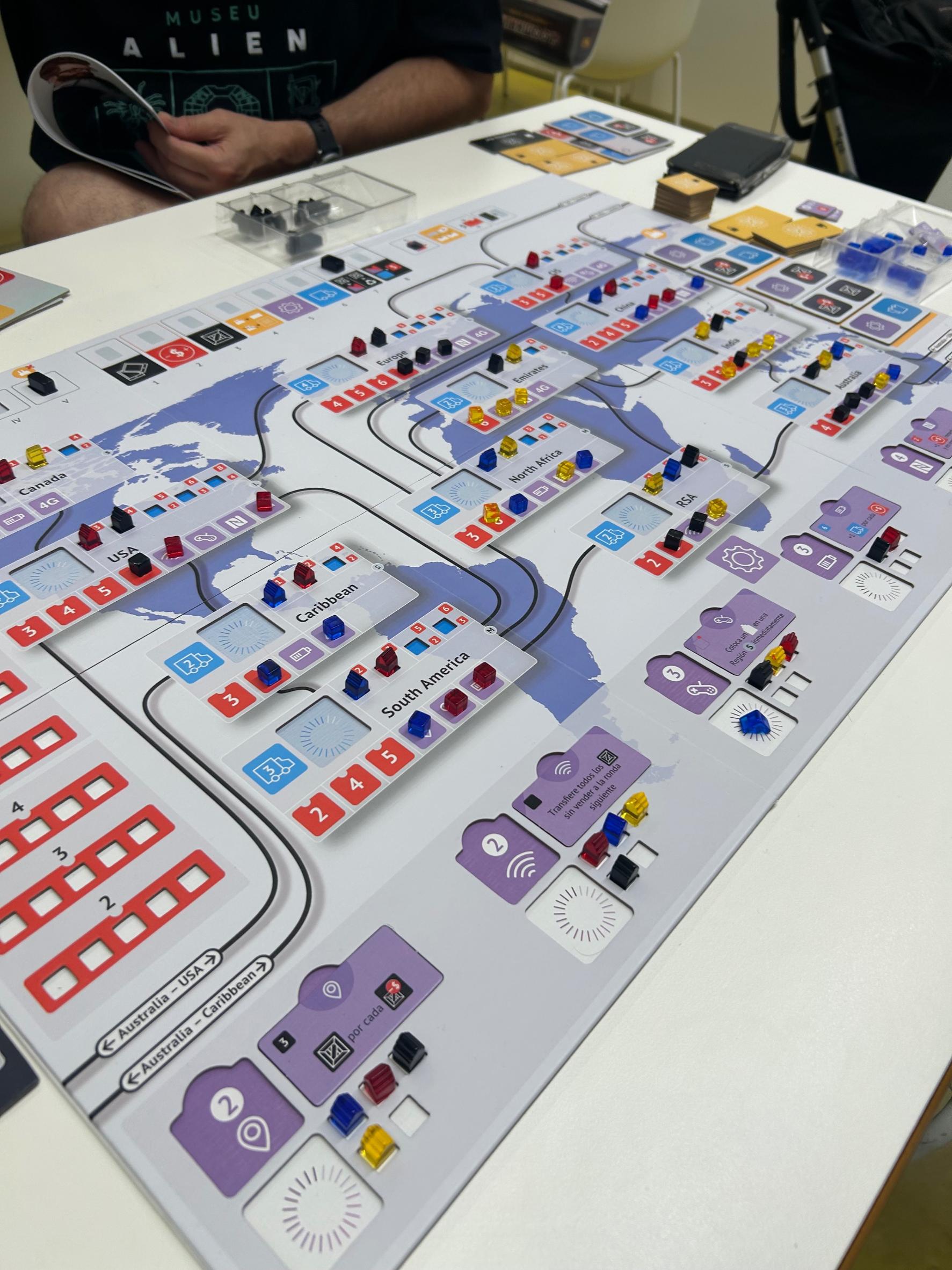
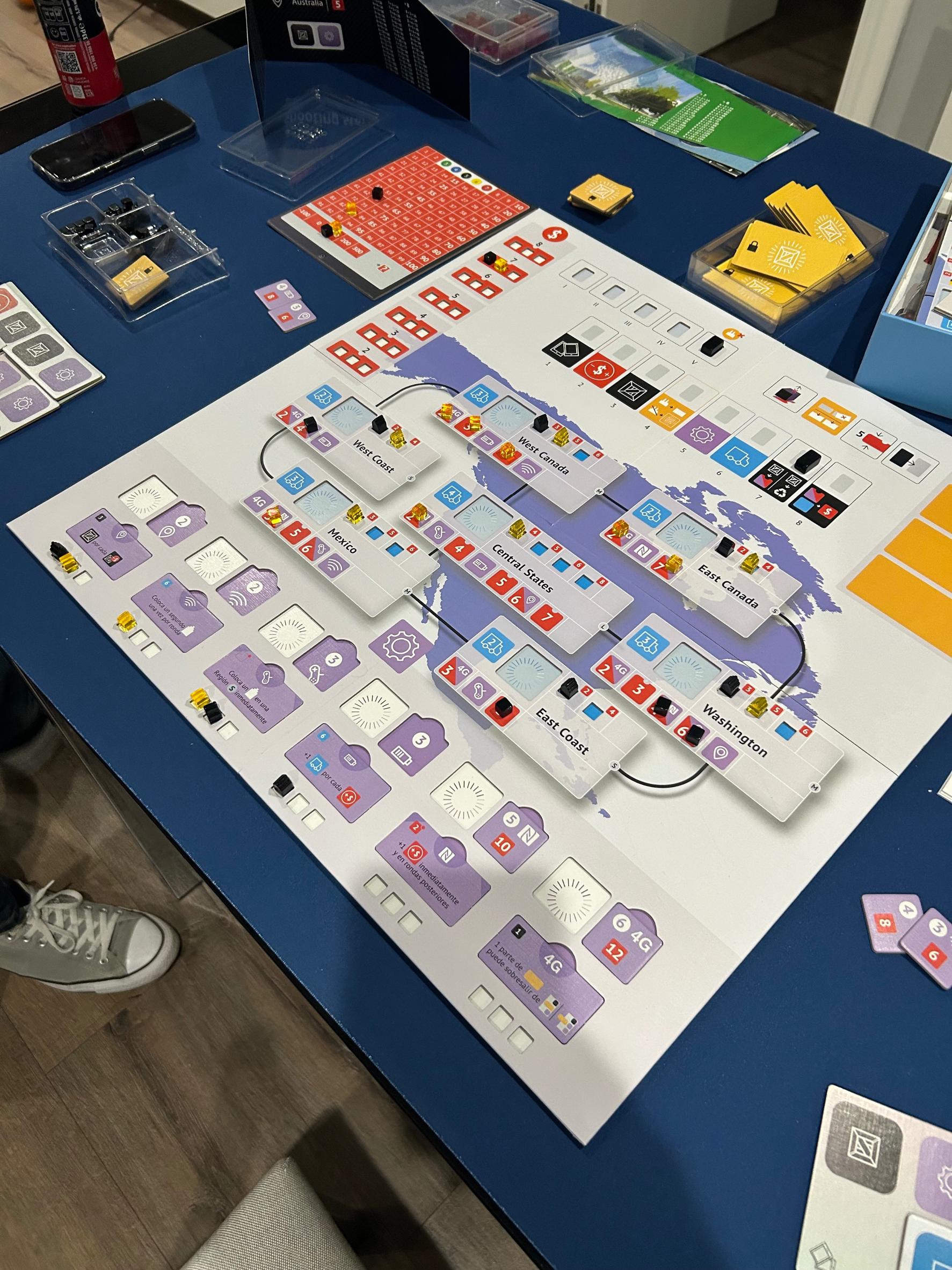
Evan5.9 In this game players get two boards. Simultaneously they secretly overlap the boards in such a way that they cover 1 to 4 spaces. Then the icons that remain determine what you do that turn. Generally you produce cubes, place new houses along connected routes and research special abilities which also give you more opportunities to sell cubes. The key parts of the game involve setting a price for your cubes at the beginning of the turn and then the act of placing your produce cubes into sale spaces. Turn order goes from cheapest cubes to most expensive, and each board location has a majority scoring for who has the most cubes sold. There's a solid and enjoyable tension between wanting to sell for more vs selling cheaper to be able to sell sooner and in theory into more spots. The game feels like it needs to be exactly 5 players to function well as with 4 there are areas of the map that seem to become dominated by a single player, even when some spaces get closed off by starting setup tokens. Additionally, all the interesting decisions get made during the first half of the round, yet the second half is just raw processing and resolving and that takes up most of the time of the game. Decent economics game. Would play again with exactly 5, although the downtime is a little high. :star: Art, Iconography and components functional :star: Clever or interesting mechanisms :nostar: Reasonably low downtime between turns with mildly AP players :star: Multiple plays stay interesting :star: Low or mitigatable luck elements :star::star::star::nostar::nostar: Raw enjoyment

Rules questions
Answered from the rulebook by Ludoya's rules assistant.
Can I change the position of my Pads after Phase 1 if I made a mistake?
No — Pad positions are fixed for the rest of the round once Planning (Phase 1) ends; you cannot change them later (pages 10, 21).
Do covered Pad cells still produce Goods in Phase 3?
Yes — each covered cell on your Pads produces 1 Good in Phase 3 (page 11); however, cells covered by an Improvement are inactive and do not produce Goods (page 13).
How is turn order (Priority) determined when players set the same price?
Priority is by lowest price first; ties on price are broken by lowest VP on the scoreboard, and if still tied, by the players' starting positions on the VP track (pages 12, 21).
Can I skip red Buyers and sell directly to a purple Buyer that I qualify for?
No — Goods are placed on Buyers from left to right, so you cannot place on a purple Buyer while ignoring earlier red Buyers in that region; you also must have a base there and no Retailer blocking sales (page 15).
What’s the difference between placing an Improvement face-up on a Pad and placing it face-down?
A face-up Improvement is placed on your Pad (covering 2 cells) and modifies your Pad starting next round, with any covered cells becoming inactive; a face-down Improvement is kept in front of you and produces 1 Good in Phase 3 (pages 12–13).




















Free, on web, Android and iOS
Play Smartphone Inc. with Ludoya
- Keep it in your collectionTrack your copy and its expansions, lend it to friends, or put it on your wishlist and get told when the price drops.Add it to your collection
- Log every playScores, winners, timers and photos, then your stats: win rate, favourite player count, best score.Log a play
- Settle rules questionsAsk anything about the rules and get an answer from the rulebook, with the page to check it on.Ask the rules assistant
- Find people to play it withClubs, game nights and events near you that bring this game to the table.See events
Game facts (players, playing time, age, credits) from BoardGameGeek.