
2012 · Negotiation
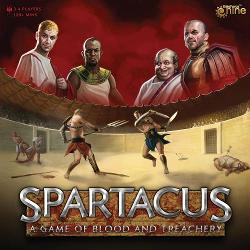
Spartacus: A Game of Blood and Treachery
Players act as Dominus of rival houses in ancient Capua, competing for Influence through politics, commerce, and gladiatorial combat. Each round players play Schemes and Reactions to advance plots and undermine opponents, then buy, sell, trade, and auction Assets such as Gladiators, Slaves, Equipment, and Guards in the Market Phase. The Arena Phase resolves miniature gladiator fights using Attack, Defense, and Speed dice, and players may bet on outcomes to gain Favor and Influence. Gameplay mixes negotiation, bribery, bidding, and tactical combat as houses jockey for power and attempt to become the most influential in Rome.
- Players
- 3–4 best 4
- Playing time
- 120–180 min
- Age
- 17+
- Complexity
- 2.7 / 5
About the game
- Publisher



Expansions
See them in Ludoya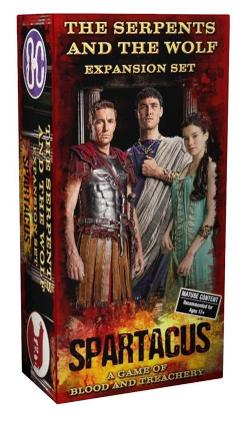 Spartacus: The Serpents and the Wolf Expansion Set2013
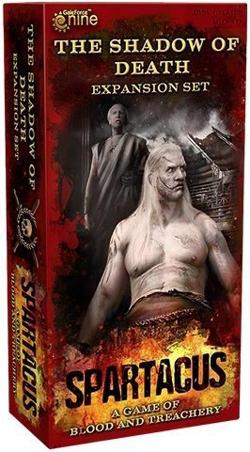 Spartacus: The Shadow of Death Expansion Set2015
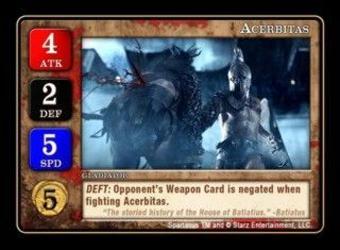 Spartacus: Acerbitas Promo Card2012
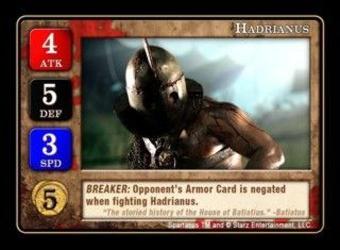 Spartacus: Hadrianus Promo Card2012
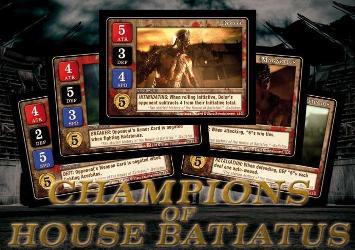 Spartacus: Champions of House Batiatus Card Set2014
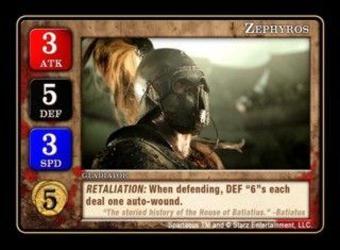 Spartacus: Zephyros Promo Card2012
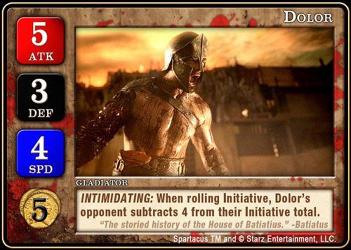 Spartacus: Dolor Promo Card2012
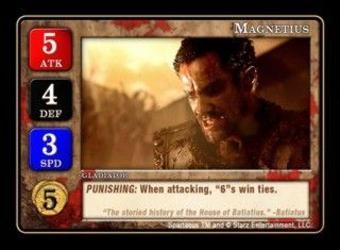 Spartacus: Magnetius Promo Card2012
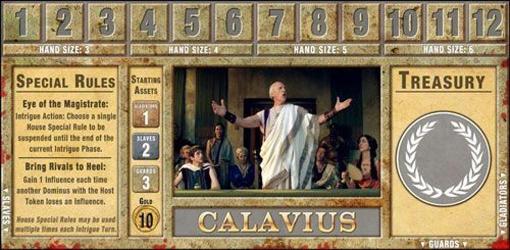 Spartacus: A Game of Blood & Treachery – House Calavius2014
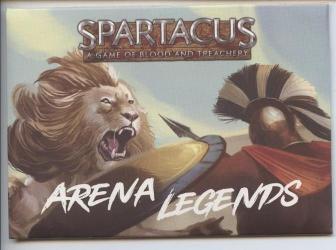 Spartacus: A Game of Blood and Treachery – Arena Legends2022
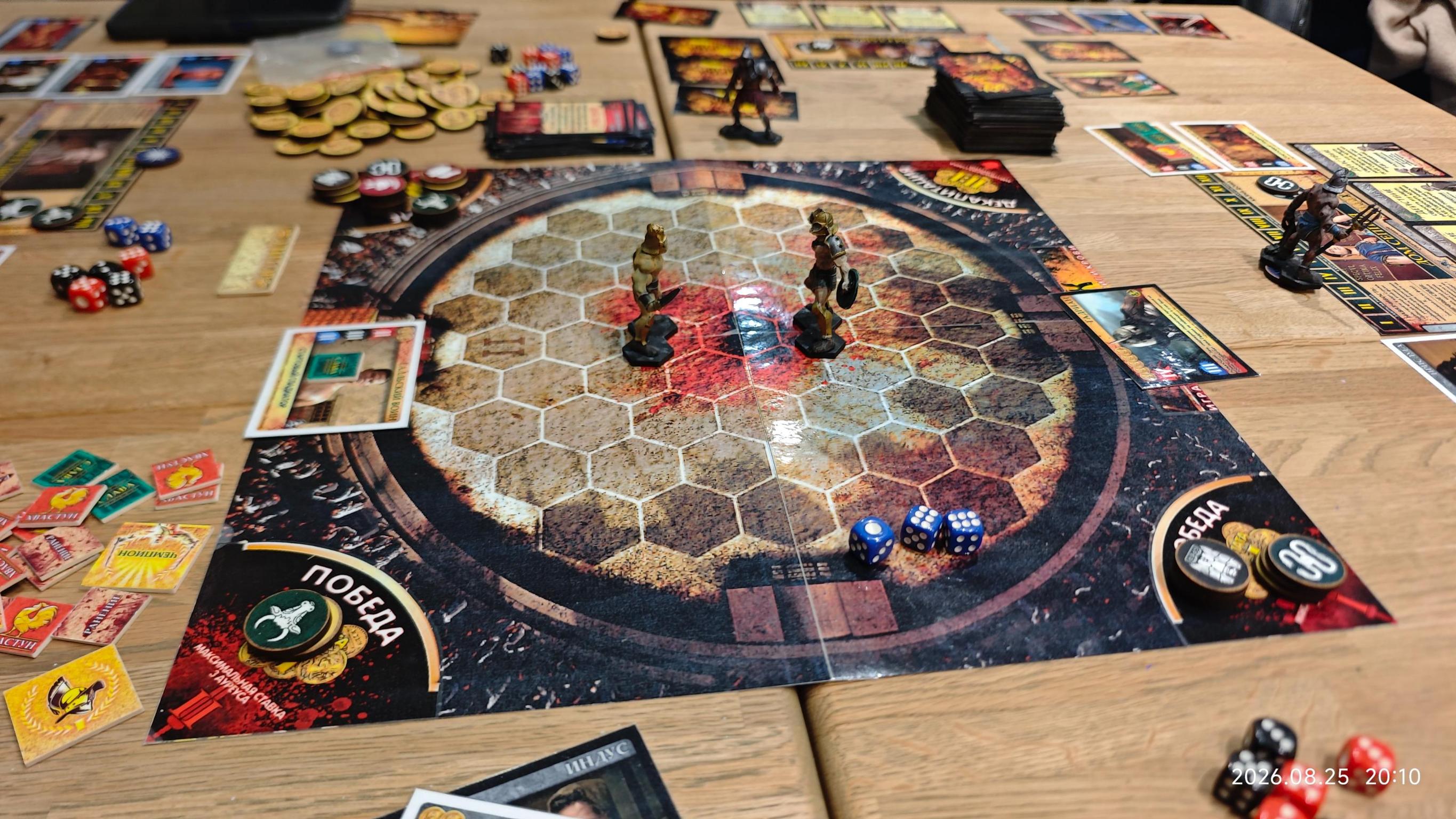
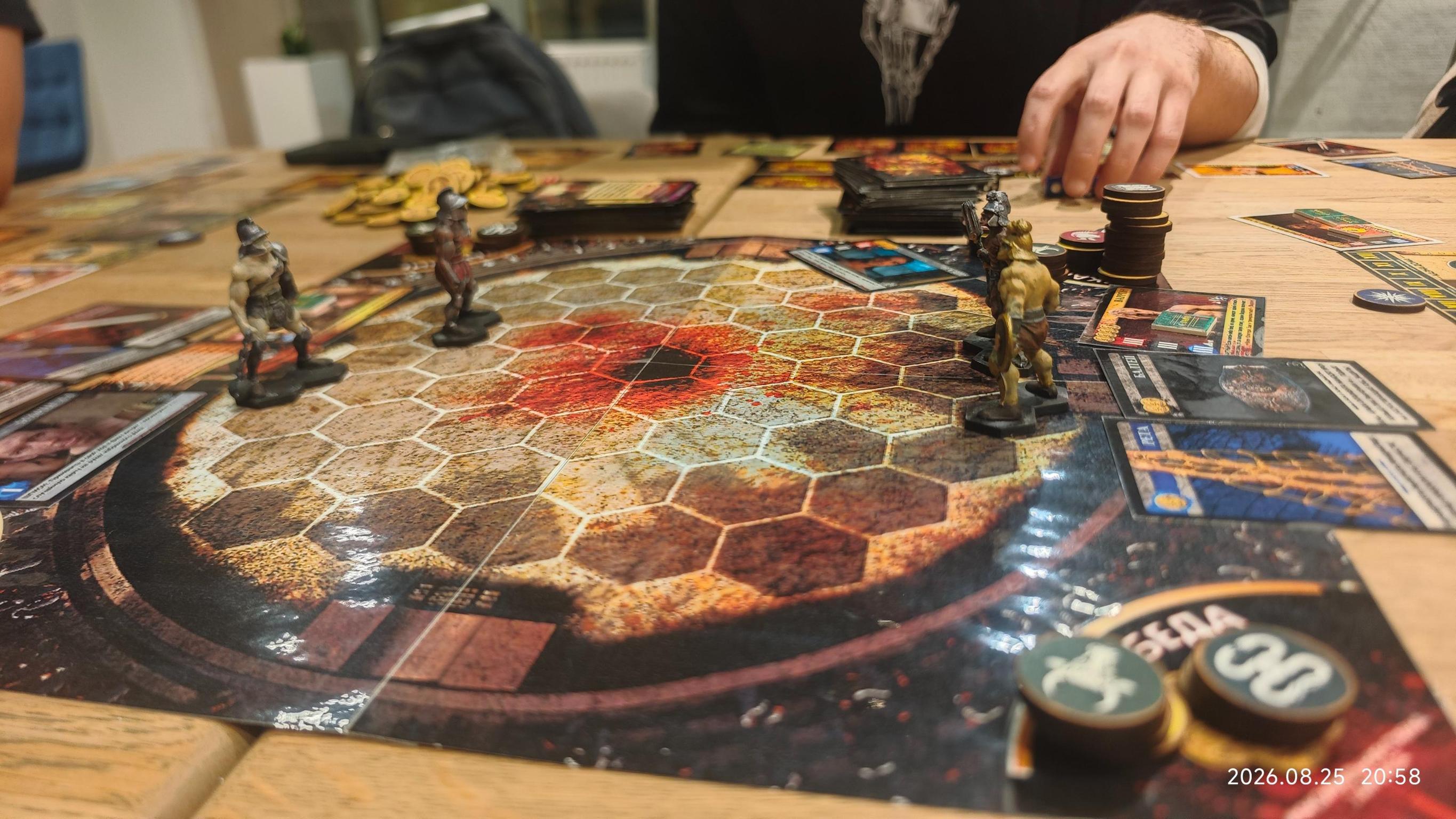
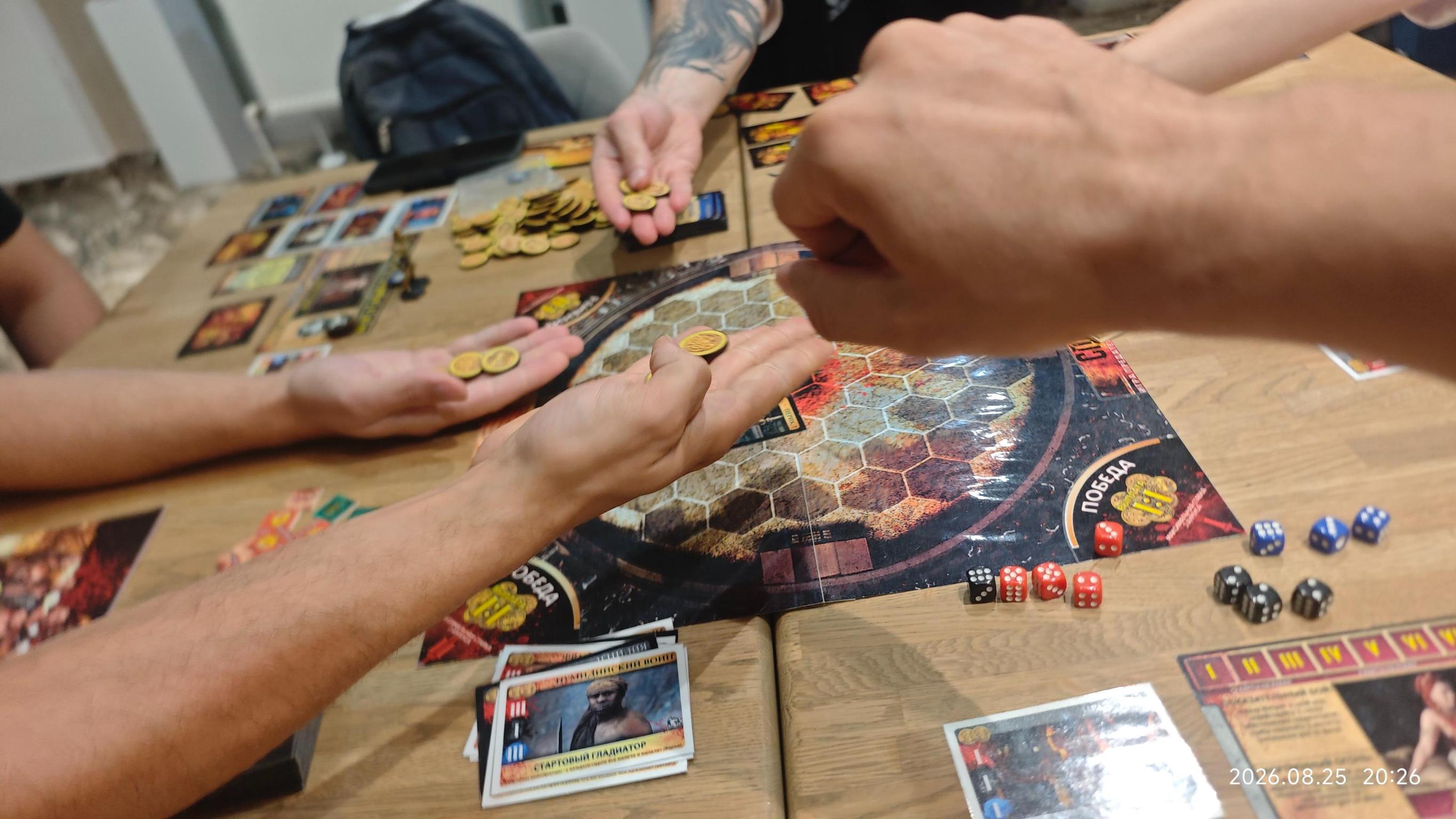
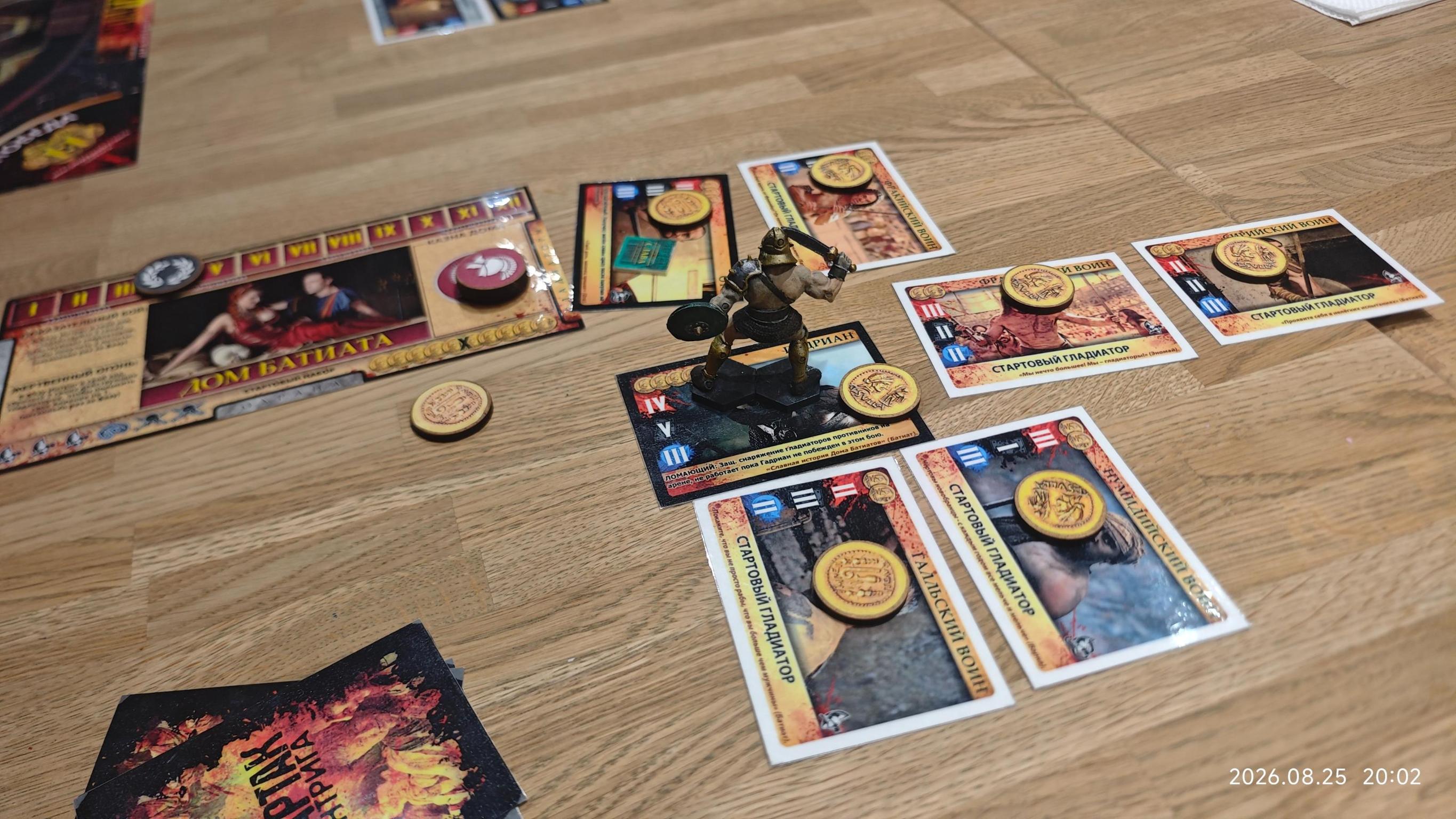
Photos from Ludoya tables
All photos in Ludoya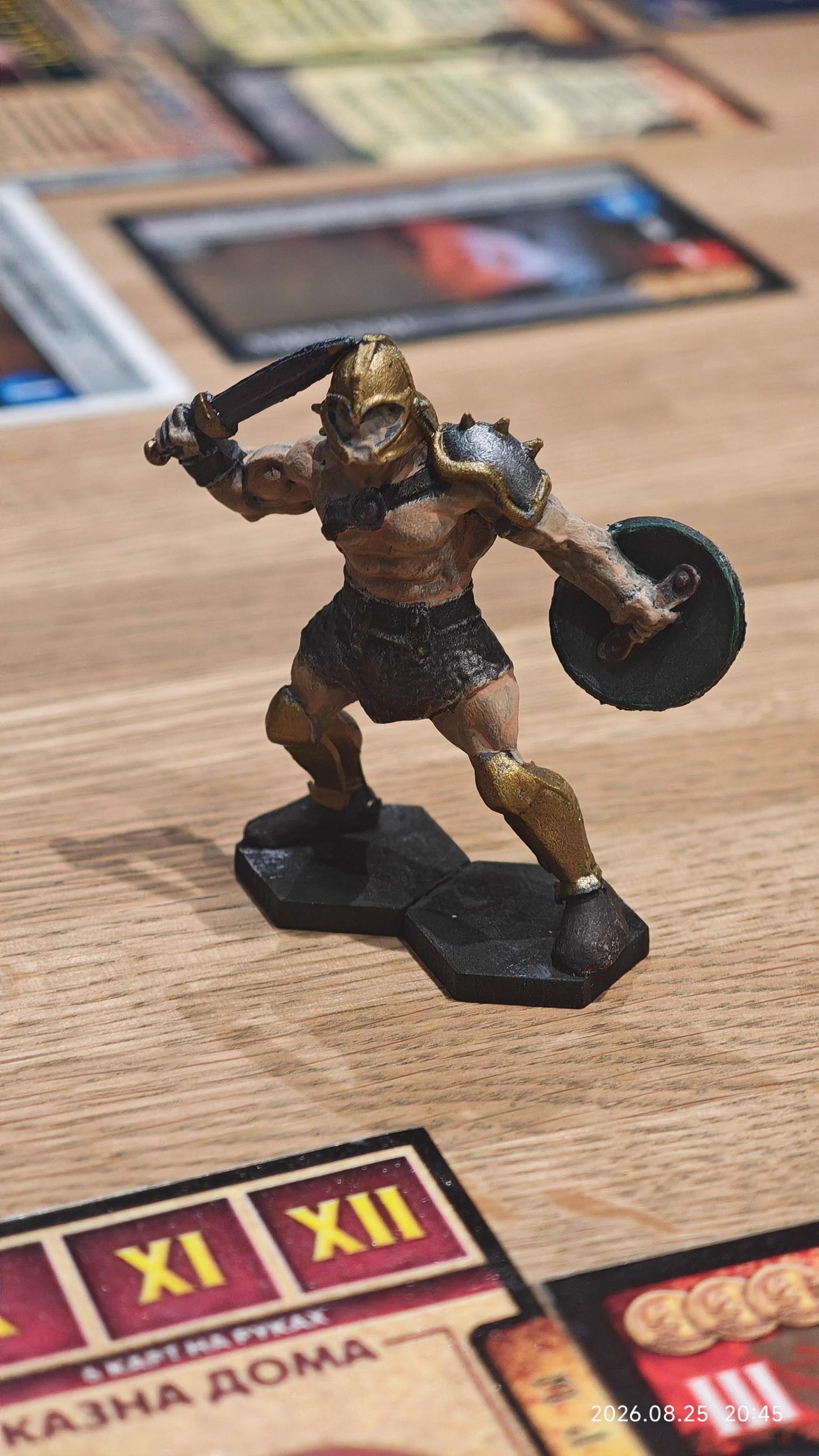
Where to buy it
Shop prices and second-hand copies, checked every day.
On Ludoya's tables
Full stats in Ludoya- 202
- Plays logged
- 319
- Players
- 3h 3m
- Average play
- 118
- In collections
- 8
- On wishlists
- 1
- Pre-ordered
7.1/10
from 78 Ludoya reviews
Mestremuten6.0 Rating: 3/5 Production value: 3/4 Is the game in my collection/Love to have?: 0/1
Cool and really thematic game. You really feel like an aristocrathic roman sending gladiators to the arena. Lots of negotiation but also randomness and chaothic strategy.
Very interactive, loud and messy game. Played this with 7 people with the expansions and it was a clusterf*ck but still had some good laughs

Rules questions
Answered from the rulebook by Ludoya's rules assistant.
Are my gladiator's dice both their stats and their health — how do wounds remove dice?
Yes. Each Attribute's dice pools are both the Combatant's stats and its total health (total dice = health); when you take Wounds you must surrender that many dice from any pools, reducing future rolls, and losing dice down to zero triggers defeat levels (Yield/Injury/Decapitation). (see p.15–17)
How do opposed attack rolls work — what's a "Dice String" and what about unopposed dice?
Attacker and defender roll their current ATK/DEF dice, sort each set highest-to-lowest into Dice Strings and compare pairwise — a Wound occurs when the attacker's die is greater than the defender's and ties go to the defender; any unopposed attack dice cause a Wound on a roll of 3 or more. (see p.16)
How is Initiative decided each combat round and what if it's tied?
Each round both players roll all available Speed dice and total them; the higher total wins Initiative and chooses to go first or second that round, and any tie is re-rolled. (see p.15)
Can I choose which dice to lose when wounded, and what is the "Rule of One"?
Yes — when surrendering dice for Wounds you may choose dice from any Attribute pools, but the Rule of One prevents reducing any pool below one die until all pools are at one; reducing a pool to zero ends the match and causes defeat. (see p.16–17)
When can I trade or sell Gladiators, Equipment or Guards to other players — Intrigue or Market?
Only during the Market phase's Open Market may Gladiators, Slaves, Equipment and Guards change hands between players; Intrigue Cards may never be traded and Asset Cards may not change hands during the Intrigue Phase. (see p.10; Intrigue restrictions on p.6)
How do auctions and concealed bidding work, and what happens with ties or failed auctions?
Auctions use concealed bids (place Gold in hand, reveal simultaneously); highest bidder wins, tied highest bidders enter additional concealed rounds adding to their previous bids until one leads, and if everyone bids zero the auction fails and the card is discarded — for Hosting ties in a Failed Auction tied bidders roll dice to determine the Host. (see p.10–11)



People who own it also own
 Funkoverse Strategy Game: DC Comics 1012019
 Survive: Escape from Atlantis!1982
 Adrenaline2016
 Nemesis2018
 Ponzi Scheme2015
 Not Alone2016
 Blood Bowl: Team Manager – The Card Game2011
 Skull King2013
 Vroom Vroom2016
 Funkoverse Strategy Game: DC Comics 1002019
 Funkoverse Strategy Game: DC Comics 1022020
 Nanty Narking2019
Free, on web, Android and iOS
Play Spartacus: A Game of Blood and Treachery with Ludoya
- Keep it in your collectionTrack your copy and its expansions, lend it to friends, or put it on your wishlist and get told when the price drops.Add it to your collection
- Log every playScores, winners, timers and photos, then your stats: win rate, favourite player count, best score.Log a play
- Settle rules questionsAsk anything about the rules and get an answer from the rulebook, with the page to check it on.Ask the rules assistant
- Find people to play it withClubs, game nights and events near you that bring this game to the table.See events
Game facts (players, playing time, age, credits) from BoardGameGeek.