

1995 · Joc de cărți
High Society
Players compete to acquire luxury items and social advantages by bidding against each other, collecting positive-value and multiplier cards while avoiding negative-value and divisor cards. Bids are made from a limited cash supply; players must balance spending to win desirable cards against conserving money, since the player with the least remaining cash is excluded from winning at game end. Rounds proceed through sequential auctions until the deck is exhausted, then scores are calculated from collected cards to determine the winner among eligible players.
- Jucători
- 3–5 ideal 4
- Timp de joc
- 15–30 min
- Vârstă
- 10+
- Complexitate
- 1,5 / 5
Despre joc
- Design
- Editură


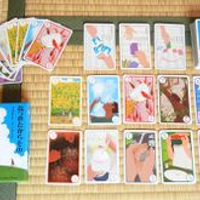



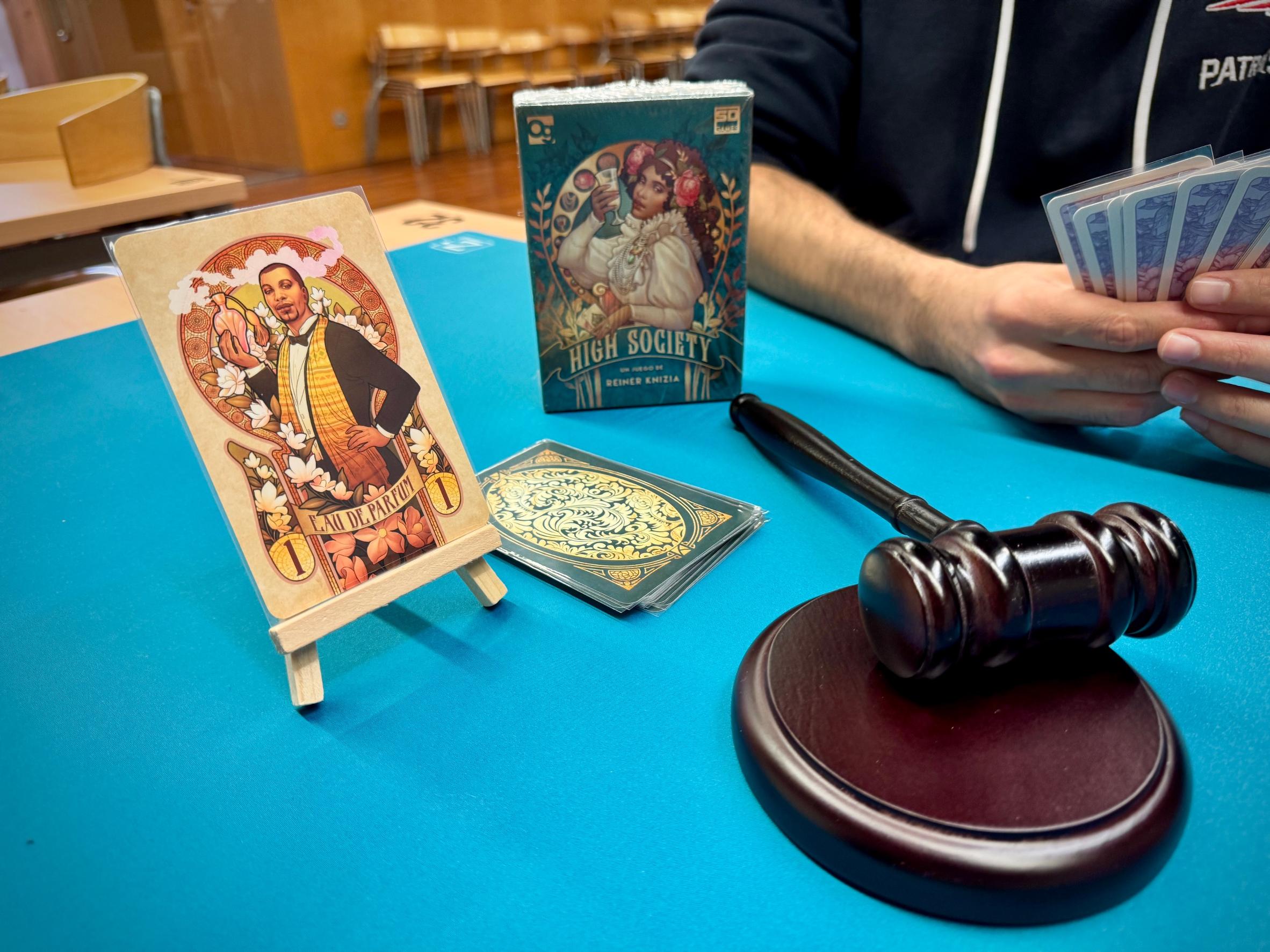
Fotografii de la mesele Ludoya
Toate fotografiile în Ludoya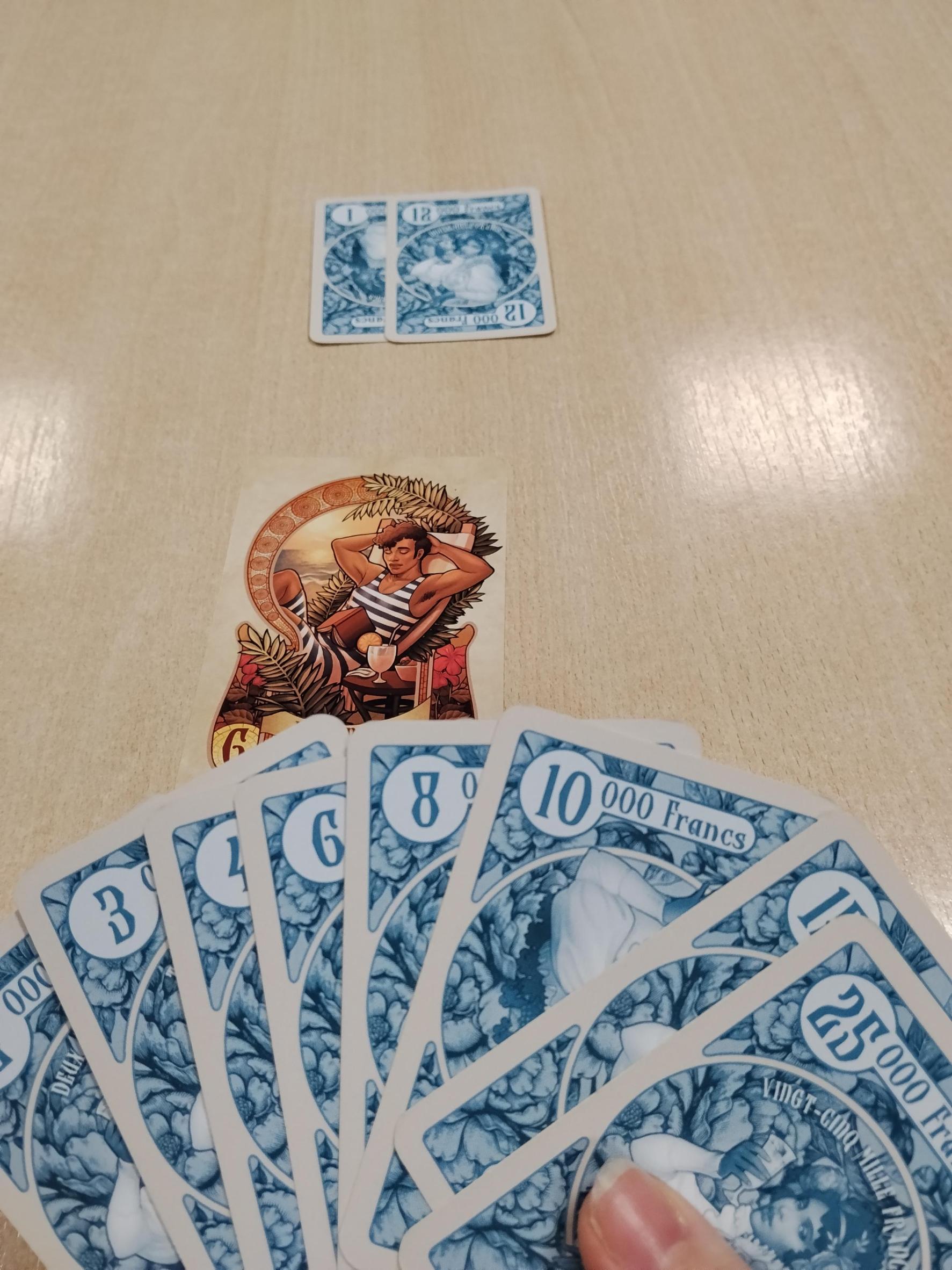
De unde îl cumperi
Prețuri din magazine și exemplare la mâna a doua, verificate zilnic.
La mesele Ludoya
Toate statisticile în Ludoya- 1.449
- Partide înregistrate
- 1.304
- Jucători
- 19m 39s
- Durată medie
- 249
- În colecții
- 27
- Pe listele de dorințe
7,6/10
din 129 de recenzii Ludoya
Xavi Torras7,8 Diversió 3/5 · Interacció 4/5 · Atractiu 5/5 · Originalitat 4/5 · Rejugabilitat 4/5 · Accessibilitat 5/5
Primele impresii · 2 partide
Nacho Ramírez10,0 Sin duda alguna mi juego favorito de subastas, y he probado varios. Tiene las ventajas de ser fácil de entender, tiemoi denjuego preciso, muy social, portable, hermoso e inmersivo. Los piques son muchísimos. Modern Art es un gran juego, pero creo que por todo lo expuesto, HS es bastante superior.
Nicio partidă înregistrată
SrCornelius8,0 Local-(284)
L-a jucat de 9 ori


Întrebări despre reguli
Răspunsuri din regulament de la asistentul de reguli Ludoya.
Can I pick up money cards I've already played to increase my bid?
No — you cannot pick up cards you have already played; you may only increase your bid by adding new money cards to the ones already on the table (page 4).
If I pass after placing a bid, do I get my money back?
Yes — if you have already bid and then pass you return all your face-up money cards to your hand, but you may no longer bid that round (page 4).
What changes when the revealed card is a disgrace? How does that auction work?
You are bidding to avoid taking the disgrace: the round ends as soon as any one player passes, that passing player picks up their money cards and must take the disgrace, while all other players discard their money cards face-down; the passing player starts the next round (page 5).
If I take the Faux Pas card, what do I have to discard?
If you take the Faux Pas you must immediately discard one luxury card you have in front of you (or the next luxury you receive if you have none), and once a luxury has been discarded the Faux Pas card itself is discarded (page 5).
When does the game end and what does 'cast out' mean?
The game ends immediately when the fourth dark-green card (the three prestige cards and the Scandale) is revealed — there is no bidding for that card — then all players reveal their hands and the player(s) with the least remaining money are cast out and cannot win (page 6).
How is final status calculated and how are ties broken?
Add up luxury card values, apply prestige multipliers (each prestige doubles your status; two = ×4, three = ×8) and apply disgrace effects (e.g., Passé −5, Scandale halves status); the highest status among players not cast out wins, with ties broken by most money left and then by the single most valuable luxury card (pages 5–6).














Gratuit, pe web, Android și iOS
Joacă High Society cu Ludoya
- Păstrează-l în colecția taȚine evidența exemplarului tău și a extensiilor lui, împrumută-l prietenilor sau pune-l pe lista de dorințe și află când scade prețul.Adaugă-l în colecția ta
- Înregistrează fiecare partidăPuncte, câștigători, cronometre și fotografii, apoi statisticile tale: rata de câștig, numărul preferat de jucători, cel mai bun scor.Înregistrează o partidă
- Lămurește întrebările despre reguliÎntreabă orice despre reguli și primești un răspuns din regulament, cu pagina unde îl poți verifica.Întreabă asistentul de reguli
- Găsește oameni cu care să-l jociCluburi, seri de jocuri și evenimente de lângă tine unde se joacă acest joc.Vezi evenimentele
Datele jocului (jucători, durată, vârstă, autori) de pe BoardGameGeek.