
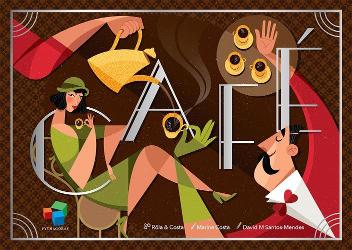
2020 · لعبة ورق
Café
Players run coffee companies in early 20th-century Portugal, building a supply chain from plantation through drying, roasting and distribution. Cards and worker-placement-like actions are used to establish and upgrade production, process coffee beans, and fulfill orders to prestigious cafés. Players manage resources, optimize card placement to chain abilities, and compete for market control and reputation across several rounds.
- اللاعبون
- 1–4 الأفضل 2
- مدة اللعب
- 20–45 دقيقة
- العمر
- 8+
- التعقيد
- 2.1 / 5
عن اللعبة
- الرسوم
- Publisher



التوسعات
شاهدها في Ludoya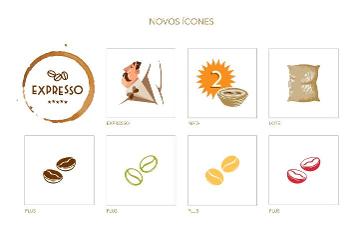
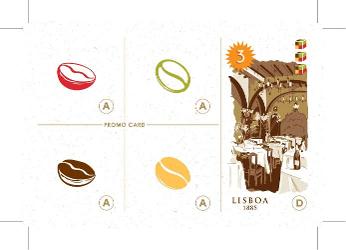
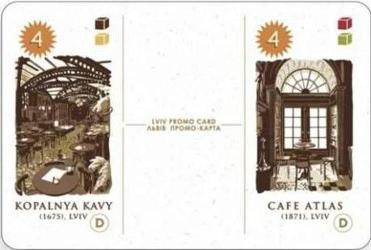
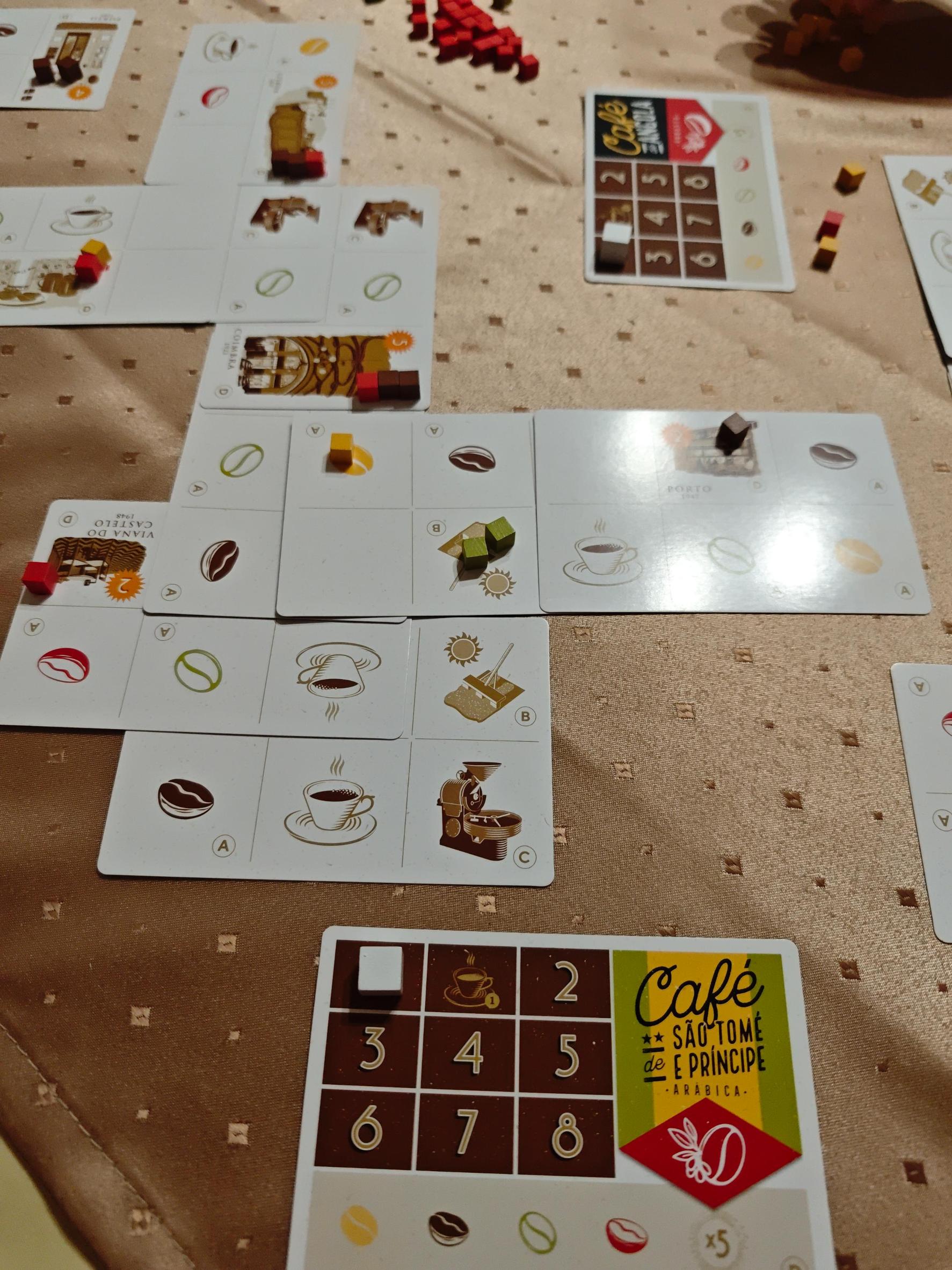
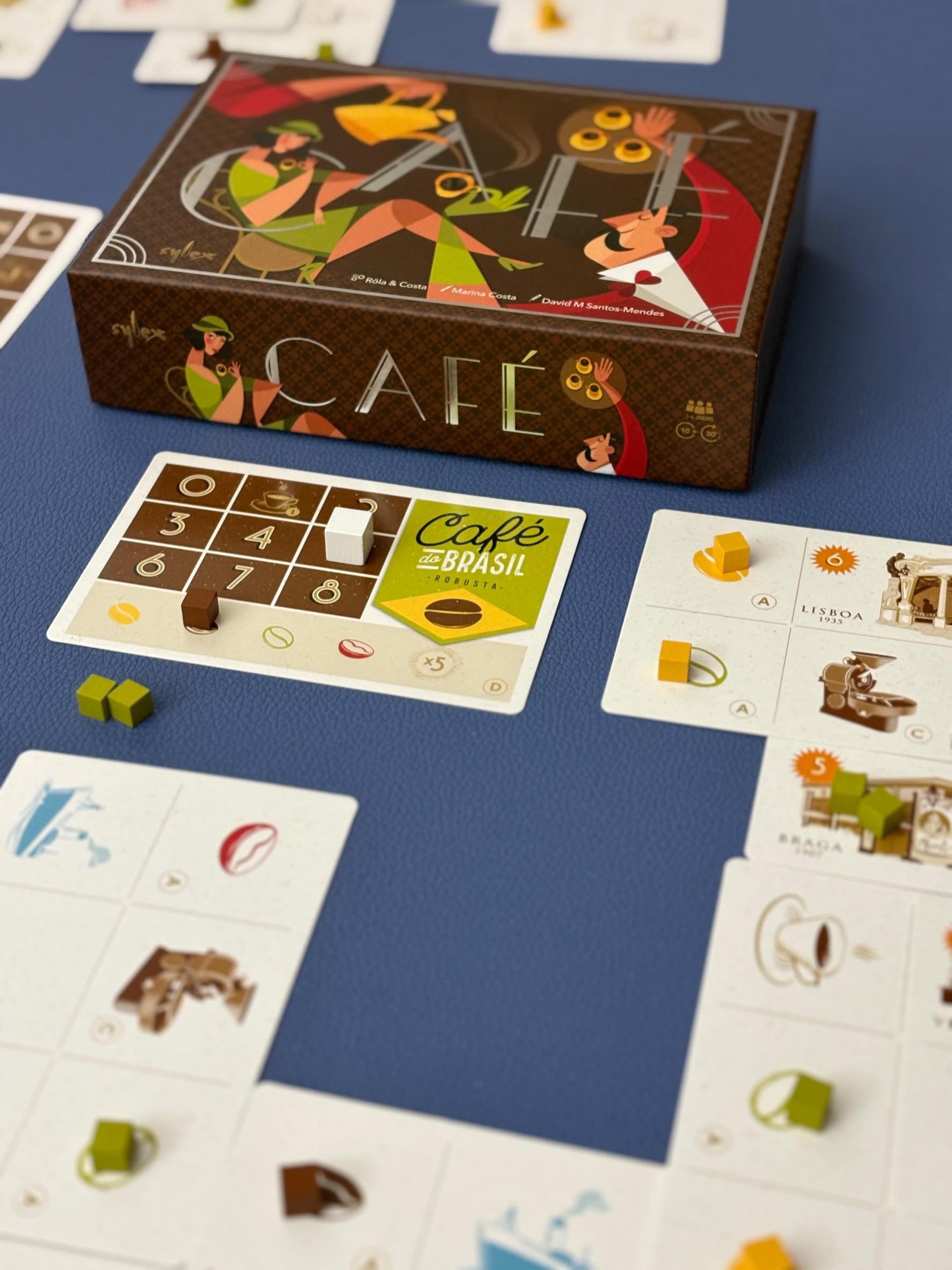
صور من طاولات Ludoya
كل الصور في Ludoya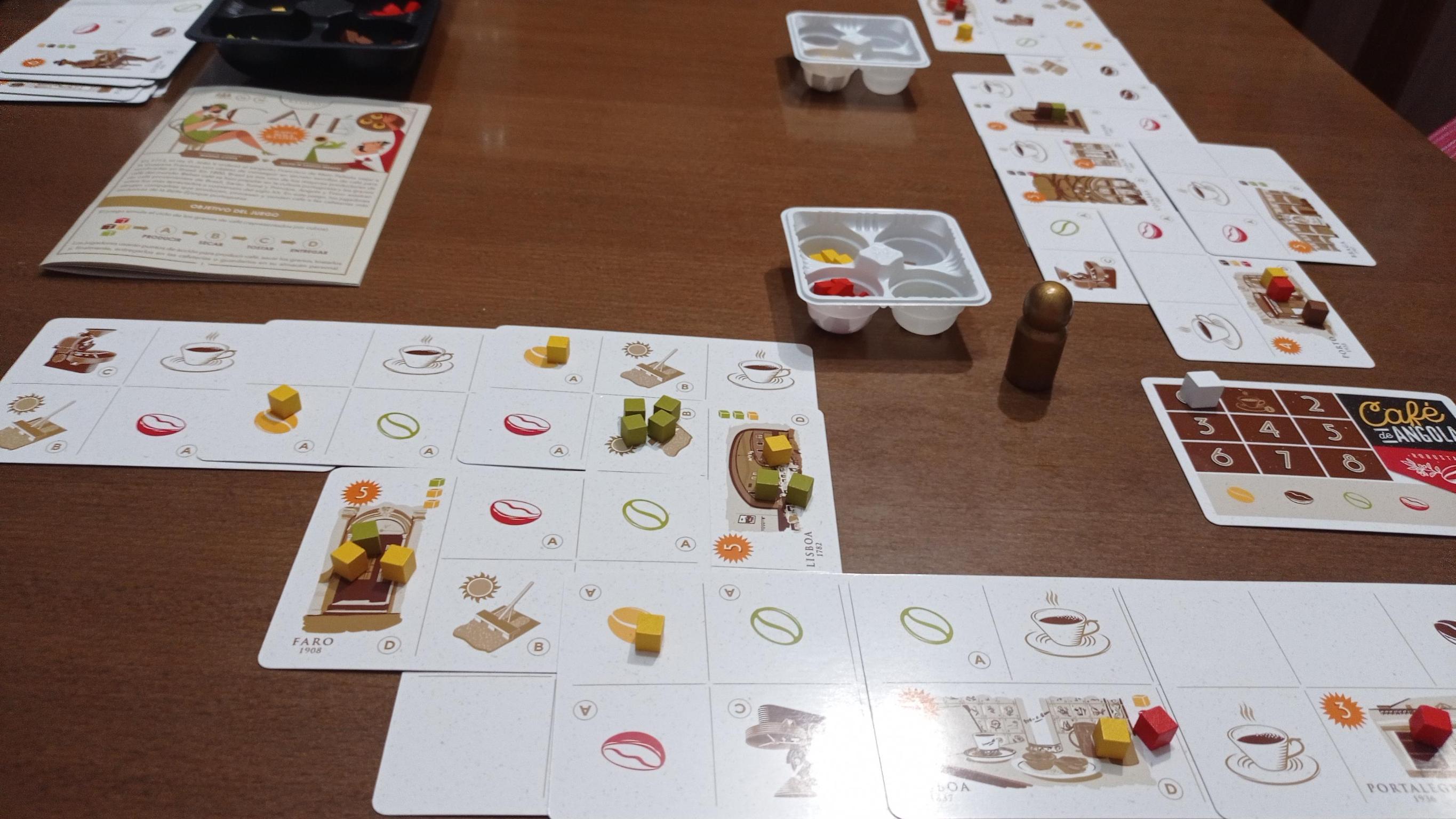
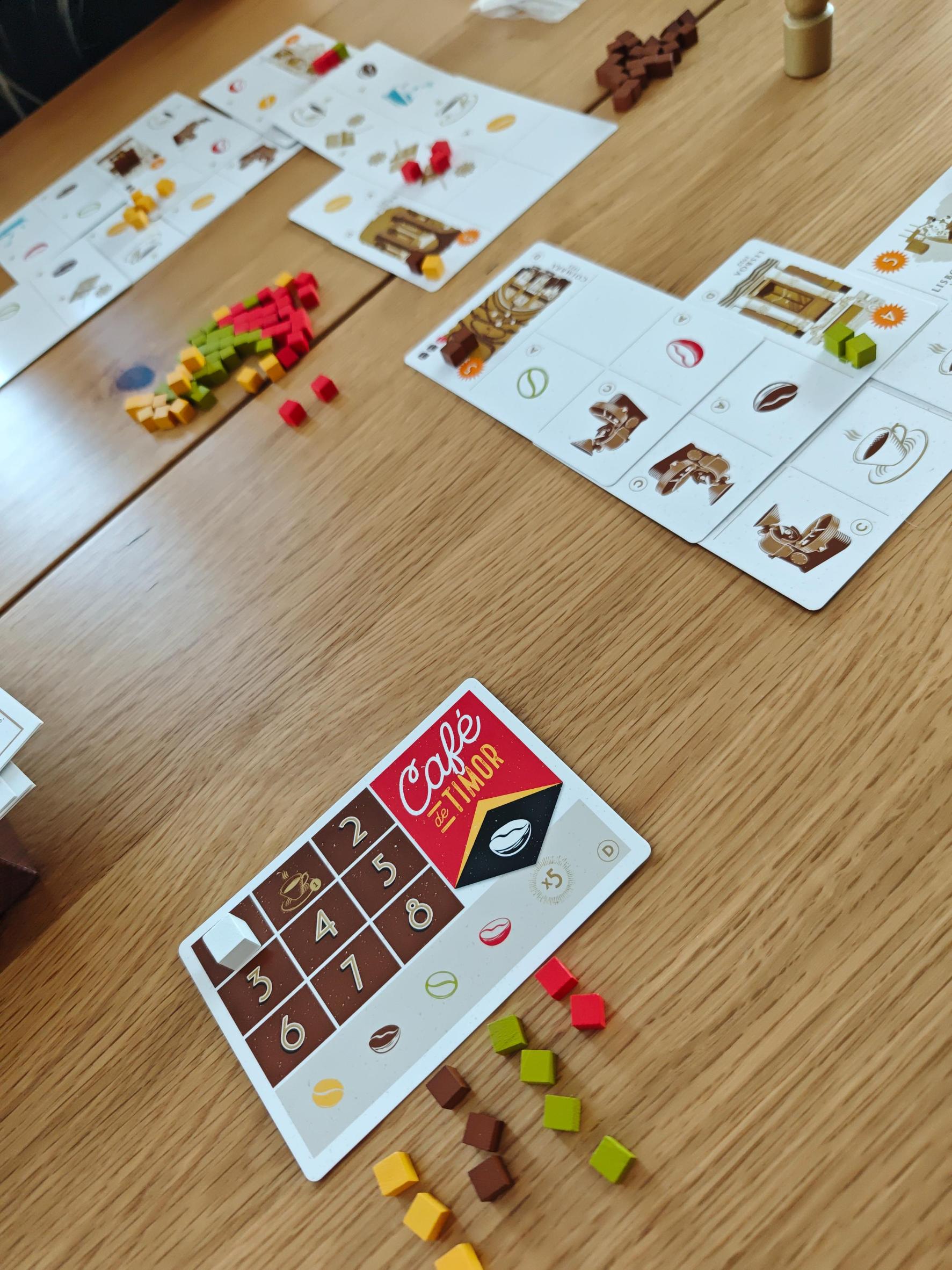
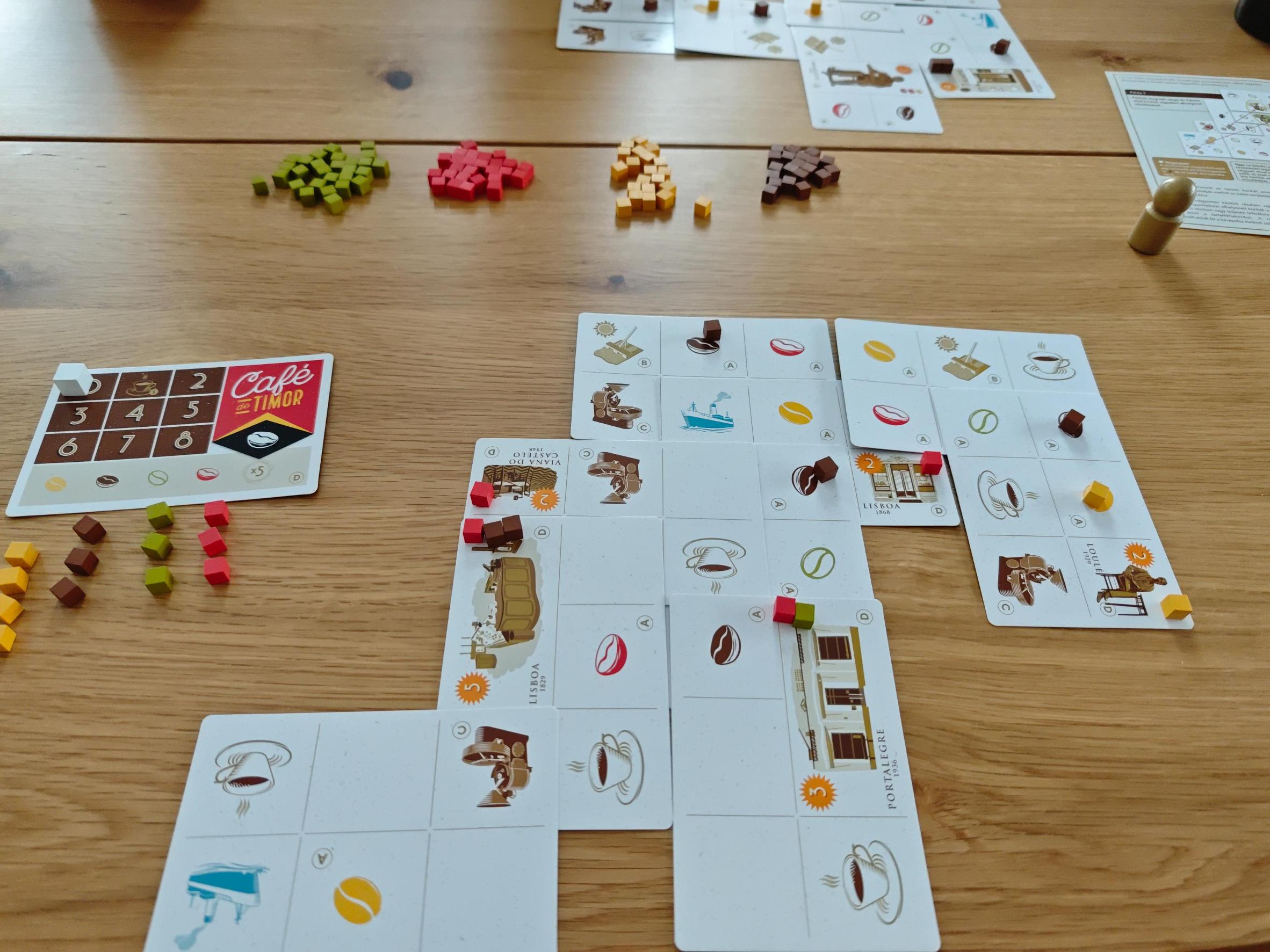
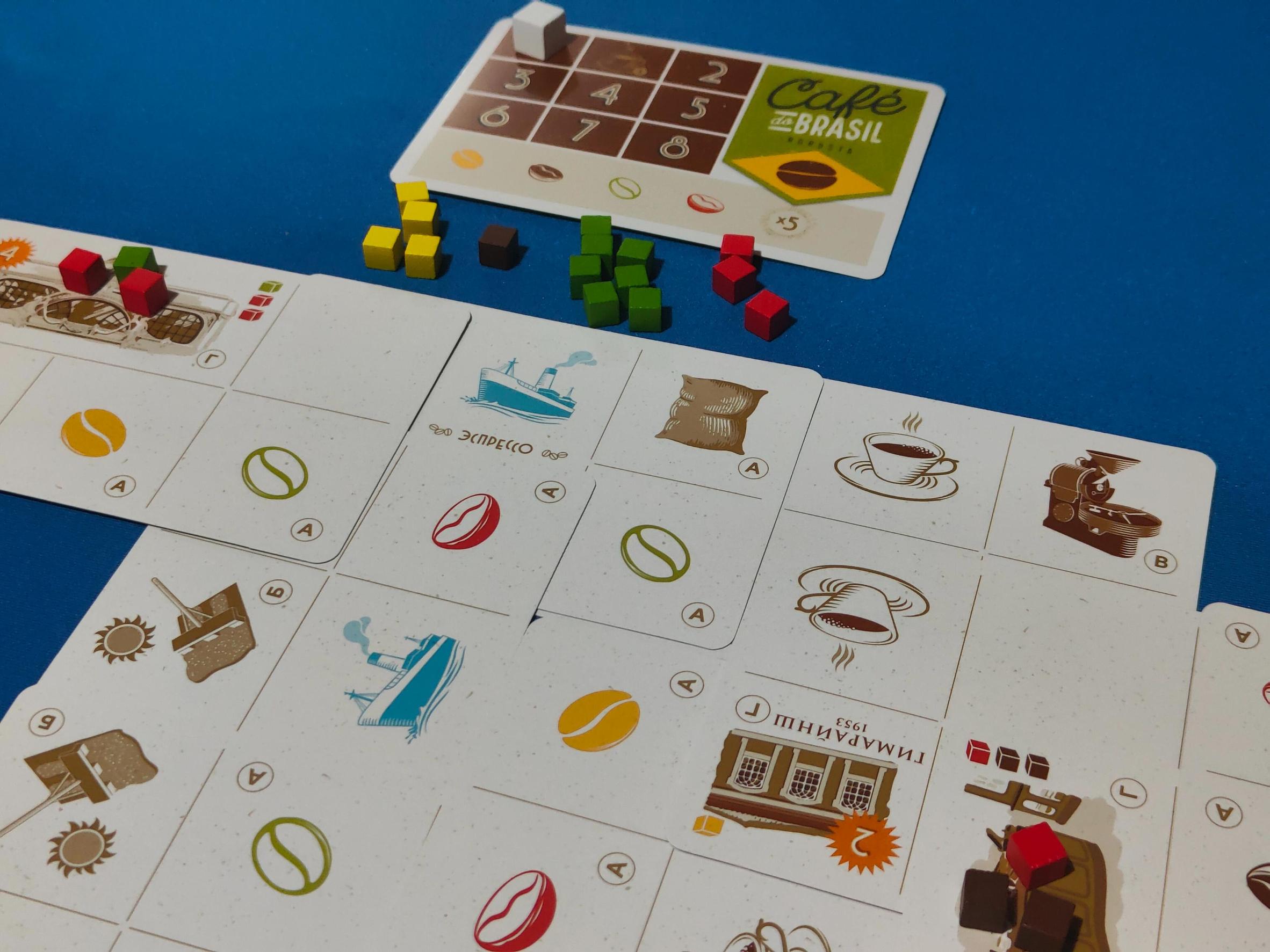
أين تشتريها
أسعار المتاجر والنسخ المستعملة، تُراجع كل يوم.
على طاولات Ludoya
الإحصاءات الكاملة في Ludoya- 553
- جلسات مسجّلة
- 372
- اللاعبون
- 28m 52s
- متوسط الجلسة
- 123
- في المجموعات
- 15
- في قوائم الرغبات
7.0/10
من 51 مراجعة على Ludoya
[FR] Review avec proposition de modification légère de règles pour moins de hasard : https://www.adayagame.fr/jeux-familiaux/373-test-du-jeu-cafe
- Base [ 01 ] -
Viciados7.0 Great looking, nice little game for couples too. Haven't played with more people. The theme doesn't really matter in the game, it's the only thing I didn't like.



أسئلة القواعد
إجابات من كتيّب القواعد يقدمها مساعد القواعد في Ludoya.
Do Plan cards have to be placed on consecutive spaces, and can they overlap other cards?
Plan cards are placed sequentially covering 2–4 squares in your tableau and must follow the placement rules shown in the examples; you do not overlap existing cards when placing them (see p.5).
Can I buy a Plan card I can’t currently afford or ‘bank’ discounts for a later purchase?
You may only buy Plan cards if you can pay their cost after applying any discounts; you cannot reserve or buy cards you cannot afford (see p.4).
When I take a Produce action, do I also produce cubes on adjacent/connected spaces (the cluster)?
Producing places cubes on the chosen production space and also affects connected production spaces as a cluster—cluster production rules and examples explain how multiple cubes are produced together (see p.6).
If I dry or roast one cube, does that affect nearby cubes in the cluster too?
Drying and roasting can apply to clusters: the rules and examples show how drying/roasting actions convert cubes in connected clusters according to the cluster rules (see p.7–p.8).
What’s the difference between delivering roasted cubes to a coffee shop versus to the warehouse?
Delivering to a coffee shop places roasted cubes for immediate scoring on that shop’s scale, while sending cubes to the warehouse stores them for end‑game scoring under different warehouse scoring rules (see p.8–p.11).
When does the game end and how is final scoring, especially for the warehouse, calculated?
The game ends after the final round, then you perform final scoring: score coffee shops immediately and then score the warehouse using the warehouse score scales and examples provided (see p.10–p.11).









مجاني، على الويب وAndroid وiOS
العب Café مع Ludoya
- احتفظ بها في مجموعتكتابع نسختك وتوسعاتها، وأعرها لأصدقائك، أو أضفها إلى قائمة رغباتك ليصلك تنبيه عندما ينخفض السعر.أضفها إلى مجموعتك
- سجّل كل جلسة لعبالنقاط والفائزون والمؤقتات والصور، ثم إحصاءاتك: نسبة الفوز، وعدد اللاعبين المفضل، وأفضل نتيجة.سجّل جلسة لعب
- احسم أسئلة القواعداسأل أي شيء عن القواعد واحصل على إجابة من كتيّب القواعد، مع الصفحة التي يمكنك التحقق منها.اسأل مساعد القواعد
- اعثر على من تلعبها معهمأندية وأمسيات ألعاب وفعاليات قريبة منك تلعب هذه اللعبة.عرض الفعاليات
معلومات اللعبة (اللاعبون، مدة اللعب، العمر، فريق العمل) مأخوذة من BoardGameGeek.