
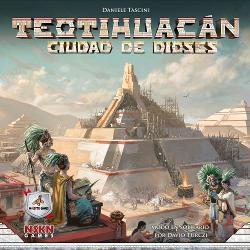
2018 · Construcció de ciutats
Teotihuacán: Ciudad de Dioses
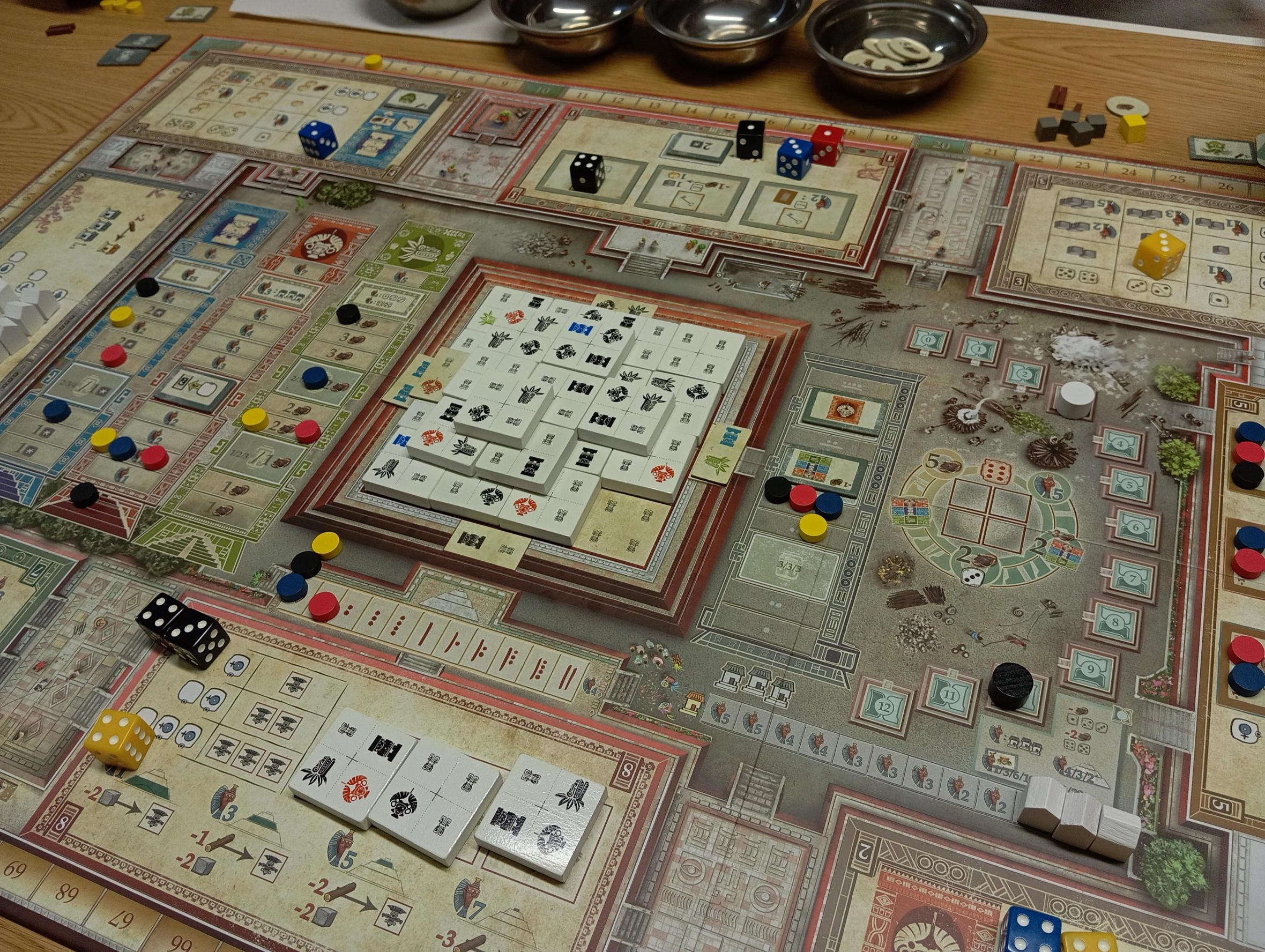
Els jugadors controlen daus-treballador que es fan més forts a mesura que actuen, movent un sol dau per un tauler modular de la ciutat i fent l'acció en un de dos espais de cada rajola. En cada torn, els jugadors trien entre fer una acció i millorar aquest treballador o bé agafar un bonus immediat sense millora, mentre gestionen recursos i la necessitat d'alimentar la seva mà d'obra. Les accions permeten desenvolupar tecnologies, construir habitatges, avançar en tres grans temples i contribuir a la piràmide esglaonada central al llarg de tres èpoques successives. La victòria es decideix per la fama acumulada després de puntuacions periòdiques.
- Jugadors
- 1–4 millor amb 4
- Durada
- 90–120 min
- Edat
- 14+
- Complexitat
- 3,8 / 5
Sobre el joc
- Disseny
- Editorial



Expansions
Veure-les a Ludoya Teotihuacán: Preclásico Tardío2019
 Teotihuacán: Sombras del Xitle2020
 Teotihuacán: Era de la Expansión2021
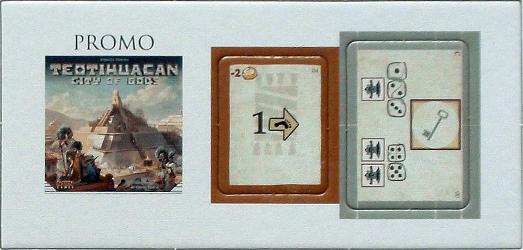 Teotihuacan: Dice Settlers Promo2018
 Teotihuacan: City of Gods – Pyramid Tile Promo, Red Temple2019
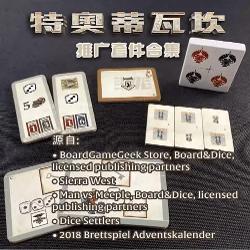 Teotihuacan: City of Gods – Promo Bundle2020
 Teotihuacan: City of Gods – 5th Player Expansion2020
 Teotihuacan: City of Gods – Decoration Tiles2019
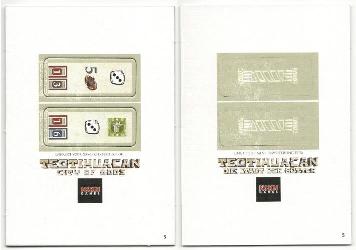 Teotihuacan: Brettspiel Adventskalender 2018 Promo2018
 Loot Box #12022
 Teotihuacan: City of Gods – Man vs Meeple Promo2019
 Brettspiel Adventskalender 20182018
 Teotihuacan: Expert Challenges – Book 12021
 Teotihuacan: Expert Challenges – Book 22021
 Teotihuacan: Expert Challenges – Book 32022
 Teotihuacan: New Priests2024
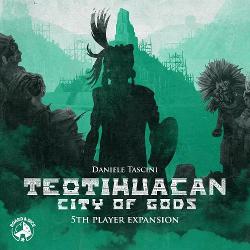 Teotihuacan: City of Gods – 5th Player Expansion2024
Fotos de taules de Ludoya
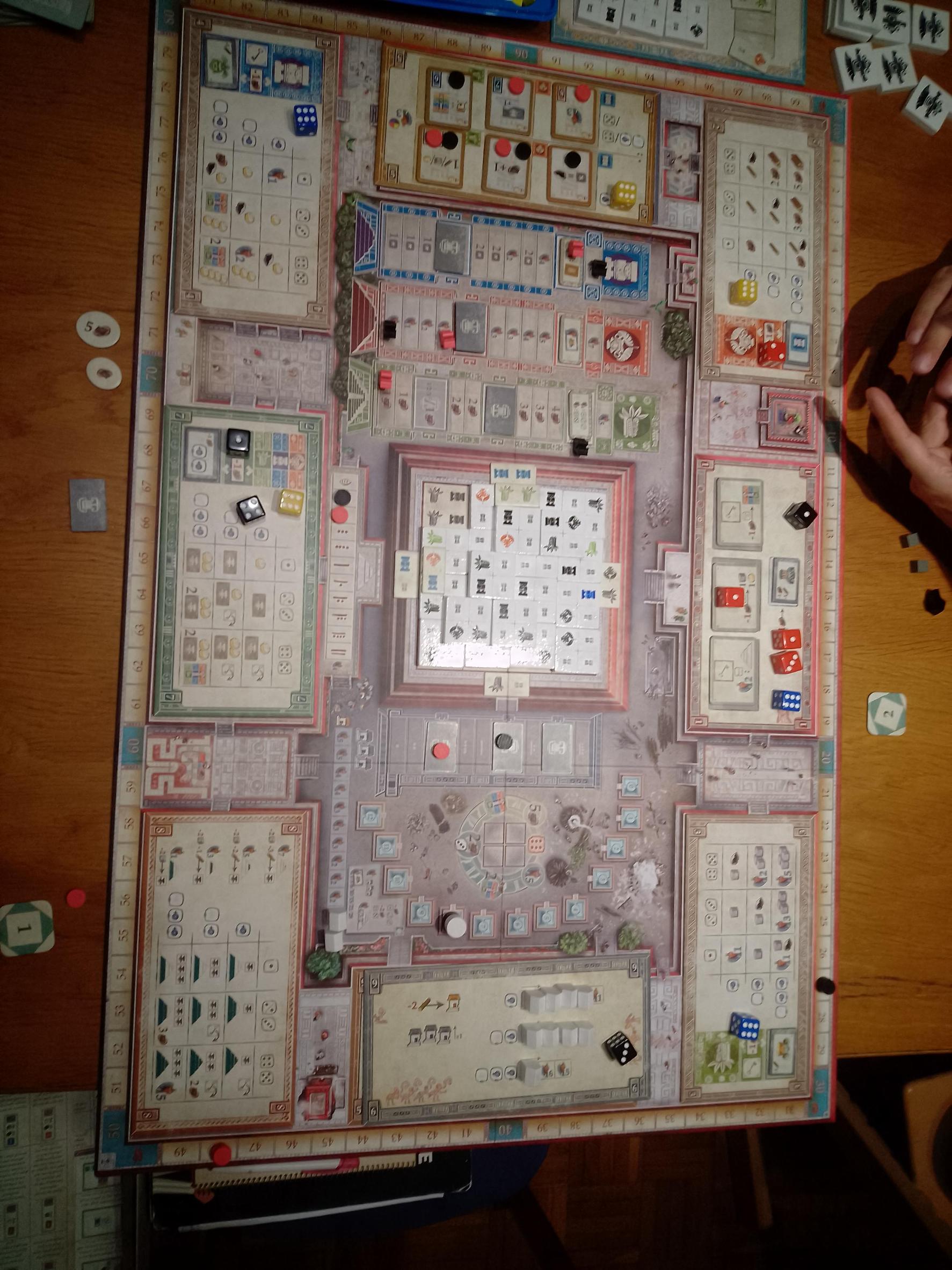
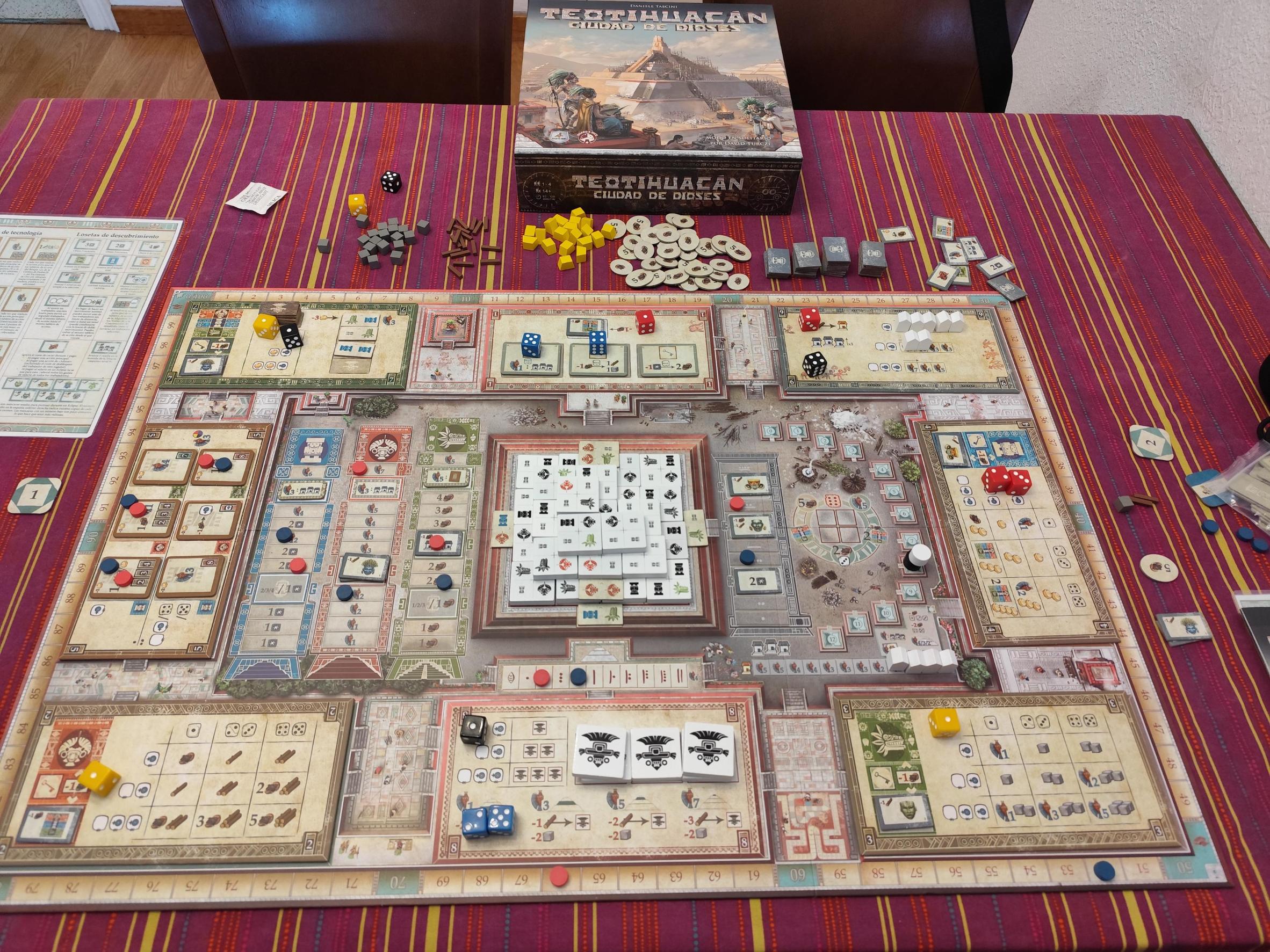
Totes les fotos a Ludoya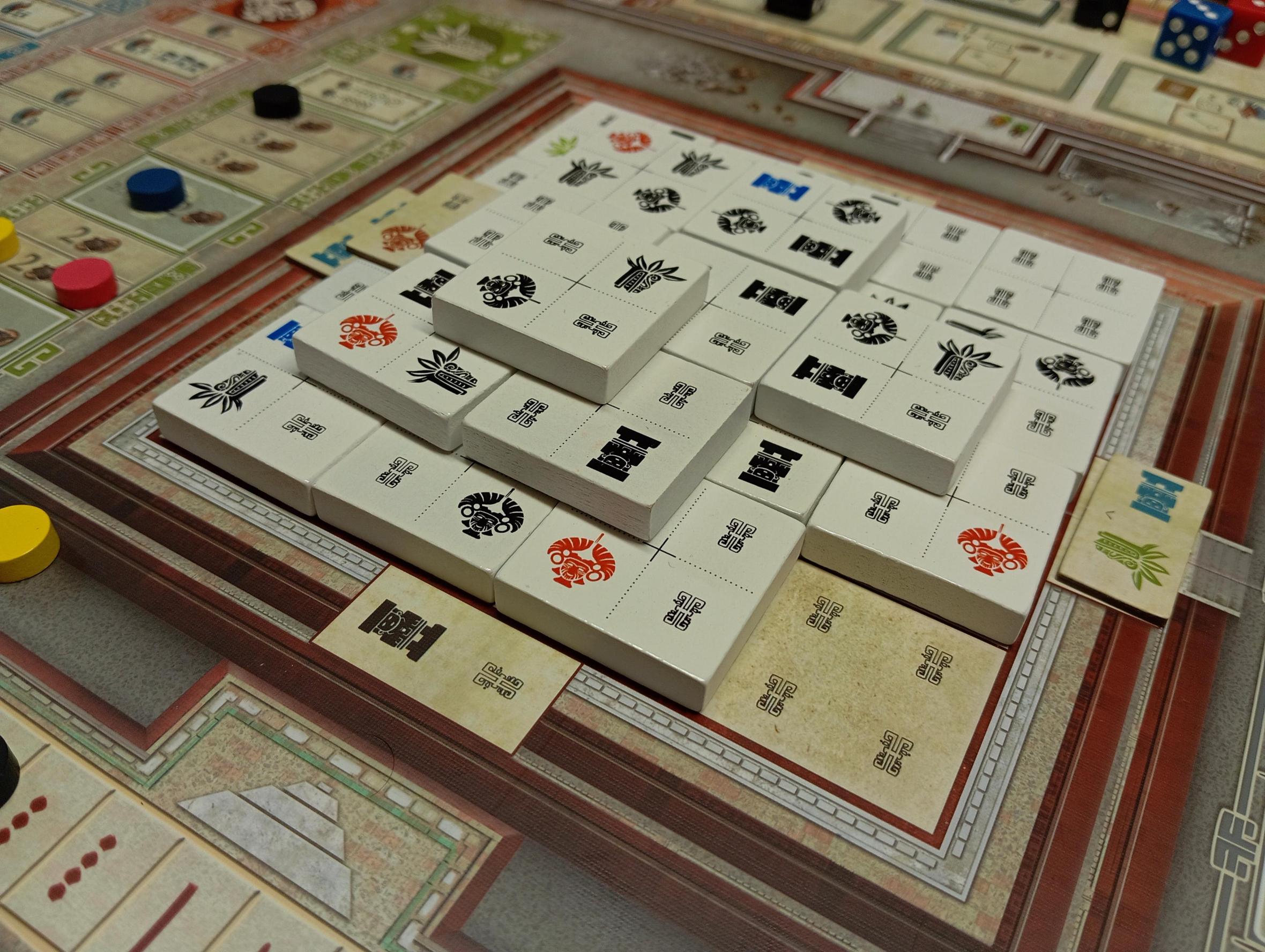
On comprar-lo
Preus de botigues i còpies de segona mà, revisats cada dia.
- Mono de JuegosSense estoc44.95 €
- Va de jocsSense estoc44.95 €
- Juegos de la Mesa RedondaSense estoc46.71 €
- Dungeon MarvelsSense estoc49.5 €
- Goblin Trader BarcelonaSense estoc49.5 €
- ZacatrusSense estoc49.5 €
- El NucliSense estoc55 €
- Miniature MarketSense estoc35.99 $
A les taules de Ludoya
Totes les estadístiques a Ludoya- 823
- Partides registrades
- 634
- Jugadors
- 1h 53m
- Partida mitjana
- 183
- En col·leccions
- 33
- En llistes de desitjos
- 1
- En preventa
6,3/10
de 117 ressenyes a Ludoya
Jan Solo8,0 Gran juego de gestión de recursos y construcción de la pirámide. Modo solitario interesante, pero a mi gusto excesivamente farragoso y lento.
Evan2,5 In this game you move one of your player markers around a roundel 1-3 spaces then resolve the action in the space you end at. Your makers are dice, and the effect of the action spaces is based on a table that looks for how many of your dice are in the space, then also what the pip value of your lowest die is. Often the effect of the space will then add pips to one or two of your dice. When a die hits 6, it resets to 1, and you gain a step on a track that produces points at the end of the round per step you have. Then you also gain a reward from a small wheel of options next to that track. Mostly what you are doing is collecting bricks and wood, then spending the bricks and wood to build the structure at the center of the board. There are extremely important technology tiles you can invest in to make your actions better. Another key thing to manage is the need to spend cacao tokens equal to the number of players in an action space to resolve the action. If you can't pay it, then you wind up skipping your action and instead getting the cacao tokens plus 1 instead. You can avoid this by taking gather actions more often, but since there's very little if any engine building in the game, it does feel like a large portion of your actions in the game work out to similar feeling gather then spend cycles. When you take the action to build the central structure, some but not all of the tiles have colored icons that give you a free step on the matching temple track in addition to the large number of points produced by the action normally. Ability to build is dependent on a substantial number of turns setup, getting the resouces and lining your dice up. Temple track steps are somewhat hard to come by and each step produces points, resources or cacao in addition to having high value endgame scoring criteria at the top, so when you are ready to build and all the pieces are totally colorless, and then you flip up colored pieces for the next person so they can spend exactly what you did only they get a substantial additional return doesn't feel great. Temple builds additionally come with steps on a track that gives bonus 4 points each round to the player who built the most. The track rests right next to the building space and is clearly tied to it. The problem here is that there is a second space that adds stair tokens to the temple, with a different cost, and a different place on the roundel, which makes it needlessly hard to see who has the potential to gain a step and when. Additionally, the stair tokens have a pointlessly specific orientation they need to be placed at because there is a tiny hard to see arrow on the tile that has to point inward. This is there to make matching the icons when you place the stair token more luck driven for no reason I can understand. Additionally these tiles can have either one or two bonus colored icon payouts that again, depend on luck of what's available, again rewarding players for lucking into situations they had no control over establishing. There's also a confusing action space that we rarely saw used. It awards some points, gives you a step on the death track, and then reduces the value of being on that track for everyone. Why have a space that invests in a track, and then simultaneously reduces the value of that same track? When a player's marker goes from 1 to 6, you also click ahead the round timer, which additionally moves after each player has had an action. The game has two modes, one where the round ends the moment the marker hits the end of the track producing uneven turns, or when it hits the end of the track each player gets one more turn. Neither of these is great, because if you age out one of your markers in the final round it effectively doesn't change the pace of the game. Why not just have even turns without playing a whole additional round? I suppose it's due to the fact that when a player is about to age out a die is very unpredictable, since when you resolve a space with two age icons, you can age the same die twice, rather than having to spread it across two dice. What this means is that it's vastly more influential to the flow of the game to age out early in the round than later in the round. More unevenness to the feel and flow of the game. I additionally was confused by one special reward tile that you can spend to ignore paying a food cost, even the totality of food required at the end of the round to feed your people. So, spend it now to avoid paying 3 or 4 food for a crowded action space, or spend it at the end of the round to avoid paying up to 8. There's a massive point hit for not feeding your people, it seems like a pretty core 'watch yourself' mechanism, that you can just ignore for a round by virtue of taking this tile. Very odd. I don't know, this is an ok game were everything feels just a little off. A few minor changes and I think this could have been great, it just doesn't feel very interesting or cohesive. Any of the little things I'm complaining about could probably be forgiven if the core mechanism was more interesting. ★ Art, Iconography and components functional ☆ Clever or interesting mechanisms ★ Reasonably low downtime between turns with mildly AP players ★ Multiple plays stay interesting ☆ Low or mitigatable luck elements ★☆☆☆☆ Raw enjoyment
Garfield8,0 #50 [c] Theme: ★★★★☆ <!-- size 7]The pyramide is great --> Gameplay: ★★★★★ <!-- size 7]Lots of meaningful decisions --> Interaction: ★★★☆☆ <!-- size 7]Where are the other dice placed --> Artwork: ★★★☆☆ <!-- size 7]Ok --> Luck: ★★☆☆☆ <!-- size 7]Pyramid tiles available at your turn --> Strategy: ★★★★☆ <!-- size 7]Different strategies possible --> Components: ★★★★☆ <!-- size 7]Pyramide tiles are great --> Play duration: ★★★☆☆ <!-- size 7]Ok --> Easy to teach: ★★★☆☆ <!-- size 7]Ok --> Rules quality: <!-- size 7]not read --> Setup time: ★★☆☆☆ <!-- size 7]A lot to setup --> No downtime: ★★★☆☆ <!-- size 7]Ok --> Replay value: ★★★★★ <!-- size 7]Modular board, different strategies --> [/c]

Dubtes de regles
Respostes a partir del reglament per l'assistent de regles de Ludoya.
Quan faig una acció principal, com compto els treballadors i quanta quantitat de cacau he de pagar? Compten els treballadors bloquejats o el treballador que acabo de moure?
Per determinar el cost en cacau, primer comptes el nombre de treballadors desbloquejats de colors diferents que ja hi ha al tauler (ignora el treballador que arriba i qualsevol treballador bloquejat dels espais de culte) i pagues aquesta quantitat de cacau (p. 7). Per resoldre els efectes de l’acció principal, després comptes els teus propis treballadors desbloquejats en aquell tauler, inclòs el treballador que acabes de col·locar, però mai més de 3 a efectes de l’efecte (p. 7).
Quan faig Recollir cacau, quins treballadors compten? Compten el treballador que arriba o els treballadors bloquejats?
Per a Recollir cacau, comptes el nombre de treballadors desbloquejats de colors diferents que ja hi ha al Tauler d’accions (no comptis el treballador que arriba ni cap treballador bloquejat d’un espai de culte) i obtens aquesta quantitat més 1 cacau; després col·loca el teu treballador mogut a l’àrea general (p. 6).
Què passa exactament quan un treballador arriba al nivell de poder 6 (Ascensió)? Activo un eclipsi immediatament?
L’ascensió s’activa immediatament quan un treballador arriba a una potència de 6: avança per l’Avinguda dels Morts, mou aquest dau a l’àrea general del Palau i reinicia’l a potència 1, tria una recompensa d’Ascensió i, després, avança el disc de llum al track del Calendari (cosa que pot activar un eclipsi). Resol completament cada ascensió i activa l’eclipsi només després del torn, si escau (p. 9).
Com funcionen les restriccions de col·locació de les Piràmides i les Decoracions, i quan fa que s’acabi la partida el fet que la Piràmide estigui acabada?
Les fitxes de decoració només es poden col·locar als espais permesos quan hi ha les capes de piràmide subjacents requerides i les decoracions prerequisides, i s’obtenen punts pels icones coincidents en cobrir fitxes (p. 8). Col·locar la fitxa de piràmide superior (de quart nivell) requereix tenir el tercer nivell complet a sota, atorga els PV indicats i mou immediatament el disc blanc del calendari fins a la posició del disc negre, cosa que desencadena l’Eclipsi final i acaba la partida (p. 8).
Quan faig una acció de Culte, puc desbloquejar el treballador d’un altre jugador i fer tant l’habilitat de culte com reclamar la fitxa de Descobriment? He de pagar alguna cosa?
Si el treballador d’un altre jugador ocupa l’espai d’Adoració, pagues 1 cacau per alliberar-lo (mou-lo a l’àrea general) abans de col·locar-hi el teu; no pots alliberar els teus propis treballadors d’aquesta manera (p. 6). Després tries entre activar l’habilitat d’Adoració o reclamar la fitxa de Descobriment, o pagar 1 cacau addicional per fer totes dues coses (tots els costos de cacau s’han de pagar abans de resoldre qualsevol benefici); si reclames una fitxa, en pagues el cost indicat (p. 6).
Jocs semblants
 Teotihuacán: Ciudad de Dioses – Edición completa2025
 Thebai2026
 Great Western Trail: Argentina2022
 Troyes2017
 Ostia
Ostia Small City: Deluxe Edition2023
 Great Western Trail: Nueva Zelanda2023
 Ezra and Nehemiah2024
 Ark Nova2022
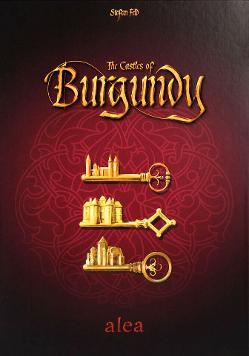 The Castles of Burgundy2020
 Merv: El Corazón de la Ruta de la Seda2021
 The Magnificent2020



Gratis, al web, Android i iOS
Juga a Teotihuacán: Ciudad de Dioses amb Ludoya
- Tingues-lo a la teva col·leccióControla la teva còpia i les seves expansions, deixa-la als amics o posa-la a la teva llista de desitjos i t'avisarem quan baixi de preu.Afegir-lo a la teva col·lecció
- Registra cada partidaPuntuacions, guanyadors, temporitzadors i fotos, i després les teves estadístiques: percentatge de victòries, nombre de jugadors preferit, millor puntuació.Registrar una partida
- Resol dubtes de reglesPregunta el que vulguis sobre les regles i obtén una resposta treta del reglament, amb la pàgina on comprovar-la.Preguntar a l'assistent de regles
- Troba gent amb qui jugar-hiClubs, nits de jocs i esdeveniments a prop teu que porten aquest joc a la taula.Veure esdeveniments
Dades del joc (jugadors, durada, edat, crèdits) de BoardGameGeek.