
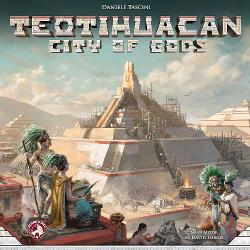
2018 · Budování města
Teotihuacan: City of Gods
Hráči ovládají kostky dělníků, které při provádění akcí nabývají na síle. Každou kostku přesouvají po modulární městské desce a provádějí akci na jednom ze dvou políček na každém dílku. Ve svém tahu si hráči vybírají mezi provedením akce a vylepšením daného dělníka, nebo okamžitým bonusem bez vylepšení. Zároveň musí hospodařit se surovinami a zajistit obživu své pracovní síle. Akce umožňují rozvíjet technologie, stavět obydlí, postupovat u tří významných chrámů a během tří po sobě jdoucích období přispívat k výstavbě centrální stupňovité pyramidy. Vítězství určuje celkově nasbíraná sláva po pravidelném bodování.
- Hráči
- 1–4 nejlépe pro 4
- Herní doba
- 90–120 min
- Věk
- 14+
- Složitost
- 3,8 / 5
O hře
- Autoři
- Ilustrace
- Vydavatel


Rozšíření
Zobrazit v Ludoya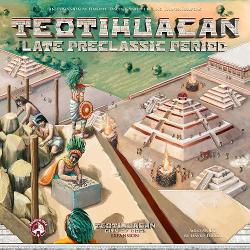 Teotihuacan: Late Preclassic Period2019
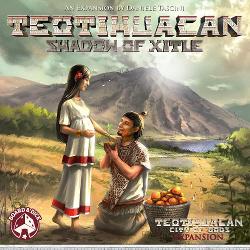 Teotihuacan: Shadow of Xitle2020
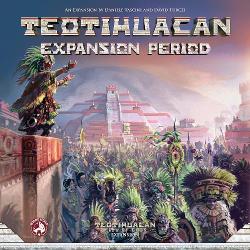 Teotihuacan: Expansion Period2021
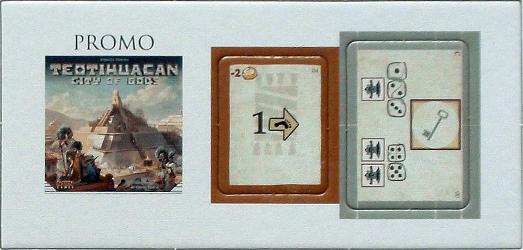 Teotihuacan: Dice Settlers Promo2018
 Teotihuacan: City of Gods – Pyramid Tile Promo, Red Temple2019
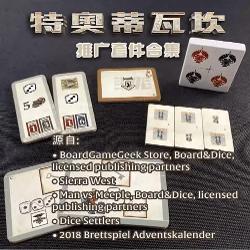 Teotihuacan: City of Gods – Promo Bundle2020
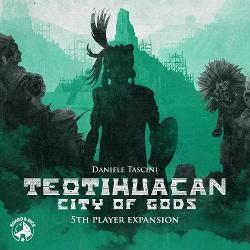 Teotihuacan: City of Gods – 5th Player Expansion2020
 Teotihuacan: City of Gods – Decoration Tiles2019
 Teotihuacan: Brettspiel Adventskalender 2018 Promo2018
 Loot Box #12022
 Teotihuacan: City of Gods – Man vs Meeple Promo2019
 Brettspiel Adventskalender 20182018
 Teotihuacan: Expert Challenges – Book 12021
 Teotihuacan: Expert Challenges – Book 22021
 Teotihuacan: Expert Challenges – Book 32022
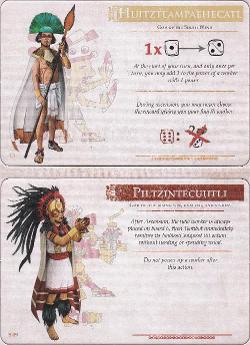 Teotihuacan: New Priests2024
 Teotihuacan: City of Gods – 5th Player Expansion2024
Fotky od stolů Ludoya
Všechny fotky v Ludoya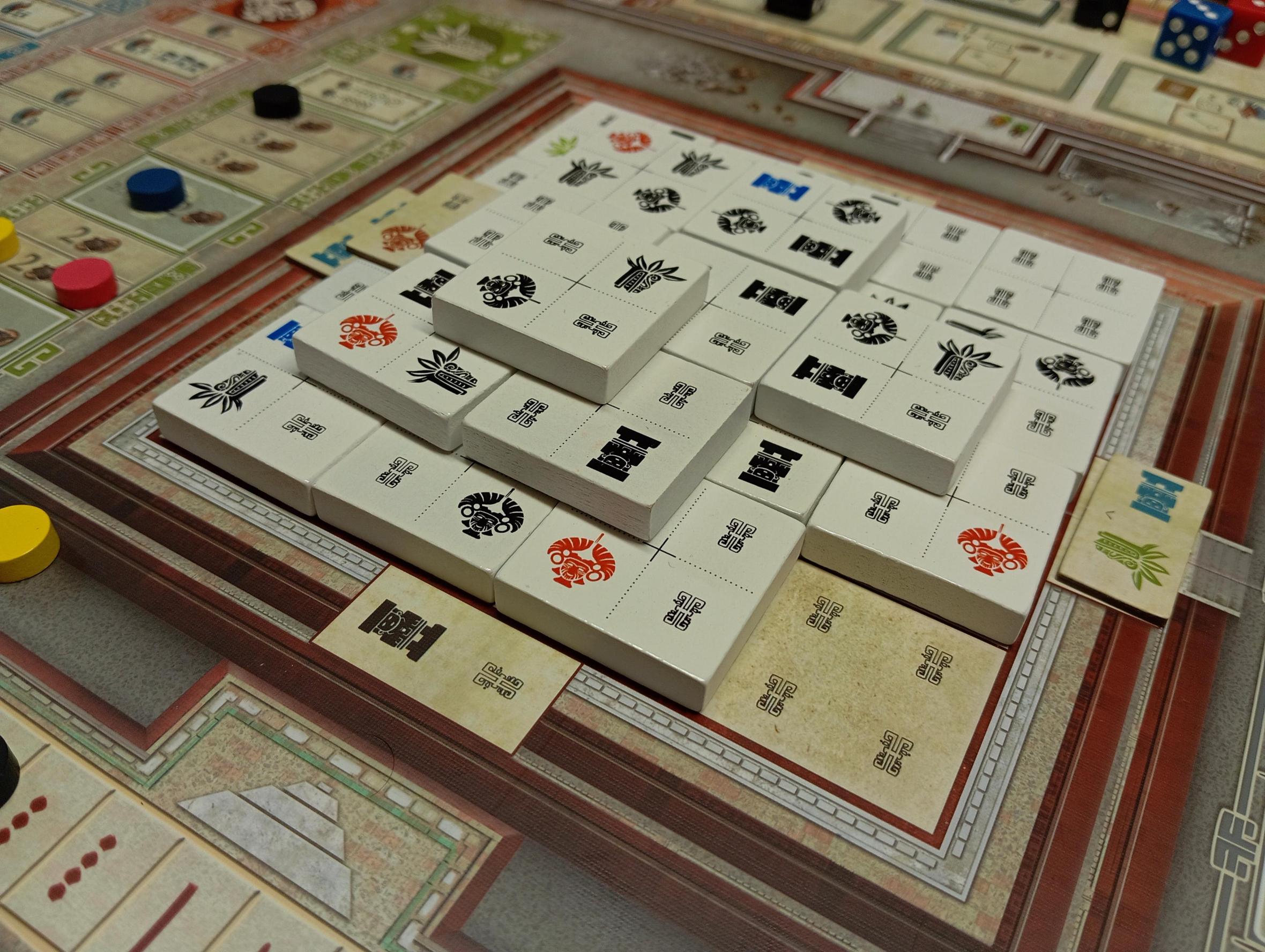
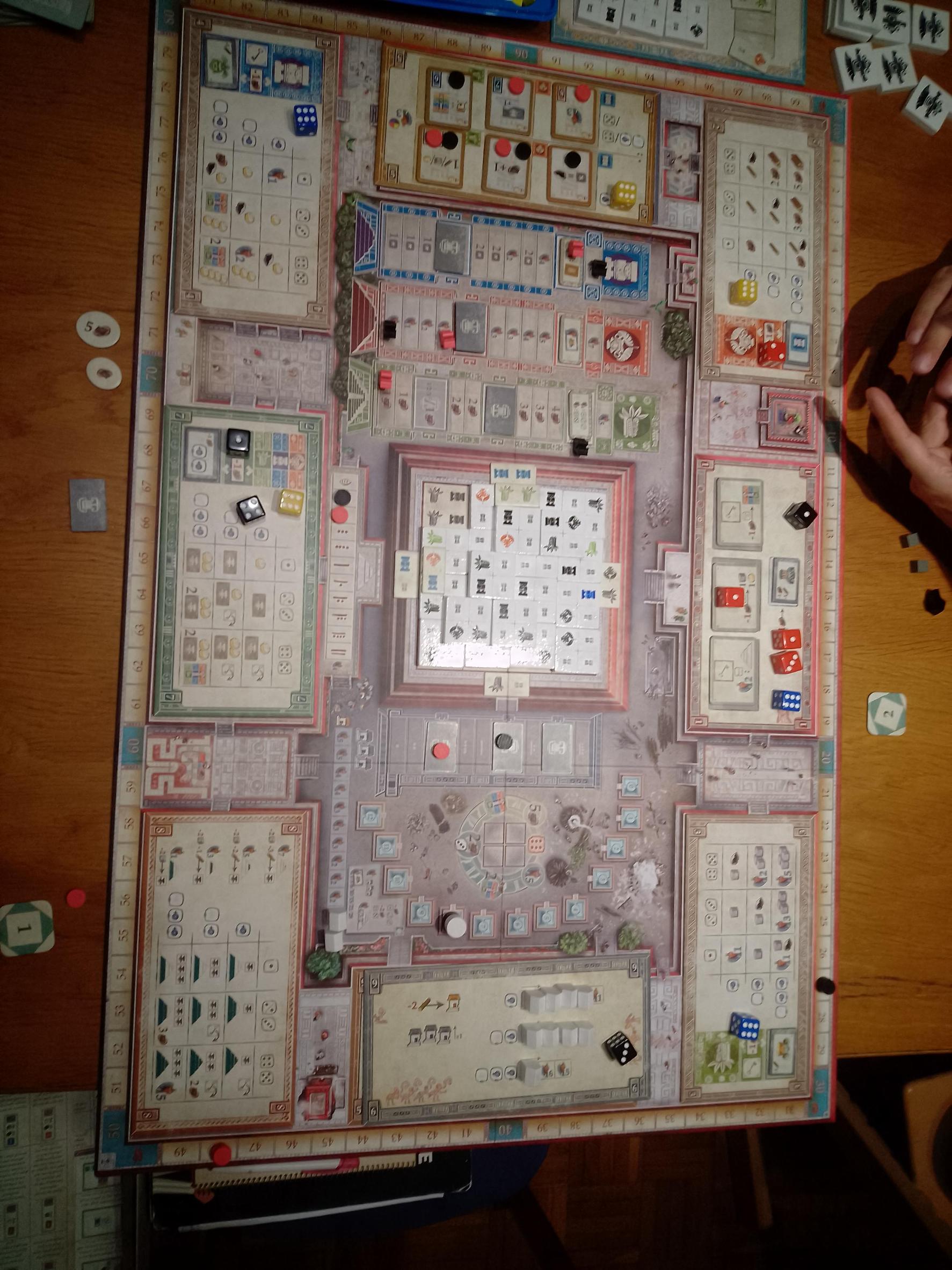
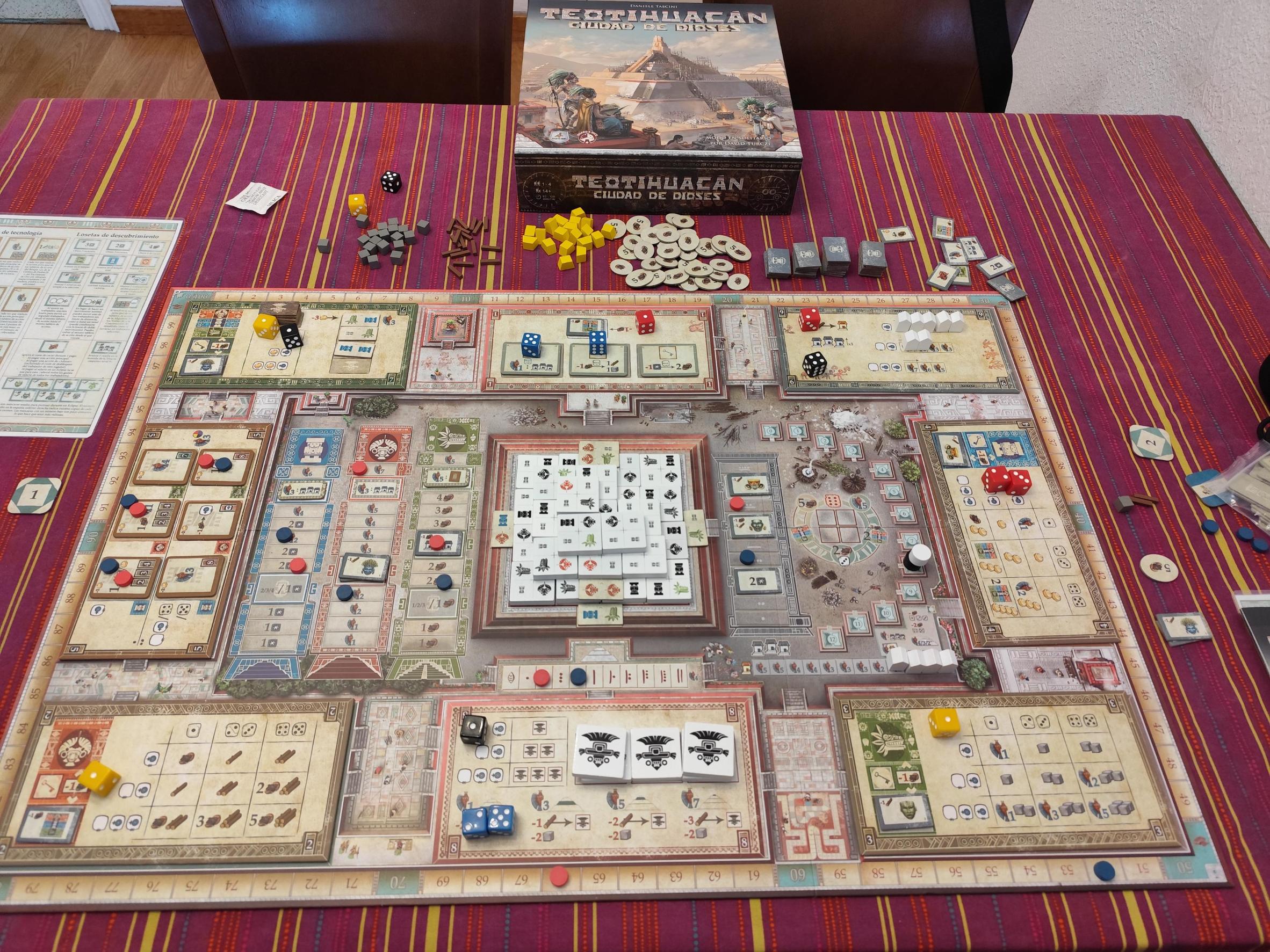
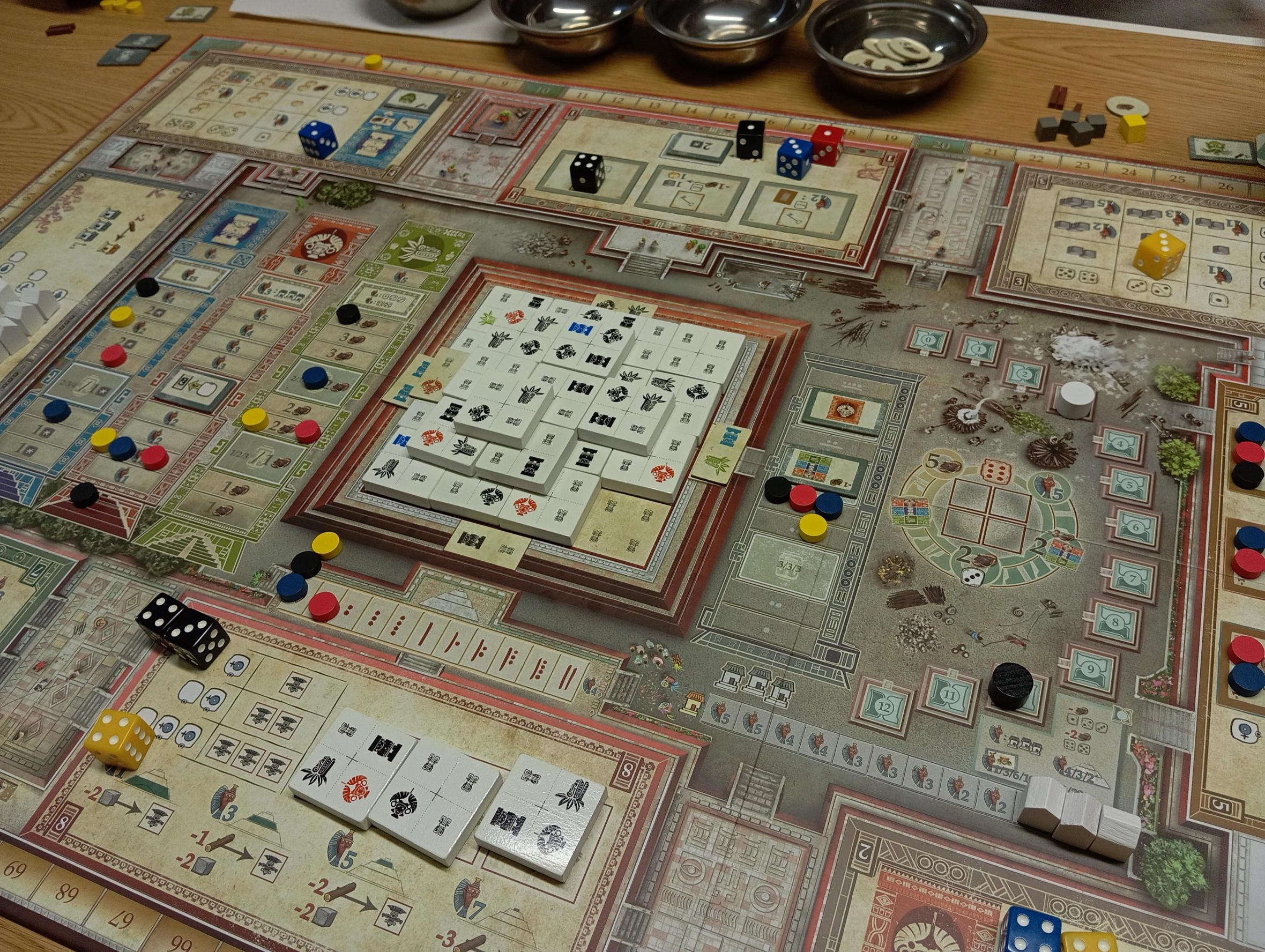
Kde koupit
Ceny v obchodech a výtisky z druhé ruky, kontrolované každý den.
U stolů Ludoya
Kompletní statistiky v Ludoya- 823
- Zapsané partie
- 634
- Hráči
- 1h 53m
- Průměrná partie
- 183
- Ve sbírkách
- 33
- Na seznamech přání
- 1
- Předobjednáno
6,3/10
z 117 recenzí na Ludoya
Jan Solo8,0 Gran juego de gestión de recursos y construcción de la pirámide. Modo solitario interesante, pero a mi gusto excesivamente farragoso y lento.
Evan2,5 In this game you move one of your player markers around a roundel 1-3 spaces then resolve the action in the space you end at. Your makers are dice, and the effect of the action spaces is based on a table that looks for how many of your dice are in the space, then also what the pip value of your lowest die is. Often the effect of the space will then add pips to one or two of your dice. When a die hits 6, it resets to 1, and you gain a step on a track that produces points at the end of the round per step you have. Then you also gain a reward from a small wheel of options next to that track. Mostly what you are doing is collecting bricks and wood, then spending the bricks and wood to build the structure at the center of the board. There are extremely important technology tiles you can invest in to make your actions better. Another key thing to manage is the need to spend cacao tokens equal to the number of players in an action space to resolve the action. If you can't pay it, then you wind up skipping your action and instead getting the cacao tokens plus 1 instead. You can avoid this by taking gather actions more often, but since there's very little if any engine building in the game, it does feel like a large portion of your actions in the game work out to similar feeling gather then spend cycles. When you take the action to build the central structure, some but not all of the tiles have colored icons that give you a free step on the matching temple track in addition to the large number of points produced by the action normally. Ability to build is dependent on a substantial number of turns setup, getting the resouces and lining your dice up. Temple track steps are somewhat hard to come by and each step produces points, resources or cacao in addition to having high value endgame scoring criteria at the top, so when you are ready to build and all the pieces are totally colorless, and then you flip up colored pieces for the next person so they can spend exactly what you did only they get a substantial additional return doesn't feel great. Temple builds additionally come with steps on a track that gives bonus 4 points each round to the player who built the most. The track rests right next to the building space and is clearly tied to it. The problem here is that there is a second space that adds stair tokens to the temple, with a different cost, and a different place on the roundel, which makes it needlessly hard to see who has the potential to gain a step and when. Additionally, the stair tokens have a pointlessly specific orientation they need to be placed at because there is a tiny hard to see arrow on the tile that has to point inward. This is there to make matching the icons when you place the stair token more luck driven for no reason I can understand. Additionally these tiles can have either one or two bonus colored icon payouts that again, depend on luck of what's available, again rewarding players for lucking into situations they had no control over establishing. There's also a confusing action space that we rarely saw used. It awards some points, gives you a step on the death track, and then reduces the value of being on that track for everyone. Why have a space that invests in a track, and then simultaneously reduces the value of that same track? When a player's marker goes from 1 to 6, you also click ahead the round timer, which additionally moves after each player has had an action. The game has two modes, one where the round ends the moment the marker hits the end of the track producing uneven turns, or when it hits the end of the track each player gets one more turn. Neither of these is great, because if you age out one of your markers in the final round it effectively doesn't change the pace of the game. Why not just have even turns without playing a whole additional round? I suppose it's due to the fact that when a player is about to age out a die is very unpredictable, since when you resolve a space with two age icons, you can age the same die twice, rather than having to spread it across two dice. What this means is that it's vastly more influential to the flow of the game to age out early in the round than later in the round. More unevenness to the feel and flow of the game. I additionally was confused by one special reward tile that you can spend to ignore paying a food cost, even the totality of food required at the end of the round to feed your people. So, spend it now to avoid paying 3 or 4 food for a crowded action space, or spend it at the end of the round to avoid paying up to 8. There's a massive point hit for not feeding your people, it seems like a pretty core 'watch yourself' mechanism, that you can just ignore for a round by virtue of taking this tile. Very odd. I don't know, this is an ok game were everything feels just a little off. A few minor changes and I think this could have been great, it just doesn't feel very interesting or cohesive. Any of the little things I'm complaining about could probably be forgiven if the core mechanism was more interesting. ★ Art, Iconography and components functional ☆ Clever or interesting mechanisms ★ Reasonably low downtime between turns with mildly AP players ★ Multiple plays stay interesting ☆ Low or mitigatable luck elements ★☆☆☆☆ Raw enjoyment
Garfield8,0 #50 [c] Theme: ★★★★☆ <!-- size 7]The pyramide is great --> Gameplay: ★★★★★ <!-- size 7]Lots of meaningful decisions --> Interaction: ★★★☆☆ <!-- size 7]Where are the other dice placed --> Artwork: ★★★☆☆ <!-- size 7]Ok --> Luck: ★★☆☆☆ <!-- size 7]Pyramid tiles available at your turn --> Strategy: ★★★★☆ <!-- size 7]Different strategies possible --> Components: ★★★★☆ <!-- size 7]Pyramide tiles are great --> Play duration: ★★★☆☆ <!-- size 7]Ok --> Easy to teach: ★★★☆☆ <!-- size 7]Ok --> Rules quality: <!-- size 7]not read --> Setup time: ★★☆☆☆ <!-- size 7]A lot to setup --> No downtime: ★★★☆☆ <!-- size 7]Ok --> Replay value: ★★★★★ <!-- size 7]Modular board, different strategies --> [/c]

Otázky k pravidlům
Odpovědi z pravidel od asistenta pravidel Ludoya.
Když provedu hlavní akci, jak počítám dělníky a kolik kakaa musím zaplatit? Počítají se i zablokovaní dělníci nebo dělník, kterým jsem právě pohnul?
Pro určení ceny v kakau nejprve spočítej počet odemčených dělníků různých barev, kteří už jsou na destičce (příchozího dělníka a všechny dělníky na uzamčených modlitebních místech ignoruj), a zaplať tolik kakaa (str. 7). Při vyhodnocování efektů hlavní akce pak spočítej své vlastní odemčené dělníky na dané destičce včetně právě umístěného dělníka, ale pro účely efektu nikdy nepočítej více než 3 (str. 7).
Když si vezmu Akci Sklizeň kakaa, kteří dělníci se počítají — počítá se přicházející dělník nebo zamčení dělníci?
U akce Sbírání kakaa spočítáš počet odemčených dělníků různých barev, kteří se už nacházejí na akční desce (nepočítej přicházejícího dělníka ani žádného zamčeného dělníka v prostoru uctívání), a získáš tolik kakaa plus 1; poté umísti přesunutého dělníka do obecné oblasti (str. 6).
Co se přesně stane, když dělník dosáhne síly 6 (Vzestup)? Spustím okamžitě zatmění?
Nanebevstoupení se spustí okamžitě, když je dělník nabit na 6: posuňte se po Aleji mrtvých, přesuňte tuto kostku do obecné oblasti Paláce a nastavte ji zpět na sílu 1, zvolte jednu odměnu za Nanebevstoupení a poté posuňte světelný disk na stupnici Kalendáře (což může vyvolat Zatmění) — každé Nanebevstoupení vyřešte celé a Zatmění případně vyvolejte až po tahu (str. 9).
Jak fungují omezení při umisťování Pyramidy a Dekorací a kdy dokončení Pyramidy ukončí hru?
Dlaždice dekorací lze umístit pouze na povolená místa, pokud jsou přítomny požadované spodní vrstvy pyramidy a potřebné dekorace; při zakrývání dlaždic získáváte body za odpovídající ikony (str. 8). Umístění vrchní dlaždice pyramidy (čtvrté úrovně) vyžaduje kompletní třetí úroveň pod ní, přinese uvedený počet vítězných bodů a okamžitě přesune bílý kalendářní žeton na pozici černého žetonu, čímž spustí poslední zatmění a ukončí hru (str. 8).
Když provedu akci Uctívání, můžu odemknout dělníka jiného hráče a provést jak schopnost uctívání, tak si vzít destičku Objevu? Musím za něco platit?
Pokud prostor Uctívání obsadí dělník jiného hráče, zaplatíš 1 kakao za odemčení tohoto dělníka (přesuneš ho do obecné oblasti), než umístíš svého; tímto způsobem nesmíš odemykat své vlastní dělníky (str. 6). Poté si zvolíš, zda aktivuješ schopnost Uctívání, nebo získáš destičku Objevu, případně zaplatíš další 1 kakao a provedeš obojí (všechny náklady v kakau musí být zaplaceny před vyhodnocením jakýchkoli výhod); pokud si destičku vezmeš, zaplatíš její vytištěnou cenu (str. 6).
Podobné hry










Zdarma, na webu, Androidu i iOS
Hrajte Teotihuacan: City of Gods s Ludoya
- Mějte ji ve své sbírceEvidujte svůj výtisk a jeho rozšíření, půjčujte ho přátelům, nebo si ho dejte na seznam přání a dozvíte se, když cena klesne.Přidat do sbírky
- Zapisujte každou partiiBody, vítězové, časovače a fotky, a pak vaše statistiky: úspěšnost, oblíbený počet hráčů, nejlepší skóre.Zapsat partii
- Vyřešte spory o pravidlaZeptejte se na cokoli k pravidlům a dostanete odpověď z pravidel i se stránkou, kde si ji můžete ověřit.Zeptat se asistenta pravidel
- Najděte lidi, se kterými ji zahrátKluby, herní večery a akce ve vašem okolí, kde se tato hra hraje.Zobrazit akce
Údaje o hře (hráči, herní doba, věk, autoři) z BoardGameGeek.