
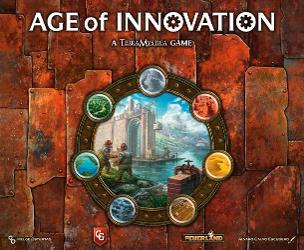
2023 · Fantasy
Age of Innovation
Players lead one of twelve asymmetrical factions across a variable map and terraform terrain into their preferred homeland to build and expand. Erect and upgrade buildings, merge structures into cities, and gather resources such as tools, scholars, coin, and power to fuel further growth. Proximity to other factions affects expansion and interaction, creating strategic tension between competition and opportunity. Develop schools and collect books to research innovations, and construct landmarks like palaces, workshops, guilds, and universities to unlock new abilities and cultural advancements.
- Players
- 1–5 best 4
- Playing time
- 40–200 min
- Age
- 14+
- Complexity
- 4.3 / 5
About the game
- Design
- Publishers





Expansions
See them in Ludoya
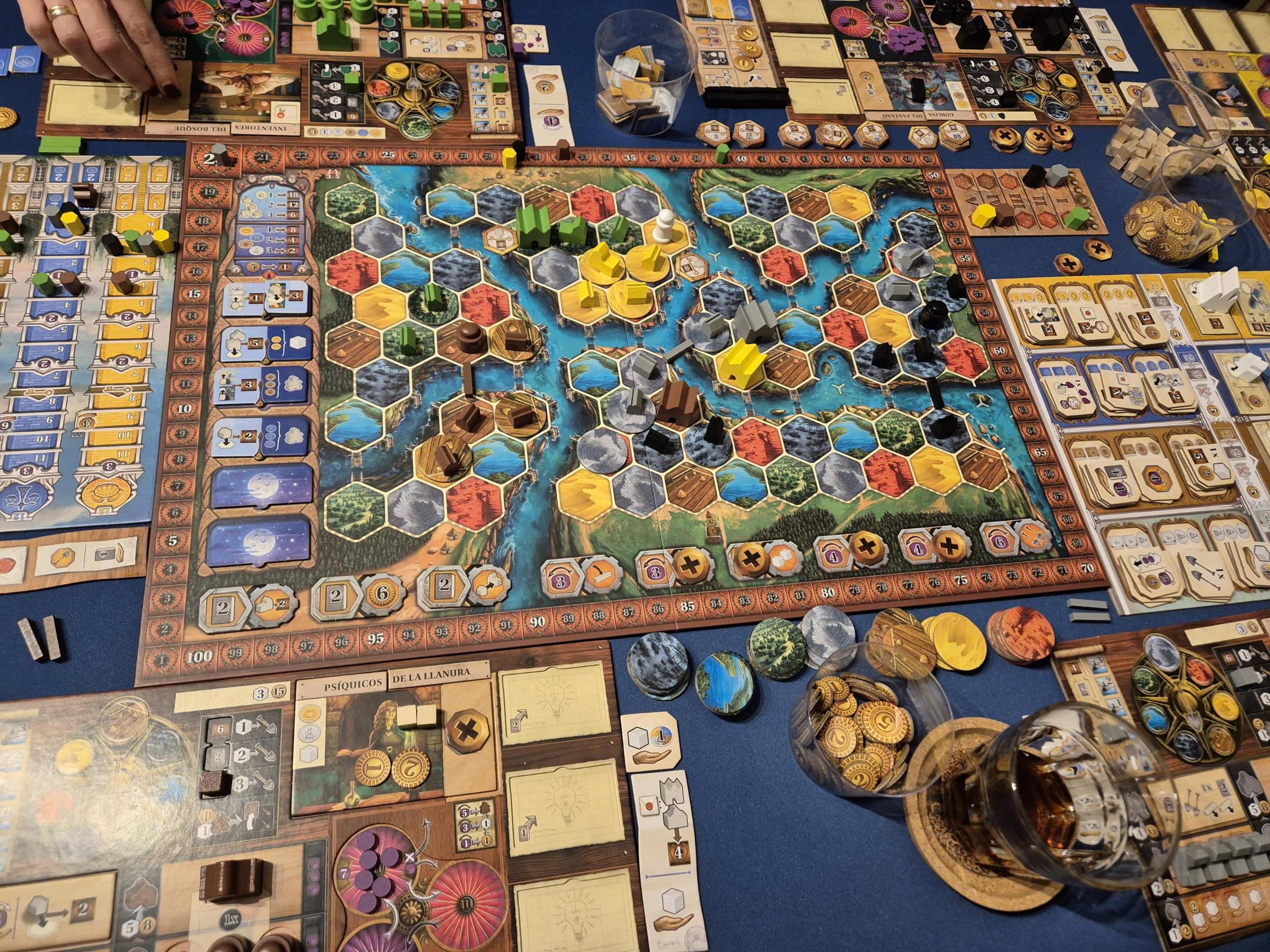
Photos from Ludoya tables
All photos in Ludoya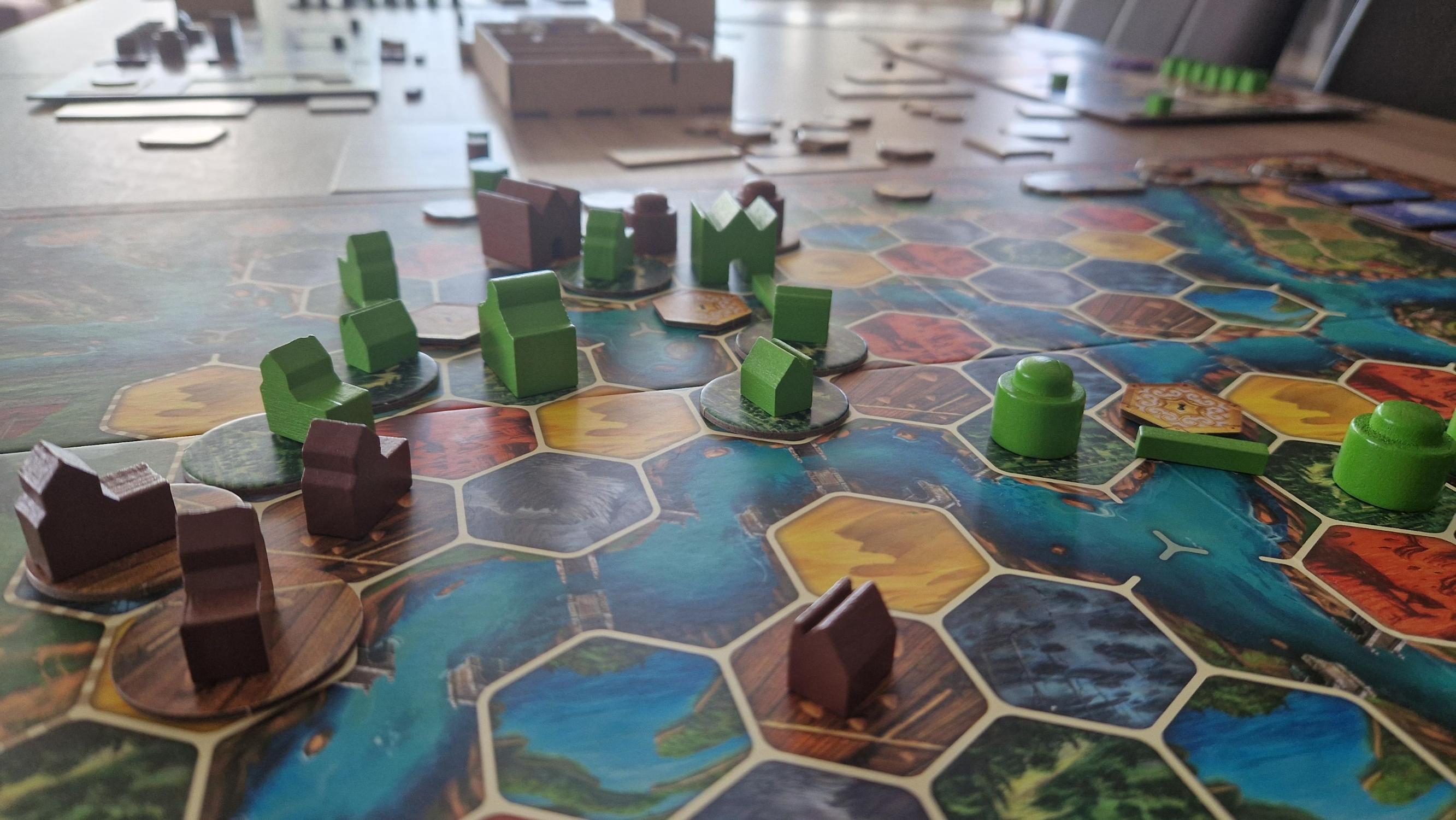
Where to buy it
Shop prices and second-hand copies, checked every day.
On Ludoya's tables
Full stats in Ludoya- 222
- Plays logged
- 318
- Players
- 2h 26m
- Average play
- 95
- In collections
- 37
- On wishlists
8.2/10
from 51 Ludoya reviews
beqs the 1st8.5 The definition of a heavy euro game. Many different mechanisms that interlock perfectly. Complex decisions with contested resources.

Rules questions
Answered from the rulebook by Ludoya's rules assistant.
How does the Power cycle work — where do I gain power and from which bowl can I spend it?
Power tokens cycle clockwise through your three Power Bowls: gaining power moves tokens from Bowl I→II, or from II→III if I is empty, and you can only spend tokens that are in Bowl III, which are then cycled back to Bowl I when spent (see p. 7).
If another player builds next to my buildings, do I automatically gain power and what does it cost me?
Other Factions may gain power equal to the total Power values of their buildings adjacent to the newly built/ upgraded building, but they may choose whether to take that full amount or not; gaining power costs points according to the scale (1/2/3/4 power costs 0/1/2/3 points respectively), you cannot take a partial amount, and you can’t drop below 0 points (see p. 8).
I got Spades as a Science Bonus in Phase III — can I use them immediately to terraform and build in the same round?
No: Spades gained as a Science Bonus are awarded outside Phase II and therefore cannot be used to terraform-and-build until Phase II of the next round (see p. 12).
When I terraform with multiple Spades can I use extra Spades on other hexes and still build where I want?
If you gain multiple Spades at once you must use them before building: any extra Spades may be applied to other reachable hexes (even up to 2 or 3 hexes), but you must complete the terraforming to your Native terrain on the primary hex first and you may only build one Workshop as part of that action (see p. 11–12).
Does upgrading a building trigger adjacency power for other players, and what happens to the old building piece?
An upgrade counts as the build of the new building and can trigger adjacency power for other Factions (they calculate power from their adjacent buildings and may opt to gain it), and you must exchange the old building by returning it to the rightmost empty space on its track on your Planning display before placing the new building (see p. 13 and p. 8).
If I send Scholars to the Science display, can I ever get them back to use again?
Scholars you place on the Science display are generally not recovered, though you may return 1 Scholar to the supply to advance 1 Level in a Discipline as an alternative; note you have a limited pool of 7 Scholars, so placement is permanent unless you use that return option (see p. 15).










Free, on web, Android and iOS
Play Age of Innovation with Ludoya
- Keep it in your collectionTrack your copy and its expansions, lend it to friends, or put it on your wishlist and get told when the price drops.Add it to your collection
- Log every playScores, winners, timers and photos, then your stats: win rate, favourite player count, best score.Log a play
- Settle rules questionsAsk anything about the rules and get an answer from the rulebook, with the page to check it on.Ask the rules assistant
- Find people to play it withClubs, game nights and events near you that bring this game to the table.See events
Game facts (players, playing time, age, credits) from BoardGameGeek.