
2014 · Fantasy
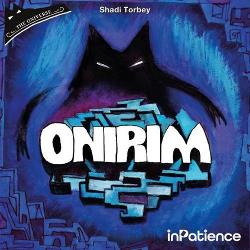
Onirim (Second Edition)
Players take the role of a Dreamwalker lost in a shifting labyrinth and must uncover a set number of oneiric Door cards before the deck runs out. On each turn, players draw and play location cards by color and symbol, discard to trigger Key abilities, and try to assemble sequences or meet specific conditions to reveal Doors while managing a hand of five cards. Nightmares are hidden in the deck and, when drawn, force disruptive effects that complicate play and require tense choices. Several modular expansions and variants change the deck composition, add new card types and victory conditions, or introduce persistent hazards and special abilities, allowing solo or cooperative play with adjustable difficulty.
- Players
- 1–2 best 1
- Playing time
- 15 min
- Age
- 10+
- Complexity
- 1.6 / 5
About the game
- Design
- Publishers




Expansions
See them in Ludoya
Photos from Ludoya tables
All photos in Ludoya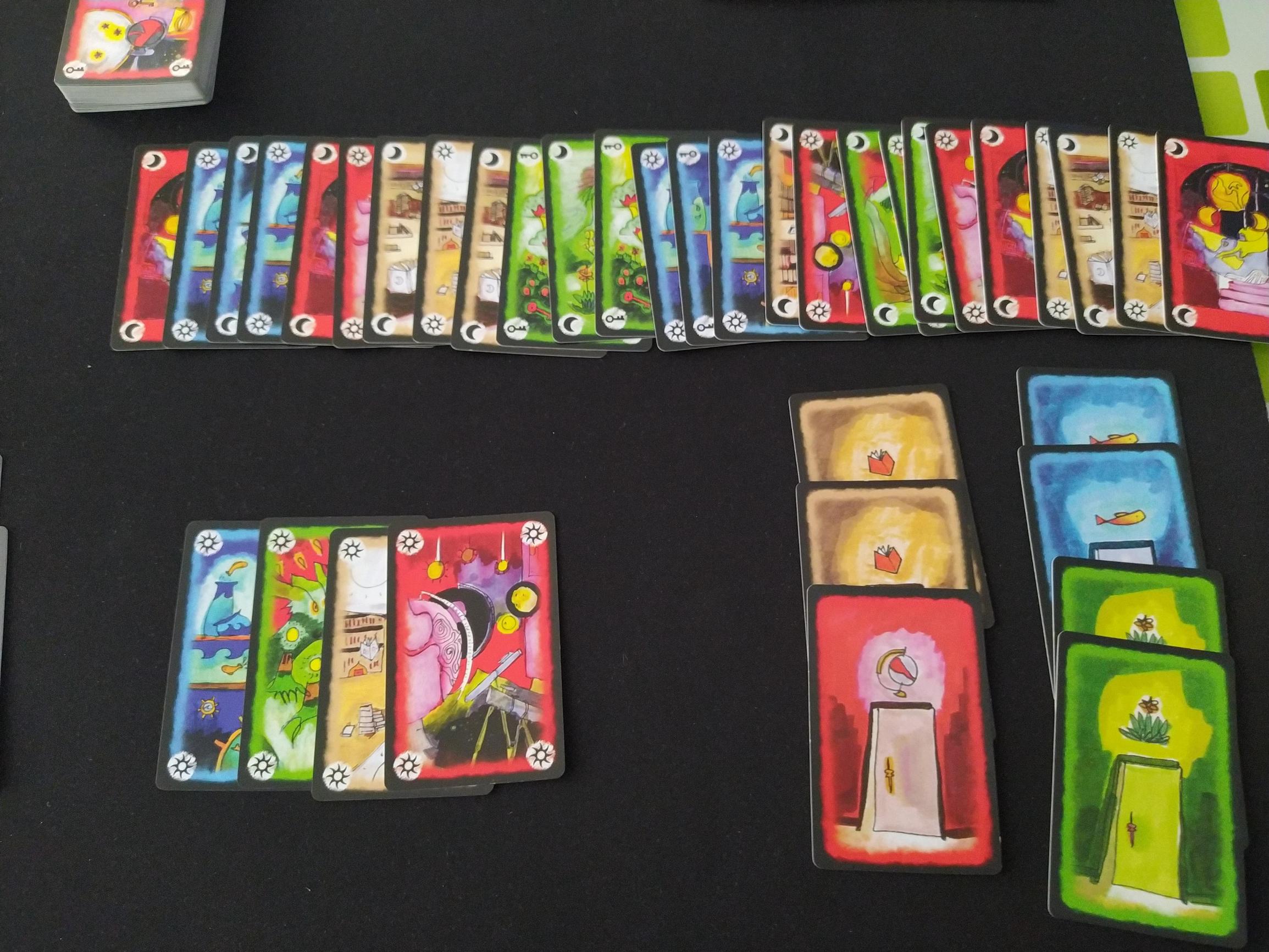
Where to buy it
Shop prices and second-hand copies, checked every day.
On Ludoya's tables
Full stats in Ludoya- 892
- Plays logged
- 94
- Players
- 14m 1s
- Average play
- 92
- In collections
- 14
- On wishlists
6.3/10
from 48 Ludoya reviews
Vic Granell7.0 Got it recently after watching the review from Dice Tower's Zee Garcia. Learn it on the app's tutorial (recommended) in minutes. Super addictive solo game! Good risk management and very difficult game to win. I think that sometimes it's just impossible to win due to how the nightmares are shuffled every time. Pending expansions to play with, that come along with the beautiful second edition.
Juli7.0 - Small box - Quick game: under 15 mins - Solo mode - Previously Owned Digital version - Digital version (iOS app - removed from App Store) - Too much shuffling
- Base -



Rules questions
Answered from the rulebook by Ludoya's rules assistant.
Can I play a Location card that shares a symbol (Sun, Moon, or Key) with the previously played card?
No — the card you play may not have any symbol in common with the last card played; the three symbols to watch are Sun, Moon and Key. (page 4)
How do I obtain a Door — do three same-color Locations have to be played in a row, and what about a fourth?
If the card you just played is the third in a row of the same color you may search the deck for a Door of that color and place it in front of you; a fourth same-color card counts as the first card of a new series. (page 4)
If I draw a Door while refilling my hand, can I discard a Key to take it right away?
Yes — when you draw a Door you may immediately discard a Key card of the same color from your hand to obtain the Door; if you don’t or can’t, place the Door in the Limbo pile. (page 5)
What is the Limbo pile and when do cards in it return to the deck?
The Limbo pile is where cards are temporarily set aside (for example replaced Doors or Dreams); at the end of the turn you shuffle all cards in the Limbo pile back into the deck. (pages 4, 6)
What happens when I discard a Key — what is Prophecy?
Discarding a Key triggers a Prophecy: look at the top five cards of the deck (or all remaining if fewer), discard one of them (mandatory), then place the other cards back on top of the deck in the order of your choice. (page 5)
I drew a Nightmare — what options do I have to resolve it?
When you draw a Nightmare you must choose one of four penalties: discard a Key from your hand; place one of your acquired Doors into the Limbo pile; reveal the top five cards and discard all non‑Door/non‑Dream cards (put Doors/Dreams into Limbo); or discard your whole hand and draw a new hand of five Location cards using the setup replacement method (put aside Doors/Dreams into Limbo and do not resolve them). (page 5)






Free, on web, Android and iOS
Play Onirim (Second Edition) with Ludoya
- Keep it in your collectionTrack your copy and its expansions, lend it to friends, or put it on your wishlist and get told when the price drops.Add it to your collection
- Log every playScores, winners, timers and photos, then your stats: win rate, favourite player count, best score.Log a play
- Settle rules questionsAsk anything about the rules and get an answer from the rulebook, with the page to check it on.Ask the rules assistant
- Find people to play it withClubs, game nights and events near you that bring this game to the table.See events
Game facts (players, playing time, age, credits) from BoardGameGeek.