
2019 · Territory Building
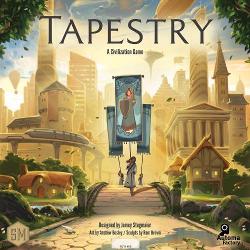
Tapestry
Create a civilization that develops from prehistory into a speculative future through a mix of cultural and technological advances. Players advance along four distinct tracks—science, technology, exploration, and military—to unlock benefits, improve income, and build a capital city while deploying asymmetric player abilities. Gameplay combines track advancement, tableau-building with tapestry cards that narrate each civilization’s story, income management, and scoring decisions to amass the most victory points over a typical two-hour playtime for 1–5 players.
- Players
- 1–5 best 3
- Playing time
- 90–120 min
- Age
- 12+
- Complexity
- 3 / 5
About the game
- Design
- Publisher



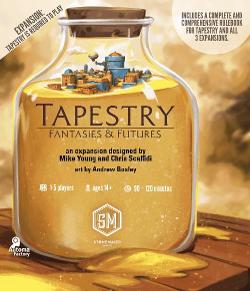
Expansions
See them in Ludoya
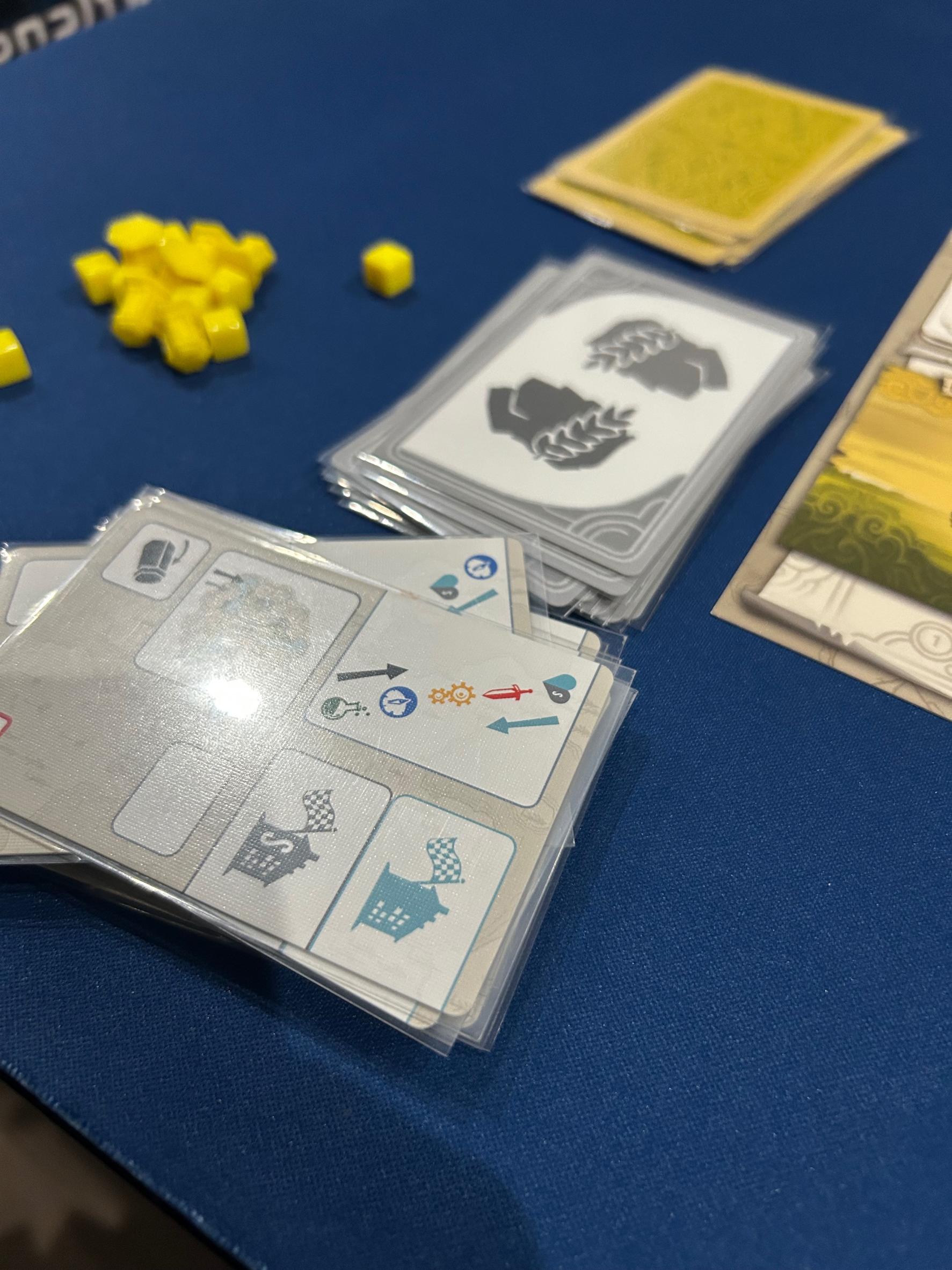
Photos from Ludoya tables
All photos in Ludoya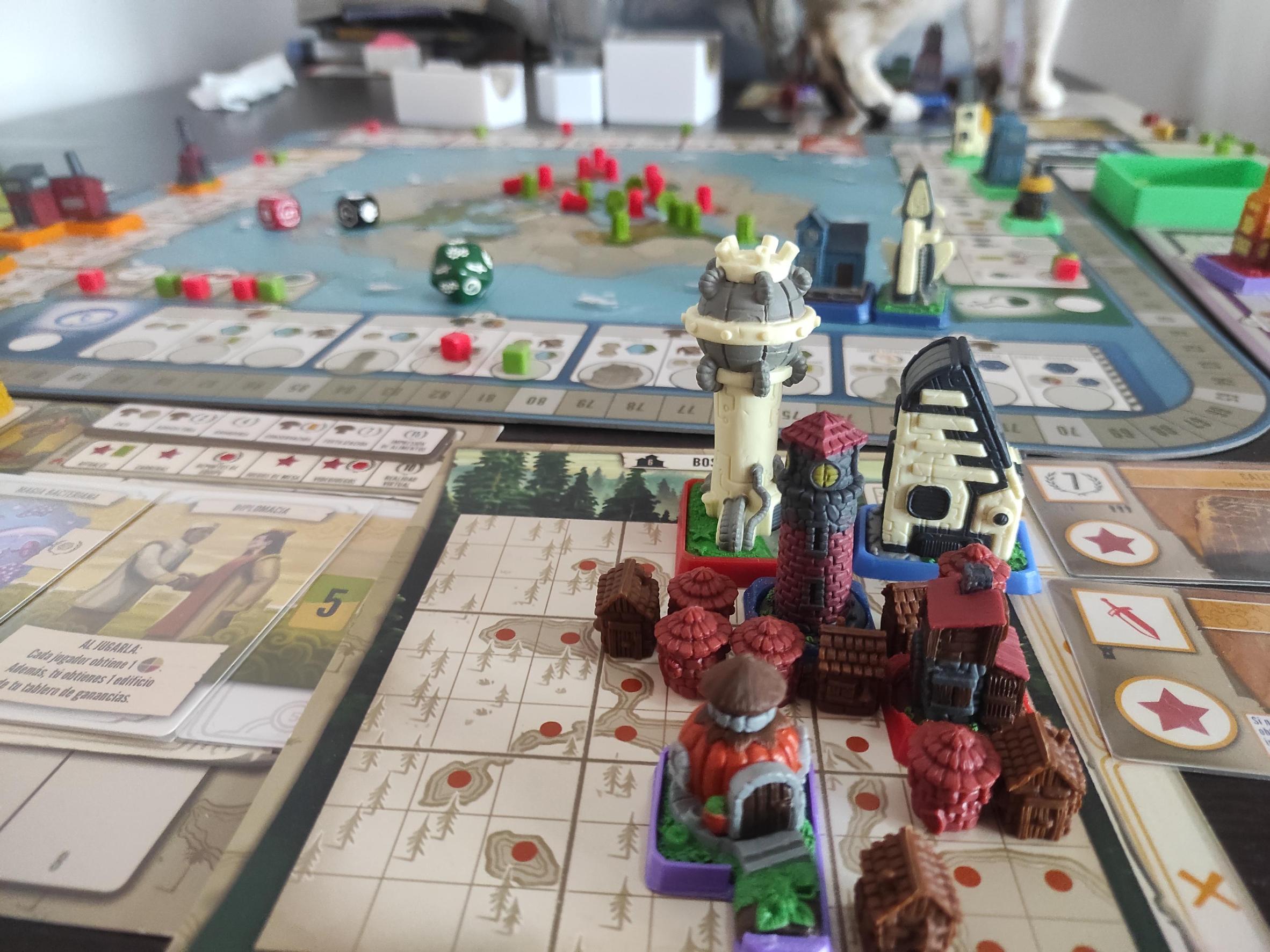
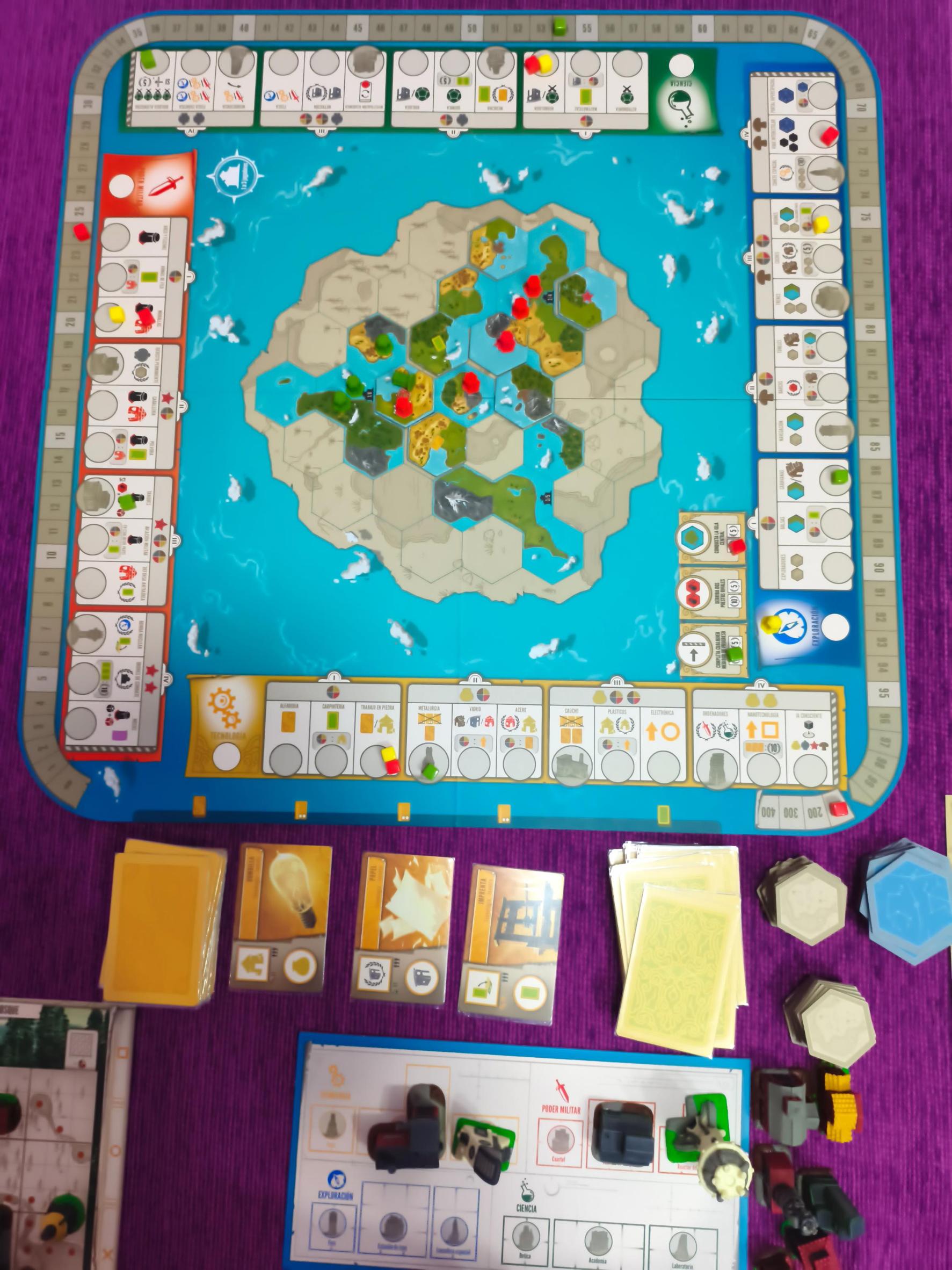
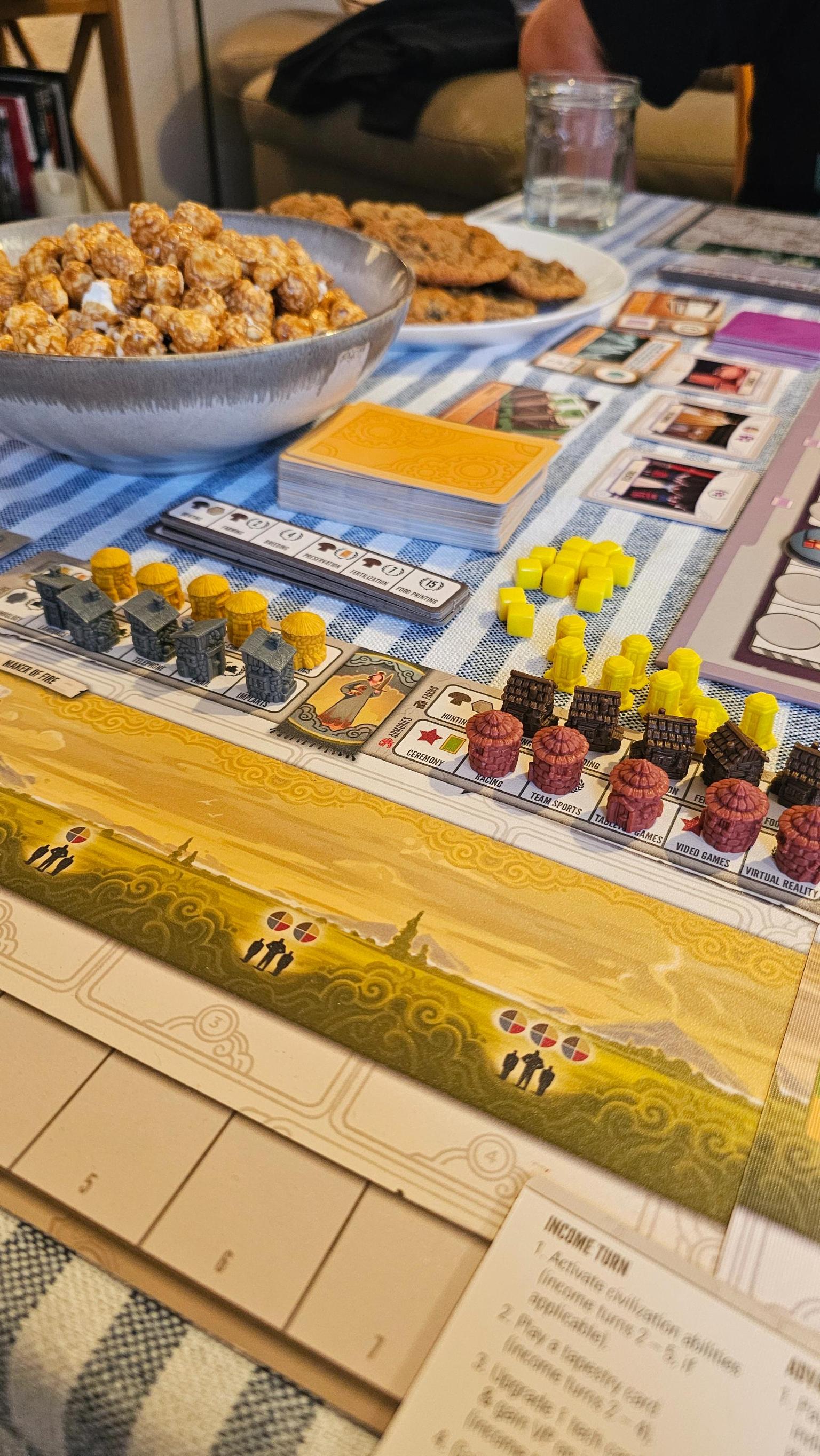
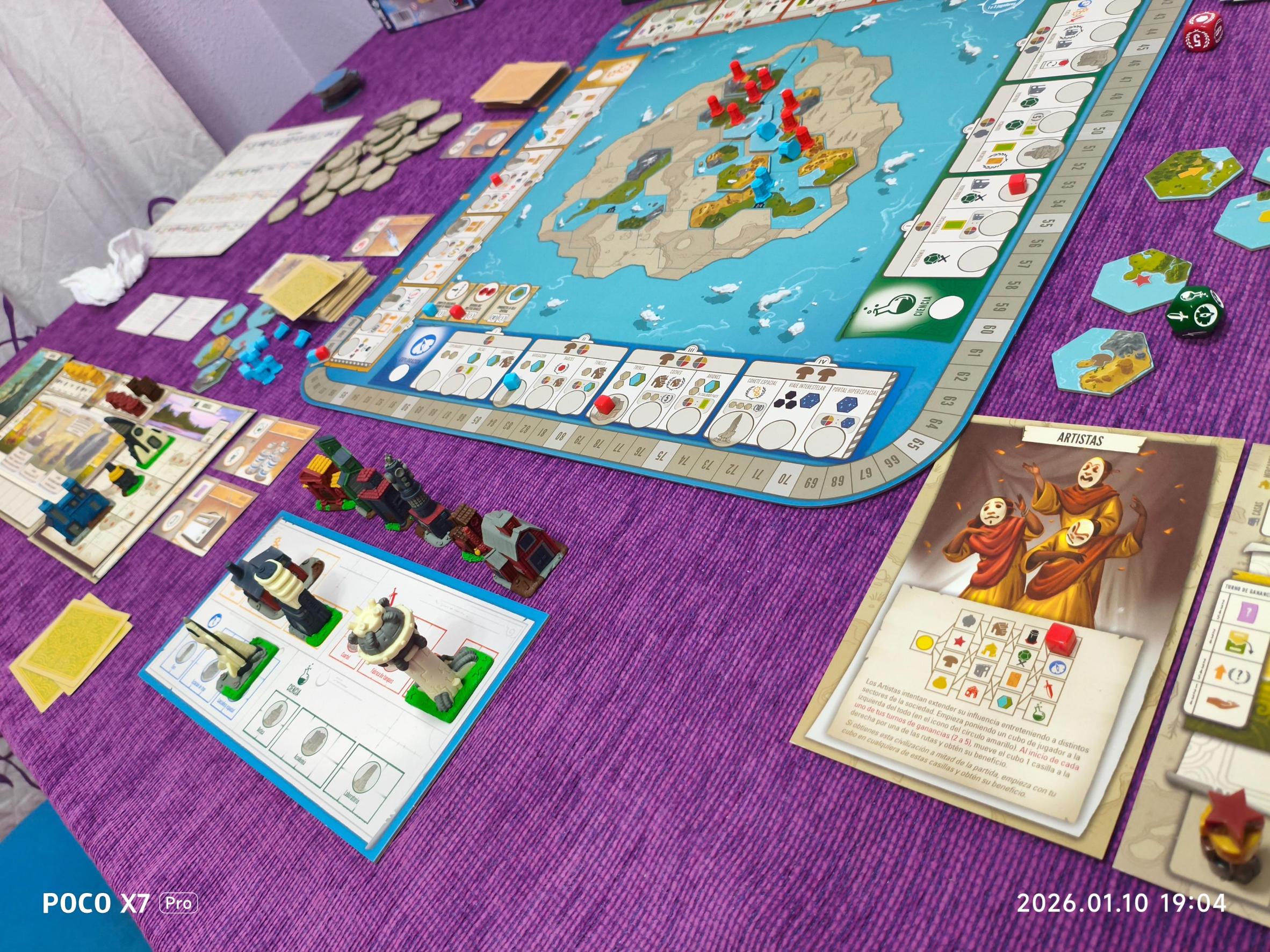

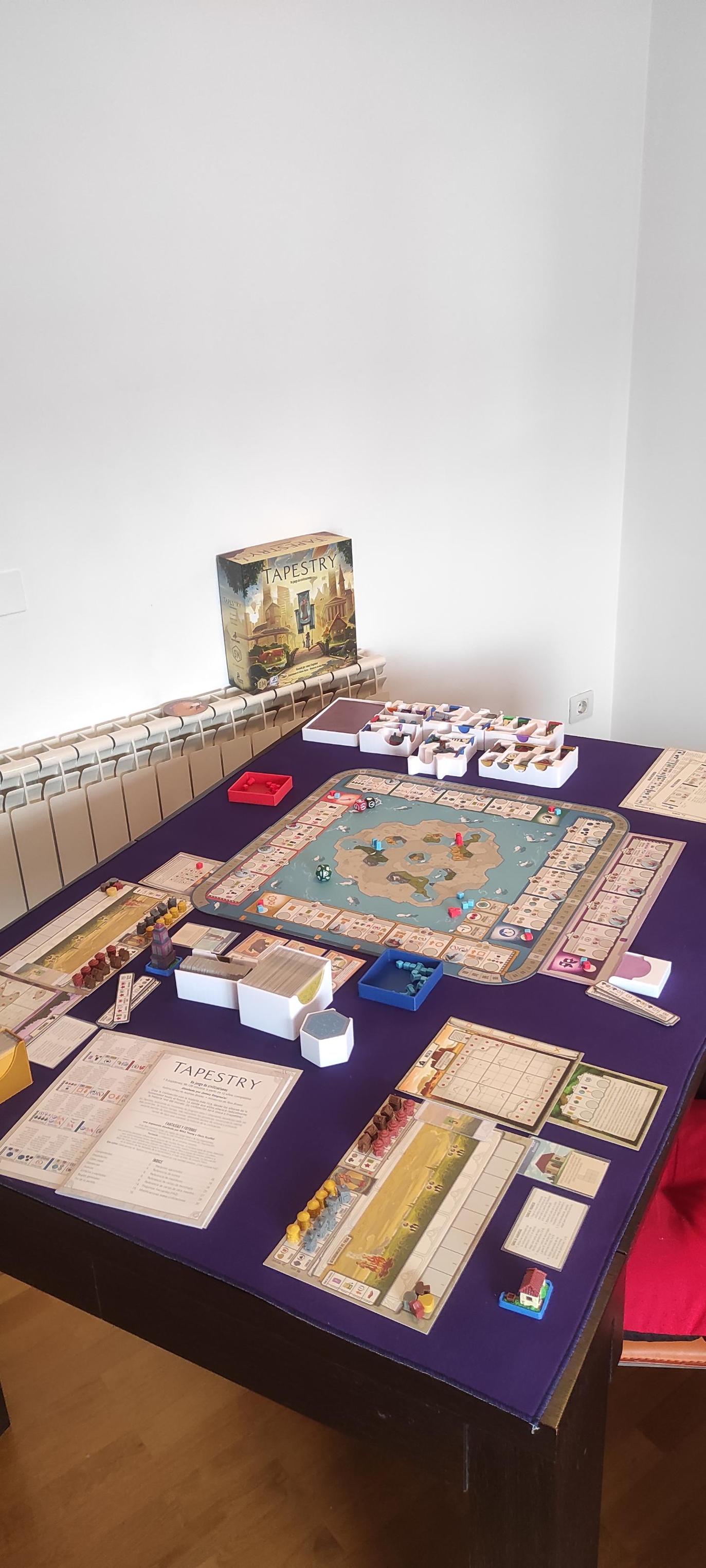
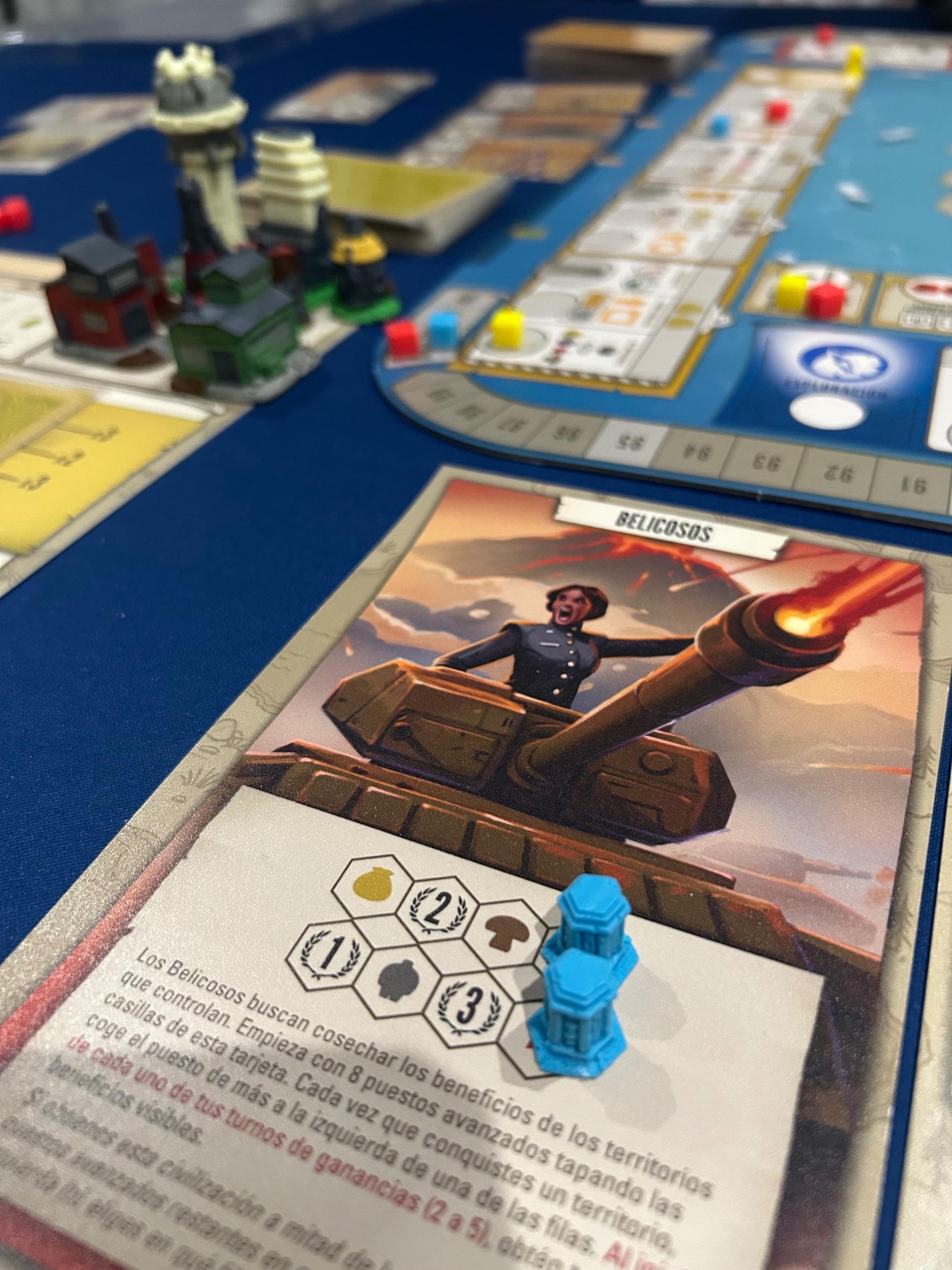
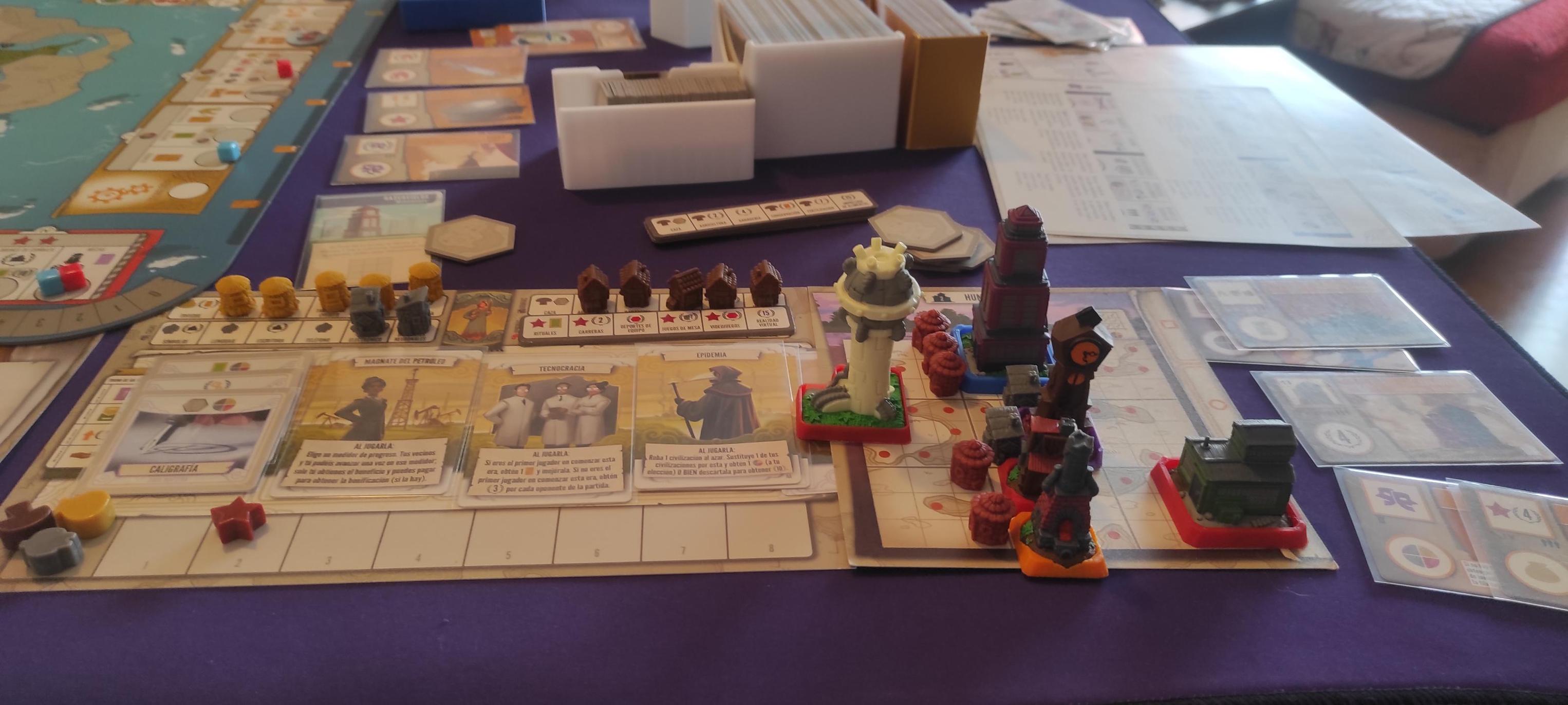
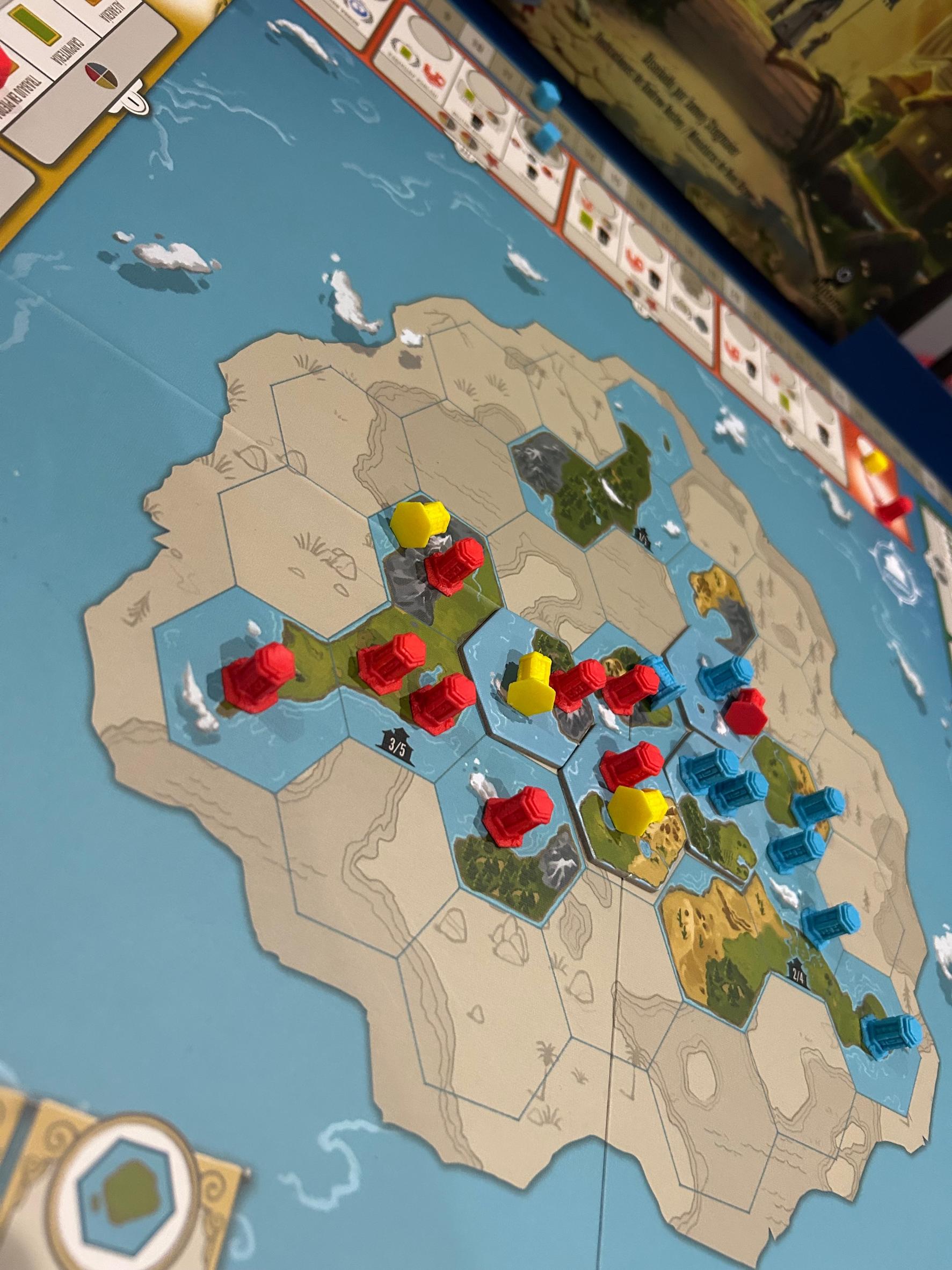
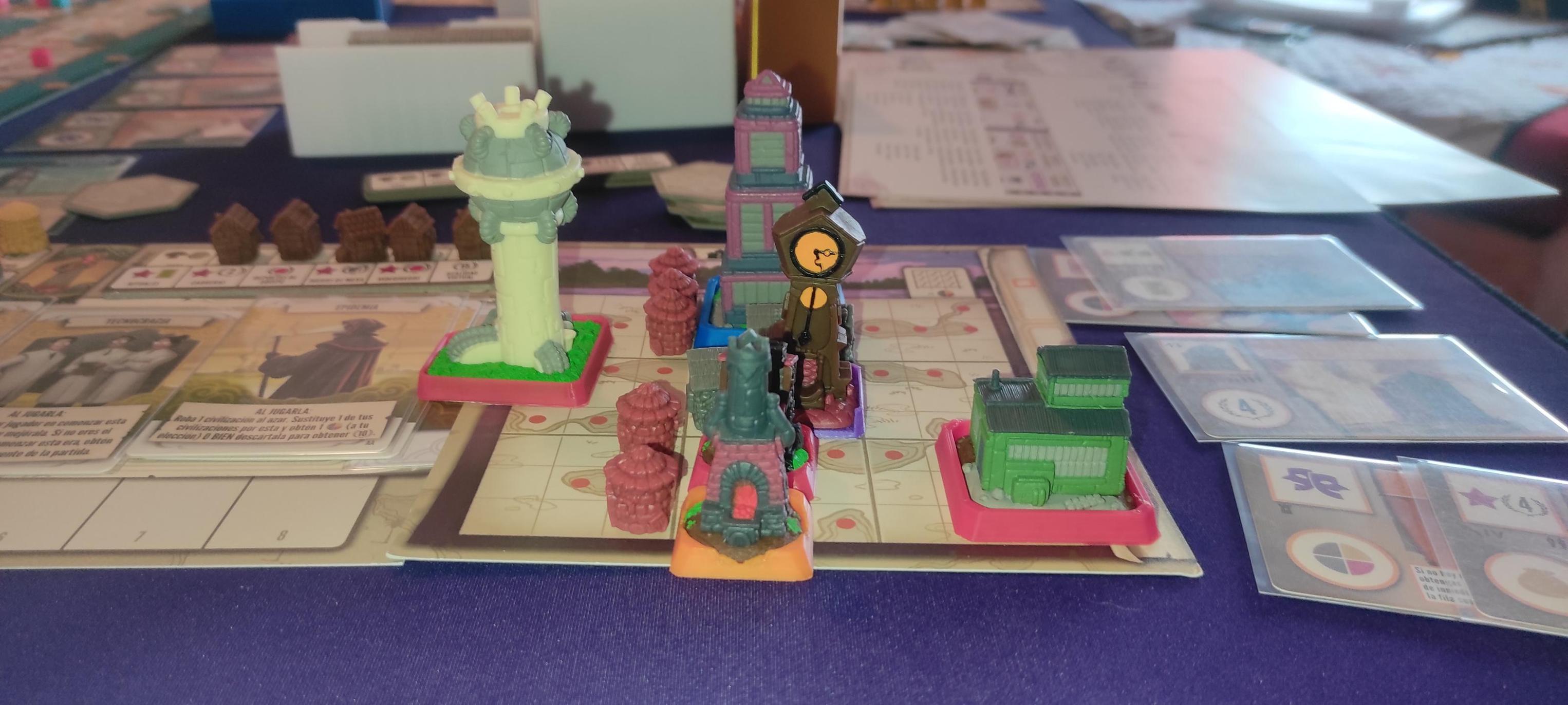
Where to buy it
Shop prices and second-hand copies, checked every day.
On Ludoya's tables
Full stats in Ludoya- 646
- Plays logged
- 643
- Players
- 2h 2m
- Average play
- 159
- In collections
- 25
- On wishlists
7.0/10
from 87 Ludoya reviews
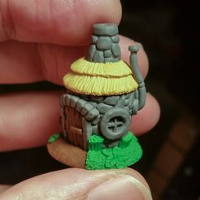
Evan7.2 This is a euro-civ game with a very unique and intuitive action selection process. The game has four tracks. On your turn you pay the resource cost indicated at the top of the bracket to advance your marker to the next step in the track, then resolve the effect of the space. Each track relates to a different strategy through the game. Deciding where to focus and what order to push which track makes for a very compelling puzzle. Each track also has three firsties bonuses at set points of the tracks which must be taken into consideration when you see your opponents pushing up the same tracks you have been working on. Of course as you bump higher on the tracks the costs grow but so do the rewards. In particular, the last step of the tracks tend to have an ability that lend themselves more to a mid-game build-up effect than an end of the game hoorah. If you run out of resources to spend, or you decide you want to pass, you can take a reset action, with causes your player board tracks to generate points and resources for you depending on how many production buildings your track actions removed. You get five resets per game, with the first being your very first turn of the game and your last being your very last turn of the game, so realistically, everything about your ability to generate the resources you need to succeed come from only three production moments. The game gives you the ability to pick up an odd resource here or there, but often also temps you away from it with the option to instead get a die roll worth of victory points that could land between 4 and 7. I found it's not uncommon to be sitting late game and realizing you spent one too many of a specific resource to be able to hit that last track step you desperately want. What this all amounts to is an intense experience where you always feel like next time you'd be able to do a better job. There are other elements that feed into this feeling as well such as doing a bad job planning out your city board for the multi-space buildings earned from firsties bonuses. I happen to love games that give me the feeling of failure in this way. It teases me with the promise that with slightly more focused or more efficient play, great things will happen for me. The game is not without it's problems. There's a decent amount of flip-luck involved with the game. The effects of the cards and the tiles you encounter from the flip luck piles have a pretty wide range of usefulness. The special pre-painted building minis the game comes with are a little hard to read in terms of what size their base is for purpose of covering the player mat. Each player also has an asymmetric power, and those seem to vary in terms of quality, or at least some are substantially more intuitive to play. Overall though, I'm having a fantastic time with the game. There's not a lot to be done about the flip-luck, but it's a random element I enjoy tactically reacting to, even if at times card luck could mean a substantial point differential.
Garfield8.0 #2.1 It looks complicated, but it's quite easy to learn/teach/play. It plays quite fast. Unfortunately the theme is very abstract. [c] Theme: :star::star::nostar::nostar::nostar: <!-- size 7]Very little --> Gameplay: :star::star::star::star::star: <!-- size 7]A lot of different options, but not too much --> Interaction: :star::star::star::nostar::nostar: <!-- size 7]Race on the tracks, fighting on the island --> Artwork: :star::star::star::nostar::nostar: <!-- size 7]ok, nothing special --> Luck: :star::nostar::nostar::nostar::nostar: <!-- size 7]Only the space tiles? --> Strategy: :star::star::star::star::nostar: <!-- size 7]A lot of strategies possible --> Components: :star::star::star::star::star: <!-- size 7]Very good --> Play duration: :star::star::star::nostar::nostar: <!-- size 7]Ok for such a game --> Easy to teach: :star::star::star::nostar::nostar: <!-- size 7]Quite easy --> Rules quality: <!-- size 7]not read --> Setup time: :star::star::nostar::nostar::nostar: <!-- size 7]Could take some time --> No downtime: :star::star::star::nostar::nostar: <!-- size 7]Plays quite fast --> Replay value: :star::star::star::star::star: <!-- size 7]A lot of strategies, different player powers --> [/c]
Jan Solo8.0 Excelente juego de civilizaciones en un tiempo contenido. Personalmente no siento en absoluto el desarrollo de mi civilización pero disfruto mucho con el puzzle que supone la gestión de acciones. Básicamente consta de 4 tracks por los que ir subiendo casillas. Cada una de ellas es una acción. JAN SOLO RULES: -Coloca puestos rivales en los 8 hexágonos más alejados. -Al ganar un monumento tapa otro del mismo nivel o inferior que no podrás obtener -No obtienes recursos al inicio de era. -A efectos de resolver cartas te puedes considerar rival (ej. Copia una carta de tu rival = una tuya) Impro-Reseña⇒ https://youtu.be/ZfpcBL7nBEs

Rules questions
Answered from the rulebook by Ludoya's rules assistant.
Do I have to play a tapestry card on my income turn?
Yes — on an income turn you must play a tapestry card from hand onto the leftmost blank space on your income mat; if you have no tapestry cards in hand, place the top card of the tapestry deck face down there (page 2).
If I’m the first to advance into a new tier, do I automatically get the landmark?
Yes — if you are the first player to advance into a new tier (I–IV) by any means, you gain the corresponding landmark and place it in your capital city (page 2).
When I explore a territory tile, how do I count the VPs for the tile’s sides — do rivers or rotation matter?
You gain 1 VP for each side of the explored territory that has at least one aligned terrain (maximum 6 VPs); ignore decorative rivers and you may orient the hex in any rotation when placing it (page 3).
If I roll the science die and it shows an X, do I still get the benefit or bonus?
No — if the research icon has an X on it, you do not gain the benefit or the bonus; if it does not have an X you may advance for free, gain the benefit, and optionally pay for the bonus (page 3).
Can I conquer a hex that already has two outposts or one I already control?
No — you may only place an outpost on a territory that has no more than one token and is adjacent to a territory you control, and you cannot conquer territories you already control; if you topple an opponent’s outpost leaving two tokens the territory cannot be conquered again, and you may no longer conquer once all your outposts are on the map (page 3).


Free, on web, Android and iOS
Play Tapestry with Ludoya
- Keep it in your collectionTrack your copy and its expansions, lend it to friends, or put it on your wishlist and get told when the price drops.Add it to your collection
- Log every playScores, winners, timers and photos, then your stats: win rate, favourite player count, best score.Log a play
- Settle rules questionsAsk anything about the rules and get an answer from the rulebook, with the page to check it on.Ask the rules assistant
- Find people to play it withClubs, game nights and events near you that bring this game to the table.See events
Game facts (players, playing time, age, credits) from BoardGameGeek.