
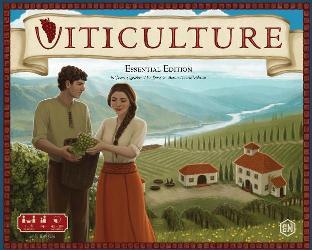
2015 · Economic
Viticulture Essential Edition
Players take the roles of vineyard owners in rustic Tuscany who inherit small plots, a crush pad, a cellar, and a handful of workers. Each year is divided into seasons; players assign workers to seasonal actions like planting vines, tending fields, harvesting grapes, building structures, managing visitors, and making wine. Visitors arrive as cards that grant one-off bonuses or special abilities when a worker is assigned to host them. Players expand their estates by acquiring additional fields and buildings, planting and upgrading vines, and filling wine orders to earn points. The game includes modules that add family growth, varied property options, revised visitor decks, and solo automa rules, while keeping the core worker-placement and seasonal action cycle.
- Players
- 1–6 best 4
- Playing time
- 45–90 min
- Age
- 13+
- Complexity
- 2.9 / 5
About the game
- Publisher




Expansions
See them in Ludoya Viticulture: Tuscany Essential Edition2016
 Viticulture: Moor Visitors Expansion2016
 Viticulture: Visit from the Rhine Valley2018
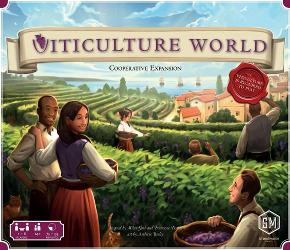 Viticulture World: Cooperative Expansion2022
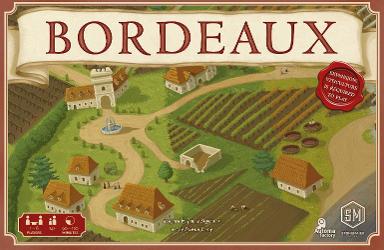 Viticulture: Bordeaux Expansion2026
 Viticulture World: First Game Continent Promo Pack2022
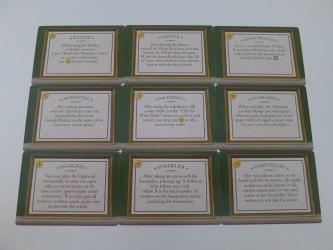 Viticulture: Tuscany – Special Worker Promo Cards2016
 Viticulture: Arboriculture and Formaggio Expansions2013
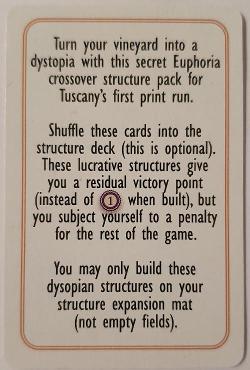 Tuscany & Euphoria Crossover Structures2014
 Viticulture: Formaggio Expansion2013
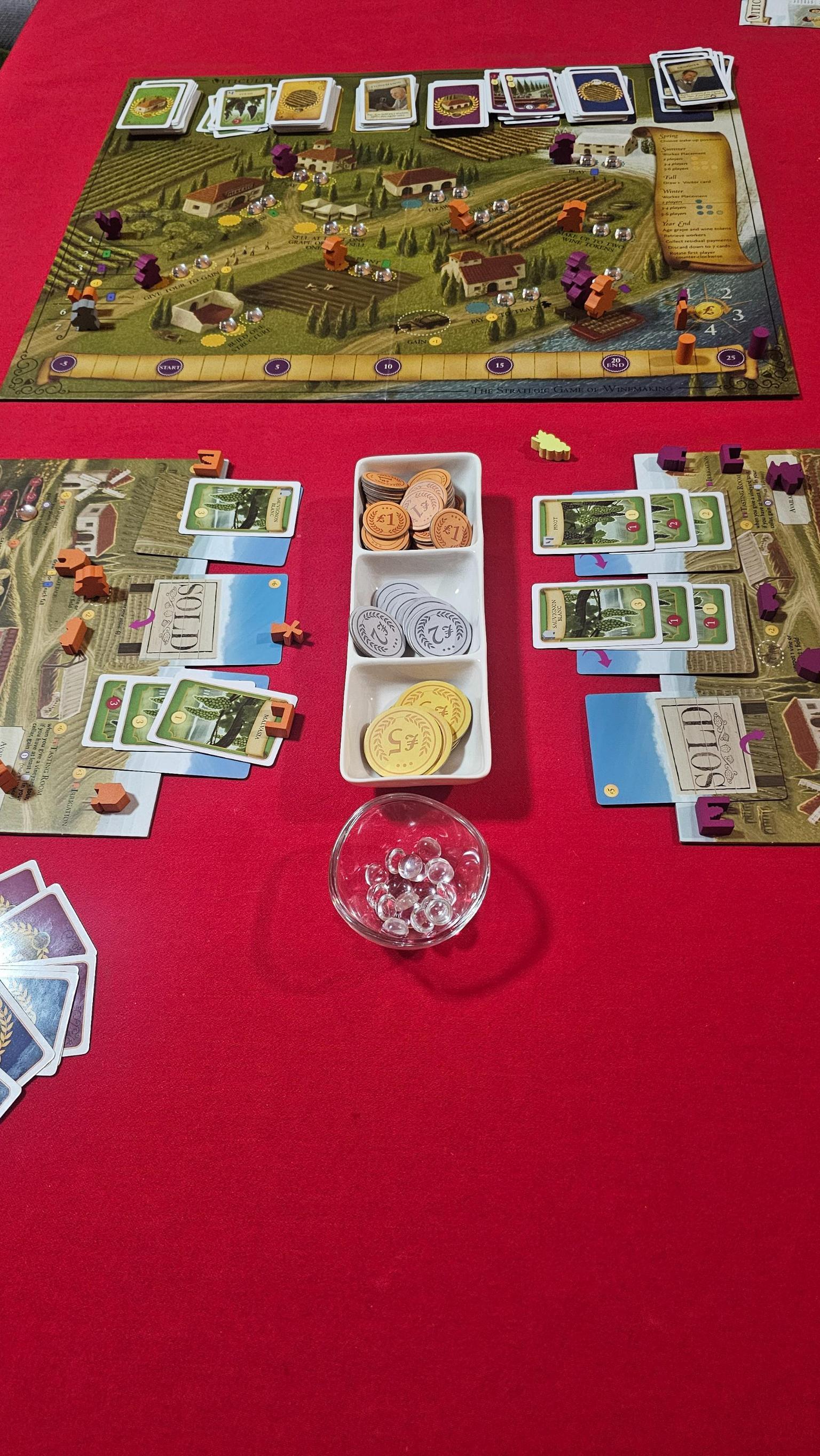
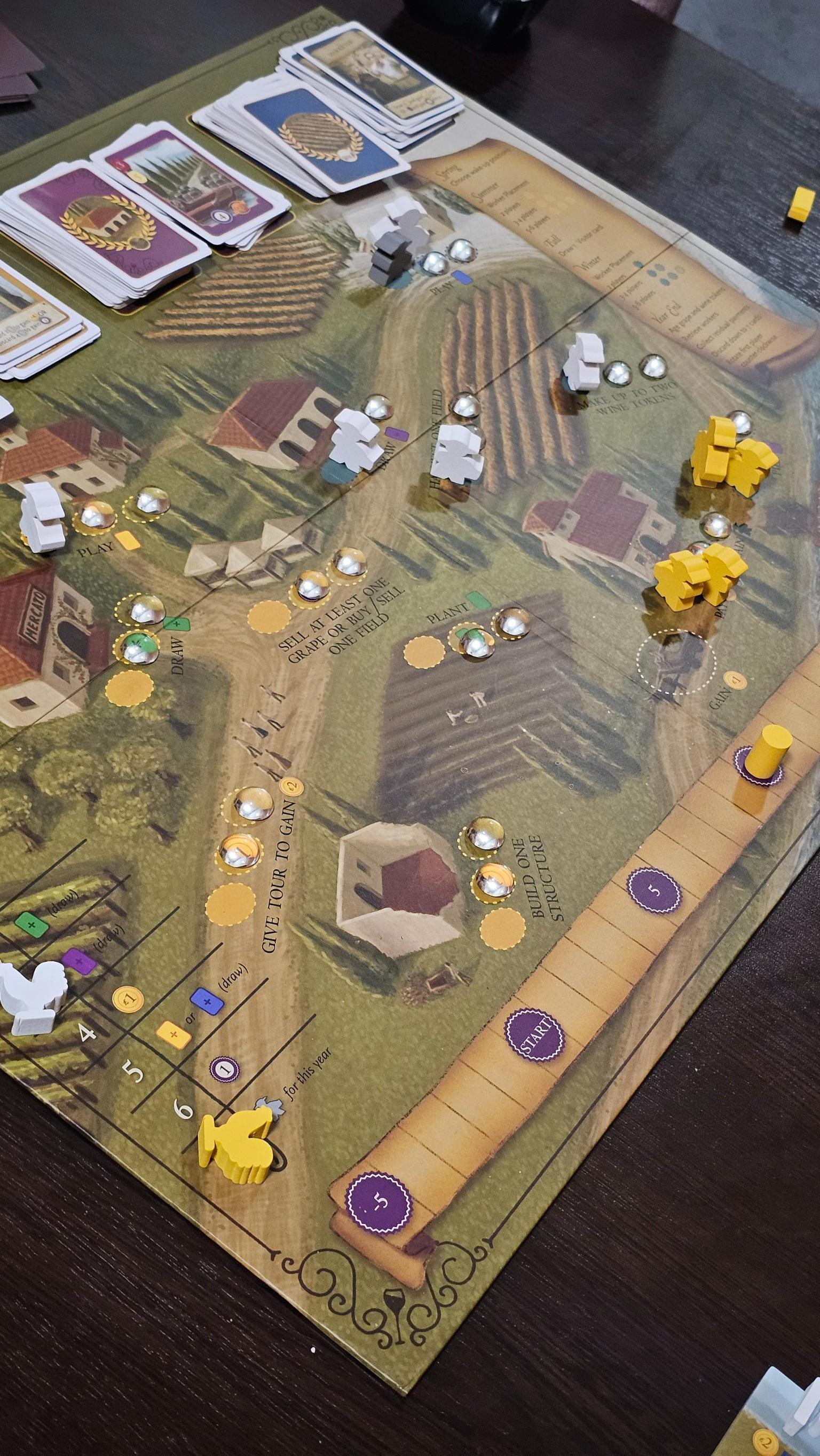
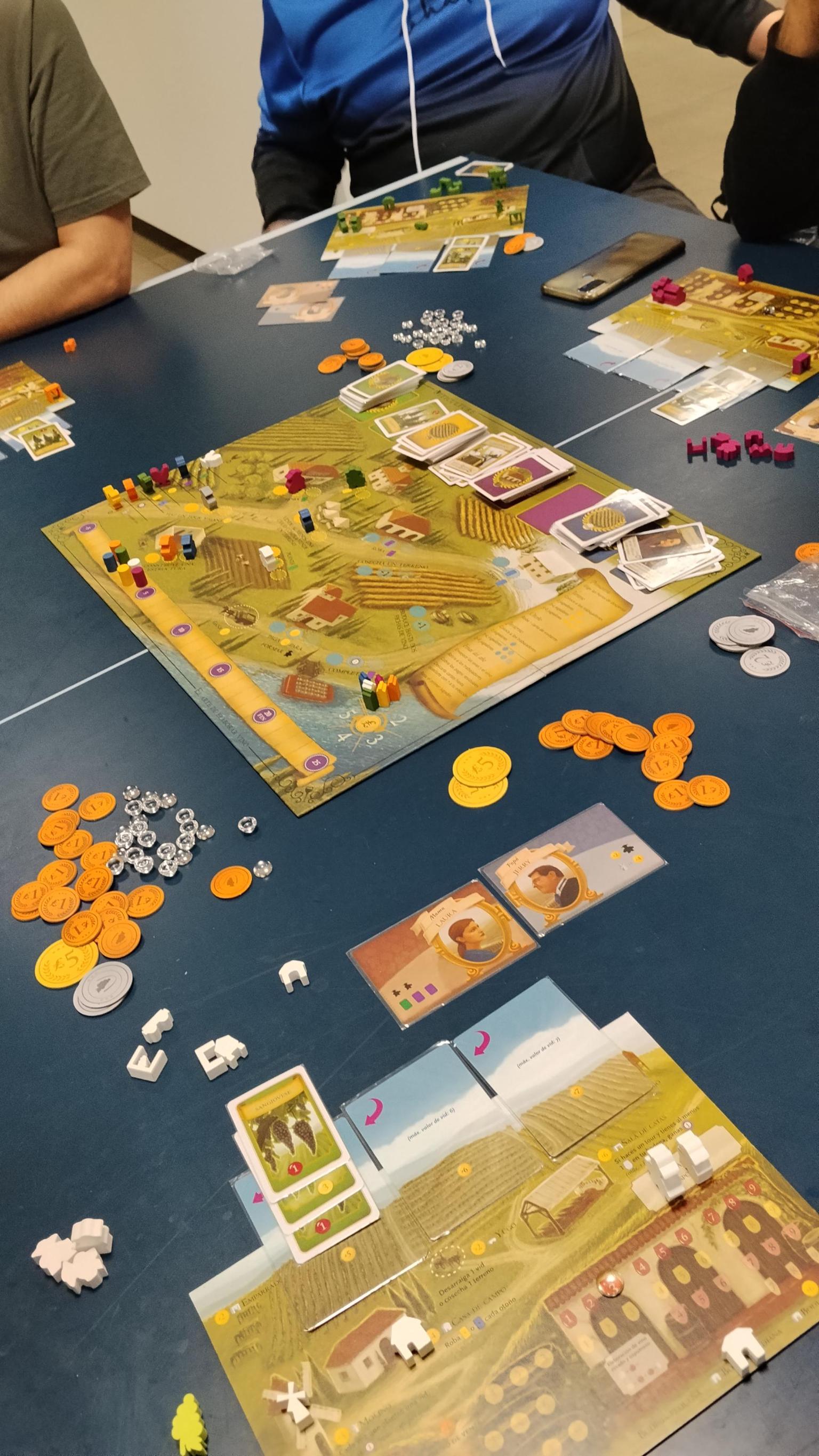
Photos from Ludoya tables
All photos in Ludoya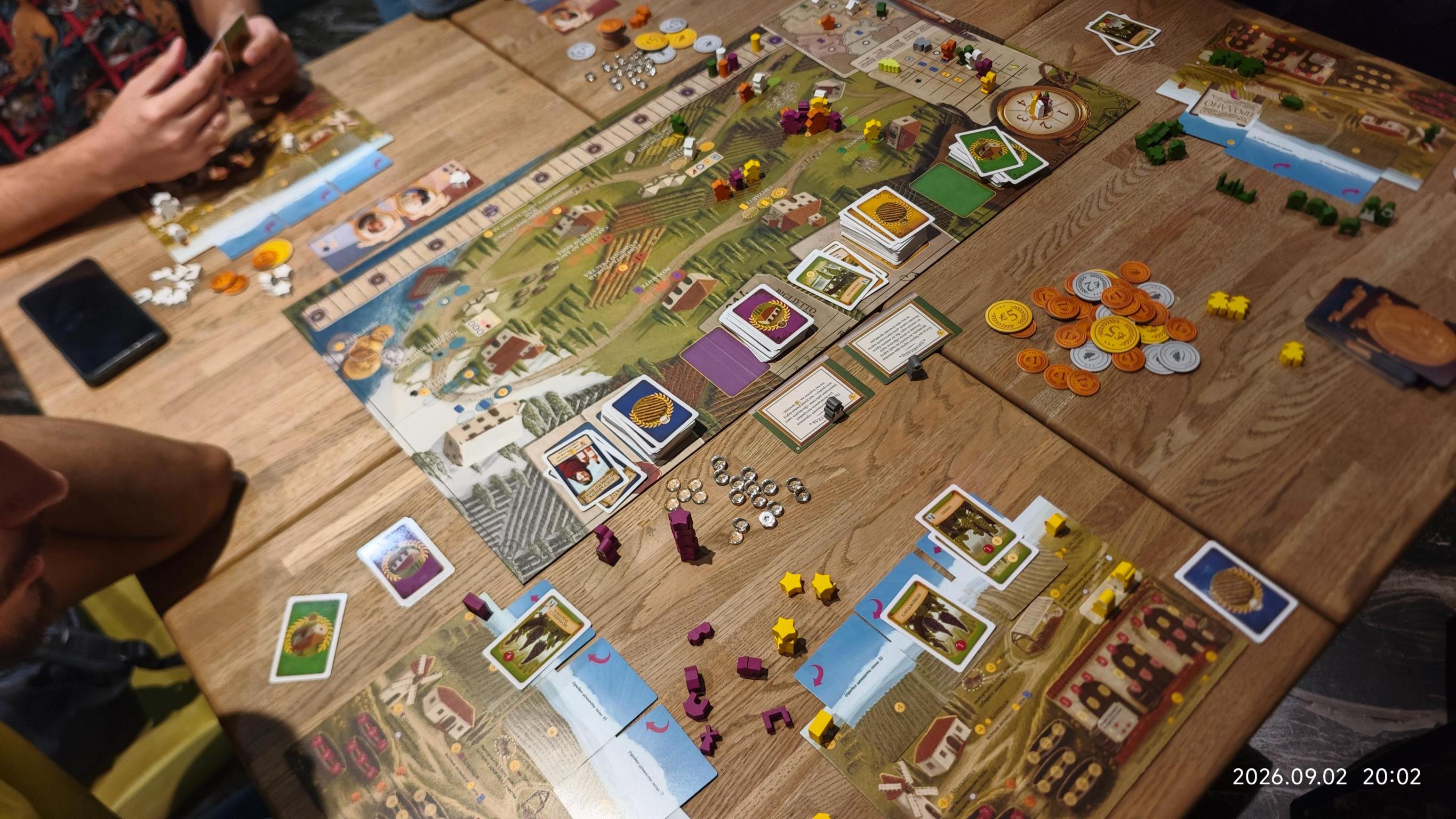
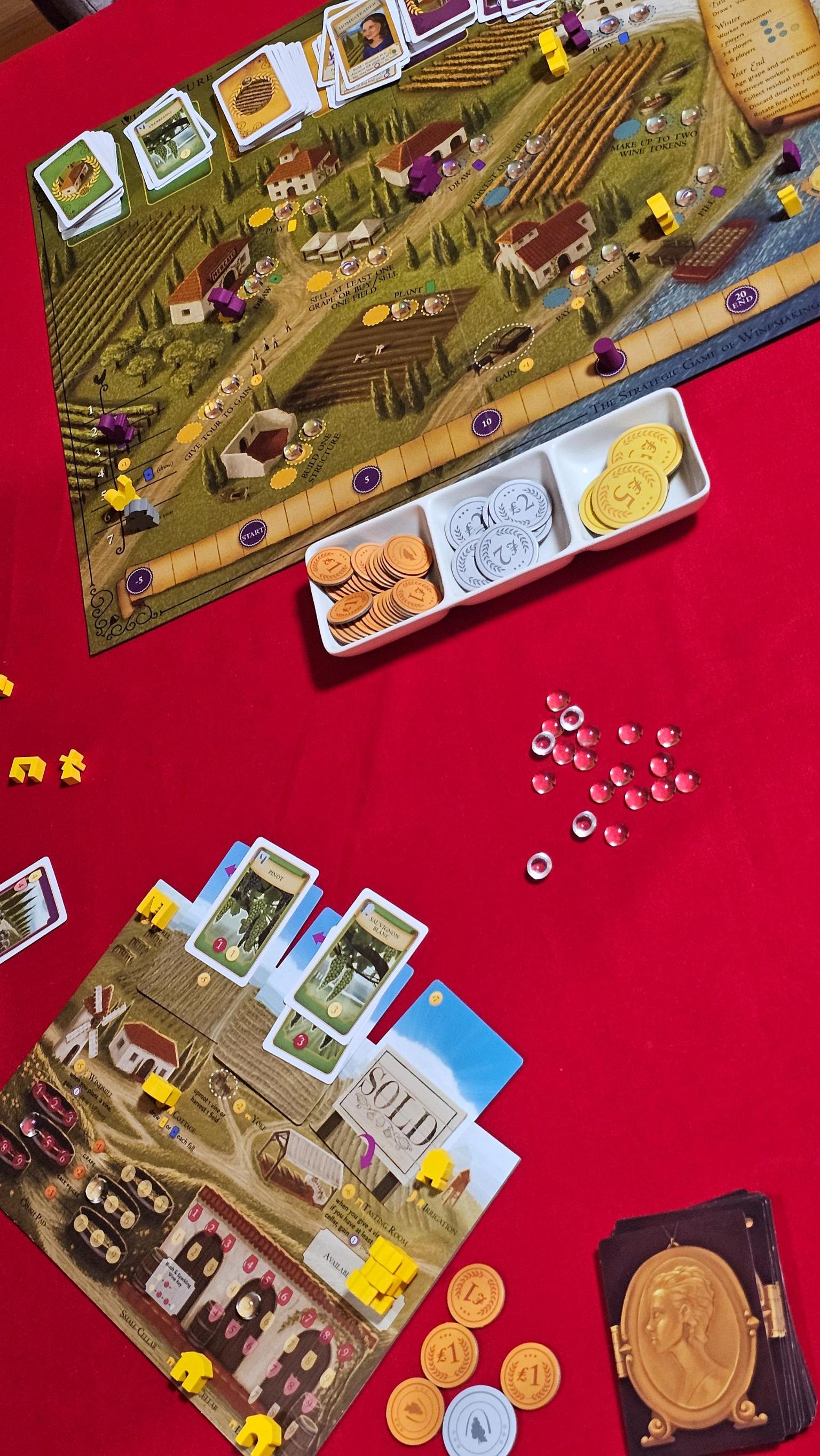
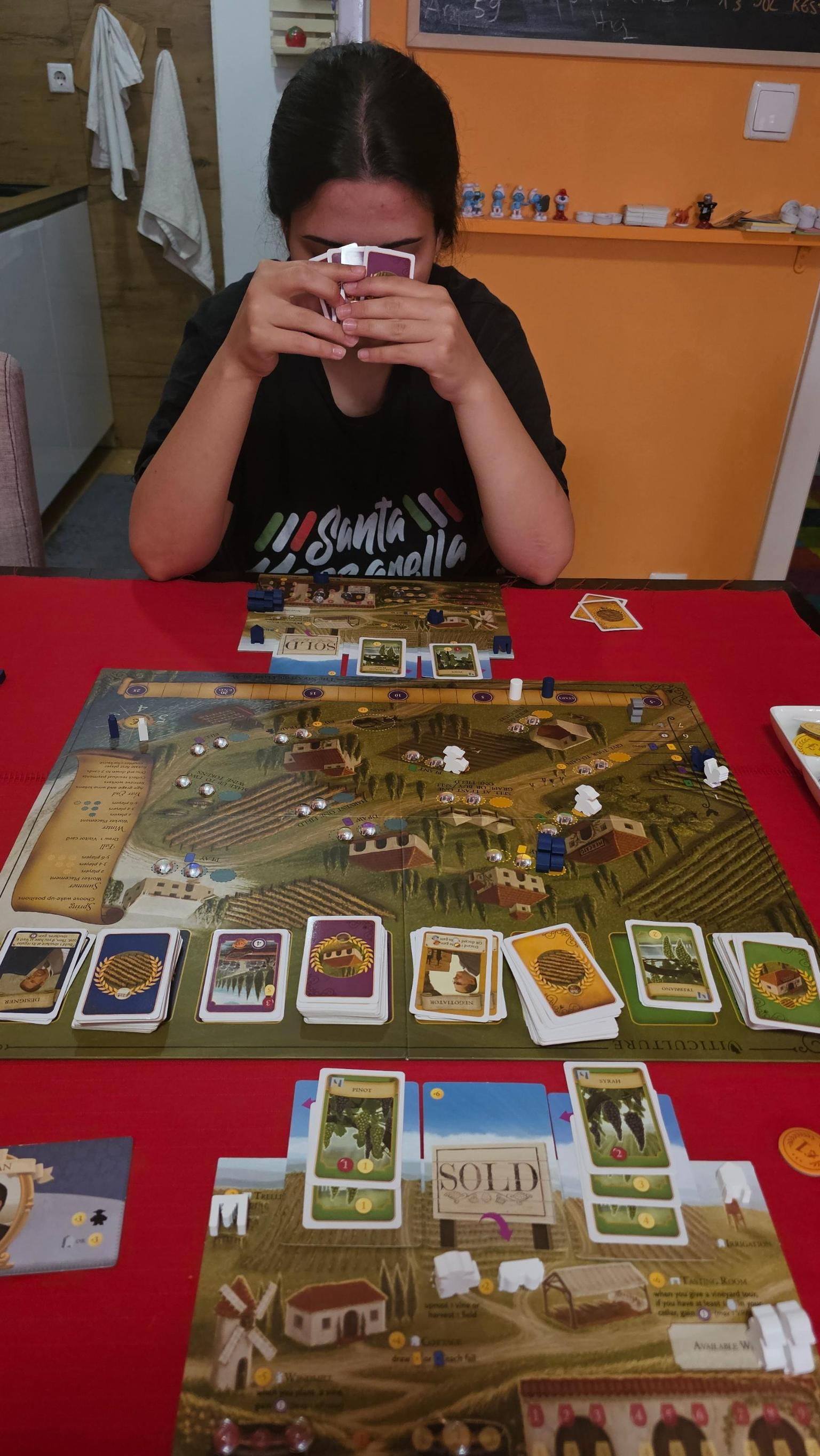
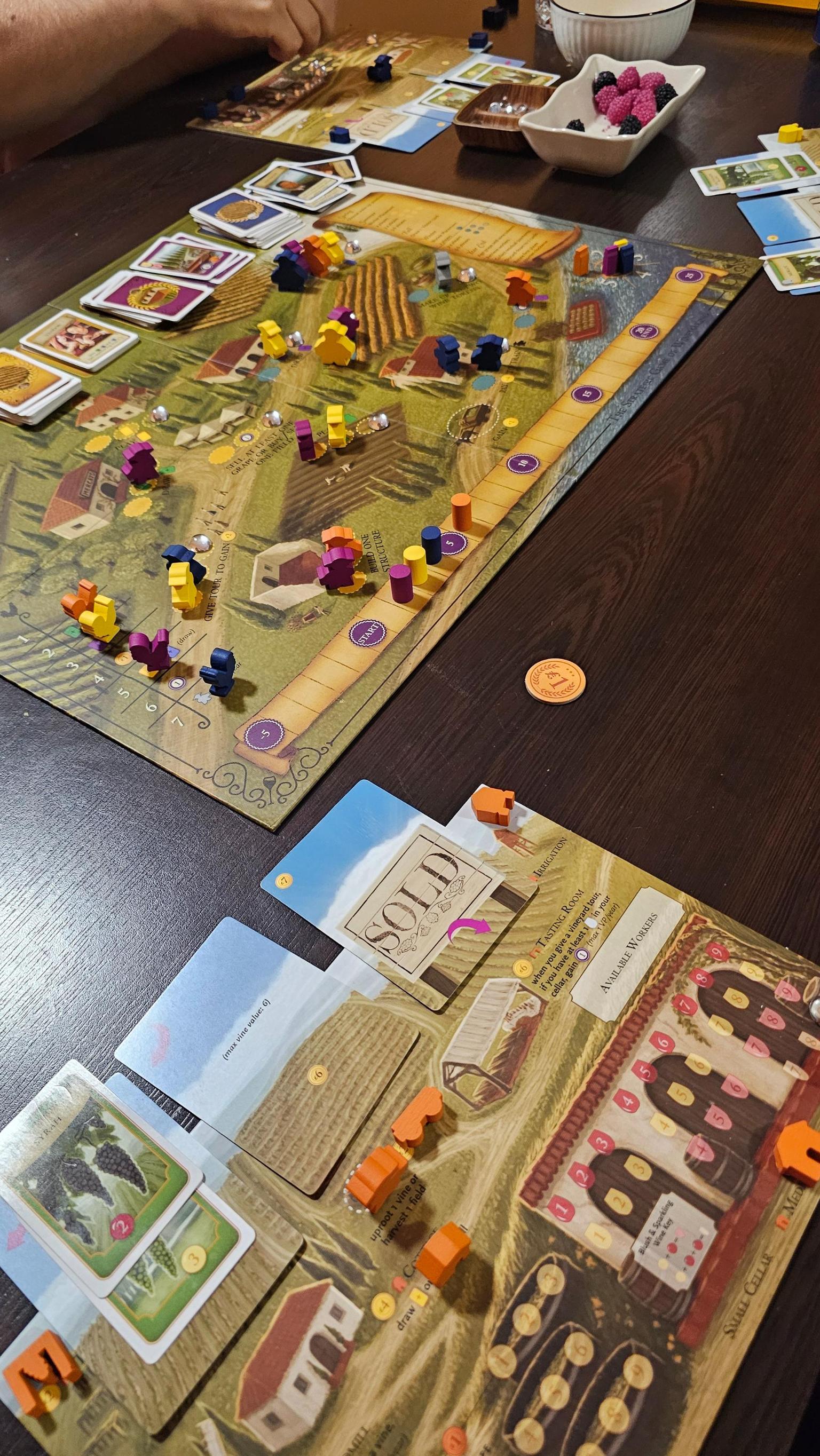
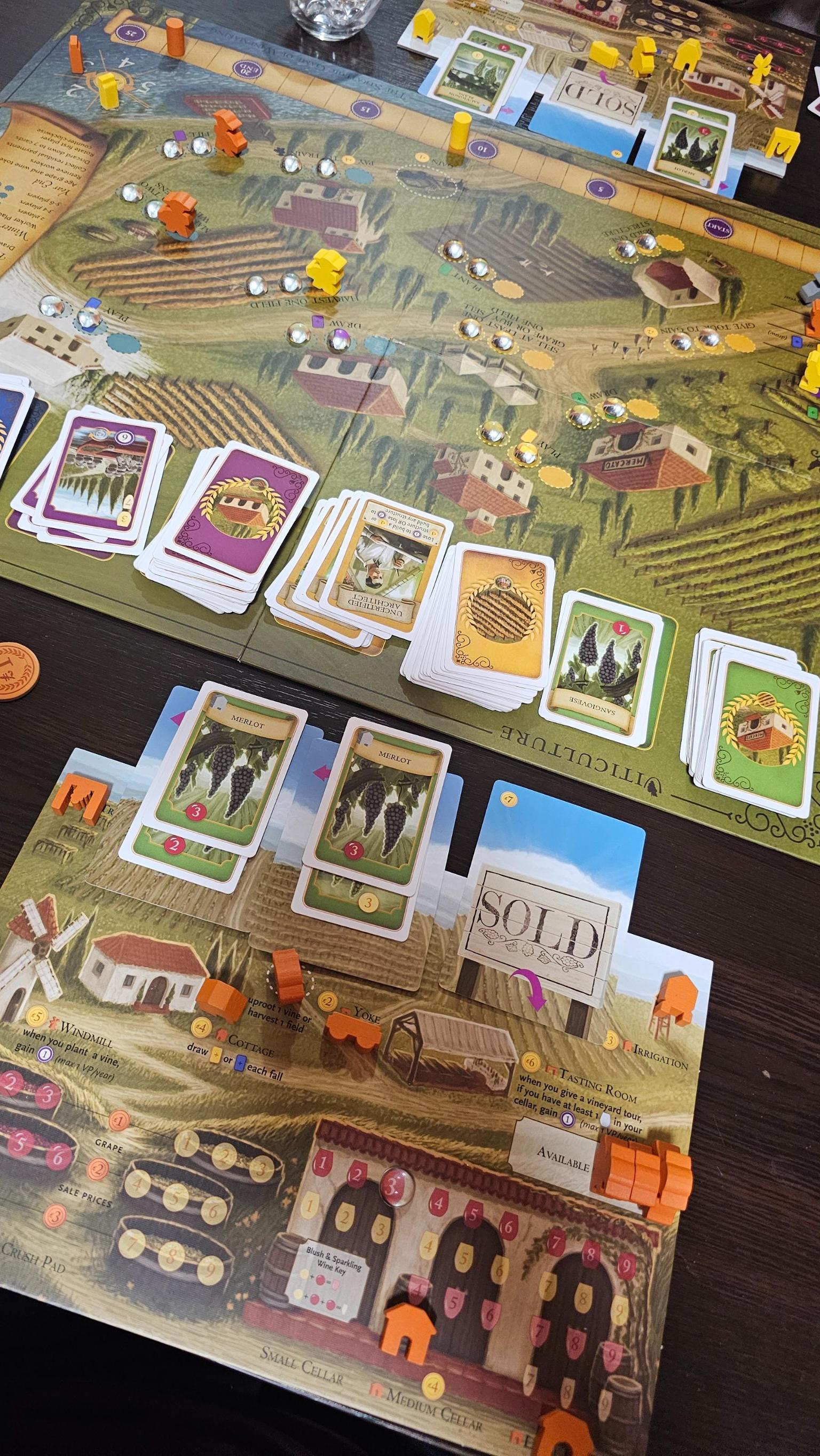
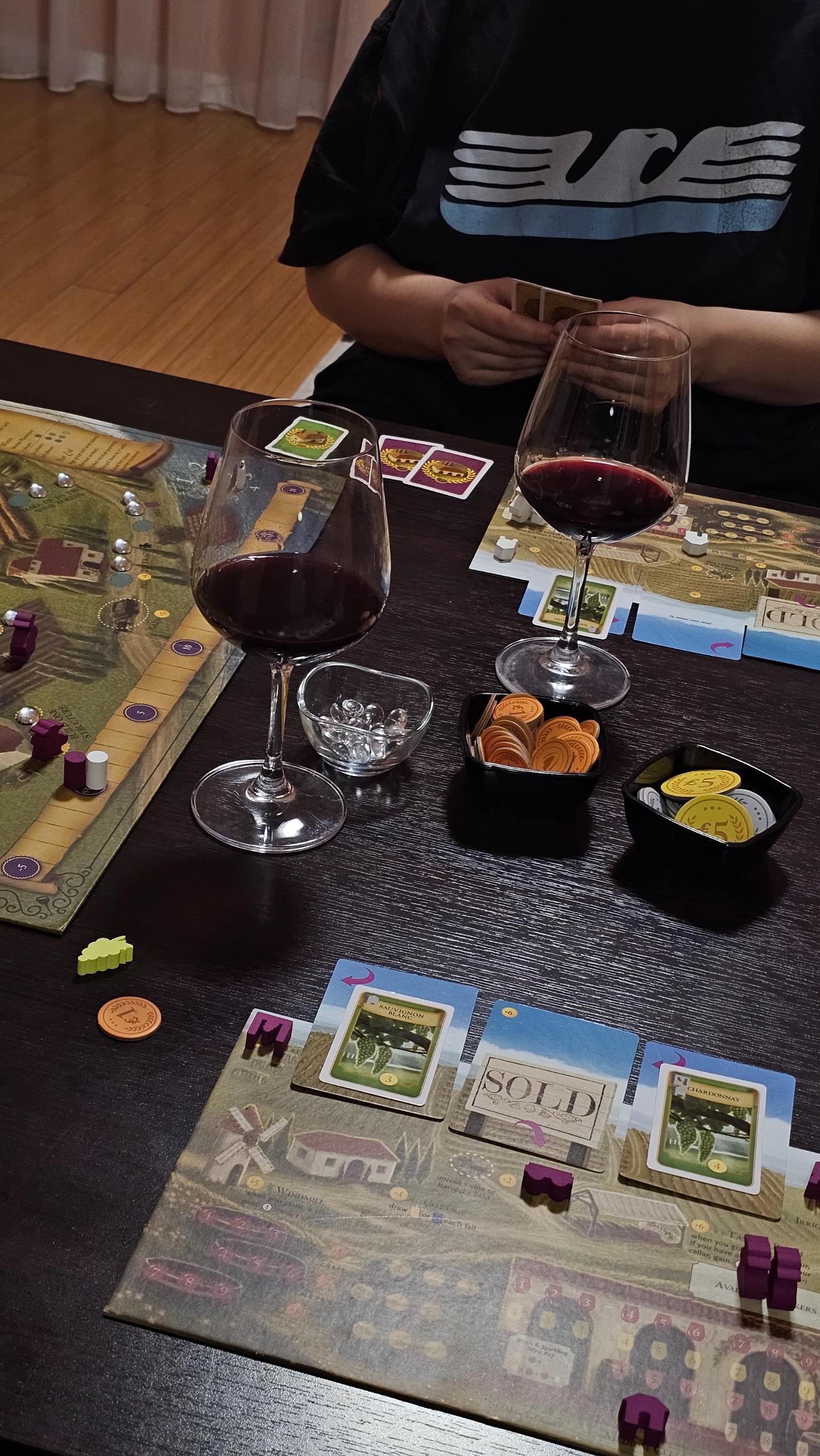
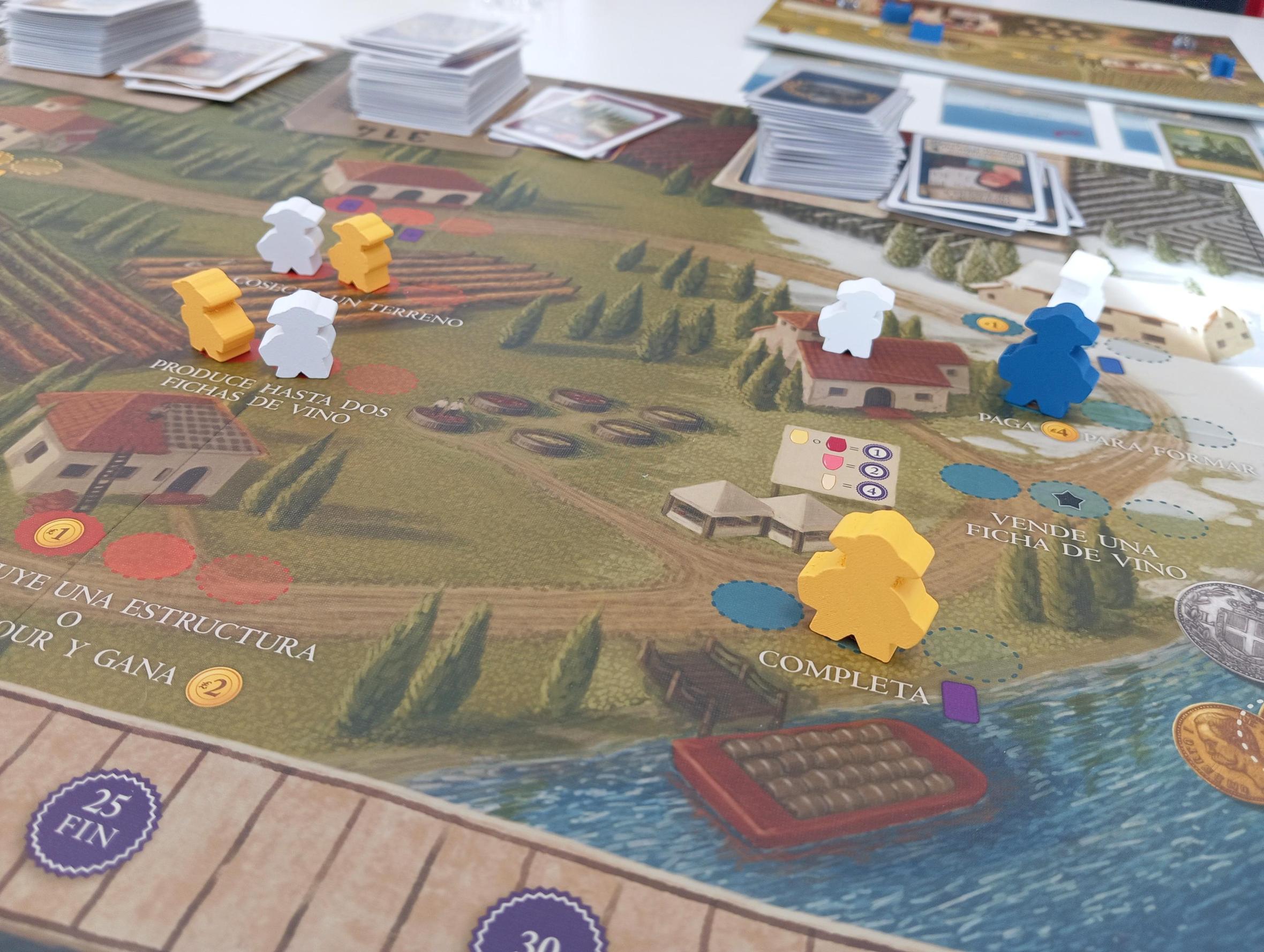
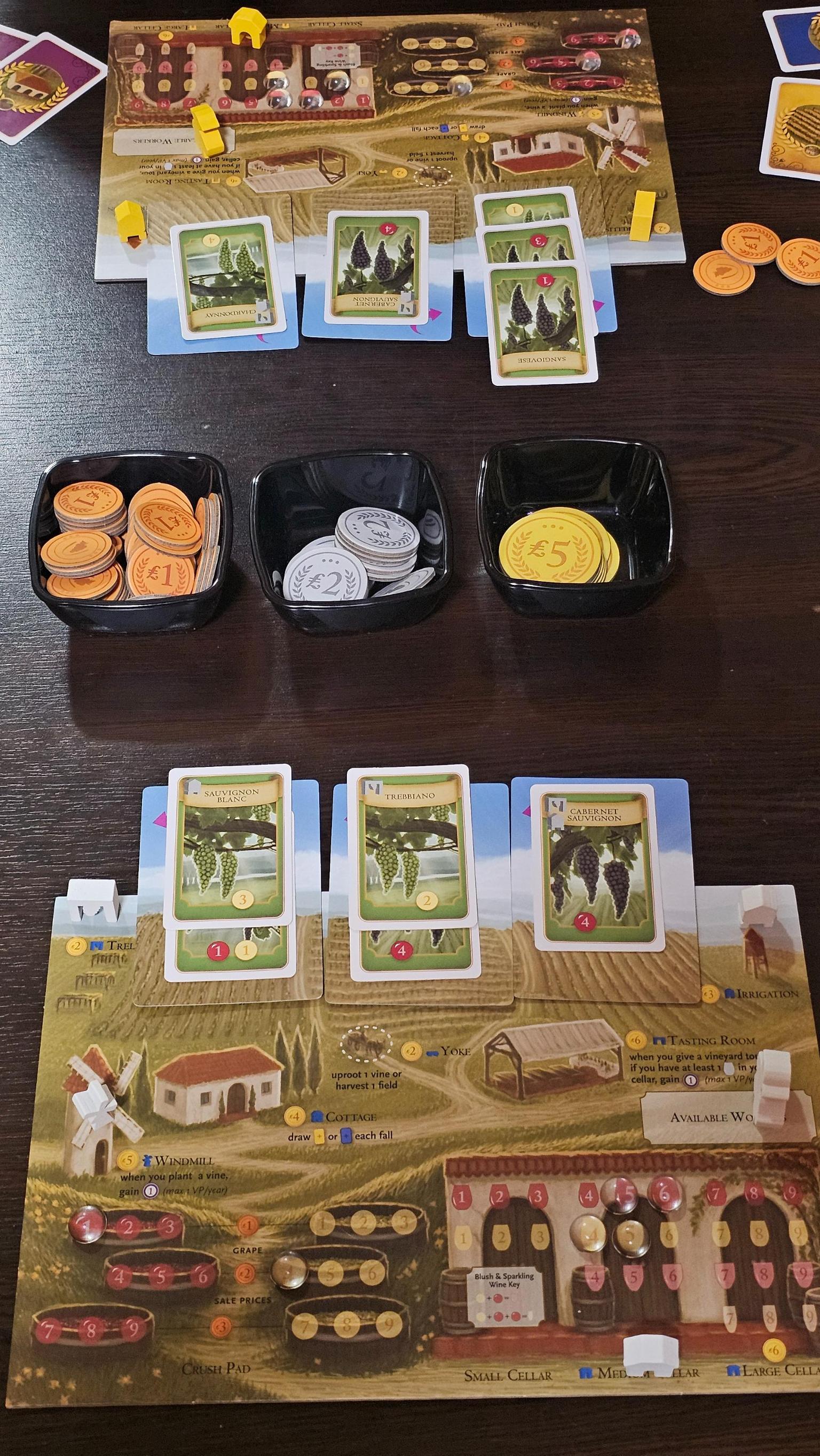
Where to buy it
Shop prices and second-hand copies, checked every day.
On Ludoya's tables
Full stats in Ludoya- 1,691
- Plays logged
- 1,228
- Players
- 1h 34m
- Average play
- 353
- In collections
- 58
- On wishlists
7.8/10
from 204 Ludoya reviews
Mohasz8.6 RATING WITH TUSCANY EXPANSION (BASE GAME: 7.0) As much as I wanted to instantly love this game, our first 2p game was somewhat underwhelming. The game starts slow, then in the second half you almost don't have anything to do with all your workers and money. All you really want to do is play cards that give you VP or fulfill order cards. I also felt like the game was a bit overcomplicated for what it offers. I'm sure it gets better once you fully understand the strategies but either way, I wasn't blown away, I expected more from such a highly regarded game. + Tuscany Essential - It is truly a better game with the Tuscany board, 7.0 -> 8.5. The visitor cards can still be a bit swingy, but other than that, really fun. + Visitor card expansions
Jan Solo8.0 Eurogame medio de colocación de trabajadores en el que deberás plantar uvas, cosechar y elaborar vinos para obtener puntos de victoria. Un euro medio muy vistoso que deja muy buenas sensaciones. Impro-Reseña⇒ https://youtu.be/ocbIBc1KXeM
Mestremuten8.0 Rating: 4/5 Production value: 3/4 Is the game in my collection/Love to have?: 1/1

Rules questions
Answered from the rulebook by Ludoya's rules assistant.
When do I place my rooster on the wake‑up chart and when do I get the wake‑up bonus?
In Spring, starting with the first‑player and going clockwise, each player places their rooster on an unoccupied wake‑up row and immediately gains that row’s listed bonus; the rooster placement also determines turn order for Summer, Fall, and Winter that year (page 6).
Can I place more than one worker on the same action space?
No — each action space can be occupied by only one worker, though larger player counts open additional spaces for the same action; the exception is the grande worker, which may be placed on a fully occupied action to perform that action (and it grants the bonus only if placed on a bonus space) (page 7).
If I harvest a grape value but that crush‑pad slot is already occupied, where does the new grape go?
When harvesting, you must place the grape on the matching value icon if empty; if that icon is occupied you devalue the new grape to the next lowest empty icon (and continue downward if needed) (page 14).
Can I play a visitor card whenever I want, or only when I take a specific action?
You may only play a summer or winter visitor by taking the corresponding "play visitor" action (placing a worker there), and you may only play a visitor if you can fully resolve its effect when played; visitor effects resolve immediately and then the card is discarded (pages 9–10).
How many wine tokens can I make at once, and do I need a certain cellar to make higher‑value, blush, or sparkling wines?
When making wine you may create up to two wine tokens (they can be same or different types), but you must own the appropriate cellar to produce blush/sparkling or wines above certain values, and each cellar slot holds exactly one wine token (see cellar level and capacity rules) (page 15).
When I fill a wine order, do I get residual lira right away or later, and how does the residual tracker work?
When you fill an order you discard the required wine tokens, gain the victory points on the card, and immediately advance your residual token on the residual tracker by the card’s lira amount; you then collect lira from your residual position at the end of each year (the marker remains where you moved it and caps at £5) (page 16).









Free, on web, Android and iOS
Play Viticulture Essential Edition with Ludoya
- Keep it in your collectionTrack your copy and its expansions, lend it to friends, or put it on your wishlist and get told when the price drops.Add it to your collection
- Log every playScores, winners, timers and photos, then your stats: win rate, favourite player count, best score.Log a play
- Settle rules questionsAsk anything about the rules and get an answer from the rulebook, with the page to check it on.Ask the rules assistant
- Find people to play it withClubs, game nights and events near you that bring this game to the table.See events
Game facts (players, playing time, age, credits) from BoardGameGeek.