
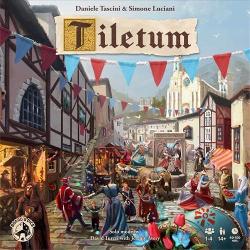
2022 · Renaissance
Tiletum
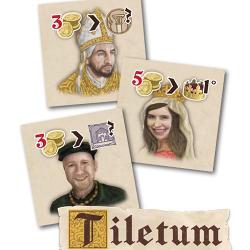
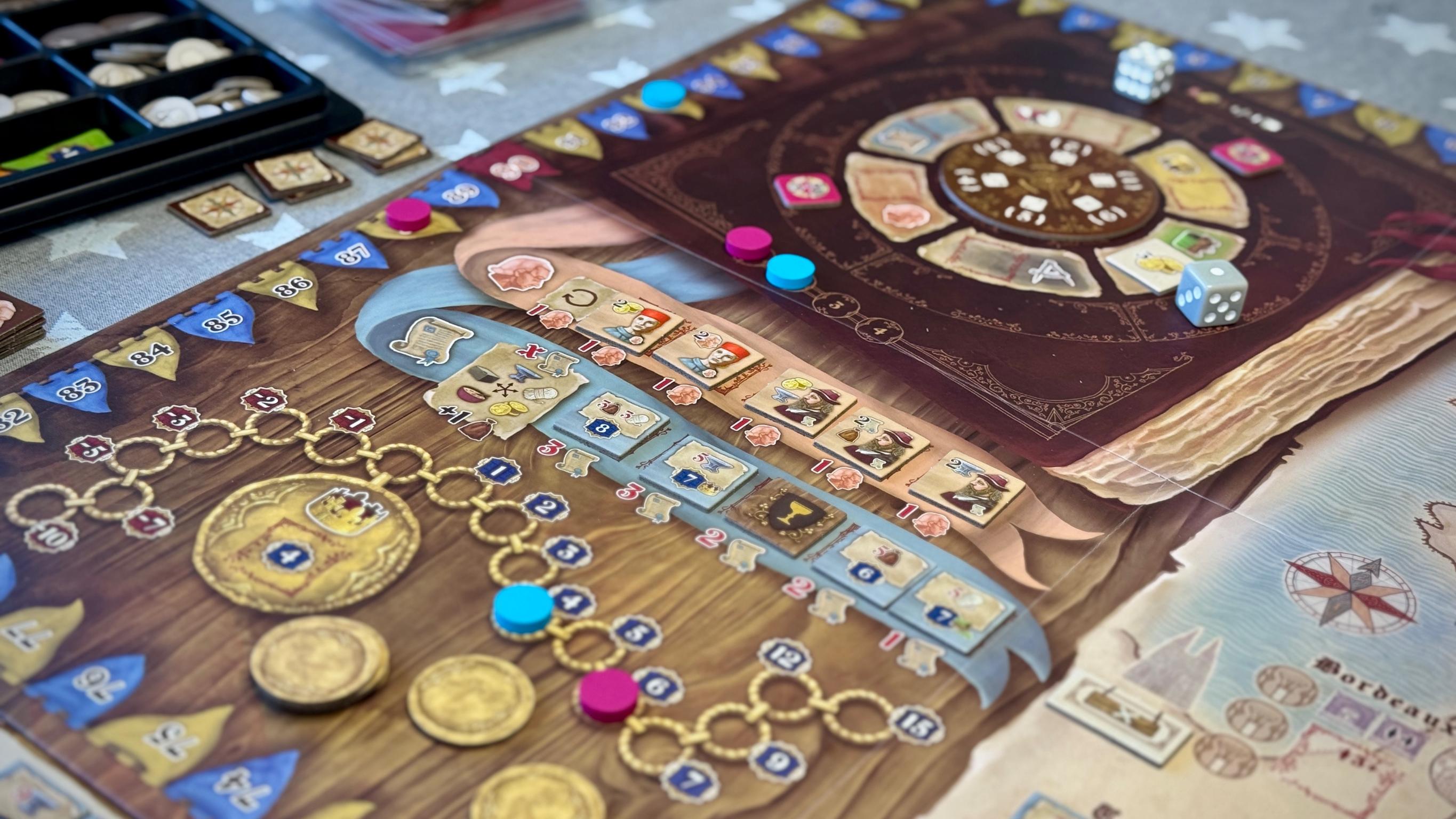
Players assume the roles of wealthy merchants traveling across Renaissance Europe to secure trade contracts, collect coats of arms, and expand influence through fairs, noble patronage, and cathedral building. Gameplay centers on dice-management: a pool of dice is rolled each round and players select a die to gain resources equal to its value and then take the die’s associated action. Lower-value dice grant fewer resources but more powerful actions, while higher values yield more goods but weaker effects. Players use resources to fulfill contracts, hire notable figures, invest in monuments, and score prestige to become the most renowned merchant.
- Players
- 1–4 best 2
- Playing time
- 60–100 min
- Age
- 14+
- Complexity
- 3.4 / 5
About the game
- Publisher





Expansions
See them in Ludoya
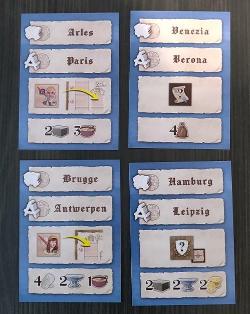
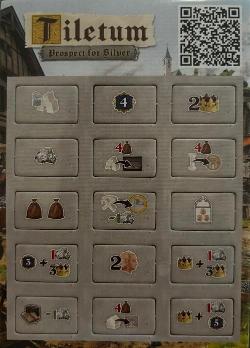
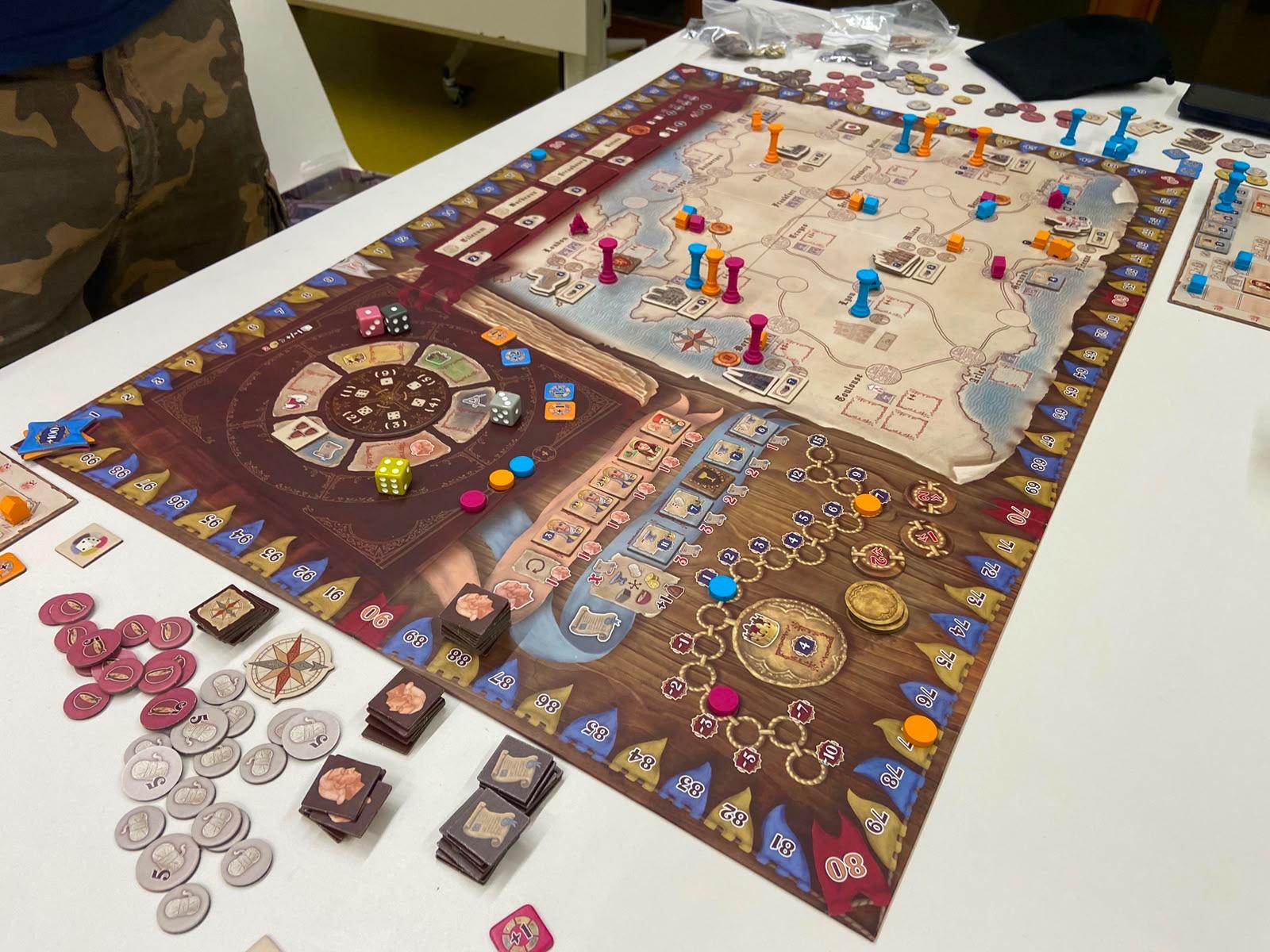
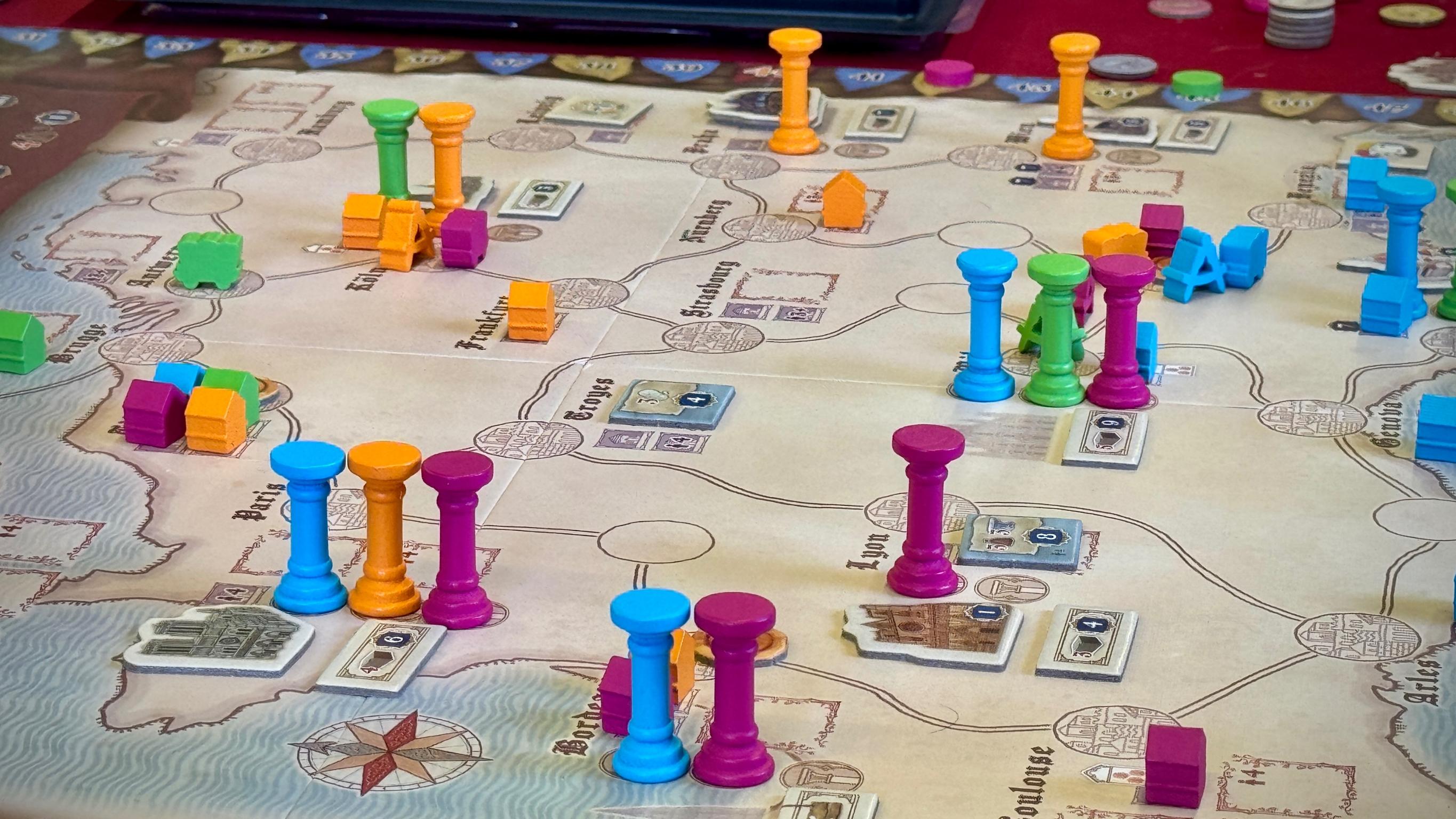
Photos from Ludoya tables
All photos in Ludoya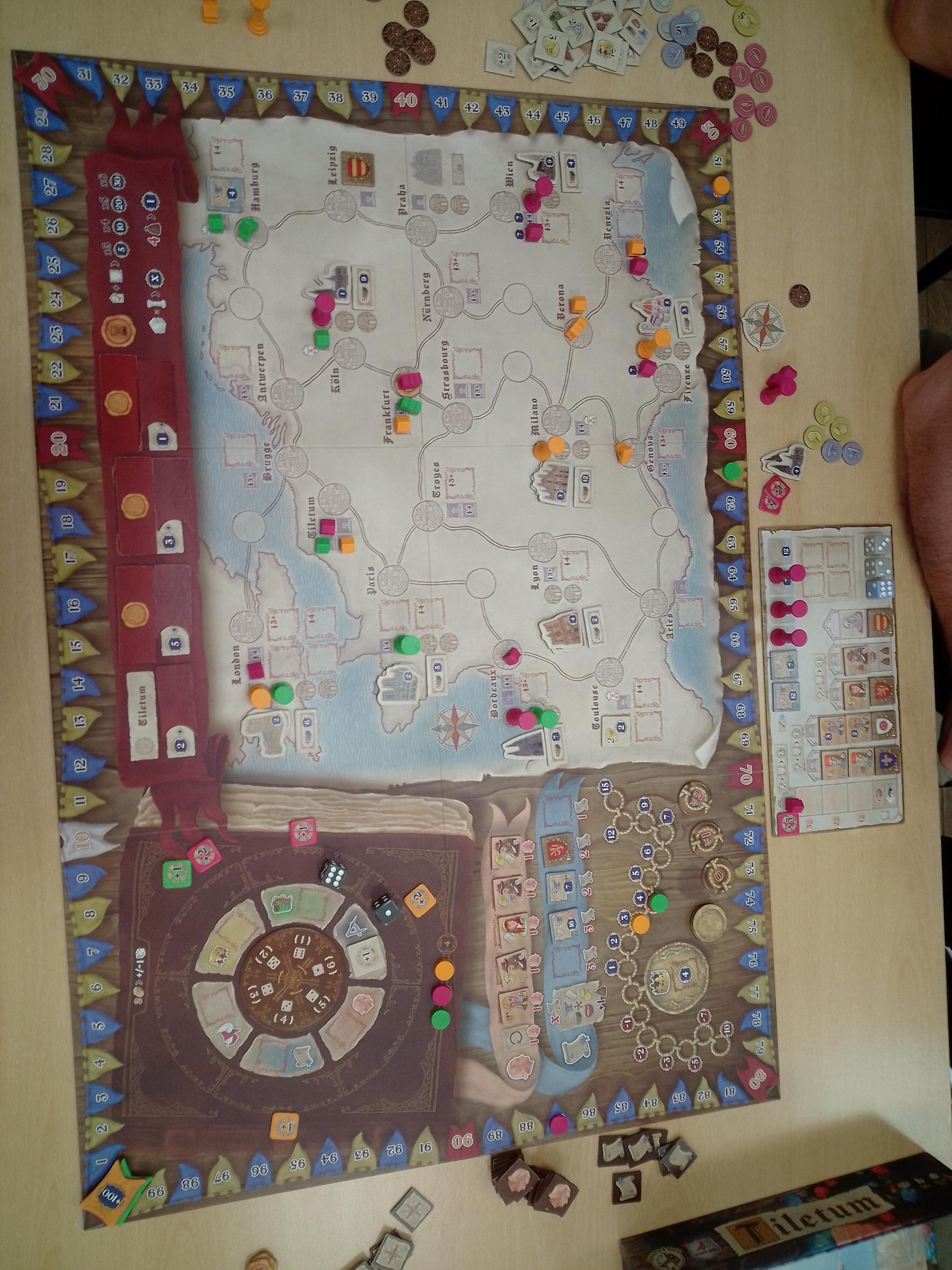
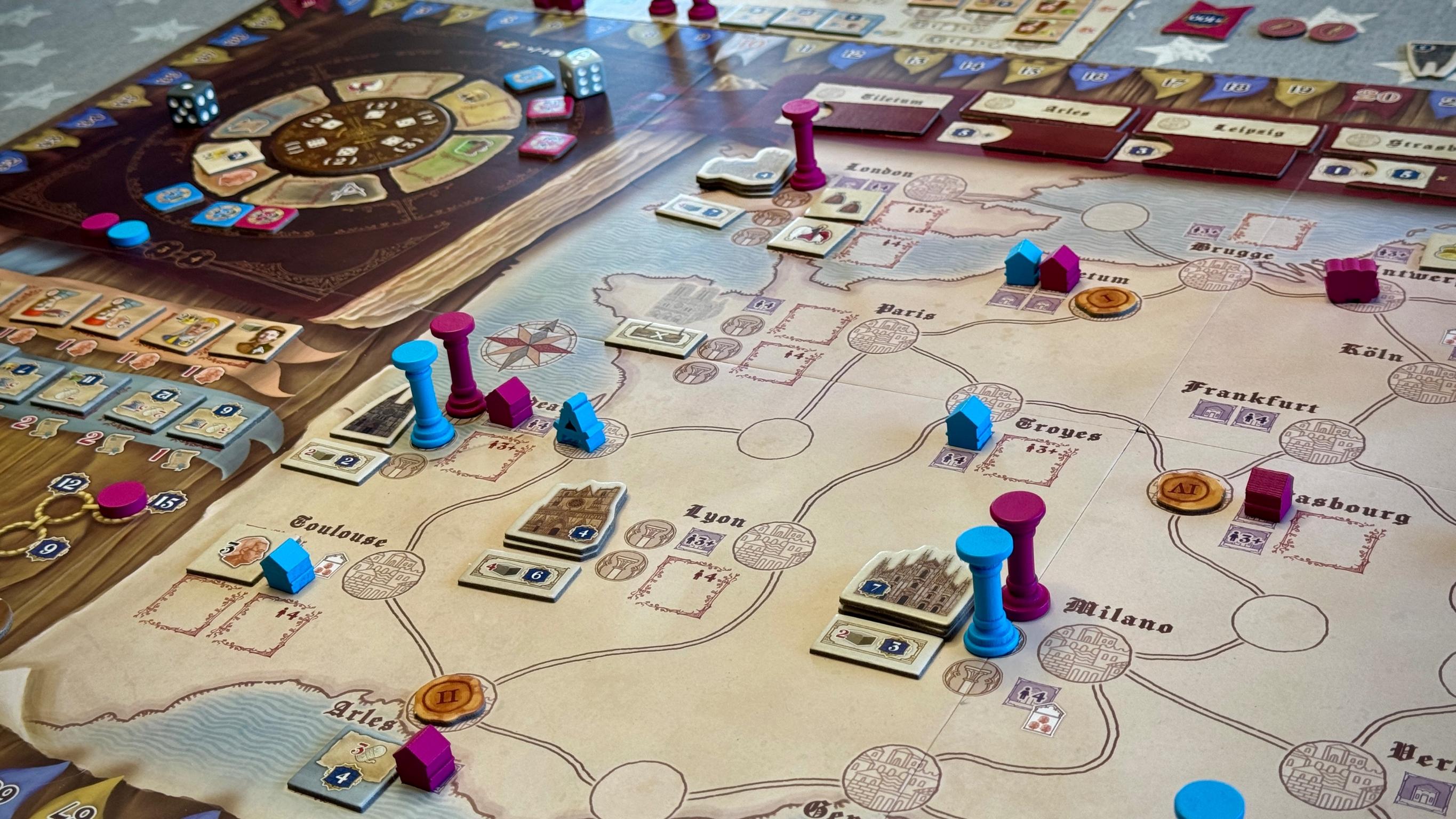
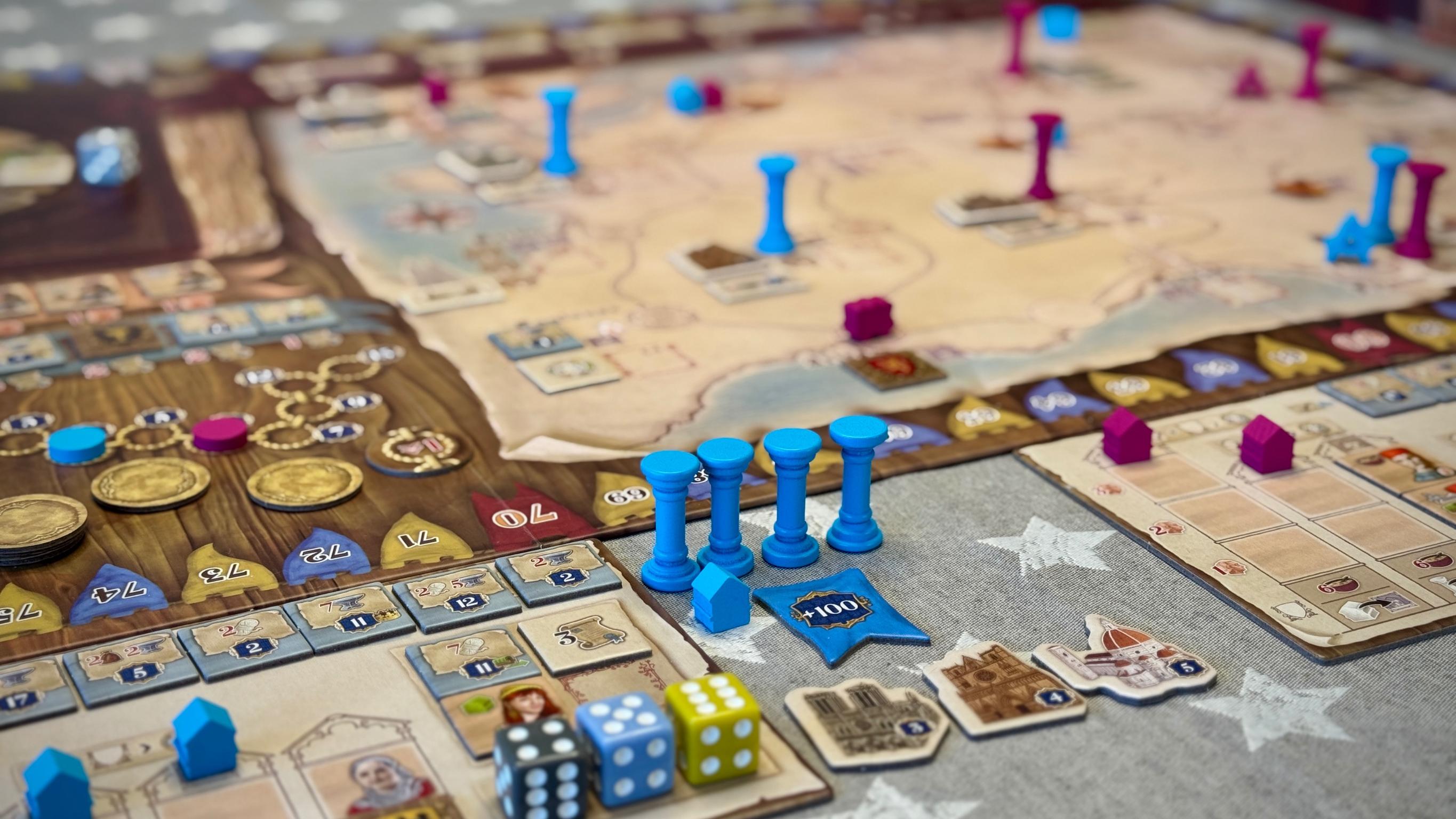
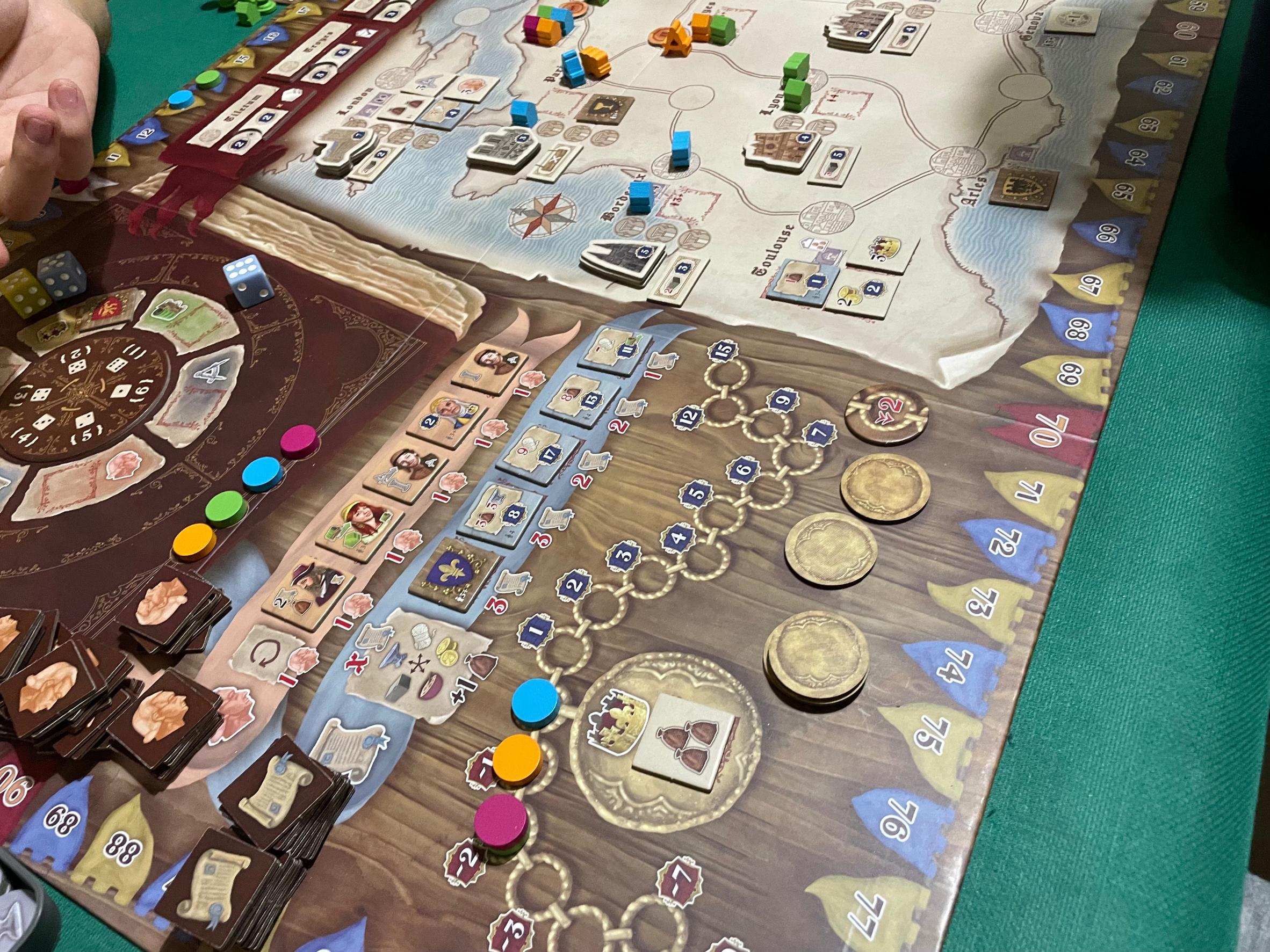
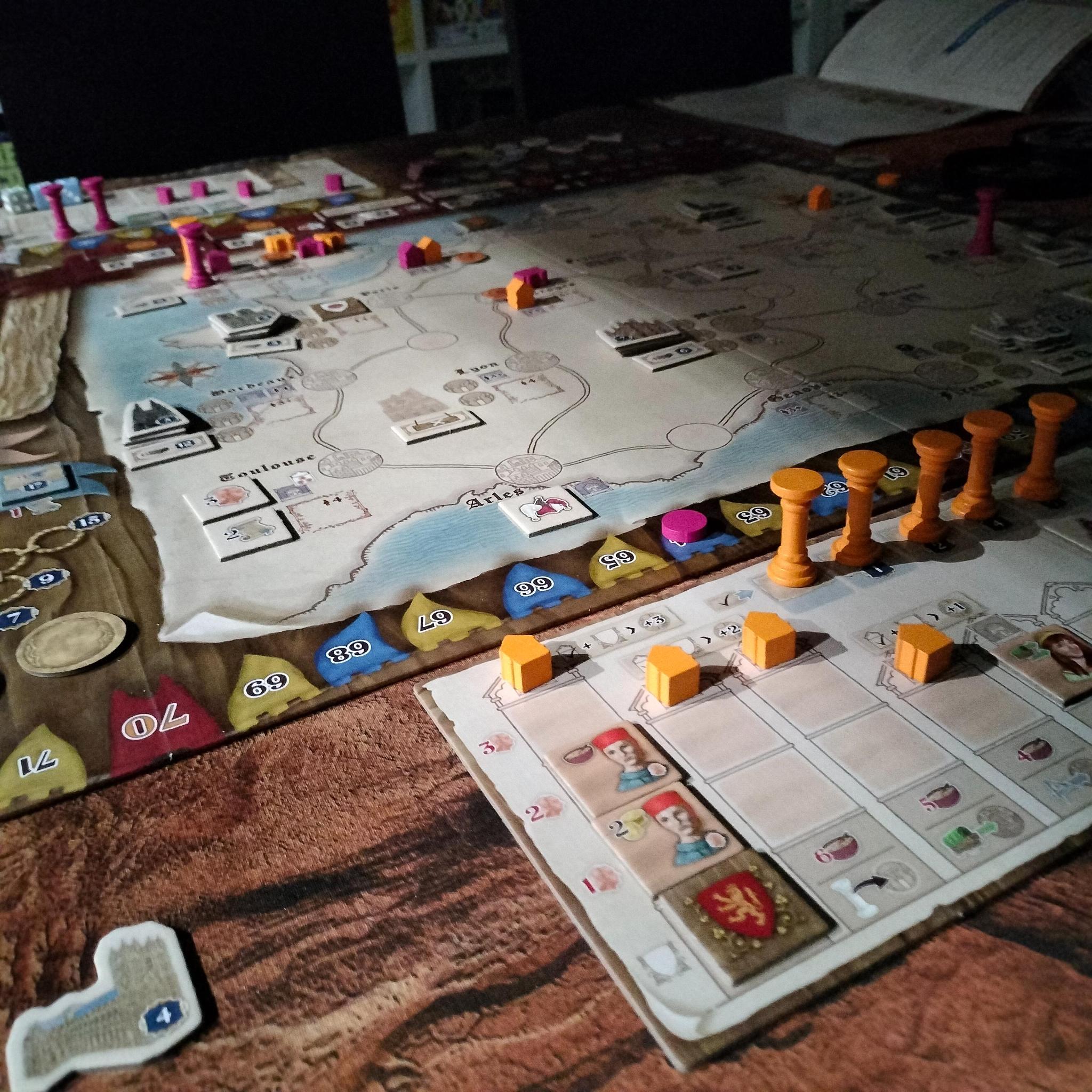
Where to buy it
Shop prices and second-hand copies, checked every day.
On Ludoya's tables
Full stats in Ludoya- 401
- Plays logged
- 442
- Players
- 1h 59m
- Average play
- 145
- In collections
- 33
- On wishlists
7.8/10
from 68 Ludoya reviews
SchaufelElch5.9 Great game in principle, but to play successfully, you need to chain as many bonus actions as possible into every turn. Hence turns take too much time.

Rules questions
Answered from the rulebook by Ludoya's rules assistant.
How do I calculate Action Points from a die? Do modifiers change that?
Action Points = 7 − the die’s value; that result is the AP you have for that turn. You may spend 2 Gold per ±1 immediately before taking a die to permanently change its value, and the modified value determines both the Resources and the AP (pp.14, 11).
What does the Joker action let me do?
The Joker lets you choose one of the other five Actions and spend all your Action Points on options of that single Action; you may not split those AP between different Actions (p.18).
When I take a Bonus/Contract/Character tile, does it go into play immediately?
Any tile you gain from the board first goes into your Storehouse; you must have an empty Storehouse space to take a tile, and tiles in the Storehouse cannot be discarded until you later place or use them (pp.11, 20).
How and when do I score from the King track, and when do you get the 4 VP bonus?
During the King phase players score according to their King-track position; the highest marker takes the Bonus tile beside the track or, if no Bonus tile is available, that player scores 4 Victory Points, with ties broken in favor of the bottommost marker (p.12).
Do I need a House or my Merchant to score at a Fair, and how are Fair VPs calculated?
You participate in a Fair if you have a House in that Town or your Merchant is present there; the VP award equals the board value plus the Fair tile value, multiplied by the number of times you meet the condition shown on the Fair tile (pp.13, 28).
What makes a Building "Completed" and what bonus does that give me?
A Building is Completed when all its Rooms hold Character tiles and a Crest is placed in that Building’s space; you immediately take the corresponding Bonus Action Points marker and thereafter gain +1/+2/+3 AP for that Action (including when using the Joker), though the rightmost Building grants no Action bonus (pp.20–21).














Free, on web, Android and iOS
Play Tiletum with Ludoya
- Keep it in your collectionTrack your copy and its expansions, lend it to friends, or put it on your wishlist and get told when the price drops.Add it to your collection
- Log every playScores, winners, timers and photos, then your stats: win rate, favourite player count, best score.Log a play
- Settle rules questionsAsk anything about the rules and get an answer from the rulebook, with the page to check it on.Ask the rules assistant
- Find people to play it withClubs, game nights and events near you that bring this game to the table.See events
Game facts (players, playing time, age, credits) from BoardGameGeek.