
2015 · Economic
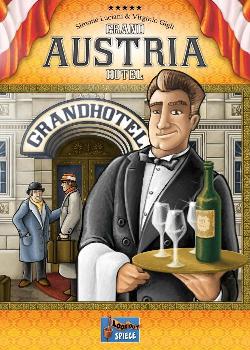
Grand Austria Hotel
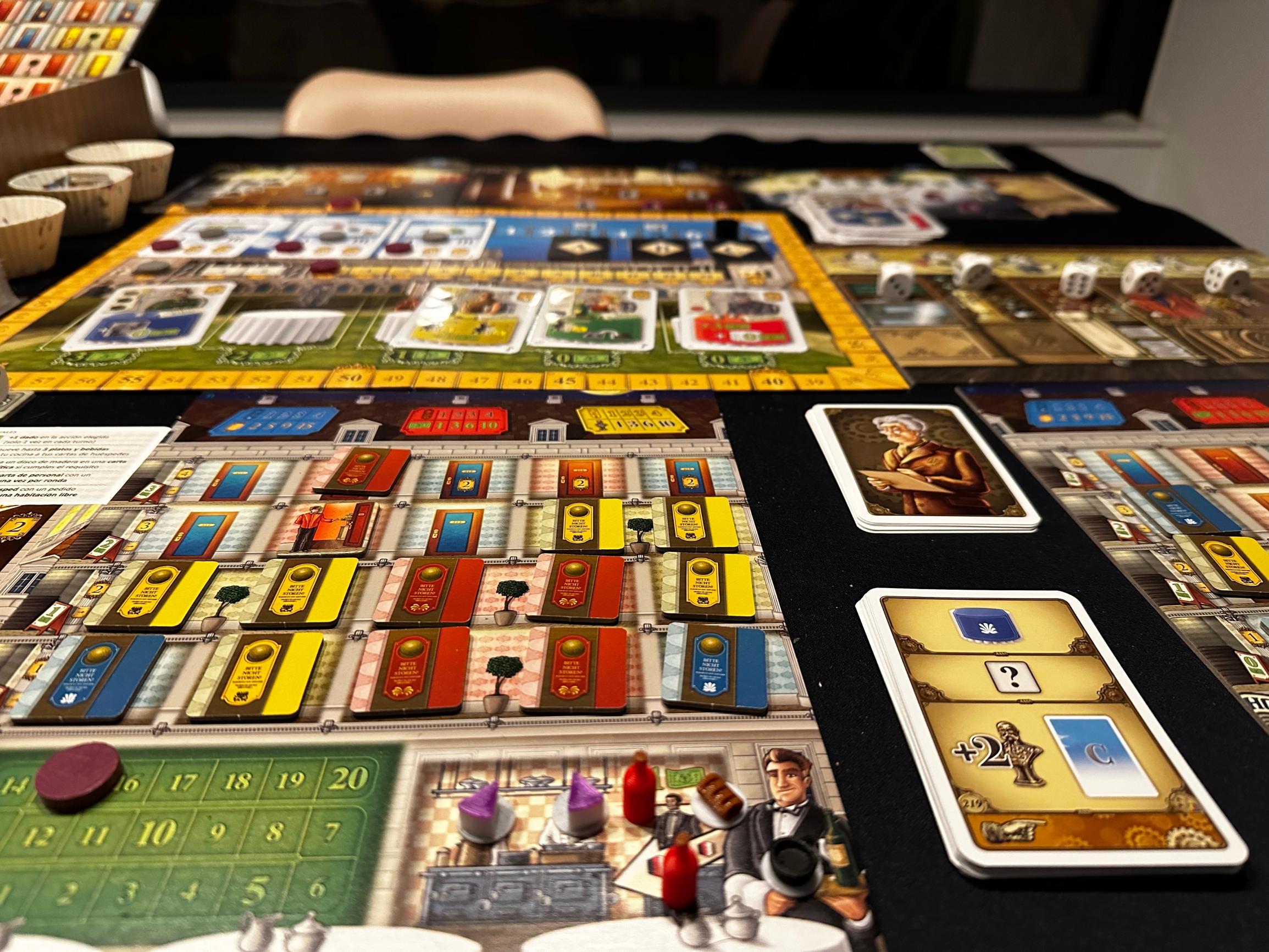
Manage a Viennese café as it expands into a hotel during the modern age. Players take turns selecting from six shared actions determined by rolled dice, using the dice values to gain resources, hire staff, prepare rooms, and serve guests. Guests arrive with specific orders that grant bonuses when fulfilled, and staff cards provide ongoing advantages. Players remove dice to chain additional actions, but the game lasts seven rounds so efficiency and timing matter. The modular card setup and varied staff and guest options create different strategic decisions each play.
- Players
- 2–4 best 2
- Playing time
- 60–120 min
- Age
- 12+
- Complexity
- 3.2 / 5
About the game
- Publisher



Expansions
See them in Ludoya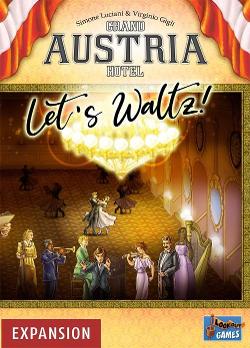
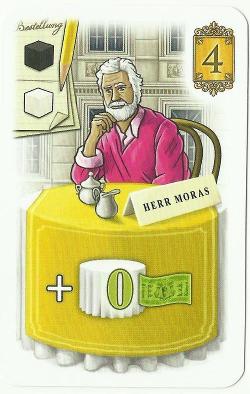
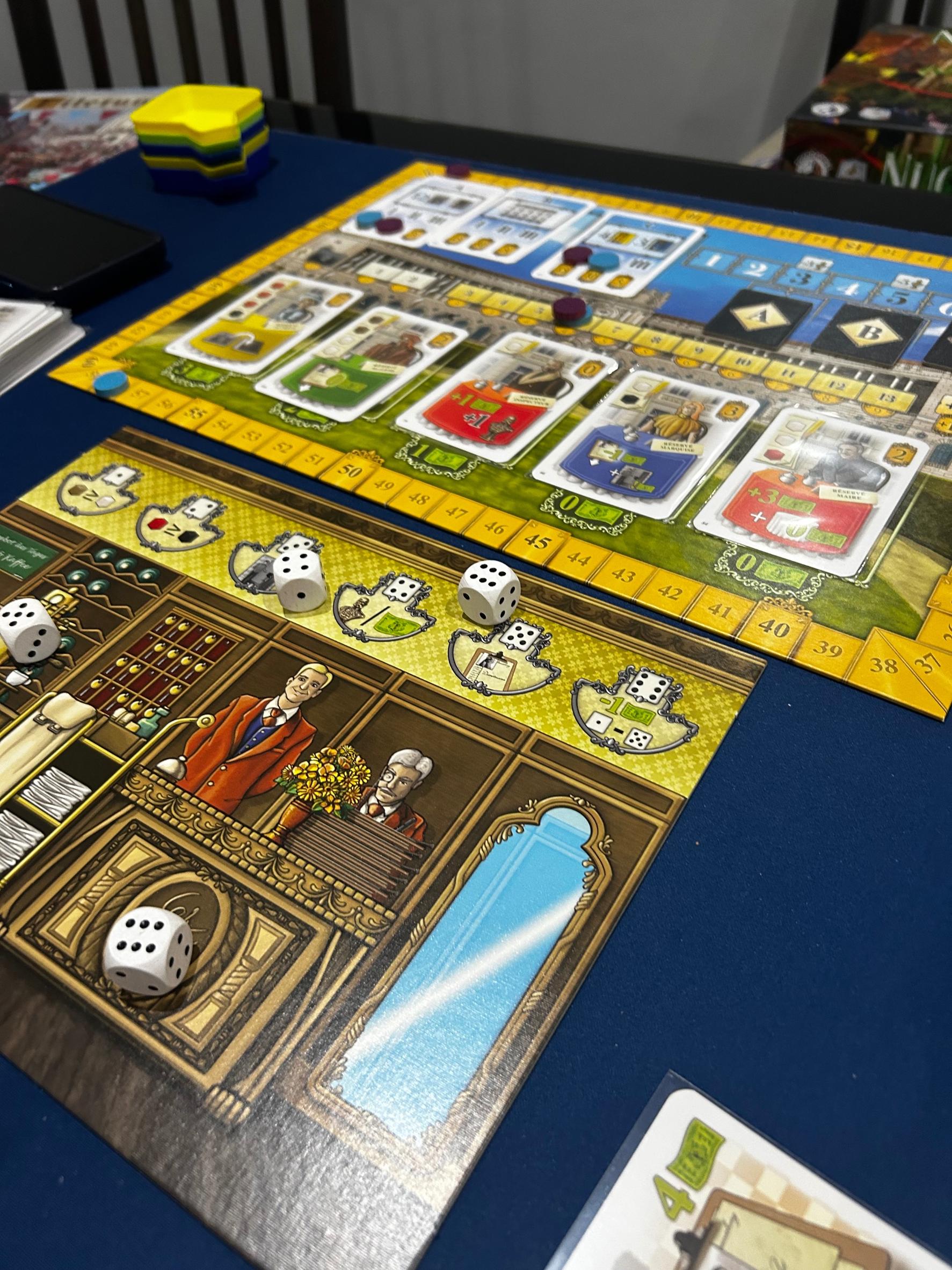
Photos from Ludoya tables
All photos in Ludoya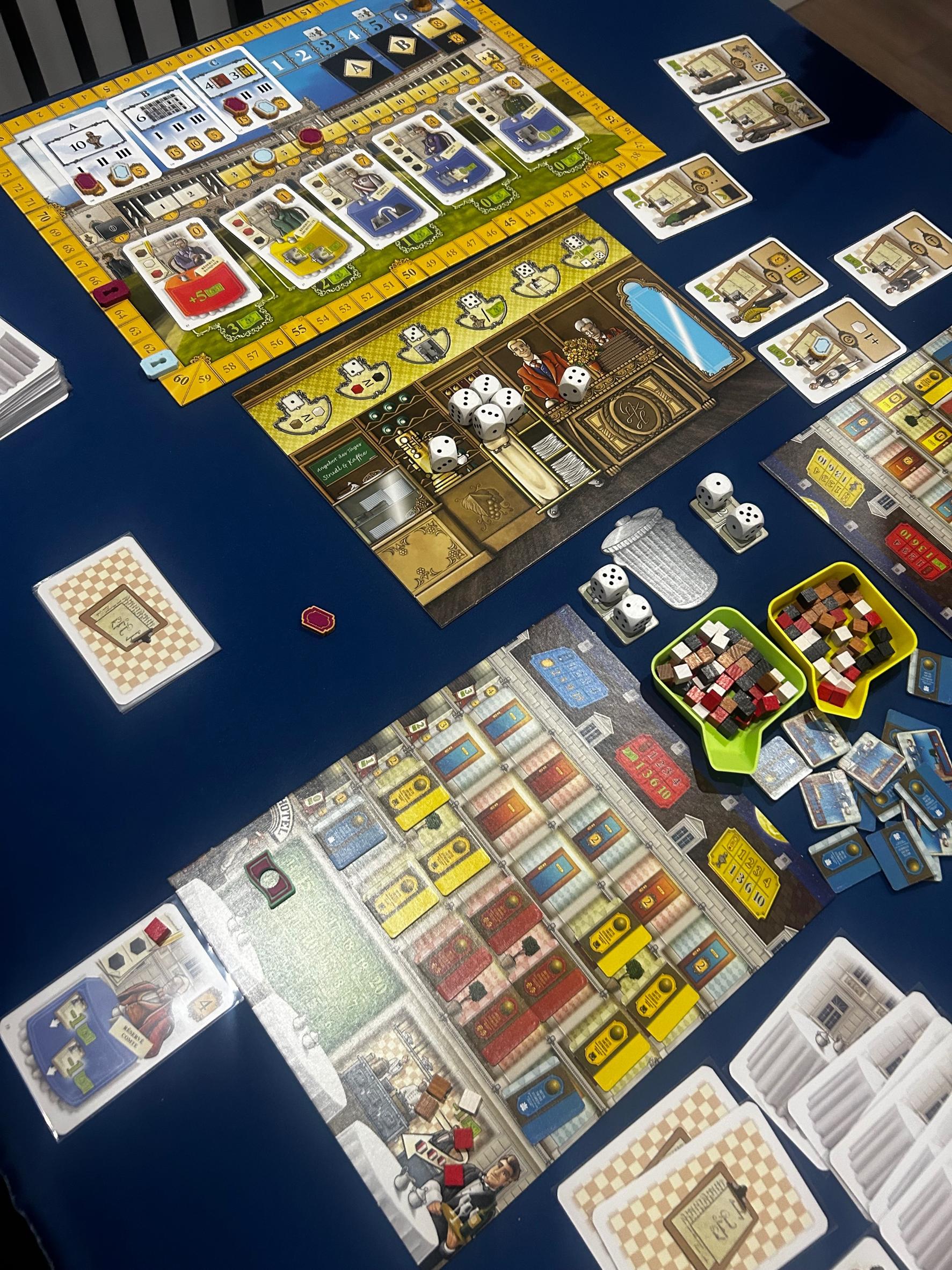
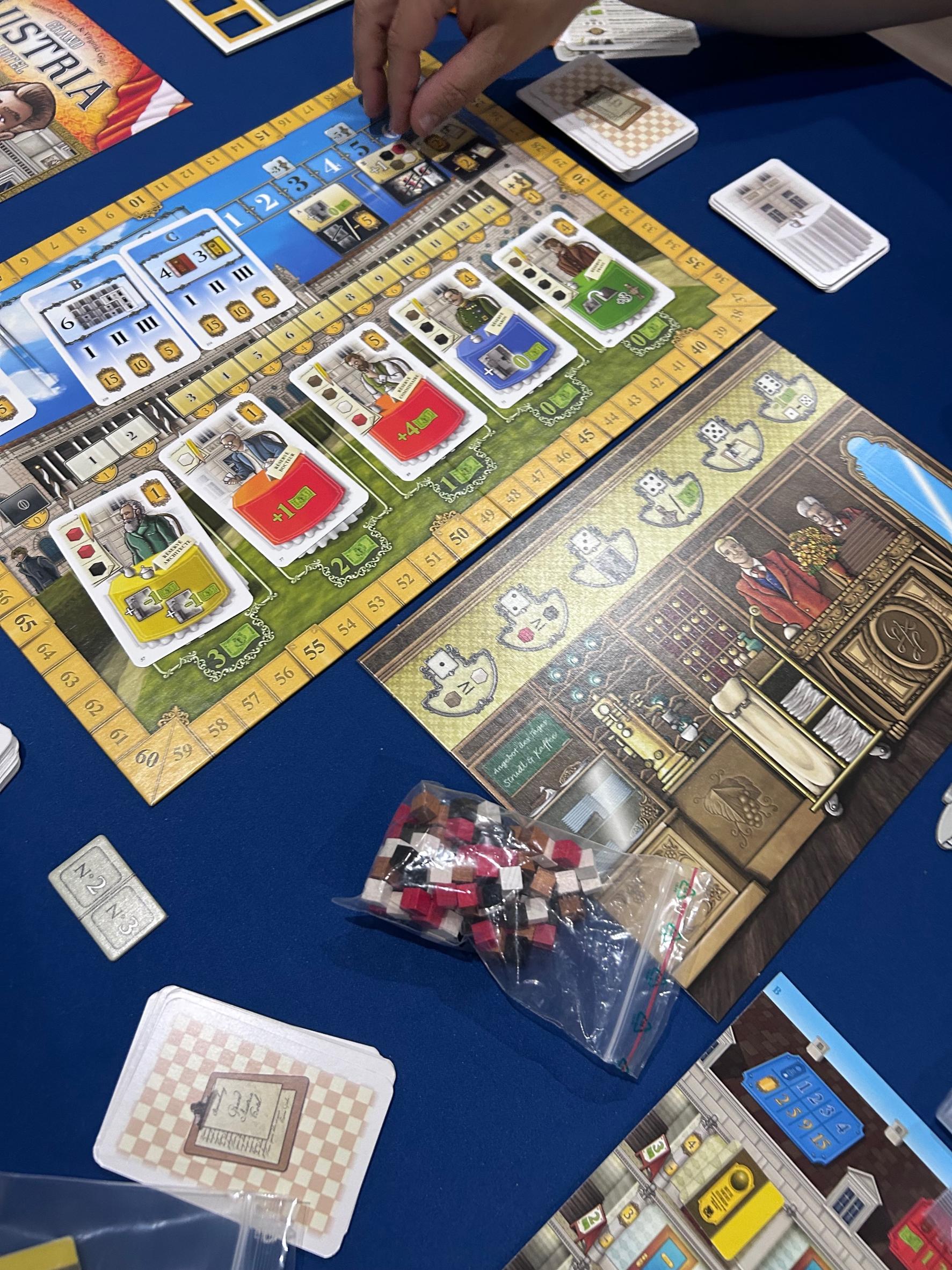
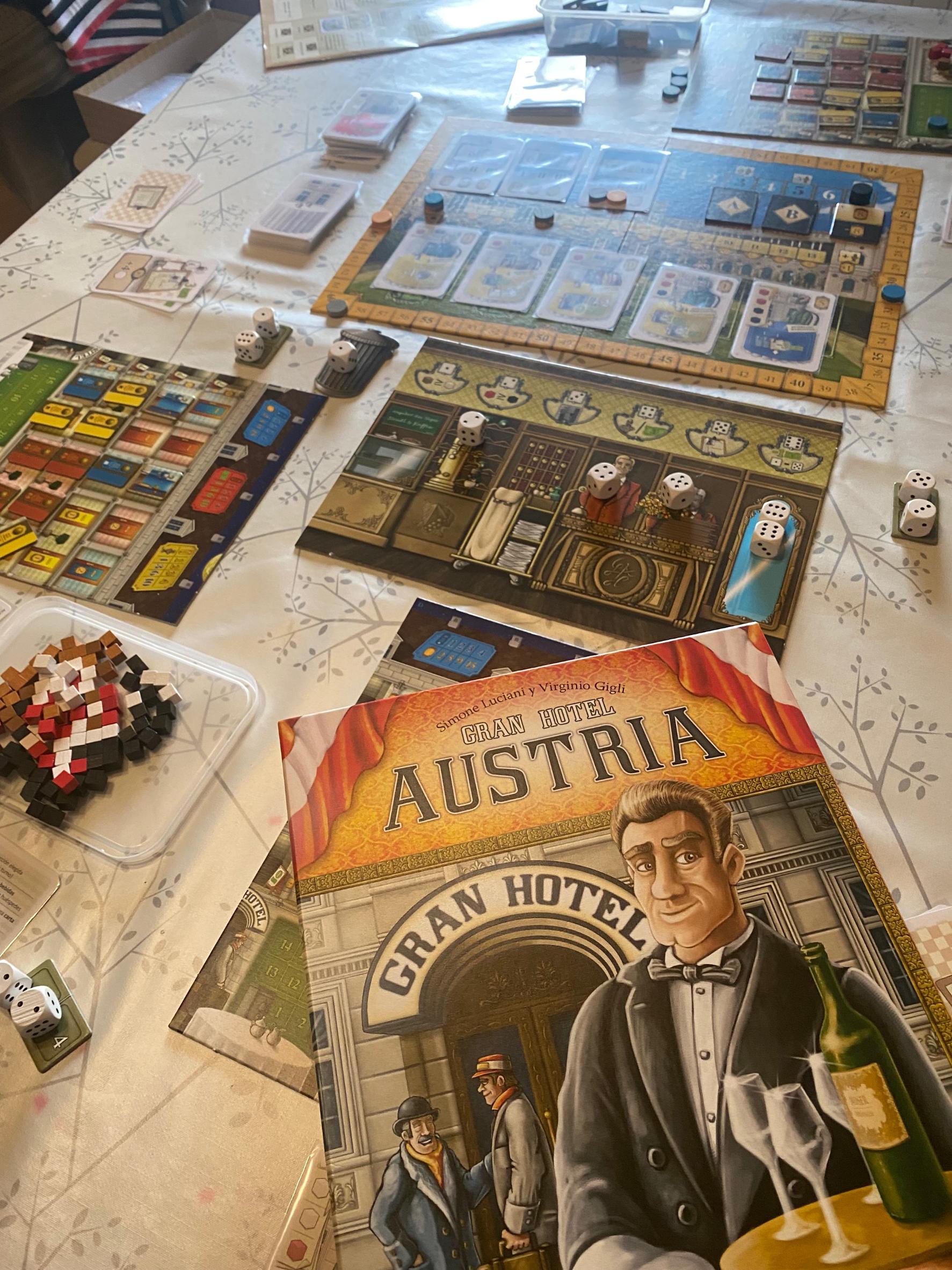
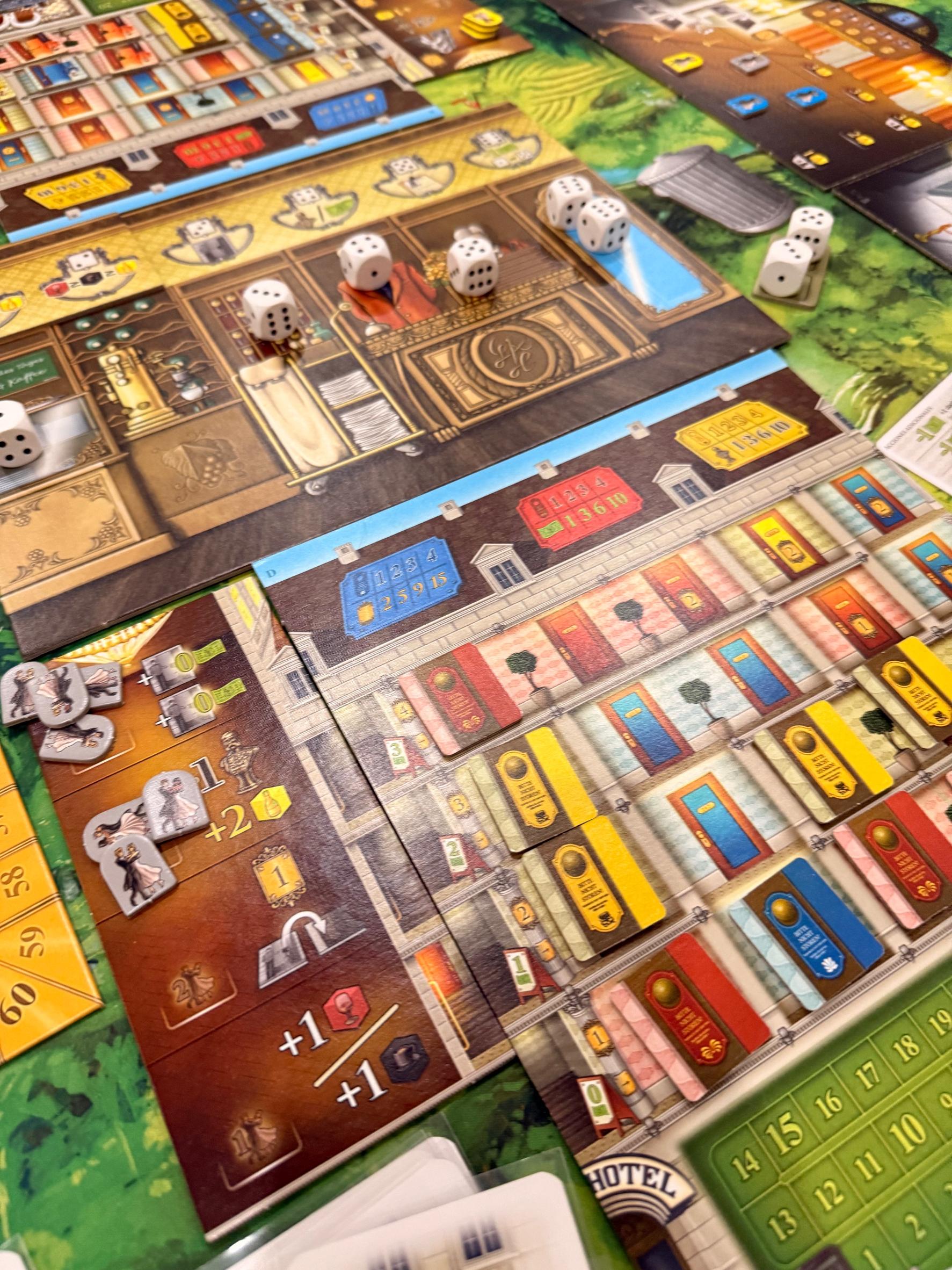
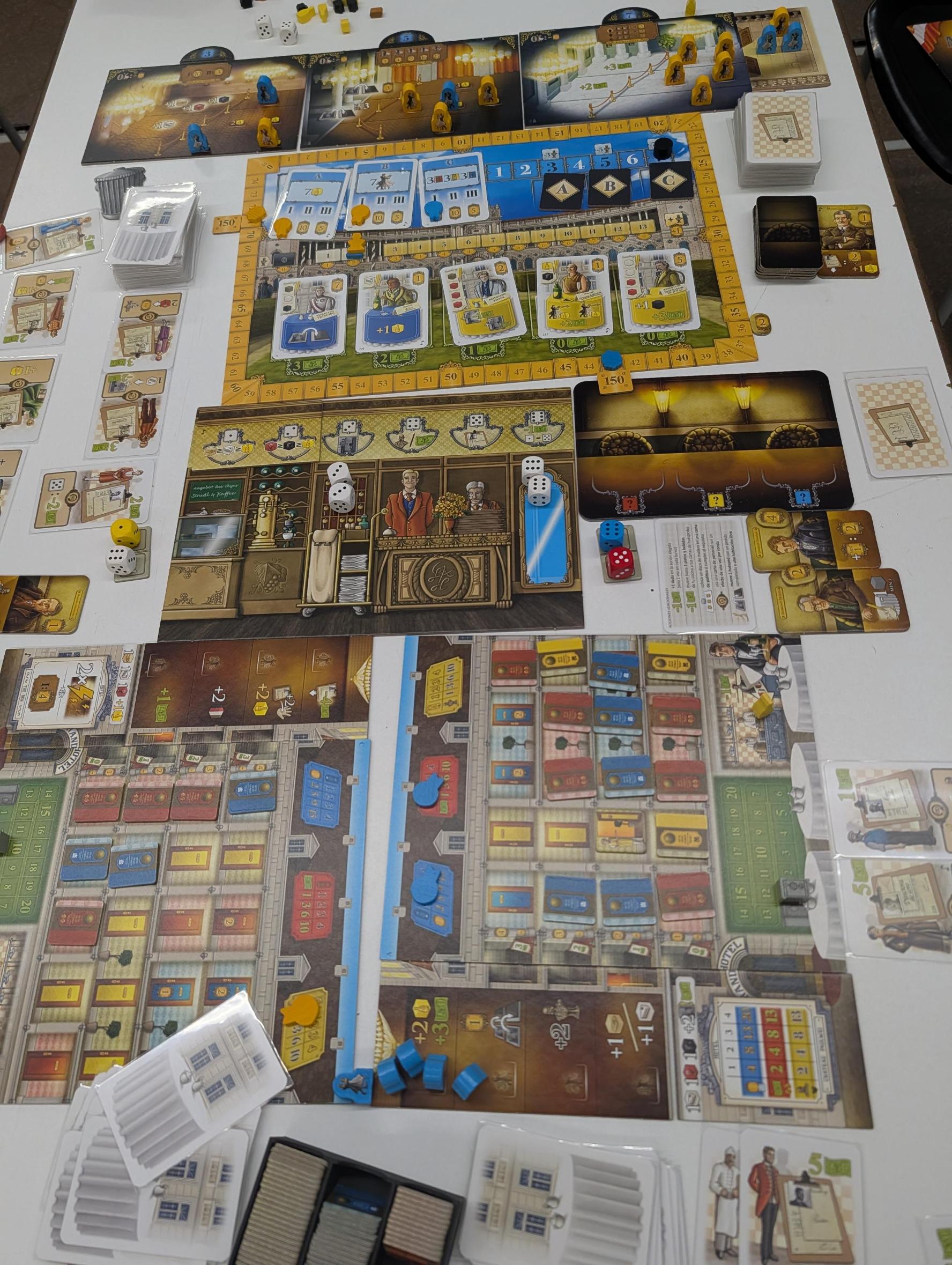
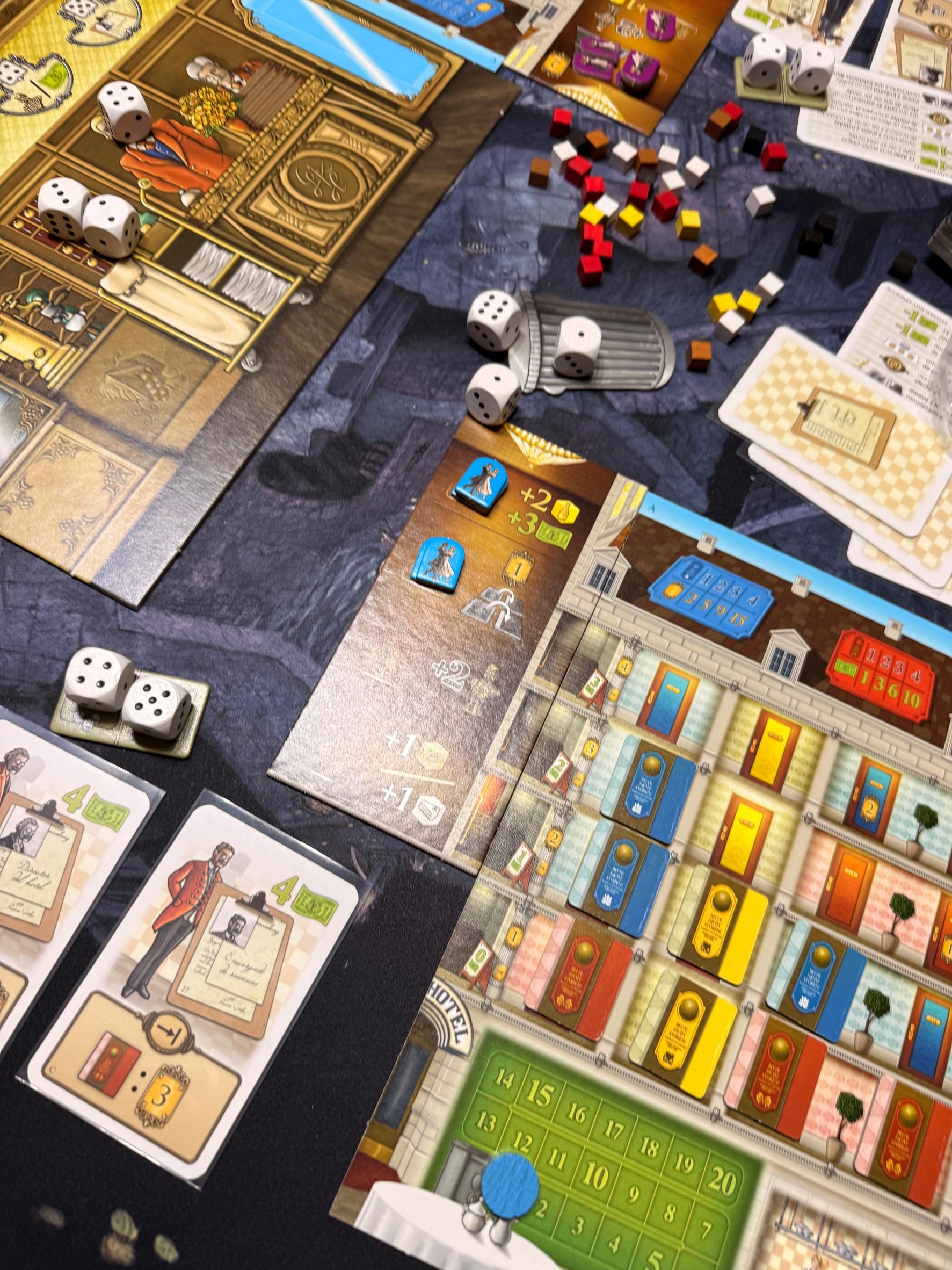
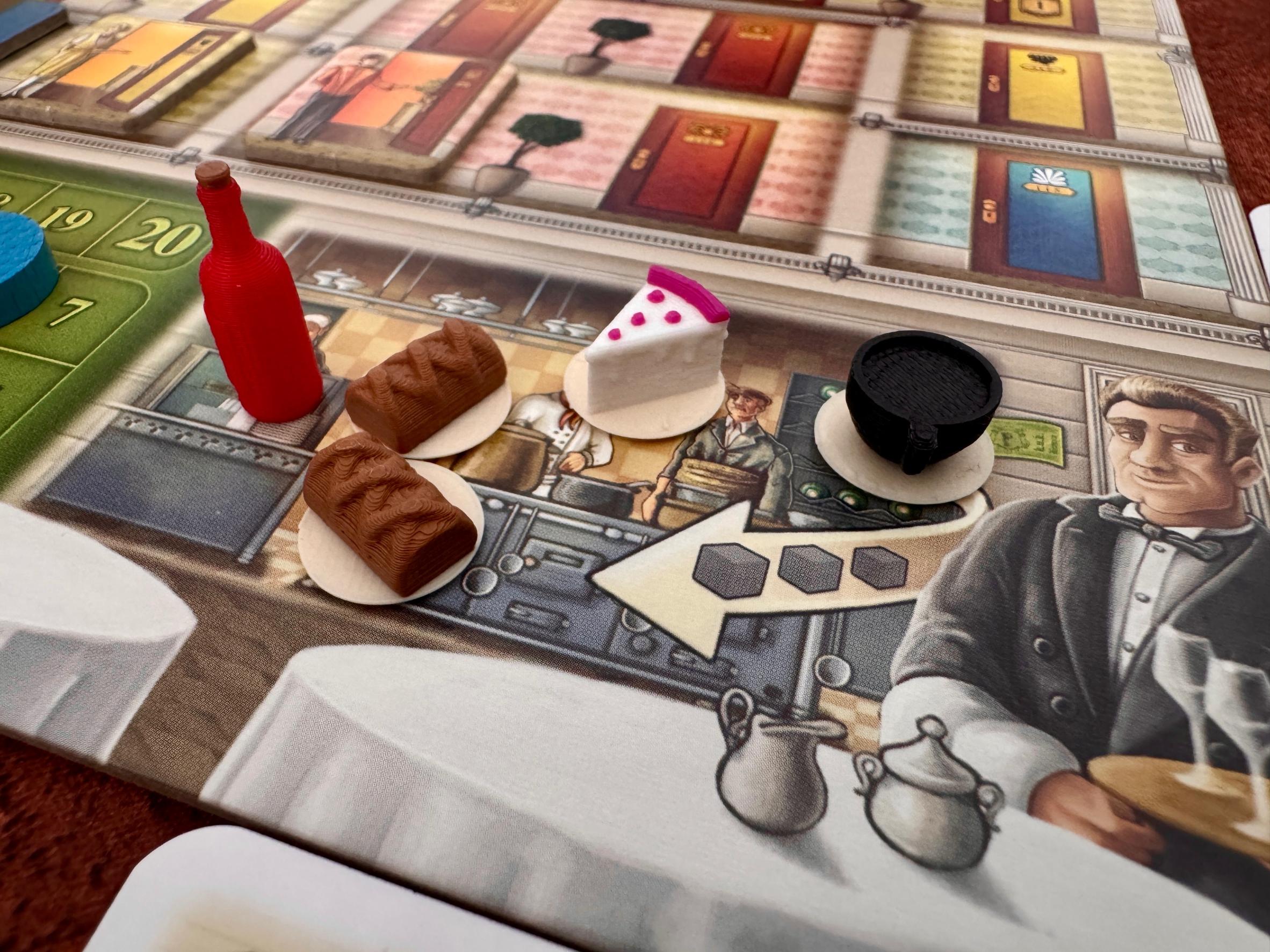
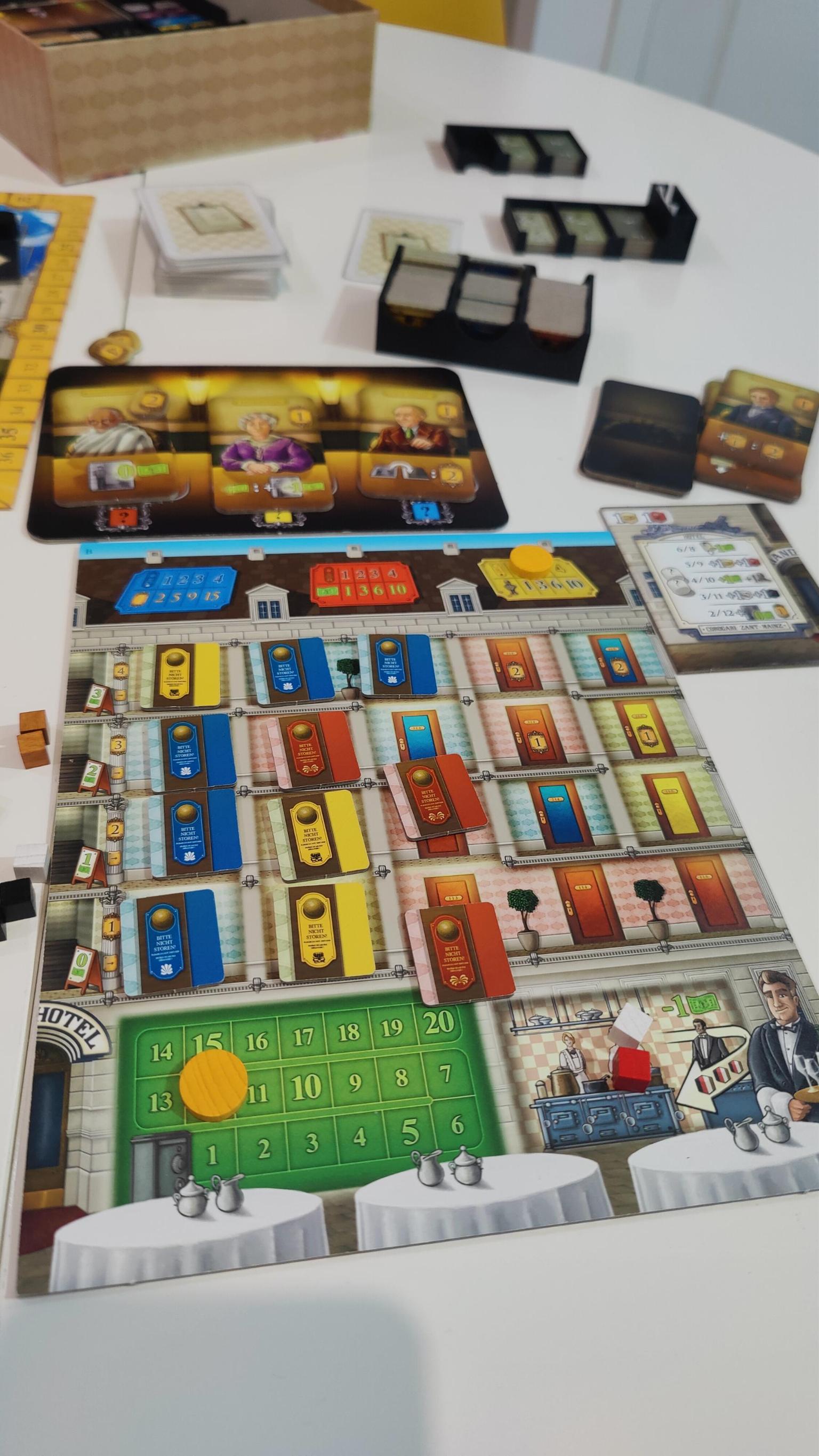
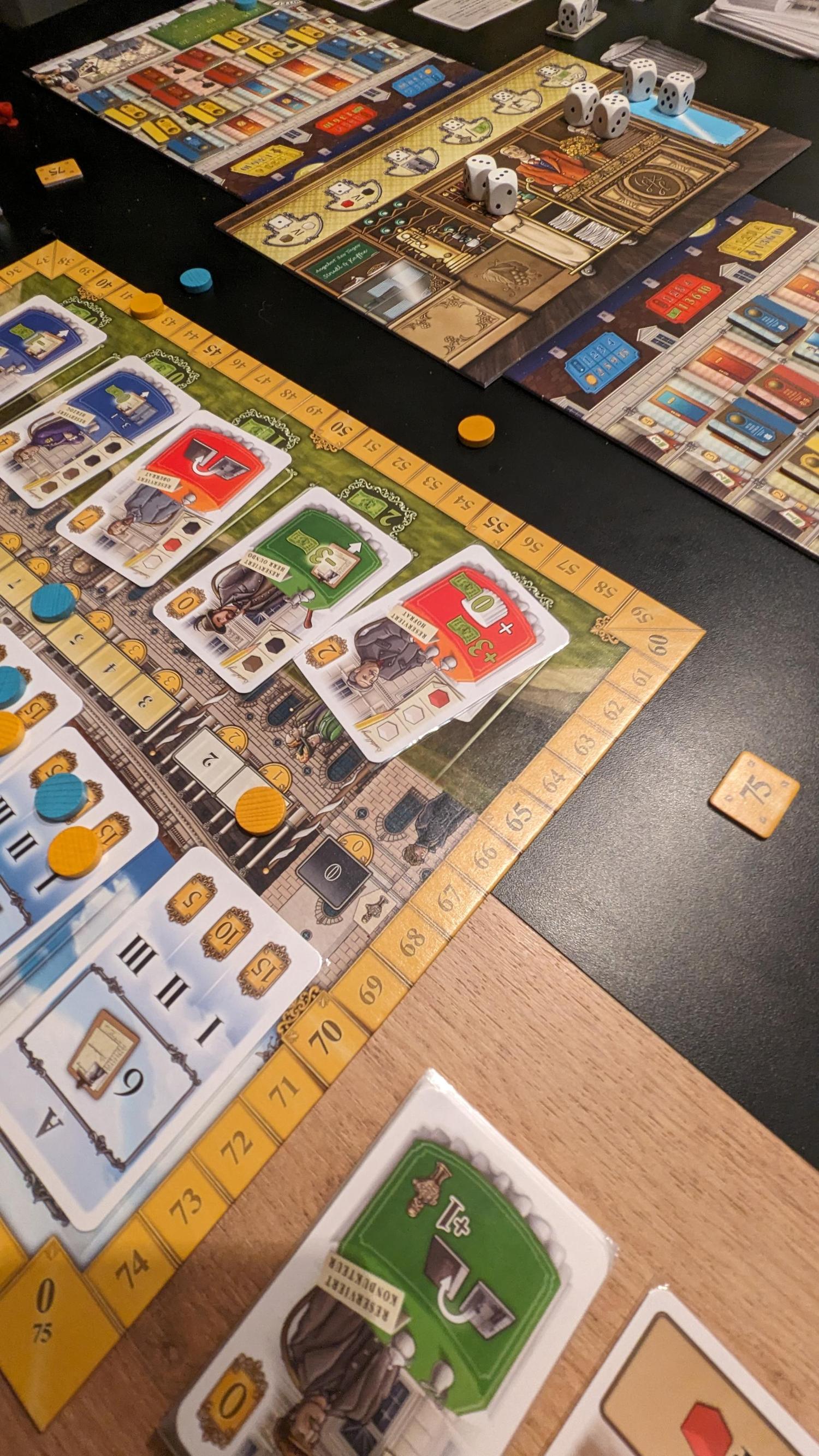
Where to buy it
Shop prices and second-hand copies, checked every day.
On Ludoya's tables
Full stats in Ludoya- 1,999
- Plays logged
- 959
- Players
- 1h 18m
- Average play
- 310
- In collections
- 43
- On wishlists
- 1
- Pre-ordered
7.6/10
from 180 Ludoya reviews
Evan1.6 This is a game about running a hotel. Dice get rolled at the start of each round and players get four chances to remove a die and resolve an action that corresponds to the number, with a strength of action equal to the number of dice that were there before you took one. The game works well enough, but it felt like the flip luck was a little too high in terms of which employee cards you get, and which color of customers are available on your turn. There's also a frustrating turn order mechanism where the turn order sort of snakes. With 2 players, the order goes player 1, 2, 2, 1. With four, it's 1,2,3,4,4,3,2,1. This turn order system seems to be different for differences sake because all it really adds is downtime. Another issue is what you are essentially doing in the game is taking customers, building rooms in colors that match your customers, and then supplying those customers with cubes that match their requirements so they complete the rooms. All this is done with incredibly few actions. The puzzle is ok, but aside from the flipluck issues and the turn order issue, the game lets you take a customer every turn if you have room for one, but the ability to build rooms is dependent on dice being rolled into the right number. This seems like an issue since it can make for a luck driven bottleneck in the game's core mechanism. This is especially annoying since the game punishes you at the end for having unfulfilled customers. :star: Art, Iconography and components functional :nostar: Clever or interesting mechanisms :star: Reasonably low downtime between turns with mildly AP players :nostar: Multiple plays stay interesting :nostar: Low or mitigatable luck elements :star::nostar::nostar::nostar::nostar: Raw enjoyment
Mestremuten6.0 Rating: 3/5 Production value: 3/4 Is the game in my collection/Love to have?: 0/1
Julen T.8.0 Gestiona un hotel de lujo en la Viena del siglo XIX, seleccionando dados para servir a los clientes, preparar habitaciones y conseguir el favor del Emperador. MECANICAS Mezcla distintas mecánicas, donde las principales son Draft de dados y Contratos. ESCALABILIDAD (2-4) Ideal - 2 Correcto - 3 No recomendado - 4 Su mayor defecto. Debido al sistema de orden de turno en serpiente (J1-J2-J3-J4-J4-J3-J2-J1), hace que el entreturno a 4 jugadores sea largo y las opciones disponibles para la segunda acción, escasas. Por ello, a 2 funciona como un tiro. Y a 3 funciona bien. Evitaría jugar a 4. ACCESIBILIDAD ⭐⭐⭐ Requiere Rodaje Aprender a encadenar las habilidades de los huéspedes con las del personal requiere un par de partidas de rodaje. PROFUNDIDAD ⭐⭐⭐ Alta Optimizar el uso de los dados, los requisitos de las habitaciones, las sinergias entre huéspedes y personal y gestionar la presión del track del Emperador. Todo esto garantiza un buen número de partidas para dominar el juego. VARIABILIDAD ⭐⭐⭐⭐ Enorme La combinación de cartas de personal, huéspedes y objetivos varía completamente cada partida. IMPACTO DEL AZAR ⭐⭐⭐ Alto Los dados determinan qué acciones están disponibles en la ronda y el robo de huéspedes depende del mazo. Aunque se pueden aplicar variantes para mitigar el azar en el robo. INTERACCION ⭐⭐ Baja Tipo Indirecto: Competencia por llevarse los huéspedes, los dados de una acción y los objetivos antes que el resto. TEMATIZACION Integrado Servir café y tartas, alojar clientes ilustres y hacer donaciones al Emperador transmite muy bien el ambiente de la Viena señorial. DEPENDENCIA DEL GRUPO En partidas a 3 - 4, con jugadores que tienden al analisis paralisis, la partida se puede alargar considerablemente. DURACION 60 - 90 mins. SETUP / TEARDOWN Medio El tiempo de montaje y recogida es aceptable. EXPANSIONES / MODULOS El juego base no dispone de módulos, salvo el modo introductorio y el normal. Expansión: Bailemos un Vals! Trae 5 módulos combinables, aumentando la variabilidad, las posibles estrategias viables, pero aumentando un poco la complejidad. Se puede incluir cuando el juego base se sienta trillado y para solventar el problema del entreturno, gracias a uno de sus módulos, haciéndolo viable a 4 jugadores. VARIANTES - Variante 1: Mazos separados por tipo de carta. Separad las cartas de personal por tipo. En un mazo estarán las de endgame (puntuación de final de partida) y en el otro el resto. Repartid las primeras 6 cartas que conforman la mano inicial, tomando solo del mazo general (donde no están las de endgame). Durante la partida cada jugador elige de qué mazo robar. De esta manera se reduce levemente el azar a la hora de robar, ya que si algún jugador quiere, específicamente, una carta de tipo endgame, la podrá robar de su mazo correspondiente. - Variante 2: Mazos separados por tipo de carta + Objetivo. Se barajan las cartas de endgame y cada jugador roba una al azar. Después se deja en un mazo las cartas de endgame restantes. Se hace un draft con las cartas (las de NO endgame) que compondrán la mano inicial. El resto se dejan en un mazo de robo, de forma que tendremos 2 mazos. Uno con cartas endgame y otro con el resto. Cada jugador robará según le convenga. De esta manera se puede hacer el draft inicial con un objetivo de final de partida ya en mente, en vez de elegir cartas sin criterio ni estrategia. - Variante 3: Orden de turno en sentido horario (oficial). COMPONENTES Quitar la fichas de orden de turno. Seleccionar una de ellas (o usar un token cualquiera) como ficha de jugador inicial. PREPARACIÓN El jugador inicial toma el token de jugador inicial y comienza con 10 coronas (como en una partida normal). El siguiente jugador (a la izquierda del primero) comienza con 11 coronas. El tercero con 12 coronas y el cuarto con 13 coronas. DESARROLLO DE LA PARTIDA Al inicio de cada ronda, el jugador con la ficha de jugador inicial lanza y dispone los dados (como en una partida normal) y realiza su turno. Los demás turnos se llevan a cabo en sentido horario (cada jugador mantiene los dados delante para recordar las acciones que se han realizado). NUEVO JUGADOR INICIAL El primer jugador que pase en la ronda toma la ficha de jugador inicial. Si el primer jugador que pasa en la ronda ya tenía la ficha de jugador inicial, debe dársela al jugador de su izquierda. El turno continúa en sentido horario hasta que todos los jugadores hayan pasado. Cuando esto suceda, aquellos jugadores que no hayan realizado sus 2 acciones comienzan su turno empezando por el primer jugador y siguiendo en sentido horario.

Rules questions
Answered from the rulebook by Ludoya's rules assistant.
When I take a guest from the board, do I pay the cost on the guest card or somewhere else, and what if my Café is full?
You pay the cost printed on the game board when you take a face-up guest and then place them in a free Café space; if all your Café spaces are occupied you cannot take a guest. (page 7)
If I take dishes or drinks from an action, can I place them directly on guest orders or do they have to go to the Kitchen first?
Whenever you receive dishes or drinks you may immediately place them on a guest’s order and put any remainder in your Kitchen. (page 8)
What exactly happens when I take a die — how does it affect turn order?
When you take a die you carry out that action, remove one die from the action space, and place it on the lowest visible number on your Turn Order tile; the player with the lowest number showing goes next. (pages 6, 7, 9)
Can I complete a guest’s order if I don’t have a matching free room to move them into?
You can fulfill a guest’s order by placing the required dishes/drinks, but you cannot move that guest into a room if you have no free matching room, so the guest stays in your Café and blocks the space. (page 8)
When do I get an occupancy bonus for room groups, and can I get it more than once per group?
You trigger the occupancy bonus only at the moment you turn the last room in a group (for example when moving a guest into it), and each group’s bonus is awarded only once. (page 10)
How does Emperor Scoring work — do I score then get moved back, and what about Emperor tile effects?
At each Emperor Scoring you first receive Victory Points for your wooden disk’s current space, then you move that disk back (3, 5, and 7 spaces after the 1st, 2nd, and 3rd scorings); if your disk ends in the yellow area you get the Emperor tile bonus, if it ends on 0 you suffer the tile penalty. (page 11)

















Free, on web, Android and iOS
Play Grand Austria Hotel with Ludoya
- Keep it in your collectionTrack your copy and its expansions, lend it to friends, or put it on your wishlist and get told when the price drops.Add it to your collection
- Log every playScores, winners, timers and photos, then your stats: win rate, favourite player count, best score.Log a play
- Settle rules questionsAsk anything about the rules and get an answer from the rulebook, with the page to check it on.Ask the rules assistant
- Find people to play it withClubs, game nights and events near you that bring this game to the table.See events
Game facts (players, playing time, age, credits) from BoardGameGeek.