
2026 · Kiegészítő az alapjátékhoz
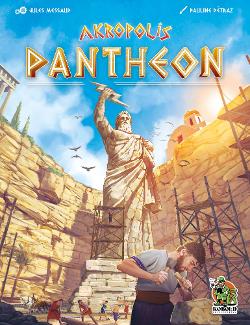
Akropolis: Pantheon
Players cooperate as rival cities that have united to build a shared Capital and honor the gods. On a turn, a player adds a tile to their personal City to complete Architectural Challenges and earn Divine Altars, or contributes a tile to the central Capital to shape the shared layout that will be scored at game end. Players manage limited Stone cubes and hold three City tiles in hand, drawing back up at the end of each turn. Completed Challenges allow placement of Divine Altars in specific Capital squares; only squares with the correct Altar color count for scoring when all City tiles are played. Players compare the final, collective score to the chosen scenario target.
- Játékosok
- 1–4 legjobb: 2
- Játékidő
- 25 perc
- Kor
- 8+
- Bonyolultság
- 2,3 / 5
A játékról
- Tervezés
- Grafika
- Kiadó



Kiegészítő ehhez:
Nézd meg őket a Ludoyában
Hol vásárolhatod meg
Bolti árak és használt példányok, naponta ellenőrizve.
A Ludoya asztalain
Teljes statisztika a Ludoyában- 3
- Rögzített játszmák
- 5
- Játékosok
- 1h 14m
- Átlagos játékidő
- 3
- Gyűjteményekben
- 4
- Kívánságlistákon
8,8/10
1 Ludoya-értékelés alapján
Szabálykérdések
A Ludoya szabályasszisztense válaszol a szabálykönyv alapján.
Can I add a tile to my City and the Capital on the same turn?
No. On your turn, choose one option: add 1 tile to your City, or pay 1 Stone and add 1 tile to the Capital. (p. 4)
How do I place tiles on higher levels?
A higher-level tile must sit on top of 3 hexes, cover hexes on at least 2 different tiles, and not hang over empty space. You gain 1 Stone for each Quarry you cover. (p. 4)
Do our individual Cities score points at the end?
No. Only the Capital scores; count only its Plazas that contain a Divine Altar, and apply the chosen Scenario’s conditions. (p. 7)
When I complete an Architectural Challenge, what happens to its Altar?
If your own City meets the challenge, discard that Challenge tile and immediately place its matching Altar on an unoccupied Plaza in the Capital. Placing an Altar costs nothing, and you can complete more than one challenge on a turn. (p. 5; p. 6)
Can another player give me Stones to pay a cost?
Yes, but the giver must also pay 1 Stone to the reserve for each Stone given. Stones for a cost must come from your personal supply, including any Stones received after the giver pays this tax. (p. 7)
Do all Plazas in the Capital count, even if there’s no matching Altar?
No. Only Plazas with a Divine Altar of that Plaza’s color score; at game end, count only Altar-occupied Plazas that also meet the chosen Scenario’s conditions. (p. 5; p. 7)
Ingyenes, weben, Androidon és iOS-en
Játszd a(z) Akropolis: Pantheon játékot a Ludoyával
- Tartsd a gyűjteményedbenKövesd a példányodat és a kiegészítőit, add kölcsön a barátaidnak, vagy tedd fel a kívánságlistádra, és szólunk, ha csökken az ára.Add hozzá a gyűjteményedhez
- Rögzíts minden játszmátPontok, győztesek, időzítők és fotók, aztán a statisztikáid: győzelmi arány, kedvenc játékosszám, legjobb pontszám.Játszma rögzítése
- Döntsd el a szabályvitákatKérdezz bármit a szabályokról, és választ kapsz a szabálykönyvből, az oldallal együtt, ahol ellenőrizheted.Kérdezd a szabályasszisztenst
- Találj játszótársakat hozzáKlubok, játékestek és események a közeledben, ahol ez a játék asztalra kerül.Események megtekintése
Játékadatok (játékosok, játékidő, kor, alkotók) forrása: BoardGameGeek.