
1990 · Politic
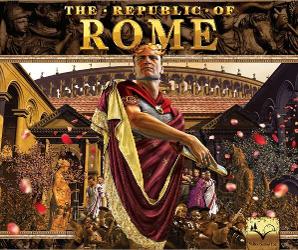
The Republic of Rome
Players represent rival aristocratic factions maneuvering for influence in the Roman Senate across a simulated stretch of Republican history. On each turn players propose and vote on Senate actions—assigning offices, sending governors and generals to provinces, raising armies, pursuing prosecutions, and addressing public crises. Influence and voting power depend on the number and rank of Senators each player controls, while Offices determine who may make proposals. External threats such as wars, famine, unrest and financial collapse force temporary cooperation; if Rome fails, all players lose. Victory comes from turning a faction’s Senators and commanders into the dominant force in the state.
- Jucători
- 1–6 ideal 5
- Timp de joc
- 300 min
- Vârstă
- 14+
- Complexitate
- 4,4 / 5









De unde îl cumperi
Prețuri din magazine și exemplare la mâna a doua, verificate zilnic.
La mesele Ludoya
Toate statisticile în Ludoya- 57
- Partide înregistrate
- 92
- Jucători
- 3h 54m
- Durată medie
- 44
- În colecții
- 4
- Pe listele de dorințe
- 1
- Precomandat
7,8/10
din 27 de recenzii Ludoya
The most immersive, emotional and fun game of all; what the players decide or vote, how they behave toward each other, everything counts. The most enjoyable point of this game is that it allows you to do endless things. It's about politics, after all, and that's what makes the game shining: the emotional factor. You can convice the others to vote or support you, and then betray them. Or you can make the others don't see you as a threat, and instead judge another senator and execute him. Or send him to a war. And it has a right sense of Roman history. For a history lover, it is even more enjoyable. The only flaws are the length (more than 5 hours ruling Rome may be exhausting), the big amount of rules and the optimal number of players, which prevents it being more played as it would deserve.
halbert827,0 Joc semicooperatiu de simulació política i diplomacia amb puteig i molt temàtic. El joc inclou diversos escenaris (desde la República dels inicis fins a gairebé la seva caiguda) que canvien la forma de jugar, que pot ser més cooperativa o més competitiva. L'atzar pot ser decisiu, hi han tirades de daus constanment, però li dona molta emoció al joc sense restar estrategia, ja que l'important és la teva posició al Senat en front de la resta de jugadors. La dificultad del Escenari de la "República Temprana" és molt elevat, resulta complicat defensar la República de totes les agresions que pateix. Té una duració molt elevada, de unes 5 hores jugant a un escenari de una sola época. Actualització després de més partides: realment, l'atzar de les fitxes de mort és molt decisiu, especialment si es dona sempre en el mateix jugador. A més, totes les partides acaben sent molt similars (especialment a la República Temprana). Hi han algunes cartes que estan molt descompensades (com Sabotaje o Seducción) i que sempre es guarden per fer intents de influencia el últim torn... Tot i que el sistema de votacions, discussió, etc... está molt ben dissenyat, al final resulta molt farragós i cansat. El vaig agafar amb moltes ganes però cada día em fa més mandra jugar-hi, per duració abans prefereixo fer un TtA, un TI3 o un Runewars...
Ultralong game about diplomacy. Historically it's awesome, but you need a lot of time to play and to learn a massive messy rulebook


Întrebări despre reguli
Răspunsuri din regulament de la asistentul de reguli Ludoya.
How does a Persuasion (bribe/counter-bribe) attempt work—can I spend my faction treasury to stop someone and who gets the money?
The persuader may spend Talents from his Personal Treasury to raise the Base Number and then rolls vs. 2d6; all other players may irrevocably spend Talents from their Faction Treasuries to subtract from the Base Number as counter-bribes. All Talents spent (bribes and counter-bribes) are placed into the target Senator’s Personal Treasury after the Attempt regardless of success or failure (see p.9, 1.07.412–1.07.414).
If one of my senators dies, what happens to his markers, concessions and my faction—am I eliminated?
When a Senator dies all markers except a Faction Leader marker are removed, his Concessions return to the Curia and his Province (if governor) goes to the Forum; Family (black-text) cards without a Faction Leader go to Repopulating Rome (p.5, 1.05.3). A faction is only eliminated if it has no Senators left as a result of a failed Assassination; otherwise the player may draw the top Senator from the Curia to replace his leader or wait for the next Curia entry (p.5, 1.05.4).
What's the difference between Personal Revenue, Provincial Spoils and the Faction Treasury, and when can money be moved between them?
Personal Revenue is income each Senator generates (base income plus Knights, Concessions and optional Provincial Spoils); Provincial Spoils are optional die-roll results collected by Governors (p.5, 1.06.1–1.06.13). During Redistribution (end of the Revenue Phase) players may freely move Talents between Personal Treasuries and their own Faction Treasury (except Rebels cannot transfer to non-Rebels) and may give Talents to other players (p.5, 1.06.3).
When does a Governor return to Rome and does a returning Corrupt Governor keep his Corrupt marker?
At the end of the Revenue Phase the term dial of non‑Rebel Governors is advanced and when it moves off “1” the Governor returns to Rome and the Province card goes back to the Forum; returning Corrupt Governors keep their Corrupt marker (p.6, 1.06.6).
How do prosecutions work and what are the consequences of a Minor vs. Major Prosecution?
The Censor may conduct up to two Minor or one Major Prosecution per turn; voting is for conviction and the Accused gains additional votes equal to his Influence, with Popular Appeal possible (p.12, 1.09.41–1.09.42). A successful Minor Prosecution strips 5 Popularity, 5 Influence, any Prior Consul and returns Concessions to the Forum; a successful Major Prosecution results in execution (p.13, 1.09.43–1.09.44).
What immediate game states cause everyone to lose—what must we avoid to keep Rome alive?
The game ends in defeat for all players if at the end of a Combat Phase there are four or more Active Wars, if the People Revolt with no Rebel in play, or if the State Treasury goes bankrupt with no Rebel in play (p.2 and p.19, 1.12.3).
Jocuri similare
 John Company: Second Edition2022
 John Company2017
 Pericles: The Peloponnesian Wars2017
 Pendragon: The Fall of Roman Britain2017
 Falling Sky: The Gallic Revolt Against Caesar2016
 Imperial Elegy: The Road to the Great War 1850-19202025
 Hegemony: Lead Your Class to Victory – Extended Edition2023
 Kingdoms Forlorn: Dragons, Devils and Kings2025
 Sword of Rome: Conquest of Italy, 362-272 BC2004
 Hegemony: Lead Your Class to Victory2023
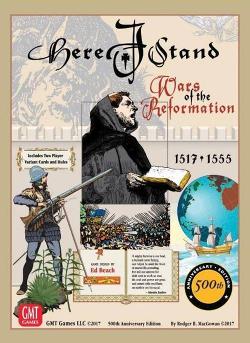 Here I Stand: 500th Anniversary Edition2017
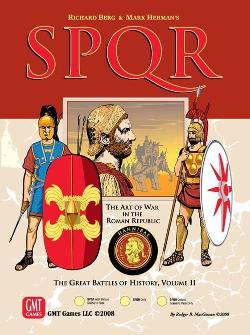 SPQR (Deluxe Edition)2008
Cei care îl au mai au și
 Revolution: The Dutch Revolt 1568-16482004
 Flying Colors2003
 1714: The Case of the Catalans2014
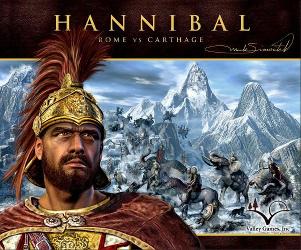 Hannibal: Rome vs. Carthage1996
 Virgin Queen2012
 By Swords and Bayonets2025
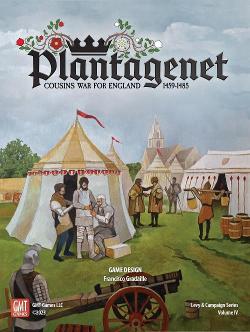 Plantagenet: Cousins' War for England, 1459 - 14852023
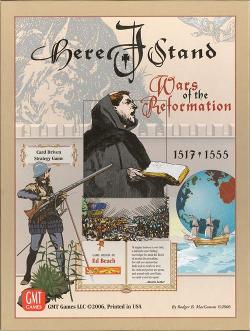 Here I Stand2006
 Holland '44: Operation Market-Garden2017
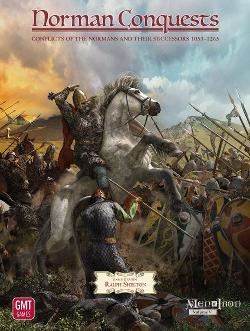 Norman Conquests: Men of Iron Volume V2023
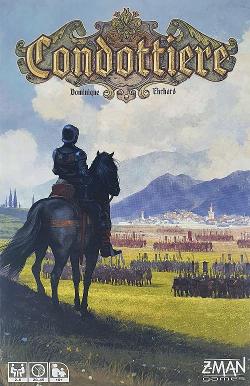 Condottiere1995
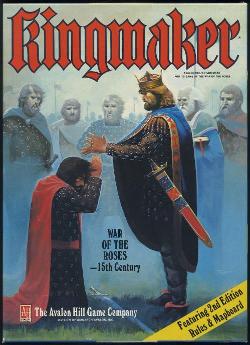 Kingmaker1974
Gratuit, pe web, Android și iOS
Joacă The Republic of Rome cu Ludoya
- Păstrează-l în colecția taȚine evidența exemplarului tău și a extensiilor lui, împrumută-l prietenilor sau pune-l pe lista de dorințe și află când scade prețul.Adaugă-l în colecția ta
- Înregistrează fiecare partidăPuncte, câștigători, cronometre și fotografii, apoi statisticile tale: rata de câștig, numărul preferat de jucători, cel mai bun scor.Înregistrează o partidă
- Lămurește întrebările despre reguliÎntreabă orice despre reguli și primești un răspuns din regulament, cu pagina unde îl poți verifica.Întreabă asistentul de reguli
- Găsește oameni cu care să-l jociCluburi, seri de jocuri și evenimente de lângă tine unde se joacă acest joc.Vezi evenimentele
Datele jocului (jucători, durată, vârstă, autori) de pe BoardGameGeek.