
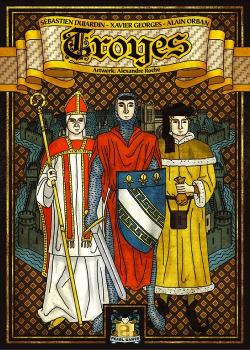
2010 · Medieval
Troyes
Players recreate centuries of a medieval Champagne city by managing a personal pool of dice and a hand of cards that represent religious, military, and civil affairs. Dice are allocated to projects such as cathedral construction, disaster response, and civic tasks; cards enable actions, recruitments, and scoring opportunities across the three social domains. Players may spend money to hire opponents’ dice for temporary use and compete for influence, prestige, and victory points. Includes player-driven timing through dice placement and card play; later editions add a solo mode and bonus cards.
- Jucători
- 1–4 ideal 3
- Timp de joc
- 90 min
- Vârstă
- 12+
- Complexitate
- 3,4 / 5
Despre joc
- Ilustrație
- Publisher





Extensii
Vezi-le în Ludoya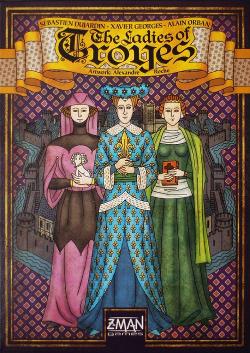
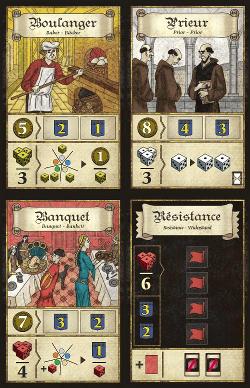
Fotografii de la mesele Ludoya
Toate fotografiile în Ludoya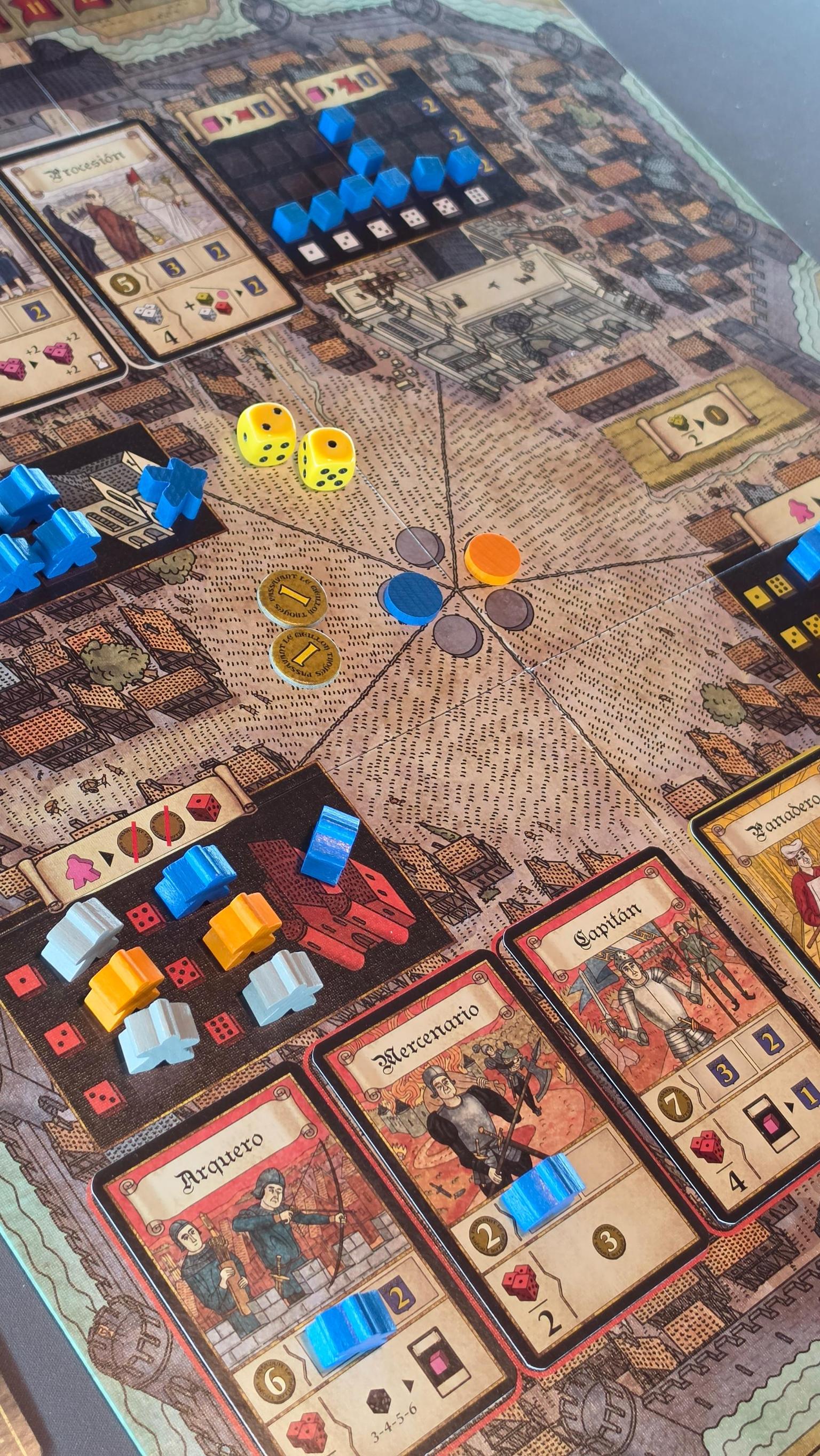
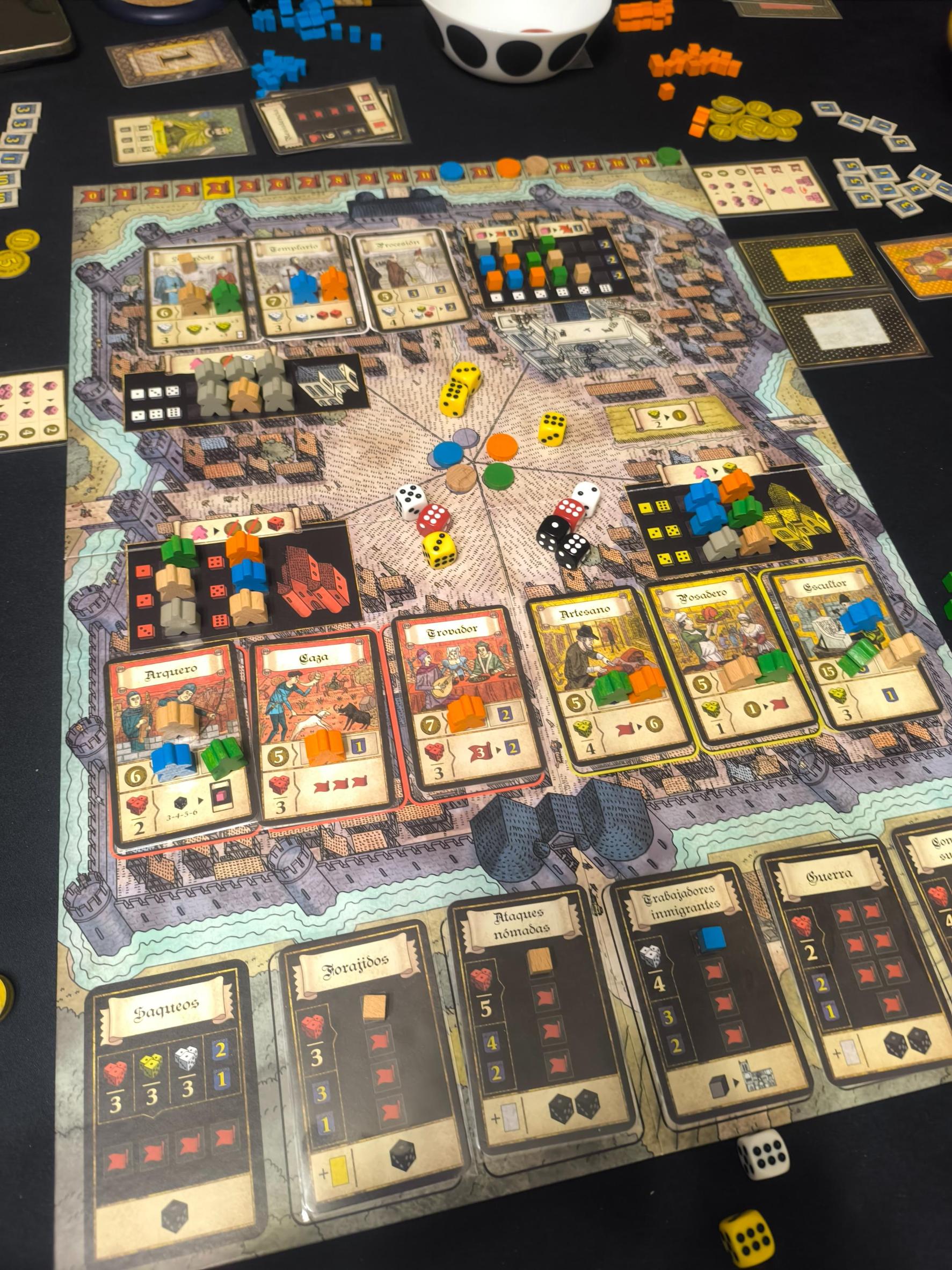
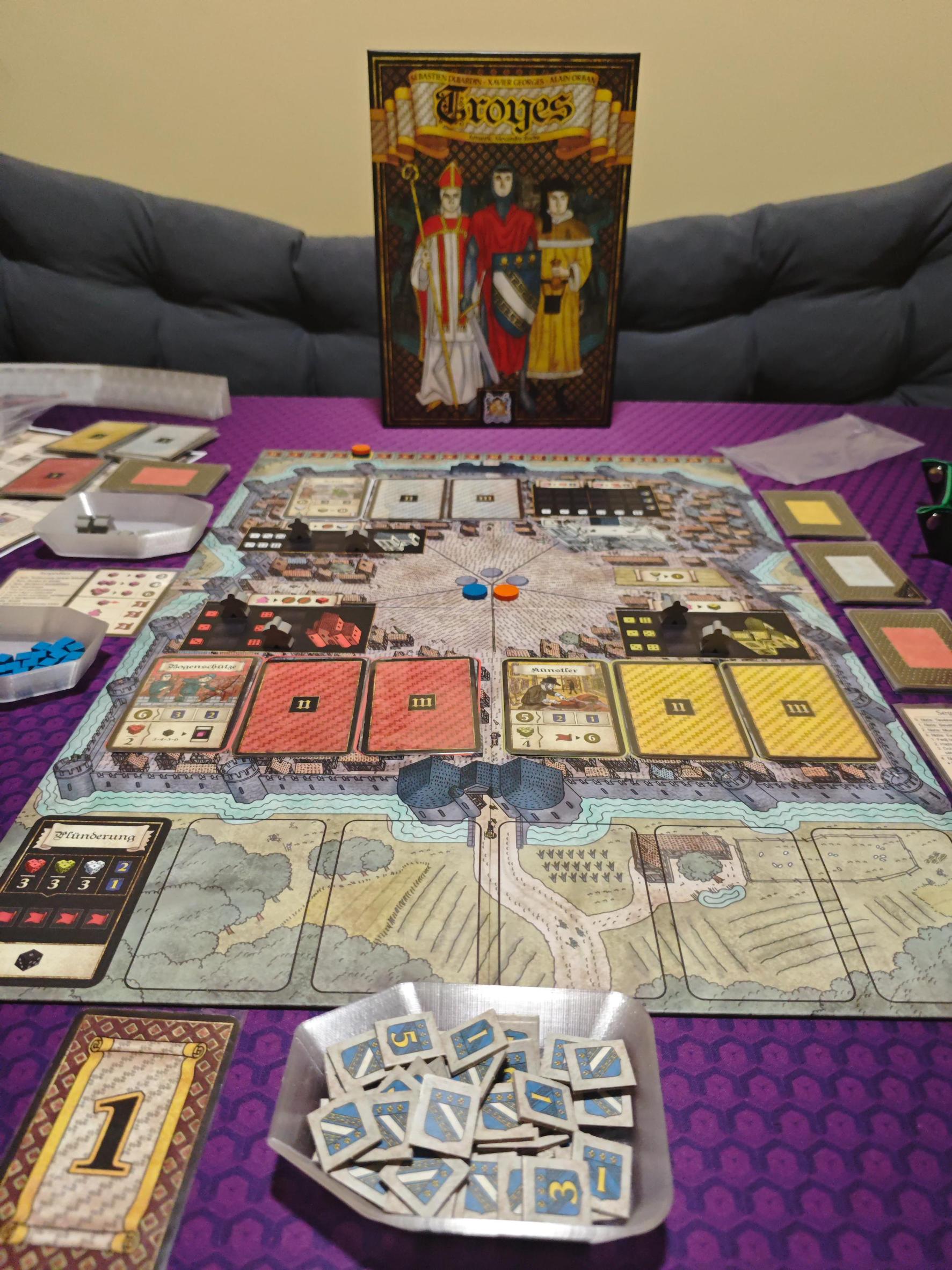
De unde îl cumperi
Prețuri din magazine și exemplare la mâna a doua, verificate zilnic.
La mesele Ludoya
Toate statisticile în Ludoya- 807
- Partide înregistrate
- 536
- Jucători
- 1h 30m
- Durată medie
- 163
- În colecții
- 34
- Pe listele de dorințe
- 1
- Precomandat
7,1/10
din 109 recenzii Ludoya
Garfield7,0 #50 Nice dice mechanism. But it's always better if you roll high? So it's a little bit luck dependent? If you always roll low you won't win for sure. Have to try with expansion. [c] Theme: :star::nostar::nostar::nostar::nostar: <!-- size 7]No --> Gameplay: :star::star::star::nostar::nostar: <!-- size 7]Placing dice to do something --> Interaction: :star::star::star::nostar::nostar: <!-- size 7]Blocking each other --> Artwork: :star::star::star::nostar::nostar: <!-- size 7]Ok --> Luck: :star::star::star::star::nostar: <!-- size 7]Dice rolling --> Strategy: :star::star::nostar::nostar::nostar: <!-- size 7]Not sure --> Components: :star::star::star::nostar::nostar: <!-- size 7]Ok --> Play duration: :star::star::star::nostar::nostar: <!-- size 7]Ok --> Easy to teach: :star::star::star::nostar::nostar: <!-- size 7]Ok --> Rules quality: :star::star::star::star::nostar: <!-- size 7]Very good --> Setup time: :star::star::star::nostar::nostar: <!-- size 7]Ok --> No downtime: :star::star::star::nostar::nostar: <!-- size 7]Ok --> Replay value: :star::star::star::nostar::nostar: <!-- size 7]Different random cards --> [/c]
Evan4,6 My group was a big fan of this game, but it never really worked for me. First and foremost the look of this game really bothers me. The garrish patterns combined with the ketchup red and mustard yellow really bothers me, more than it should. I like to think that I'm a mechanisms over theme guy, but art like this I find troublesome. Additionally, this game is very guilty of difficult to understand icons. Each game doesn't have that many cards, but the cards will often have one time use icons on them, so it hurt my experience substantially that when I played this it was before a BGG card lookup player aid was available. I'm not thrilled with the way your meeples get kicked out of the various offices. I'm also not thrilled with the feeling you get when your opponent buys the die you needed out from under you. These two forms of negative player interaction would be forgivable in a game with a better look to it, but when combined with the visual static of the game, it hurts an already difficult experience. I'm also feeling a little done with the game mechanism where there are invader cards collecting at the bottom of the board that players need to collectively fend off. It's so perfectly executed in Lowlands, that it's hard to imagine going back. The expansion is also troublesome. The purple die module means that my issue with people stealing my dice out from under me is resolved, as nobody can steal your purple die, but the flip side of that is it removes key tension from the game that's really the game's soul. I may not like the steal mechanism, but without the threat of it, there's a hollow feeling to the rest of what happens. There's also a module where you walk your people around the exterior of the board that feels very tacked on. I was unimpressed, and it certainly didn't add anything that saved the experience of the base game for me. It's rough, because I really should like this game. I understand it's a good game. I just can't manage it. :nostar: Art, Iconography and components functional :star: Clever or interesting mechanisms :star: Reasonably low downtime between turns with mildly AP players :star: Multiple plays stay interesting :star: Low or mitigatable luck elements :star::star::nostar::nostar::nostar: Raw enjoyment
Mestremuten9,0 Rating: 4/5 Production value: 4/4 Is the game in my collection/Love to have?: 1/1
Întrebări despre reguli
Răspunsuri din regulament de la asistentul de reguli Ludoya.
Când scoate zarul negru o piață și ce trebuie să tai?
La începutul fiecărei jumătăți de zi, zarul negru distruge piața pe care stă; începând cu ziua 3, îi obligă și pe toți jucătorii să taie de pe foaia de scor zarul care se potrivește cu valoarea zarului negru și cu culoarea pieței, iar tu trebuie să tai orice clădiri neconstruite din secțiunea colorată a coloanei. Clădirile construite nu sunt distruse, iar o Fortăreață din acea coloană te protejează de distrugerea provocată de zar (vezi pagina 4).
Când dau o piață pe dos și când rotesc roata?
La sfârșitul fiecărei jumătăți de zi, crainicul orașului întoarce piața distrusă pe cealaltă față înainte de a o pune la loc pe roată, iar la sfârșitul fiecărei zile întregi, crainicul orașului rotește stratul mic al roții cu un pas în sensul acelor de ceasornic, pentru a afișa următorul număr de zi (pagina 5).
Cum exact obțin resurse de pe un zar — încercuiesc atâtea cât valoarea zarului?
Când iei acțiunea „Gain Resources”, înconjori cu cerc atâtea resurse câte arată valoarea zarului, de la stânga la dreapta pe pista culorii respective; când primești resurse de tip cetățean, înconjori cetățeanul corespunzător pe pista lui (pagina 6).
Cum modifică Influența, Deniers și Cunoașterea zarurile când efectuez o acțiune?
Influența (roșu) îți permite să ajustezi valoarea zarului ales cu ±1 pentru fiecare influență cheltuită, denarii (galben) plătesc costul pentru a folosi o poziție de zar, iar cheltuirea a 2 cunoaștere (alb) îți permite să schimbi culoarea zarului pe care l-ai ales (pagina 6).
Ce face Fortressul — împiedică să-mi fie tăiate clădirile?
Construirea unei Fortărețe într-o coloană te protejează de atacurile cu zarul negru asupra acelei coloane (așa că nu trebuie să tai zarul atacat de acolo) și îți oferă imediat cetățeanul ilustrat și orice bonus de legătură aplicabil; reține că clădirile deja construite nu sunt niciodată distruse de evenimente (paginile 7 și 4).
Am nevoie de un zar alb ca să construiesc o Catedrală și cum se punctează la final?
Da — acțiunea Cathedral necesită un zar alb; fiecare Cathedral pe care o construiești deblochează punctarea de final pentru un anumit tip de clădire, iar tu marchezi 1 VP pentru primele două Cathedrale, 2 VP pentru următoarele două și 3 VP pentru ultimele două, adică VP-ul câștigat per clădire de acel tip la finalul jocului (pagina 8).
Jocuri similare




Gratuit, pe web, Android și iOS
Joacă Troyes cu Ludoya
- Păstrează-l în colecția taȚine evidența exemplarului tău și a extensiilor lui, împrumută-l prietenilor sau pune-l pe lista de dorințe și află când scade prețul.Adaugă-l în colecția ta
- Înregistrează fiecare partidăPuncte, câștigători, cronometre și fotografii, apoi statisticile tale: rata de câștig, numărul preferat de jucători, cel mai bun scor.Înregistrează o partidă
- Lămurește întrebările despre reguliÎntreabă orice despre reguli și primești un răspuns din regulament, cu pagina unde îl poți verifica.Întreabă asistentul de reguli
- Găsește oameni cu care să-l jociCluburi, seri de jocuri și evenimente de lângă tine unde se joacă acest joc.Vezi evenimentele
Datele jocului (jucători, durată, vârstă, autori) de pe BoardGameGeek.