
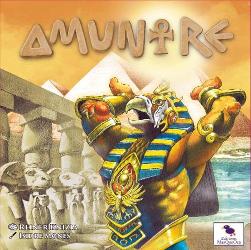
2003 · Econòmic
Amun Re
Els jugadors fan de caps de famílies reials egípcies que adquireixen províncies al llarg del Nil, les desenvolupen per a l’agricultura i el comerç, i fan servir recursos per construir piràmides i guanyar prestigi. La partida gira al voltant de les subhastes estacionals, la gestió dels ingressos de les províncies, la compra de pedres de construcció i l’assignació de cartes de poder per influir en les accions. Els jugadors també fan sacrificis periòdics al déu Amon-Re, que afecten la puntuació i l’ordre de torn. El moment en què compres, com t’expandeixes per les províncies i com reparteixes els recursos determina qui construeix més piràmides i qui aconsegueix la puntuació més alta.
- Jugadors
- 3–5 millor amb 5
- Durada
- 90 min
- Edat
- 12+
- Complexitat
- 3 / 5
Sobre el joc
- Disseny
- Editorials





On comprar-lo
Preus de botigues i còpies de segona mà, revisats cada dia.
A les taules de Ludoya
Totes les estadístiques a Ludoya- 73
- Partides registrades
- 162
- Jugadors
- 1h 39m
- Partida mitjana
- 43
- En col·leccions
- 7
- En llistes de desitjos
6,3/10
de 26 ressenyes a Ludoya
Mestremuten5,0 Rating: 3/5 Production value: 2/4 Is the game in my collection/Love to have?: 0/1
Evan4,6 Each round you flip a number of region cards equal to the number of players. Then players bid on the regions with the high bidder taking control of it with their claim marker. Then, players can buy farmers to put into the region, special action cards, and bricks that form pyramids. Then players secretly select some amount of money to throw away, the sum of which determines how much the farmers will produce that round in new money for their owners. This process gets tricky, as players not invested in farms can put a negative value card in the mix which leeches money from the total and gives it to the player. You play this way for a few rounds, and then once the board is full, you do a scoring awarding points to players for pyramids, majorities on either side of the nile river, and for holding spaces with printed temples. Then you do a big reset leaving only the point scoring temples on the board, and begin the bidding process again. The valuation process round to round is wild. Like most good games of this nature, players are valuing things differently from each other depending on their strategy going in. Ultimately plays don't vary much from one another. Either you are doing farms or going for raw income spots and bidding accordingly. Saving money from round 1 to try and win built up spaces in round 2. It's solid for a few plays, but I'm not finding the player interaction nor the game systems enough to be interesting enough for this to have much staying power.
andycted8,8 4-5 players. Classic Knizia but in a more complete/complex package than other simple auction games. One of his best, surely his best at 5 players and, at this weight, one of the best 5-player game of all time




Gratis, al web, Android i iOS
Juga a Amun Re amb Ludoya
- Tingues-lo a la teva col·leccióControla la teva còpia i les seves expansions, deixa-la als amics o posa-la a la teva llista de desitjos i t'avisarem quan baixi de preu.Afegir-lo a la teva col·lecció
- Registra cada partidaPuntuacions, guanyadors, temporitzadors i fotos, i després les teves estadístiques: percentatge de victòries, nombre de jugadors preferit, millor puntuació.Registrar una partida
- Puntua sense paperFes servir els fulls de puntuació i les ajudes de joc de la comunitat, i deixa que Ludoya sumi els punts.Buscar fulls de puntuació
- Troba gent amb qui jugar-hiClubs, nits de jocs i esdeveniments a prop teu que porten aquest joc a la taula.Veure esdeveniments
Dades del joc (jugadors, durada, edat, crèdits) de BoardGameGeek.