
2014 · Mitologia
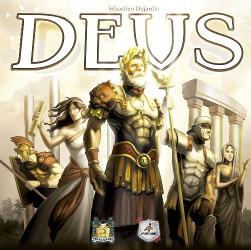
Deus
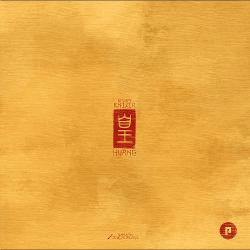
Players develop individual civilizations on a shared modular board by constructing buildings and making offerings to gods. On a turn a player either places a building card onto the board and into a personal tableau, or discards one or more cards to invoke a god’s action; cards come in six colors that represent military, production, trade, scoring, temples, and varied effects. Constructed cards are stacked by color in the tableau and their powers activate from bottom to top, creating an engine of repeating effects. The game ends when all barbarian villages are surrounded and attacked or when all temples are built; most points wins.
- Jugadors
- 2–4 millor amb 3
- Durada
- 60–90 min
- Edat
- 14+
- Complexitat
- 2,8 / 5
Sobre el joc
- Disseny
- Publisher




Expansions
Veure-les a Ludoya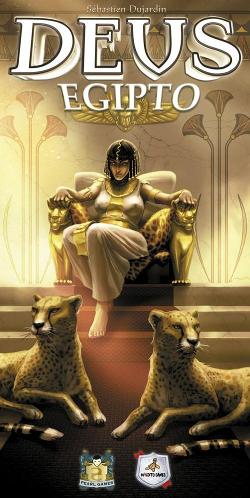
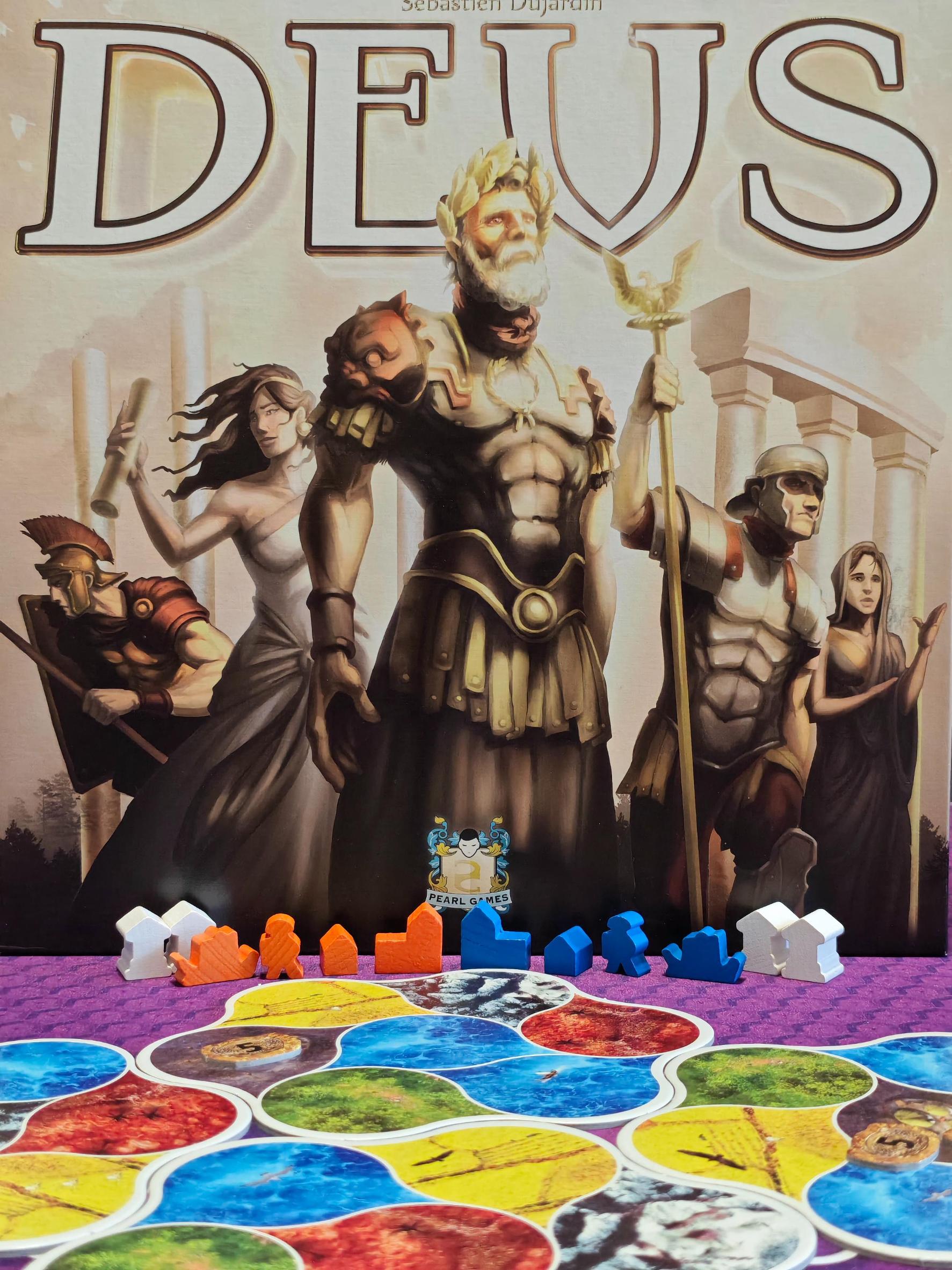
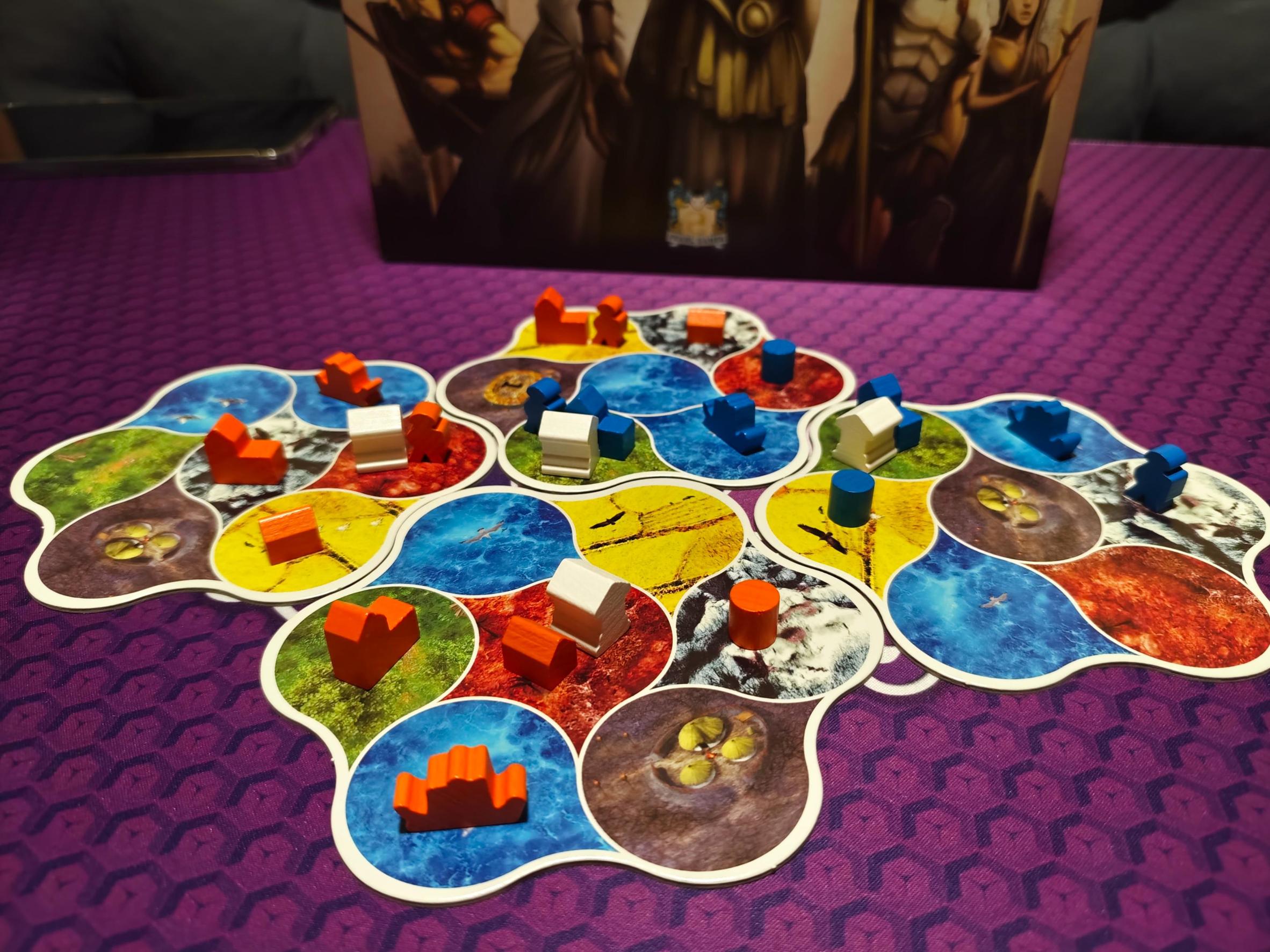
Fotos de taules de Ludoya
Totes les fotos a Ludoya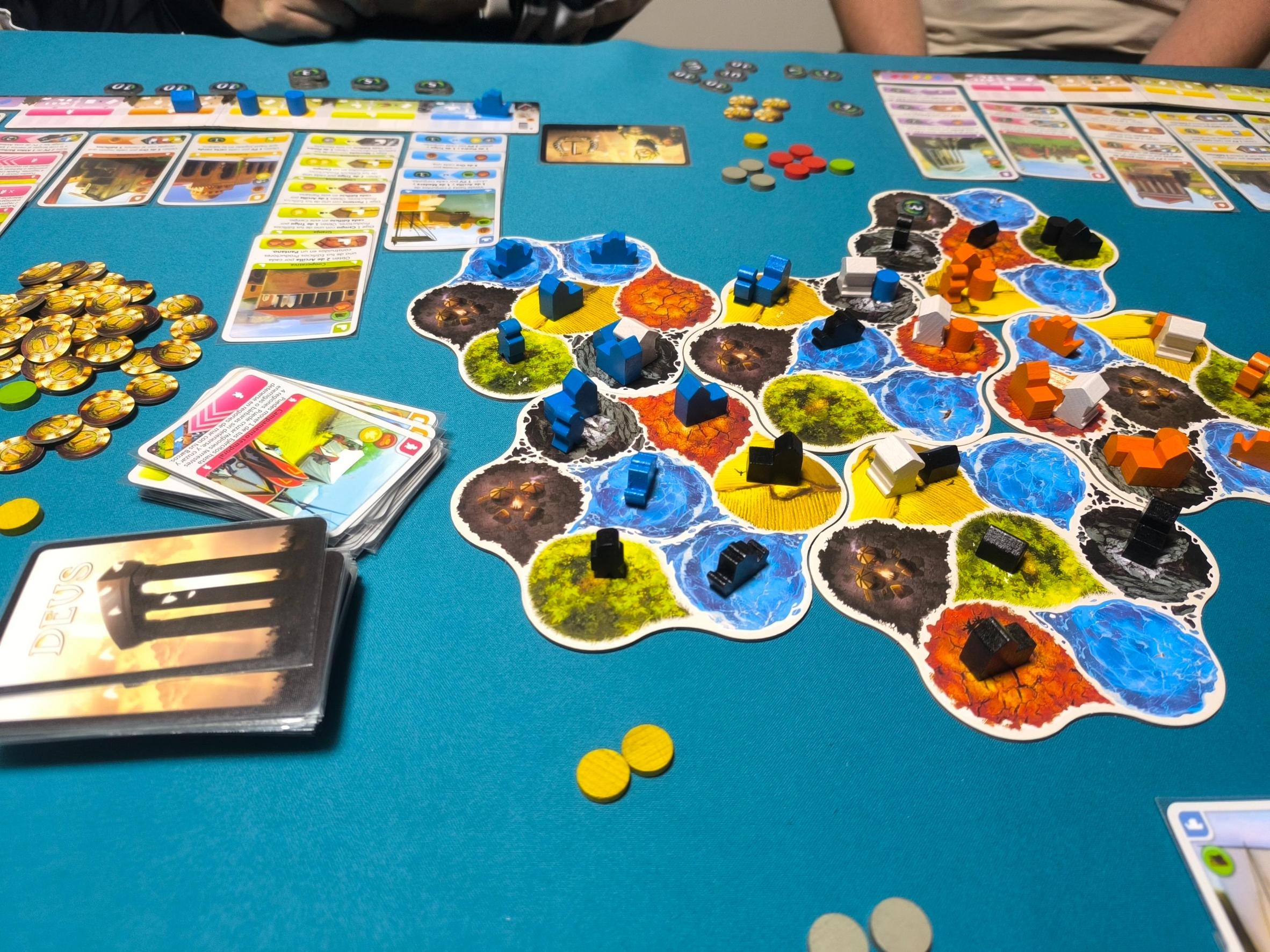
On comprar-lo
Preus de botigues i còpies de segona mà, revisats cada dia.
A les taules de Ludoya
Totes les estadístiques a Ludoya- 274
- Partides registrades
- 285
- Jugadors
- 1h 14m
- Partida mitjana
- 97
- En col·leccions
- 13
- En llistes de desitjos
6,4/10
de 44 ressenyes a Ludoya
halbert825,0 Essen '14 Joc de desenvolupament en un mapa que es guanya per PV. Es tracta de construir ciutats composades per diferents tipus d'edificis en zones. Aquests edificis es construeixen mitjançant una mà de 5 cartes, que et marquen el que pots construir i el que no. A més, hi ha una serie de punts al taulell que s'obtenen quan s'ha rodejat per complet una zona (al estil Samurai) i uns edificis (temples) que et donen punts en funció de uns objectius (no pots construir dos fins que no en tinguis un de cada tipus, tres fins dos de cada tipus etc...). Molt simple (poques opcions) i limitat al que et surti a la mà. És un conjunt de mecàniques sense gaire rel·lació. Em recorda a diferents jocs: al Romolo o Remo? (per els diferents tipus d'edificis i que a és estiguin limitats), al Terra Mystica (per el desenvolupament en el mapa, tot i que aquí es pot construir més d'un edifici per zona), al Ginkgopolis (per la construcció mitjançant cartes, tot i que aquí no es fa un draft) i al Samurai (per com s'obtenen els punts de vitoria dels poblats barbars).
Vesper7,5 NeedsToBePlayed
- Base -


Dubtes de regles
Respostes a partir del reglament per l'assistent de regles de Ludoya.
Do I have to have a wooden piece on my player board to play a building card?
Yes — to construct a standard building you must have at least one wooden piece of that building’s type on your player board; if you don’t, you cannot play the card (p.4).
Can I build in a region that has a barbarian village?
No — you cannot construct a building in a region occupied by a barbarian village (even if there are no longer VP on that village); once a village is successfully attacked it is no longer considered a barbarian village for card effects (p.4–5).
How do temples work — do I always place a wooden temple on the map when I play a Temple card?
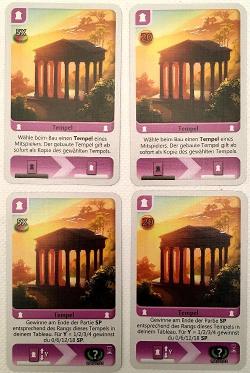
Temple cards are placed in the temple column on your player board and later temples require a number of colored cards to be built (e.g., 2nd temple needs 1 card of each color); you pay the temple cost (1 of each resource, or 4 Gold per resource) and place a wooden temple in one of your regions (not an empty region), but if the temple supply is empty you may still play the Temple card and simply do not place a wooden temple (p.5).
Who gets the VP when a barbarian village is attacked and how is the attacker determined?
When all adjacent regions are occupied and there is at least one army, the player with the most armies in the adjacent regions attacks and wins the VP on the village; ties are broken by who has built more buildings in those regions, and if still tied the tied players share the VP (rounding down) (p.5).
What happens when I make an offering — how many cards do I draw and are there hand limits?
You must discard at least one card, invoke the god shown on the topmost discarded card and apply its power, then draw from the deck to replenish your hand to 5 (Minerva grants extra draws per discarded card); you can never have more than 10 cards in hand (p.6).
Can I pay building costs with gold instead of the listed resources?
Yes — when paying a construction cost each resource may be replaced by 4 Gold (this substitution applies only to paying construction costs) (p.4).
Gratis, al web, Android i iOS
Juga a Deus amb Ludoya
- Tingues-lo a la teva col·leccióControla la teva còpia i les seves expansions, deixa-la als amics o posa-la a la teva llista de desitjos i t'avisarem quan baixi de preu.Afegir-lo a la teva col·lecció
- Registra cada partidaPuntuacions, guanyadors, temporitzadors i fotos, i després les teves estadístiques: percentatge de victòries, nombre de jugadors preferit, millor puntuació.Registrar una partida
- Resol dubtes de reglesPregunta el que vulguis sobre les regles i obtén una resposta treta del reglament, amb la pàgina on comprovar-la.Preguntar a l'assistent de regles
- Troba gent amb qui jugar-hiClubs, nits de jocs i esdeveniments a prop teu que porten aquest joc a la taula.Veure esdeveniments
Dades del joc (jugadors, durada, edat, crèdits) de BoardGameGeek.