
2024 · Renaixement
Galileo Galilei
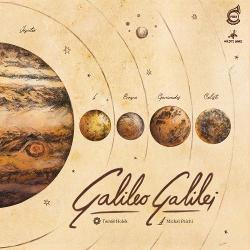
Els jugadors assumeixen el paper d’astrònoms de l’edat moderna primerenca que exploren els cels, desenvolupen telescopis i busquen avenços científics en una època de vigilància religiosa. Cada torn, un jugador fa servir un telescopi per triar una de cinc accions i pot anar millorant aquestes accions amb el temps. Els jugadors recullen cartes de planetes i sistemes estel·lars i reuneixen tres lents de colors per fer descobriments. Els inquisidors poden aparèixer i amenaçar la reputació d’un jugador, així que la clau de l’estratègia és equilibrar la recerca, les millores i algun compromís ocasional per treure profit de les seves visites.
- Jugadors
- 1–4 millor amb 3
- Durada
- 50–100 min
- Edat
- 12+
- Complexitat
- 3 / 5
Sobre el joc
- Disseny
- Publisher



Expansions
Veure-les a Ludoya

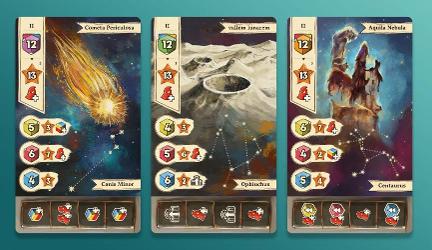
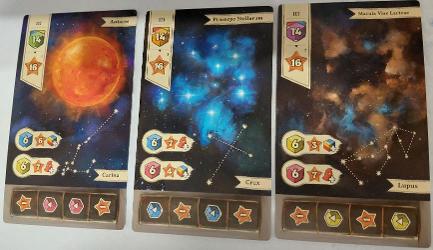
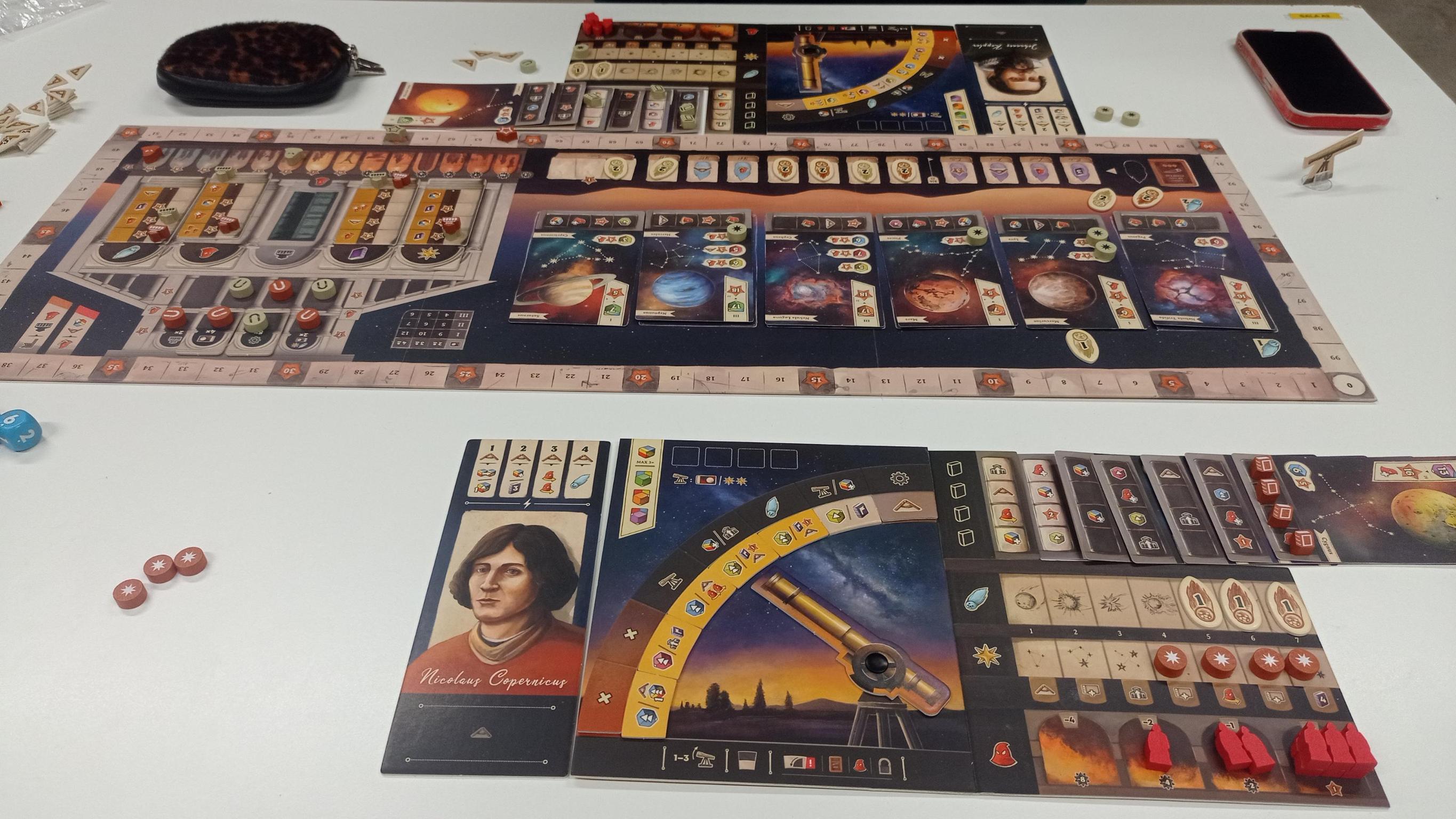
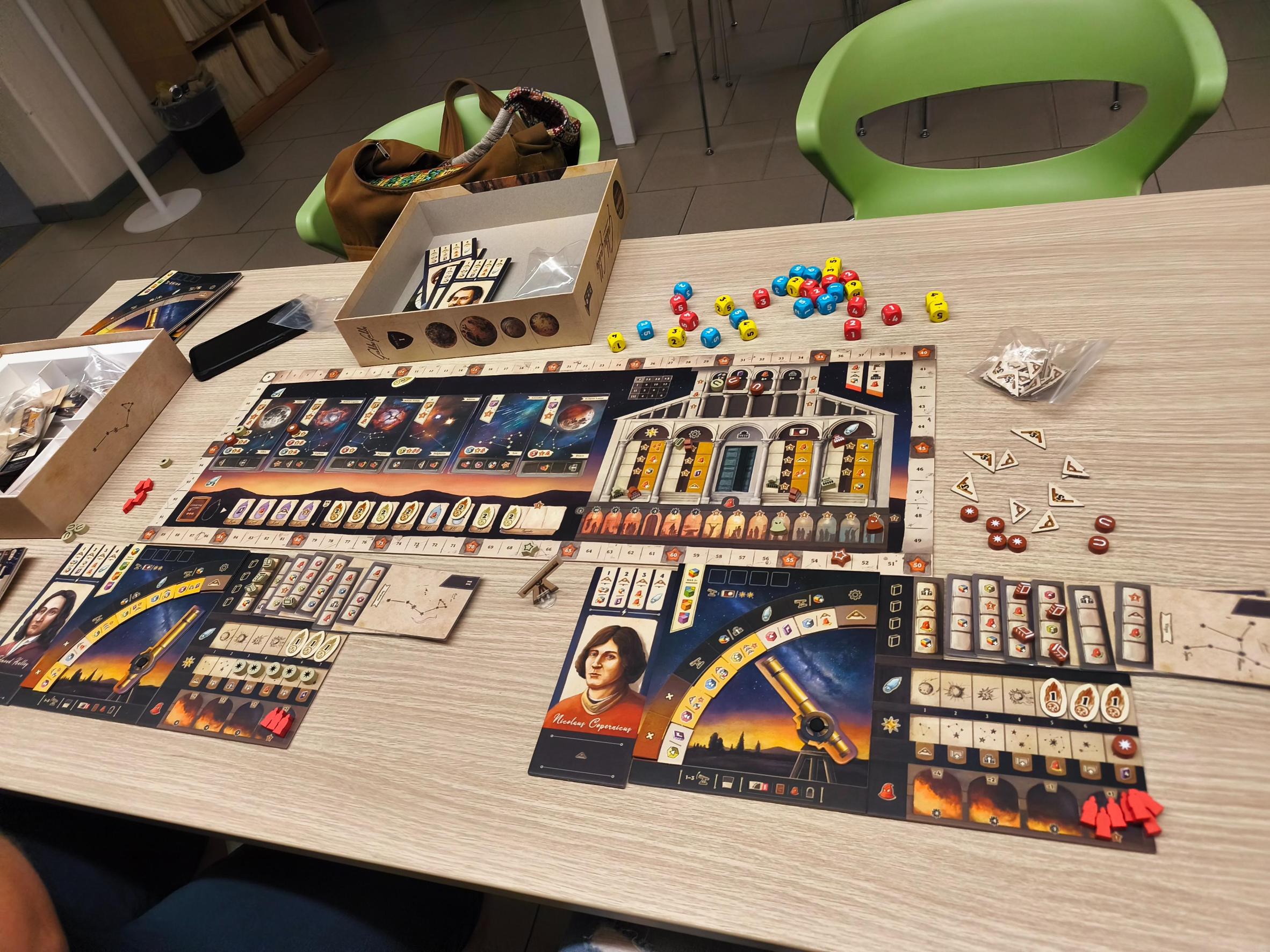
Fotos de taules de Ludoya
Totes les fotos a Ludoya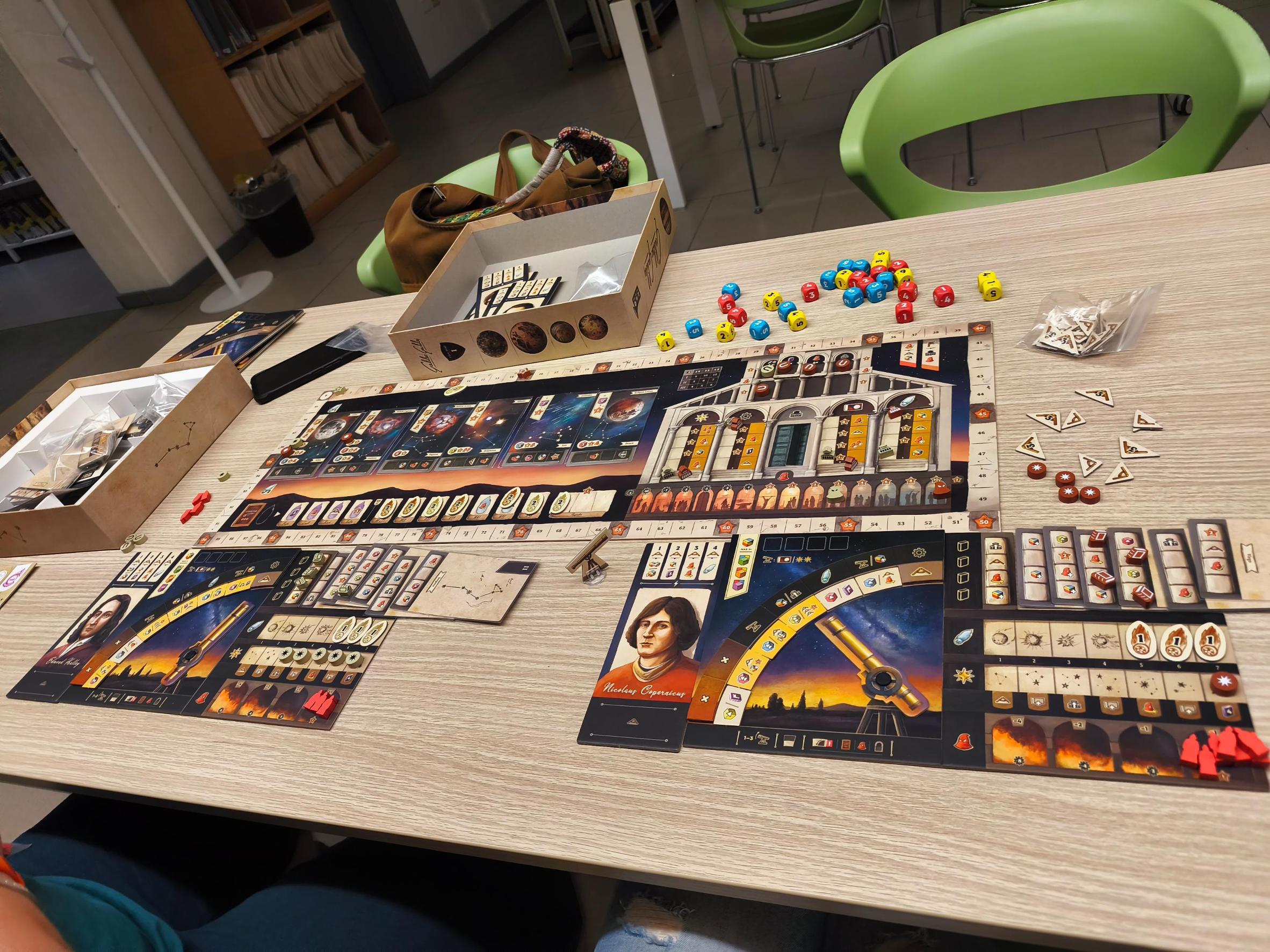
On comprar-lo
Preus de botigues i còpies de segona mà, revisats cada dia.
A les taules de Ludoya
Totes les estadístiques a Ludoya- 202
- Partides registrades
- 252
- Jugadors
- 1h 37m
- Partida mitjana
- 70
- En col·leccions
- 26
- En llistes de desitjos
- 2
- En preventa
7,4/10
de 29 ressenyes a Ludoya
Javo7,0 Juego de temática astronómica y que mezcla mecánicas de varios juegos. Lo mejor: - Diseño muy bonito. - Puzle interesante en cuanto a gestión de los inquisidores. - La rejugablidad está bien. Lo peor: - No inventa nada. Modo solitario: Funciona muy bien, compites contra un automa aunque deja poco movimiento al desarrollo ya que avanza muy rápido y puedes quedarte atrás muy fácilmente. Rejugabilidad: Personajes asimétricos con poderes diferentes. Cada partida cambian los tracks de puntuación de objetivos así como los objetivos. Cartas no hay muchas y aunque en cada partida varien, se repetiran. No obstante, las cartas no ofrecen nada especial más q puntos y beneficios, por lo que tampoco afecta. Para quien lo recomiendo? Para jugadores que busquen un euro que junte varias mecánicas interesantes y tenga una ludoteca discreta.
- Base -


Dubtes de regles
Respostes a partir del reglament per l'assistent de regles de Ludoya.
When I Observe a Major Object do I have to spend dice of both colors, and can I overpay?
You must spend at least one observation die of each color the Major Object requires, but you may spend any number of dice to meet the cost and any excess value is forfeited; return spent dice to the supply after use (page 6).
Can I Observe two constellations in one Observe action and how do Constellation tokens work?
Yes — you may Observe up to two constellations in one action but resolve them one at a time; place your leftmost Constellation token on the chosen constellation, gain its listed rewards and then the reward from the space you removed the token from, and after you’ve used your seventh Constellation token you can no longer Observe constellations (page 7).
How do Comet tokens reduce observation costs and can they replace required dice colors?
Comet tokens reduce an object's observation cost by their value and each can be used once per turn, moving/flipping as you use them, but they do not substitute for required colors — you still must spend at least one die of each required color (page 8).
When can I take free actions and what do Quadrant tokens let me do?
You may spend Quadrant tokens to take free actions during your turn (not while resolving another action); costs are 1–4 Quadrant tokens and include options like changing a die color or +1 to a die (1), gaining a die or Write 3 (2), Persuade twice (3), or Spot a Comet (4) (page 9).
When does an interrogation happen and how does it change my Reputation/score?
If you Persuaded any inquisitor (i.e., successfully moved a cellar inquisitor) during your turn, an interrogation happens in the Cleanup Phase: add the values of all inquisitors in your cellar and move your Tribunal token that many spaces (negative moves left); if you’re already at the track end you instead immediately lose or gain 2 victory points (page 12; cleanup reference page 10).
What triggers the end of the game and how are ties broken?
The game ends when the last Discovery card is placed on the Game Board; finish the round and give each player one final turn, then score University bonuses followed by Inquisition results (page 13), and ties are broken by highest sum of remaining observation dice, then most Quadrant tokens, otherwise the tied players share victory (page 13).
Fulls de puntuació i ajudes de joc
- Hoja de Puntuación
- ES ✶ Galileo Galilei



















Gratis, al web, Android i iOS
Juga a Galileo Galilei amb Ludoya
- Tingues-lo a la teva col·leccióControla la teva còpia i les seves expansions, deixa-la als amics o posa-la a la teva llista de desitjos i t'avisarem quan baixi de preu.Afegir-lo a la teva col·lecció
- Registra cada partidaPuntuacions, guanyadors, temporitzadors i fotos, i després les teves estadístiques: percentatge de victòries, nombre de jugadors preferit, millor puntuació.Registrar una partida
- Resol dubtes de reglesPregunta el que vulguis sobre les regles i obtén una resposta treta del reglament, amb la pàgina on comprovar-la.Preguntar a l'assistent de regles
- Troba gent amb qui jugar-hiClubs, nits de jocs i esdeveniments a prop teu que porten aquest joc a la taula.Veure esdeveniments
Dades del joc (jugadors, durada, edat, crèdits) de BoardGameGeek.