
2012 · Renaixement
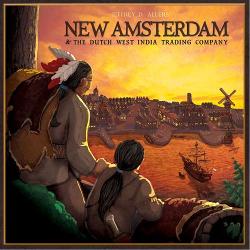
New Amsterdam
Ambientat en un assentament colonial neerlandès a l’illa de Manhattan, els jugadors assumeixen el paper de mecenes adinerats que estableixen finques i negocis per treure profit del comerç de pells. Els jugadors liciten per lots d’acció a cada ronda per construir estructures, treballar la terra per obtenir aliments i materials, reclutar servents contractats, comerciar amb els lenapes, enviar pells a Europa i competir per ocupar càrrecs polítics. L’expansió de les seves reclamacions de terra altera les accions disponibles i els obliga a interactuar amb els campaments indígenes al llarg del riu, mentre que la gestió dels recursos i la col·locació a les subhastes impulsen les decisions estratègiques.
- Jugadors
- 2–5 millor amb 5
- Durada
- 90 min
- Edat
- 12+
- Complexitat
- 3,2 / 5
Sobre el joc
- Disseny
- Art
- Editorial

On comprar-lo
Preus de botigues i còpies de segona mà, revisats cada dia.
A les taules de Ludoya
Totes les estadístiques a Ludoya- 18
- Partides registrades
- 32
- Jugadors
- 1h 24m
- Partida mitjana
- 4
- En col·leccions
5,9/10
de 7 ressenyes a Ludoya
Sup8,3 Sleeved
Primeres impressions · 1 partida
Evan6,0 This is a very tough game. Players bid at the start of each round for not only turn order, but the actions they are allowed to resolve. The bid is really interesting in that you can spend even resources on the bid, which means you could easily get the actions you need but find you've overspent and then you might not be able to resolve those actions properly. I'm not sure how getting a big early corn production isn't the best move all the time, as it not only fuels your other goals, but since you can bid with it, you can win whichever auctions you want. Of course if several players realize that, then they'll bid more aggressively for it and turn order so maybe that self balances? The game is unique in that I can't easily describe it to someone using the generic terms we have for mechanisms. This to me is a really good thing. The problem with the game is that it feels very feast or famine. Either you have more than you can use of something, or you don't have any. It's extremely punishing for players who make mistakes, and at the end, win or lose, you don't really get the satisfying feeling of having built or accomplished something. It feels close to greatness, but it's just lacking some crucial magic. ★ Art, Iconography and components functional ★ Clever or interesting mechanisms ★ Reasonably low downtime between turns with mildly AP players ★ Multiple plays stay interesting ★ Low or mitigatable luck elements ★★☆☆☆ Raw enjoyment
Primeres impressions · 2 partides
Gratis, al web, Android i iOS
Juga a New Amsterdam amb Ludoya
- Tingues-lo a la teva col·leccióControla la teva còpia i les seves expansions, deixa-la als amics o posa-la a la teva llista de desitjos i t'avisarem quan baixi de preu.Afegir-lo a la teva col·lecció
- Registra cada partidaPuntuacions, guanyadors, temporitzadors i fotos, i després les teves estadístiques: percentatge de victòries, nombre de jugadors preferit, millor puntuació.Registrar una partida
- Puntua sense paperFes servir els fulls de puntuació i les ajudes de joc de la comunitat, i deixa que Ludoya sumi els punts.Buscar fulls de puntuació
- Troba gent amb qui jugar-hiClubs, quedades de jocs i esdeveniments a prop teu que porten aquest joc a la taula.Veure esdeveniments
Dades del joc (jugadors, durada, edat, crèdits) de BoardGameGeek.