
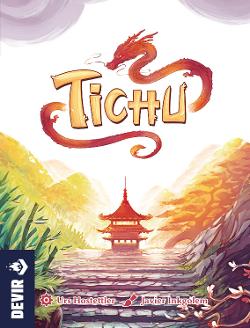
1991 · Joc de cartes
Tichu
Un joc de cartes de pujada per parelles en què els equips intenten ser els primers a quedar-se sense cartes mentre acumulen punts. Els jugadors juguen combinacions —cartes individuals, parelles, escales, fulls, etc.— ja sigui superant la combinació més alta actual o passant; quan tothom passa fins al líder, aquell jugador guanya la baza i enceta la següent. Les rondes atorguen punts per cartes específiques guanyades a les bazes, i l’últim jugador que es desfà de totes les cartes passa les cartes restants als oponents, cosa que afecta la puntuació. Abans de començar, els jugadors poden declarar apostes de risc-recompensa que atorguen o penalitzen molts punts si s’encerten o fallen. El primer equip que arribi a la puntuació objectiu guanya.
- Jugadors
- 3–10 millor amb 4
- Durada
- 30–90 min
- Edat
- 10+
- Complexitat
- 2,3 / 5
Sobre el joc
- Disseny
- Editorials






Expansions
Veure-les a Ludoya
Fotos de taules de Ludoya
Totes les fotos a Ludoya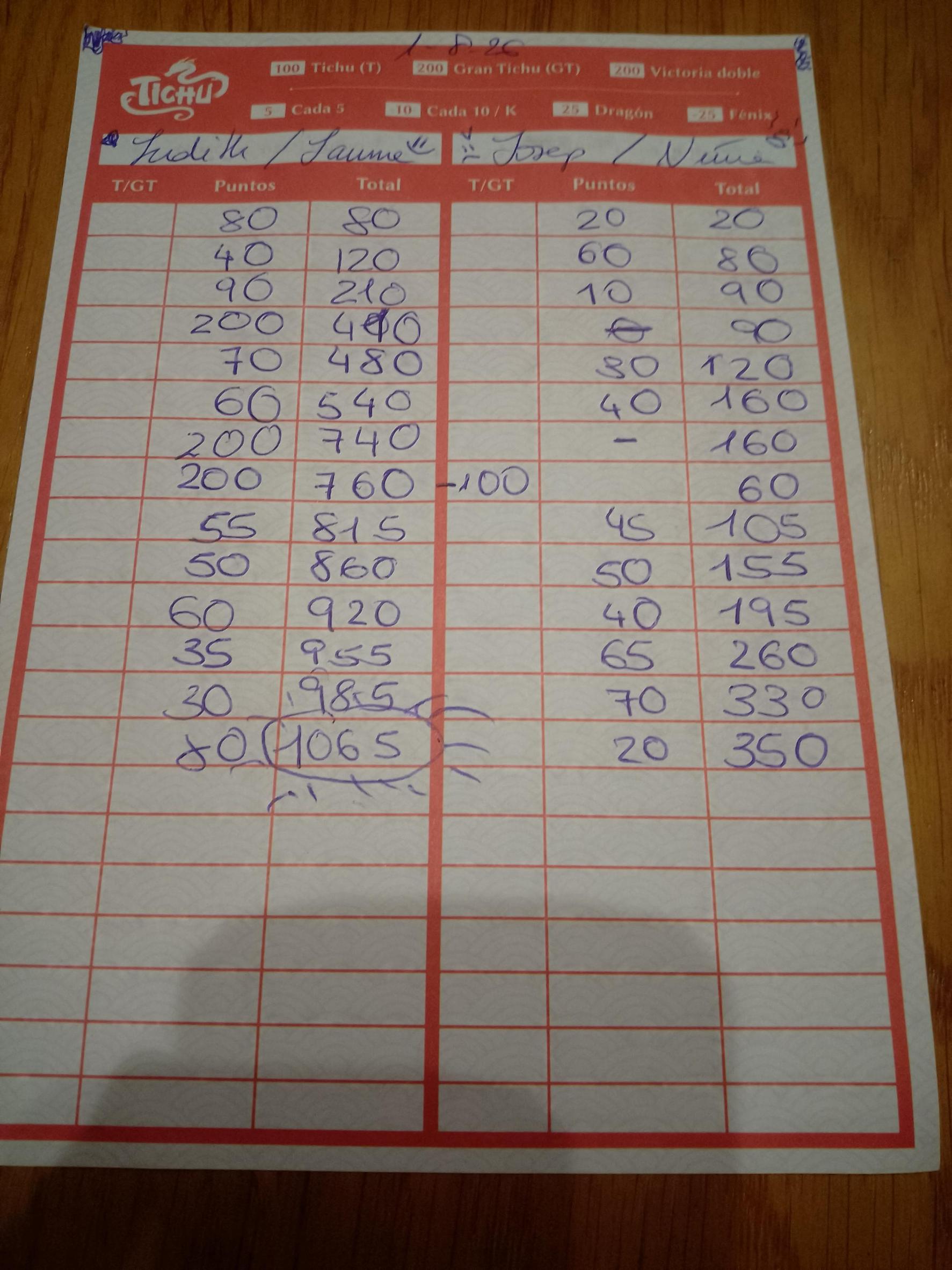

On comprar-lo
Preus de botigues i còpies de segona mà, revisats cada dia.
A les taules de Ludoya
Totes les estadístiques a Ludoya- 660
- Partides registrades
- 588
- Jugadors
- 1h 23m
- Partida mitjana
- 181
- En col·leccions
- 11
- En llistes de desitjos
7,6/10
de 59 ressenyes a Ludoya
Aya_Zholvax7,5 Molt divertit, mirar de jugar amb diferents grups per no agafar tics
Mestremuten8,0 Rating: 4/5 Production value: 3/4 Is the game in my collection/Love to have?: 1/1
Garfield6,0 #9 It's funny, but I wouldn't play it very often. It's based too much on luck and it can last for 2 hours!
Dubtes de regles
Respostes a partir del reglament per l'assistent de regles de Ludoya.
When and how do we pass the three cards at the start — do we pick them up before playing?
After each player has taken 14 cards, every player pushes 3 cards face down — one to each other player — and then may pick up the three cards that were pushed to him, adding them to his hand (p.1).
What combinations can I lead and how are they beaten?
You may lead singles, pairs, sequences of pairs, three-of-a-kind, full houses (trio+pair), or sequences of length at least 5; each combination can only be beaten by the same kind of higher combination (except bombs), and sequences must be the same length to beat (p.1).
How does the Mah Jong wish work — when must someone play the wished rank?
When the Mah Jong is played its owner may wish a normal rank (not a special card); the next player who actually has that rank and can lawfully play it must play it on his ordinary turn, but players who play bombs out of turn do not have to fulfill the wish — if a bomb wins the trick the new winner must fulfill the wish when leading next (p.1, p.3).
What exactly do the Phoenix, Dragon and Hound do?
The Phoenix is a joker in combinations (not for bombs), counts as half a rank higher when played as a single (and is worth −25 points), the Dragon is the highest single card worth +25 and, when it wins a trick, its holder gives that trick to an opponent of his choice, and the Hound has no trick-taking power — when led it simply transfers the right to lead to the player's partner (p.2).
When can bombs be played and can they beat the Dragon or take the Hound?
Bombs (either five-or-more consecutive cards in the same suit or four-of-a-kind) may be played at any time, even out of turn, and beat any non-bomb (including the Dragon); however, bombs cannot be used to take the Hound (they cannot be used to take the Hound and its transfer of lead) (p.2, p.3).
How is the round scored and what happens with the last trick (Dragon & Phoenix effects)?
The round ends when only one player has cards left; tricks are revealed and score +10 per king/ten, +5 per five, +25 for the Dragon and −25 for the Phoenix (total 100 points per deal), and although the last trick ends immediately when the third-last player finishes, it is still awarded to whoever wins it (and the Dragon, if it wins, still gives that trick to an opponent) (p.2, p.3).











Gratis, al web, Android i iOS
Juga a Tichu amb Ludoya
- Tingues-lo a la teva col·leccióControla la teva còpia i les seves expansions, deixa-la als amics o posa-la a la teva llista de desitjos i t'avisarem quan baixi de preu.Afegir-lo a la teva col·lecció
- Registra cada partidaPuntuacions, guanyadors, temporitzadors i fotos, i després les teves estadístiques: percentatge de victòries, nombre de jugadors preferit, millor puntuació.Registrar una partida
- Resol dubtes de reglesPregunta el que vulguis sobre les regles i obtén una resposta treta del reglament, amb la pàgina on comprovar-la.Preguntar a l'assistent de regles
- Troba gent amb qui jugar-hiClubs, nits de jocs i esdeveniments a prop teu que porten aquest joc a la taula.Veure esdeveniments
Dades del joc (jugadors, durada, edat, crèdits) de BoardGameGeek.