
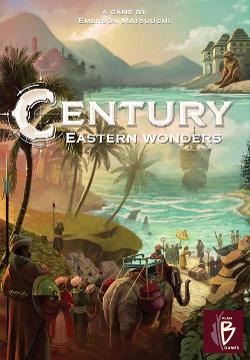
2018 · Nautical
Century: Eastern Wonders
Players sail the high seas as merchants and privateers working to establish spice trading networks among the Indonesian islands. They draft and play cards to upgrade and exchange goods, manage ship movement around a modular board, and acquire scoring objectives by delivering specific spice combinations. Gameplay centers on efficient engine-building and route selection: convert and combine spices, deploy ships to control islands, and compete for lucrative contracts and trading posts. Variable objectives and modular setup create different strategic paths and replayability.
- Players
- 2–4 best 4
- Playing time
- 30–45 min
- Age
- 8+
- Complexity
- 2.1 / 5
About the game
- Design
- Publisher


Plays with
See them in LudoyaWhere to buy it
Shop prices and second-hand copies, checked every day.
On Ludoya's tables
Full stats in Ludoya- 230
- Plays logged
- 223
- Players
- 47m 25s
- Average play
- 93
- In collections
- 4
- On wishlists
6.5/10
from 40 Ludoya reviews
I prefere the first one, I'm not much into Pick And Deliver
No plays logged

Rules questions
Answered from the rulebook by Ludoya's rules assistant.
How do I acquire a Merchant card — what do I pay and does the leftmost card cost anything?
To acquire a Merchant card, place one cube from your cargo hold on each Merchant card to the left of the card you are taking, then take that Merchant card into your hand; taking the leftmost card requires placing no cubes (page 1).
When I play a Trade card or do a Market action, can I perform the same trade multiple times?
Yes — both Trade cards and Market actions allow you to perform the listed trade any number of times in a row as long as you have the required cubes available (page 2).
How many cards do I have to discard to move my boat, and where can those cards come from?
For a Move action you discard one or more cards (each discarded card equals one adjacent tile of movement) from your hand and/or your face-up cards to the right of your player board into your face-down discard pile; the first movement also requires a discarded card (page 2).
Can I end my movement on a market tile that already has other players' boats?
You may end on a market tile with other boats only if you can pay each owner 1 cube from your cargo when you land there; if you don’t have enough cubes to pay all concerned players you cannot end your movement on that tile (page 2).
What does it cost to build an outpost on a market tile?
You may build one outpost per market tile if you don’t already have one there; the cost is 1 cube for each outpost currently on that market tile (in a 2-player game this counts as 2 cubes per outpost), so placing the first outpost on a tile costs no cubes (page 2).
How do Port VP tiles and the Closed Port tile work when I claim a VP tile?
To claim a port’s VP tile return the cubes shown on that VP tile to the supply and take the tile face down, then draw and reveal the next VP tile for that port; if the revealed tile is the Closed Port tile the port is closed (no VP tiles are placed while it is present), and whenever a VP tile is later claimed at another port you move the Closed Port tile to that port and then place a VP tile on the port that previously held the Closed Port (page 2).
Similar games
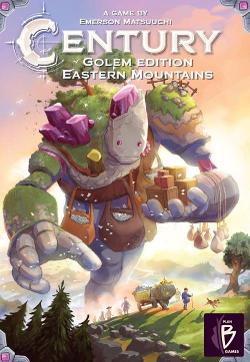 Century: Golem Edition – Eastern Mountains2019
 Century: A New World2019
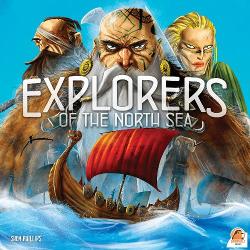 Explorers of the North Sea2016
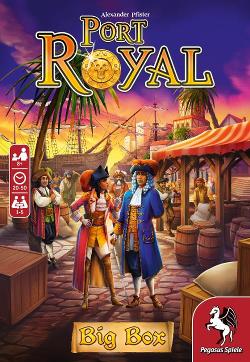 Port Royal: Big Box2022
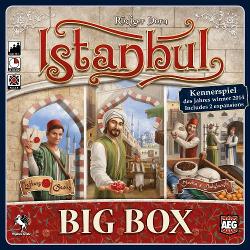 Istanbul: Big Box2018
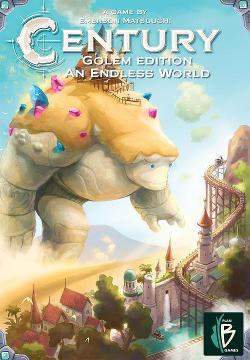 Century: Golem Edition – An Endless World2020
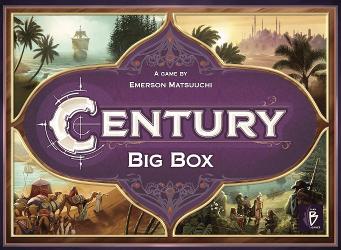 Century: Big Box2023
 Sea Dragons2023
 Photo Tour: North America2025
 The Quest for El Dorado: The Golden Temples2019
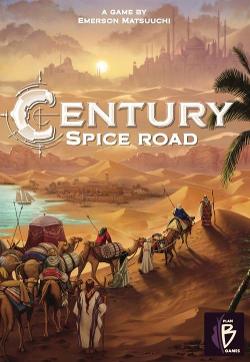 Century: Spice Road2017
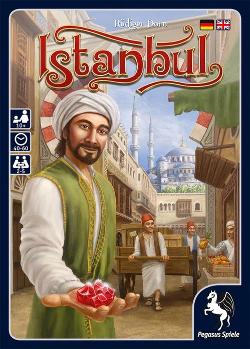 Istanbul2014


Free, on web, Android and iOS
Play Century: Eastern Wonders with Ludoya
- Keep it in your collectionTrack your copy and its expansions, lend it to friends, or put it on your wishlist and get told when the price drops.Add it to your collection
- Log every playScores, winners, timers and photos, then your stats: win rate, favourite player count, best score.Log a play
- Settle rules questionsAsk anything about the rules and get an answer from the rulebook, with the page to check it on.Ask the rules assistant
- Find people to play it withClubs, game nights and events near you that bring this game to the table.See events
Game facts (players, playing time, age, credits) from BoardGameGeek.