
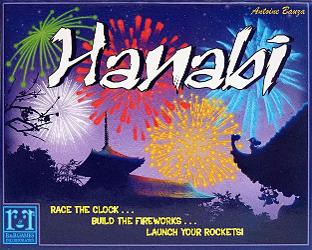
2010 · Card Game
Hanabi
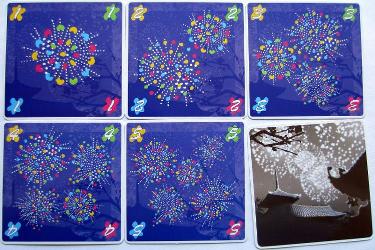
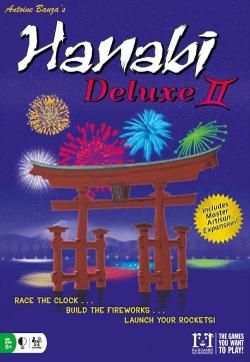
Players cooperate to build five colored sequences of cards from 1 to 5, representing a fireworks display. Each player holds their cards facing the table so only others can see them, and gives limited hints about either a card’s color or its number to guide teammates’ plays and discards. Teamwork and careful memory are required to play cards in the correct order and avoid mistakes before the draw deck runs out. An optional rainbow suit provides a variant for more advanced play.
- Players
- 2–5 best 4
- Playing time
- 25 min
- Age
- 8+
- Complexity
- 1.7 / 5
About the game
- Design
- Publishers






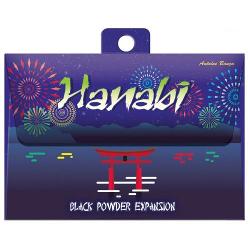
Expansions
See them in Ludoya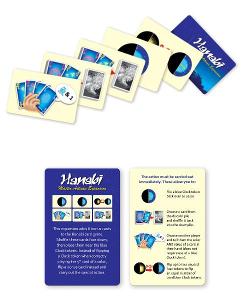
Photos from Ludoya tables
All photos in Ludoya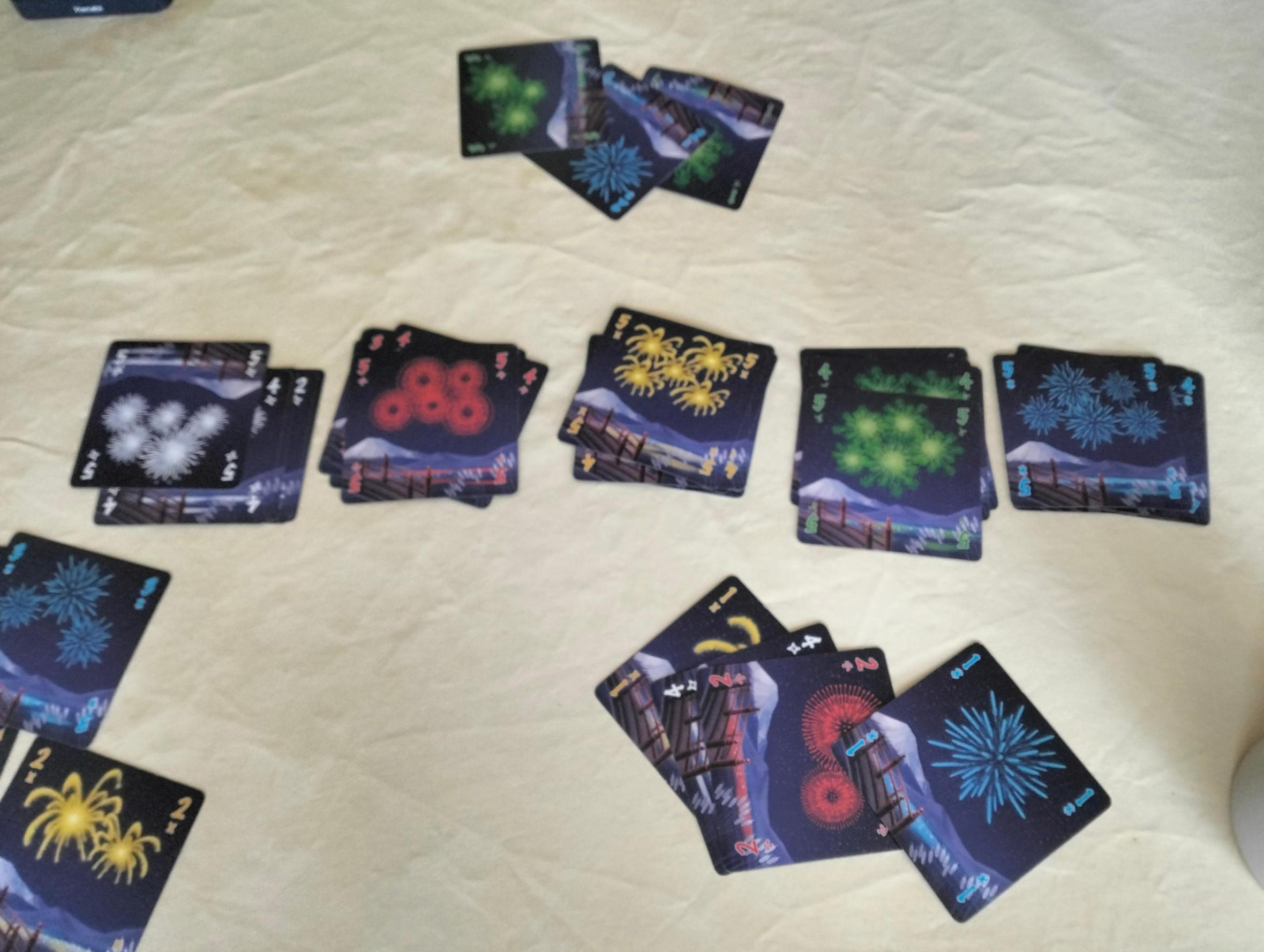
Where to buy it
Shop prices and second-hand copies, checked every day.
On Ludoya's tables
Full stats in Ludoya- 6,093
- Plays logged
- 1,052
- Players
- 30m 5s
- Average play
- 471
- In collections
- 20
- On wishlists
7.0/10
from 210 Ludoya reviews
Mestremuten6.0 Rating: 3/5 Production value: 3/4 Is the game in my collection/Love to have?: 0/1
First impressions · 1 play
Mohasz5.0 Need to play more of it, I did not like it with 2. Update: ...and with 3. Definitely not my kind of game.
No plays logged
Juanlu6.7 Diversión 3/5 · Interacción 4/5 · Atractivo 3/5 · Originalidad 4/5 · Rejugabilidad 3/5 · Accesibilidad 4/5
No plays logged
Rules questions
Answered from the rulebook by Ludoya's rules assistant.
Can I look at the fronts of the cards in my hand?
No — players MUST NOT look at the fronts of the cards they were dealt; you hold them so others can see the fronts while you only see the backs (page 2).
What exactly am I allowed to say when I give information — can I say a color and a number at once?
You may give only one type of information on your turn: either a single color or a single value, and you must clearly point to the card(s) concerned (page 2).
If a player has multiple cards of the same color or number, do I have to indicate all of them?
Yes — information must be complete: if a player has, for example, two green cards you must point to BOTH green cards, not just one (page 2).
Can I tell someone “you have none” of a color or number, or point to nothing as a clue?
No — the informer must point to the actual card(s) being referenced, so saying someone has zero of something or pointing to nothing is not allowed (page 2).
What happens if I play a card that doesn’t fit the fireworks?
If a played card cannot begin, add to, or complete a firework it is discarded and you remove the top black fuse token to the lid (and the third fuse placed ends the game as a loss) (page 2).
How do we regain information tokens, and how does the game end and get scored?
You regain a blue token by discarding a card (it returns a token to the table) or as a bonus when a firework is completed (playing a 5 returns a token if not already full); the game ends immediately on the third fuse (loss), immediately if all fireworks are completed (25 points), or after the final round when the deck is exhausted, and scoring is the sum of the highest card for each firework (page 2).





Free, on web, Android and iOS
Play Hanabi with Ludoya
- Keep it in your collectionTrack your copy and its expansions, lend it to friends, or put it on your wishlist and get told when the price drops.Add it to your collection
- Log every playScores, winners, timers and photos, then your stats: win rate, favourite player count, best score.Log a play
- Settle rules questionsAsk anything about the rules and get an answer from the rulebook, with the page to check it on.Ask the rules assistant
- Find people to play it withClubs, game nights and events near you that bring this game to the table.See events
Game facts (players, playing time, age, credits) from BoardGameGeek.