
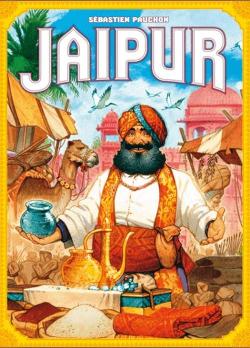
2009 · Card Game
Jaipur
Two traders compete to earn the most wealth by buying, exchanging and selling goods over a series of quick rounds. Players take turns taking cards from a shared market (all camels, a single good, or swapping several cards) or selling sets of one type of good to collect value chips. Chip values decline as the round progresses, while larger sales yield bonus rewards, creating a balance of risk and timing. Camels function as a non-sellable resource used for trades and count for end-of-round scoring. The game emphasizes hand management, market timing and head-to-head tactical choices.
- Players
- 2
- Playing time
- 30 min
- Age
- 10+
- Complexity
- 1.5 / 5
About the game
- Design
- Publishers





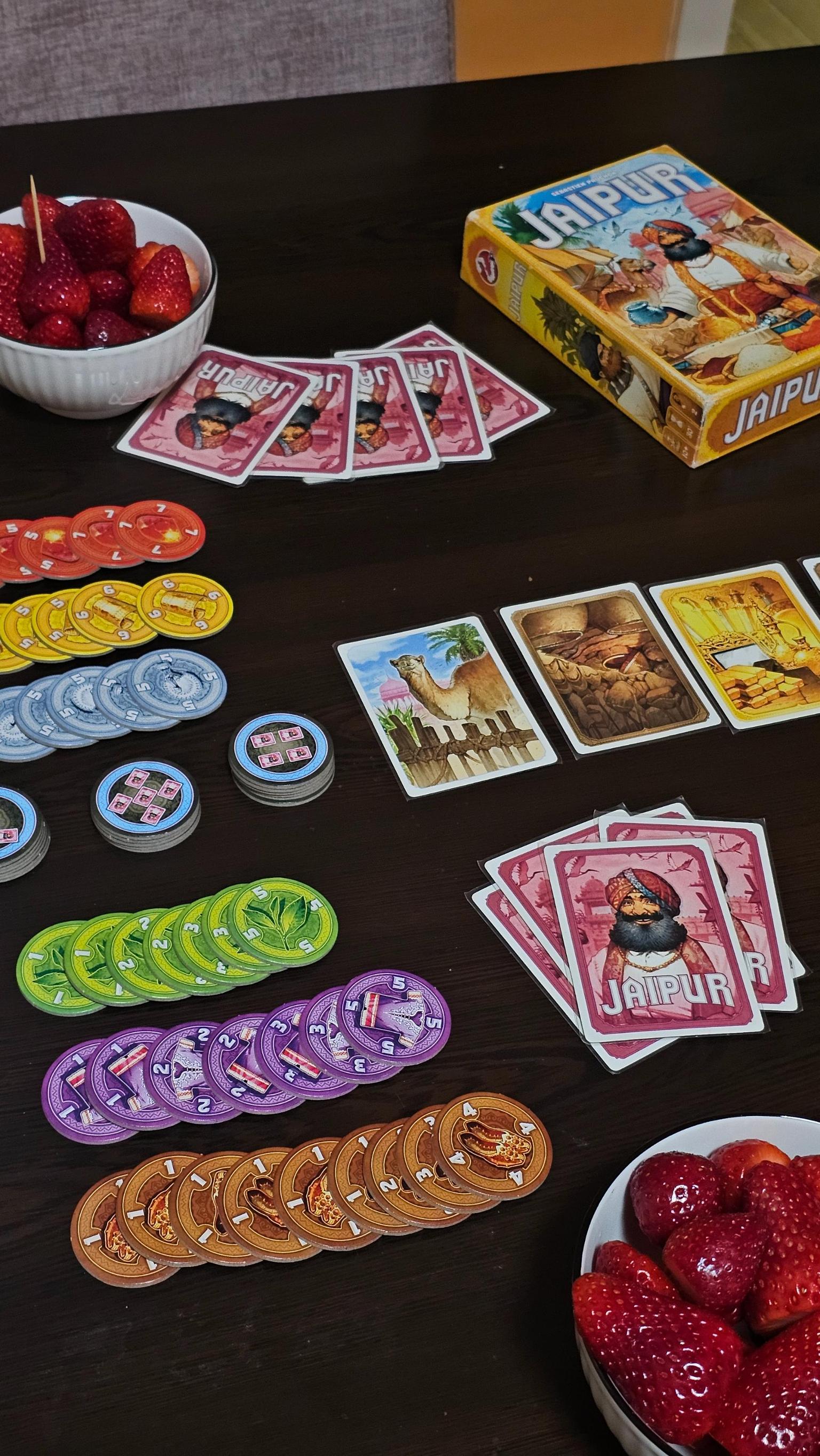
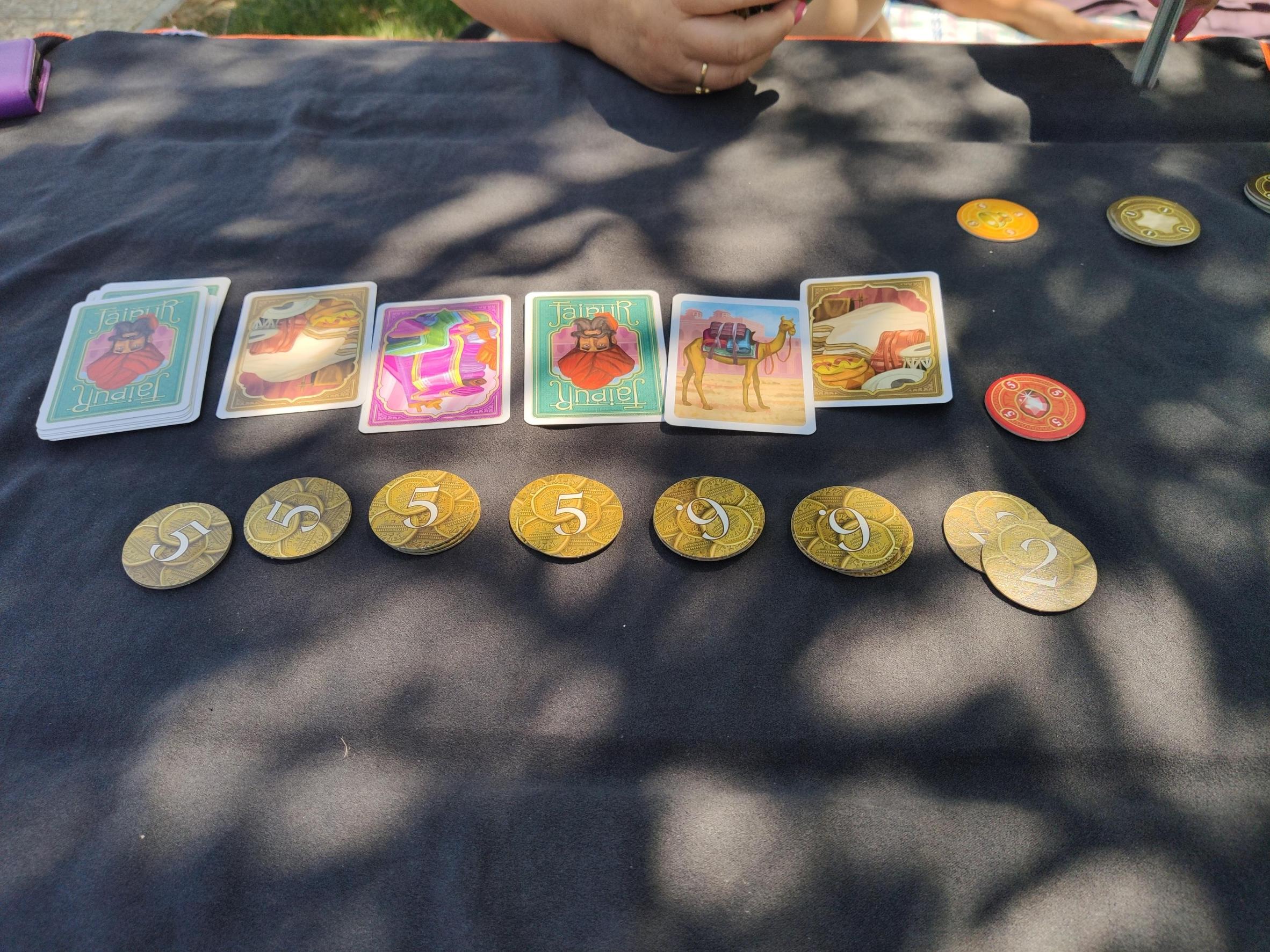
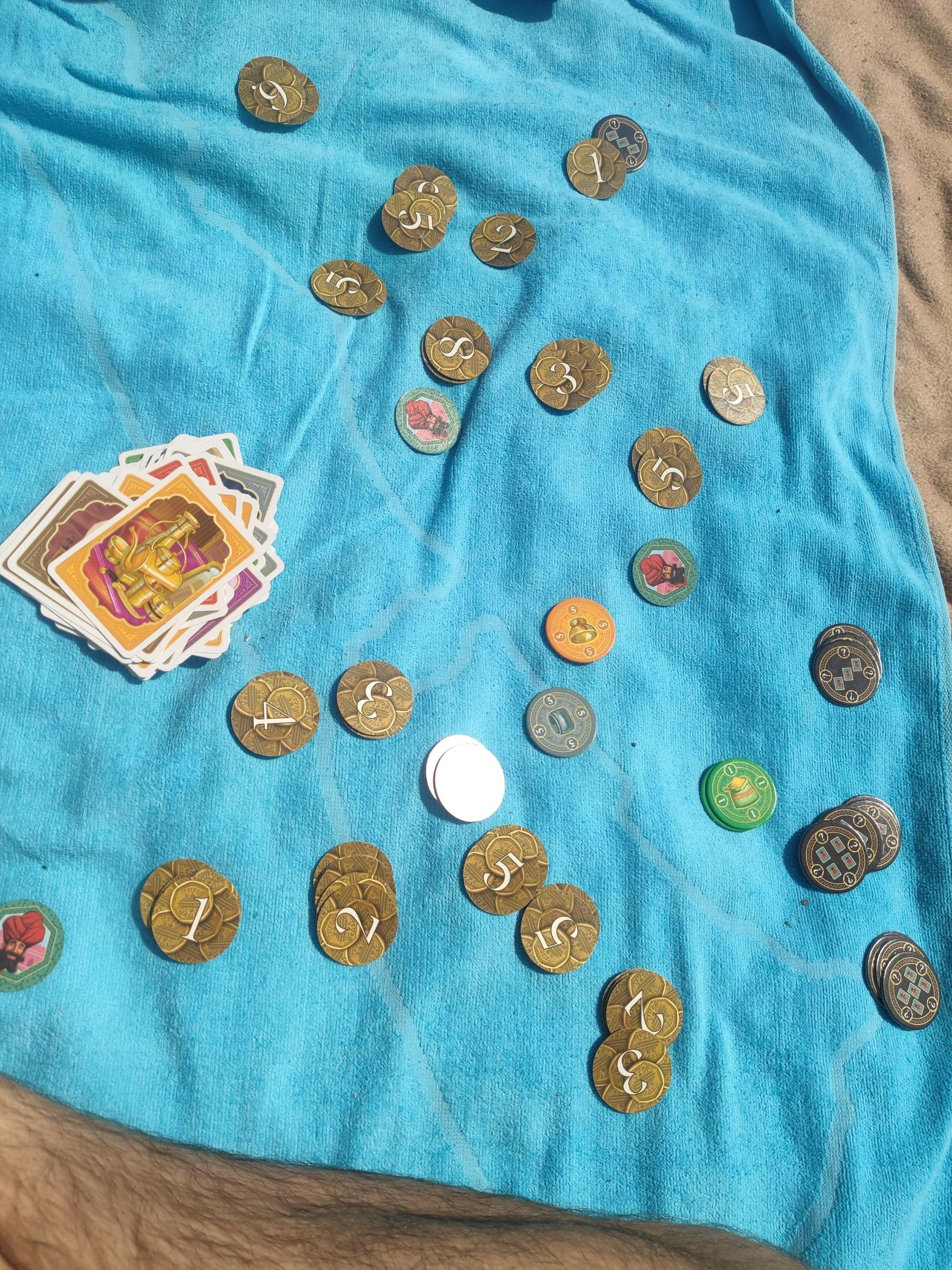
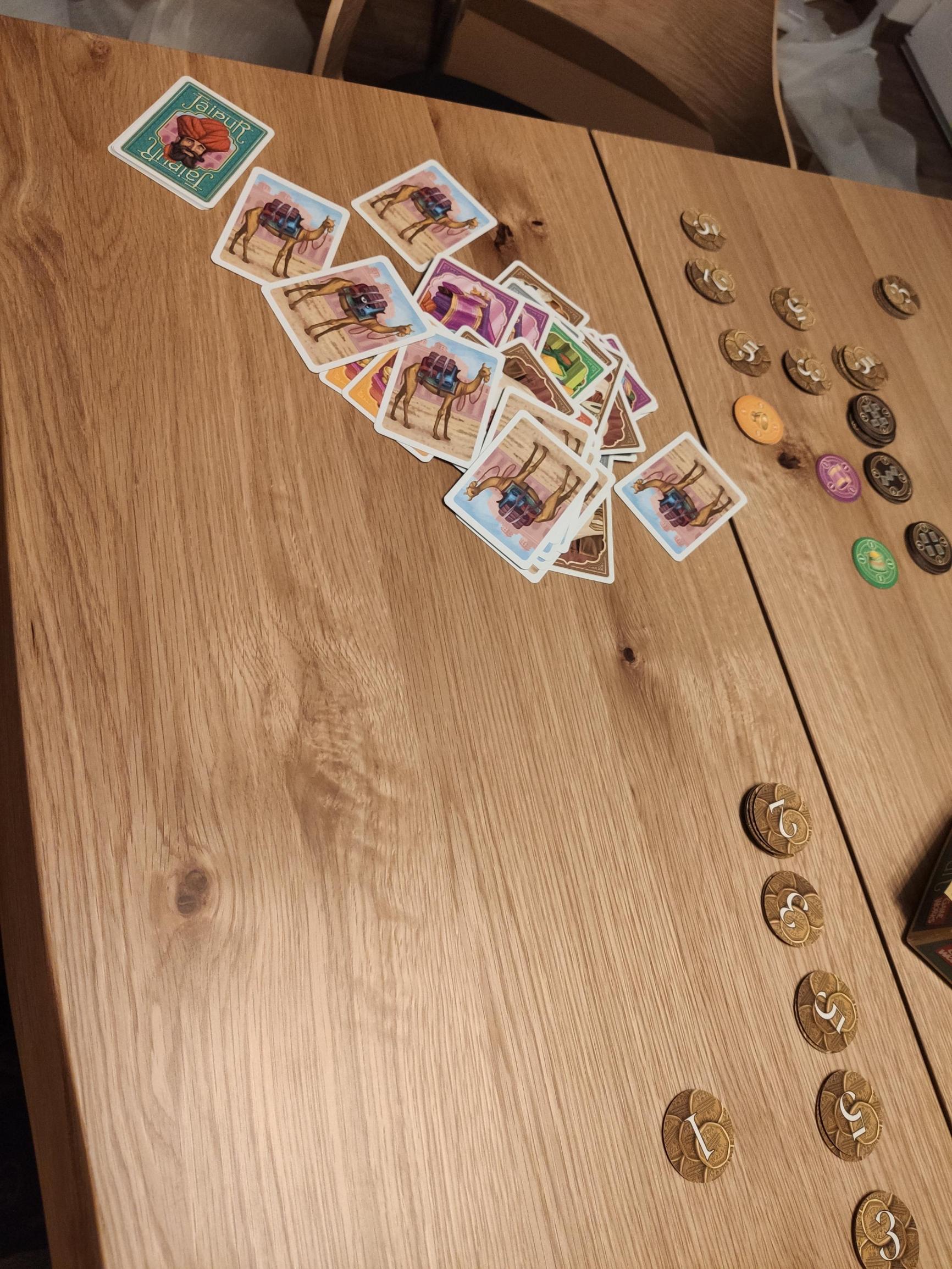
Photos from Ludoya tables
All photos in Ludoya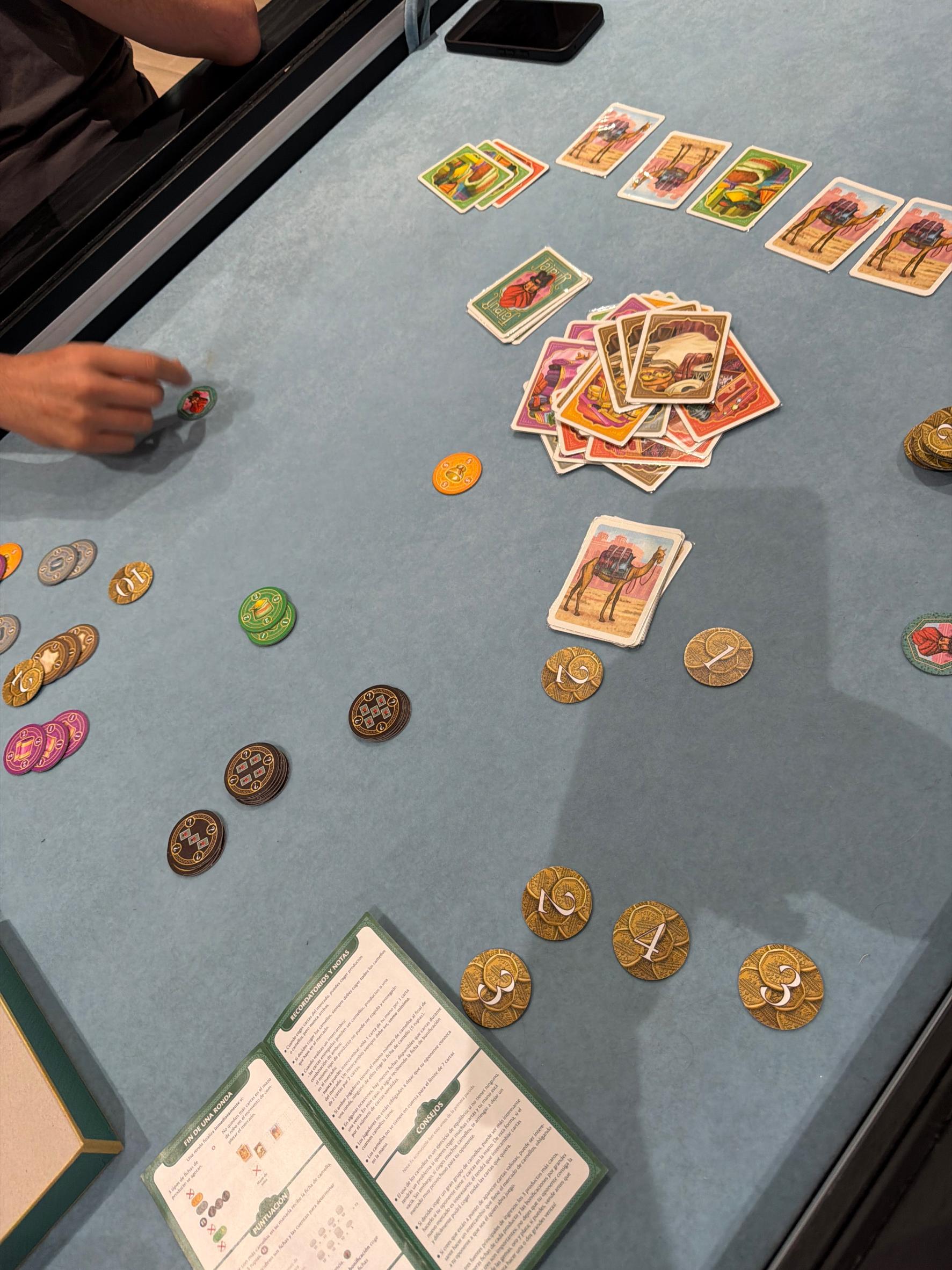
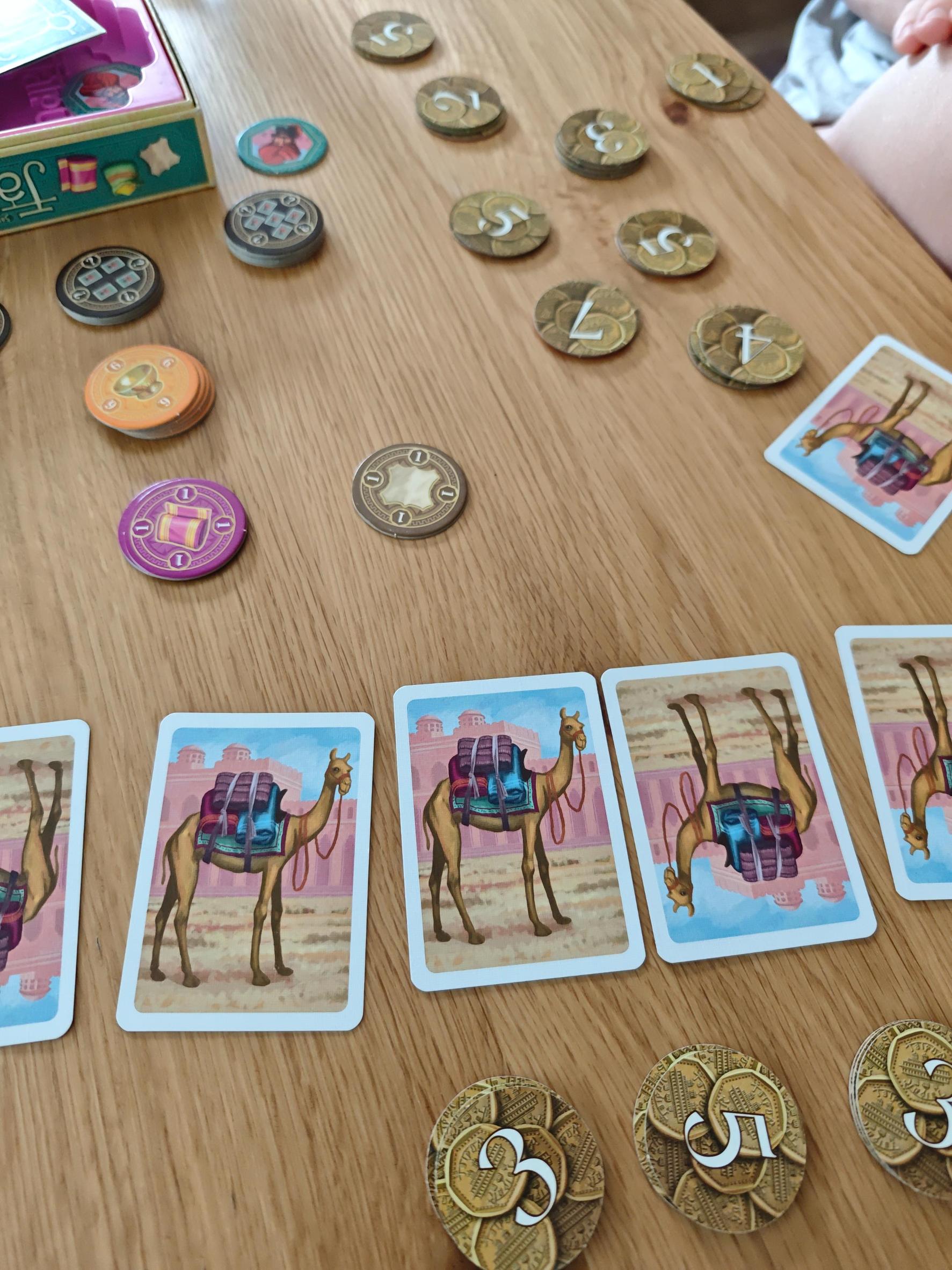
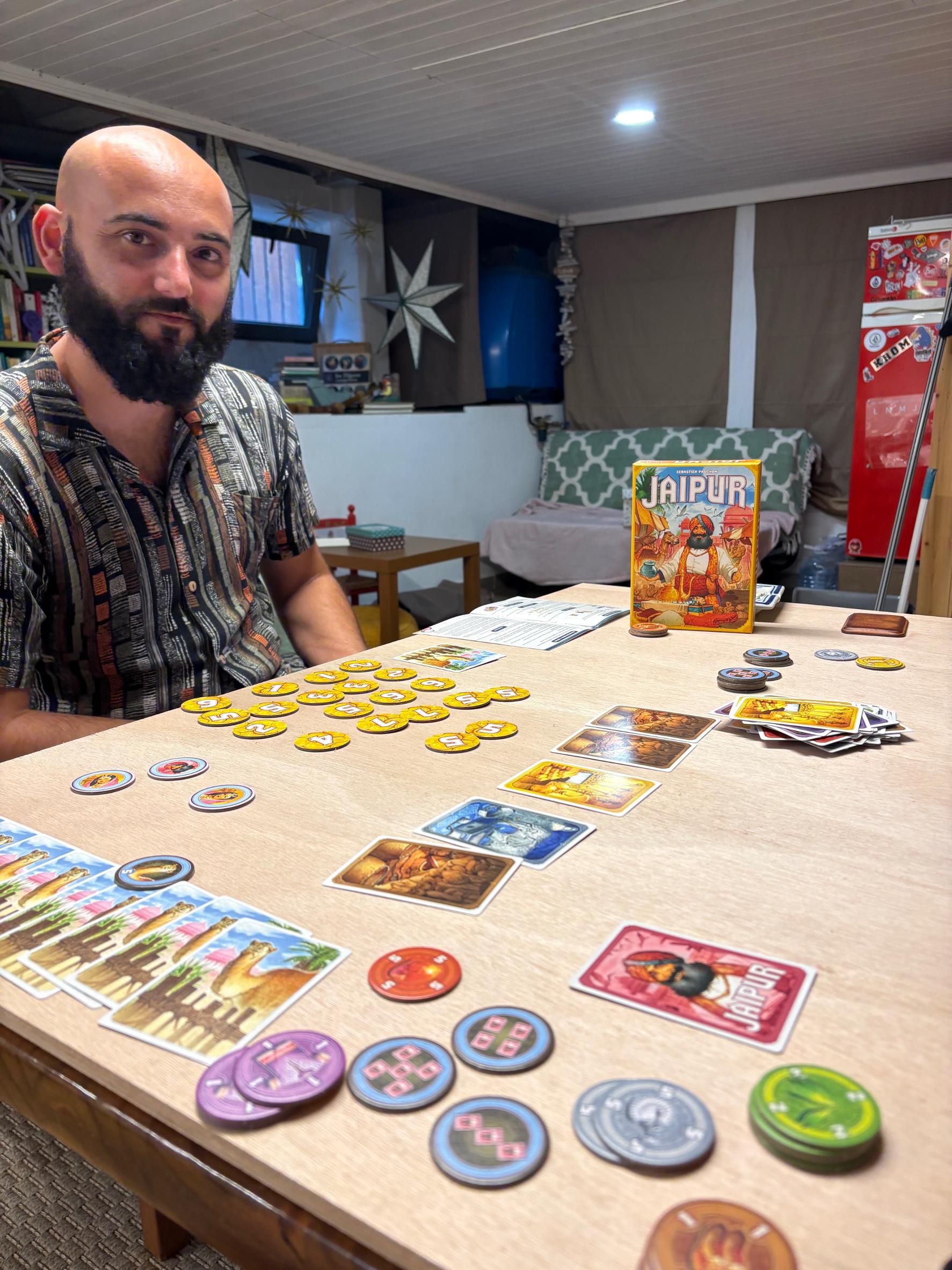
Where to buy it
Shop prices and second-hand copies, checked every day.
On Ludoya's tables
Full stats in Ludoya- 2,578
- Plays logged
- 928
- Players
- 26m 43s
- Average play
- 606
- In collections
- 32
- On wishlists
7.2/10
from 251 Ludoya reviews
Monedas Promo
First impressions · 2 plays
Mestremuten7.0 Rating: 3/5 Production value: 3/4 Is the game in my collection/Love to have?: 1/1
Played it 6 times
Mohasz7.6 The setup / game length ratio is not the best, but it's a really fun set collection game. Trading in goods is rather satisfying. I actually like it a bit more now than I used to. A solid game that you can always rely upon. I really like the current version, but if the new edition will come with poker chips, I'm probably replacing my copy. It came with just slightly better components, replaced it anyway.
Played it 3 times

Rules questions
Answered from the rulebook by Ludoya's rules assistant.
Can I take cards and sell cards on the same turn?
No — on your turn you must choose either TAKE CARDS or SELL CARDS, but never both (Rulebook p.2).
Do camels count toward the 7‑card hand limit?
No — players may never have more than 7 cards in hand at the end of their turn, and camels are kept in a separate herd and do not count toward the 7‑card limit (Rulebook pp.3–4).
When I do an exchange at the market, can I swap 1 card from my hand for 1 card from the market?
No — an exchange always involves at least 2 cards for 2 cards; surrendered cards can be camels and/or goods, but you can never exchange just 1 for 1, and you may not both surrender and take the same goods type in the same exchange (Rulebook p.4).
If I take camels from the market, do I have to take all the camels there?
Yes — taking camels is a specific action: you must take ALL the camels in the market and add them to your herd, then refill the market from the deck (Rulebook p.3), and the reminder reiterates you must always take all the camels if you choose that action (Rulebook p.4).
Can I sell just one diamond/gold/silver card for a token?
No — when selling the three most expensive goods (diamonds, gold, silver) a sale must include at least 2 cards (Rulebook p.3).
What ends a round, and who gets the camel token if camels are tied?
A round ends immediately if three types of goods tokens are depleted or if there are no cards left in the draw pile when trying to fill the market; the player with the most camels gets the camel token worth 5 rupees, and if both players have the same number of camels neither takes the token (Rulebook p.4).















Free, on web, Android and iOS
Play Jaipur with Ludoya
- Keep it in your collectionTrack your copy and its expansions, lend it to friends, or put it on your wishlist and get told when the price drops.Add it to your collection
- Log every playScores, winners, timers and photos, then your stats: win rate, favourite player count, best score.Log a play
- Settle rules questionsAsk anything about the rules and get an answer from the rulebook, with the page to check it on.Ask the rules assistant
- Find people to play it withClubs, game nights and events near you that bring this game to the table.See events
Game facts (players, playing time, age, credits) from BoardGameGeek.