
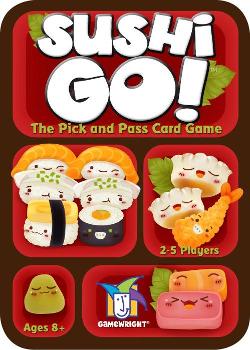
2013 · Party Game
Sushi Go!
Players sit a sushi conveyor belt and draft cards from their hand, passing the rest to the next player each turn. Cards represent different dishes that score in different ways: collect sets of rolls, assemble sashimi triples, apply wasabi to boost nigiri, and track pudding for end‑of‑game scoring. Each round plays quickly with simple rules; players simultaneously pick a card, reveal, then pass hands until all cards are taken. Strategic choices and blocking opponents emerge from limited options and shifting card pools across multiple rounds.
- Players
- 2–5 best 4
- Playing time
- 15 min
- Age
- 8+
- Complexity
- 1.2 / 5
About the game
- Design
- Publishers





Expansions
See them in Ludoya
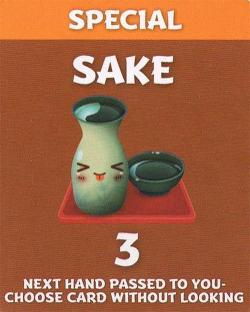
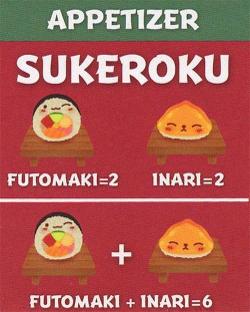

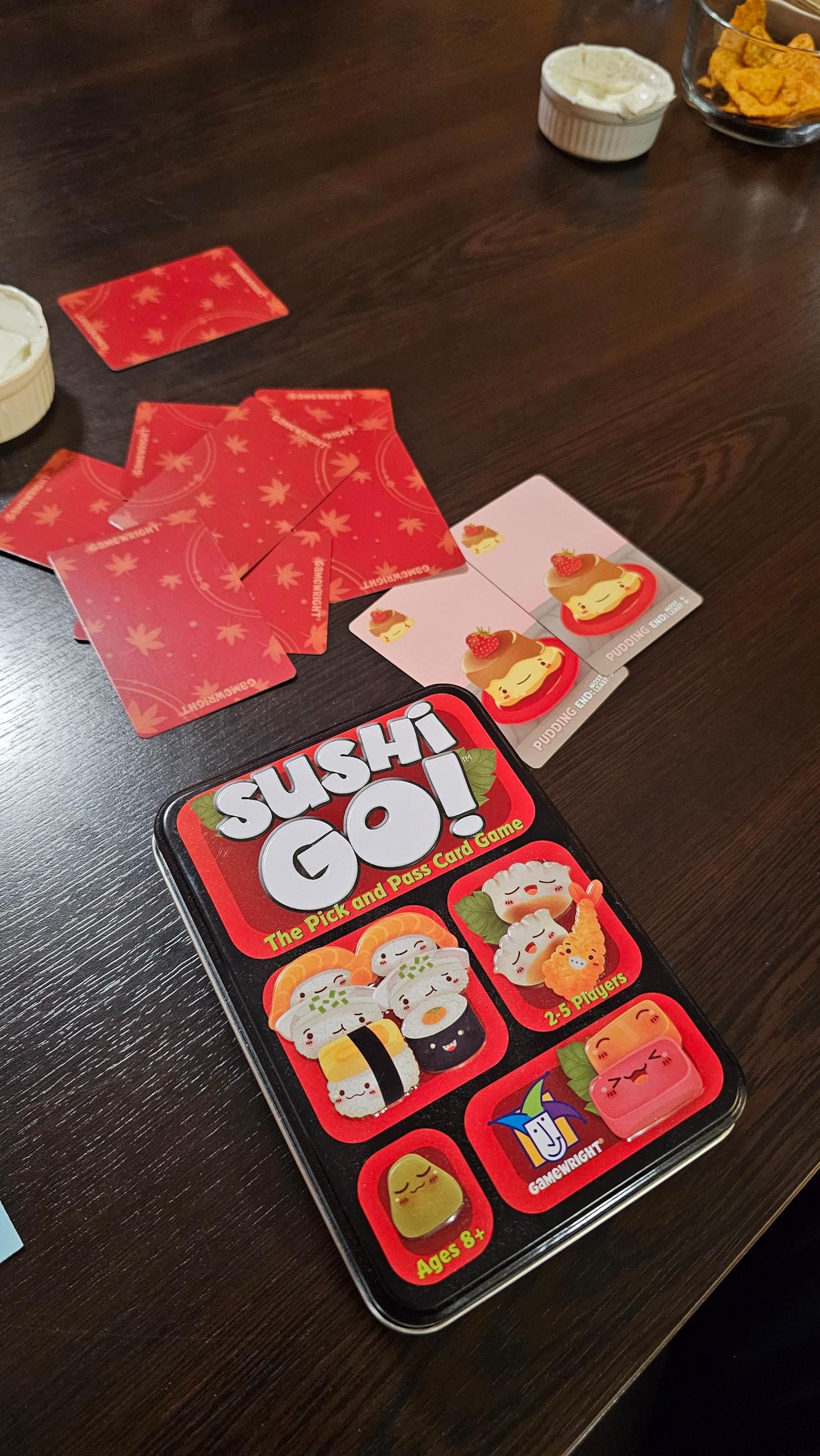
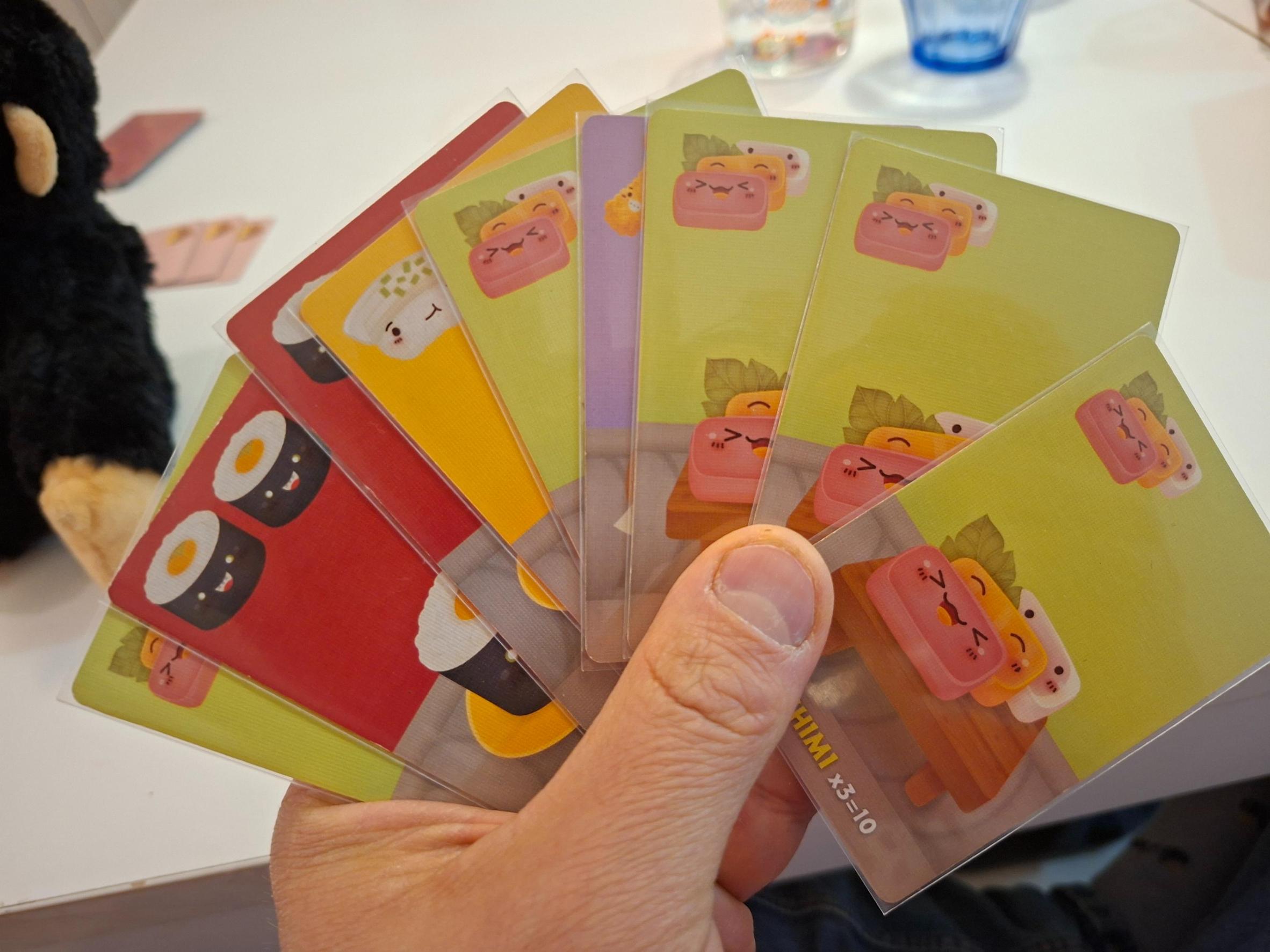
Photos from Ludoya tables
All photos in Ludoya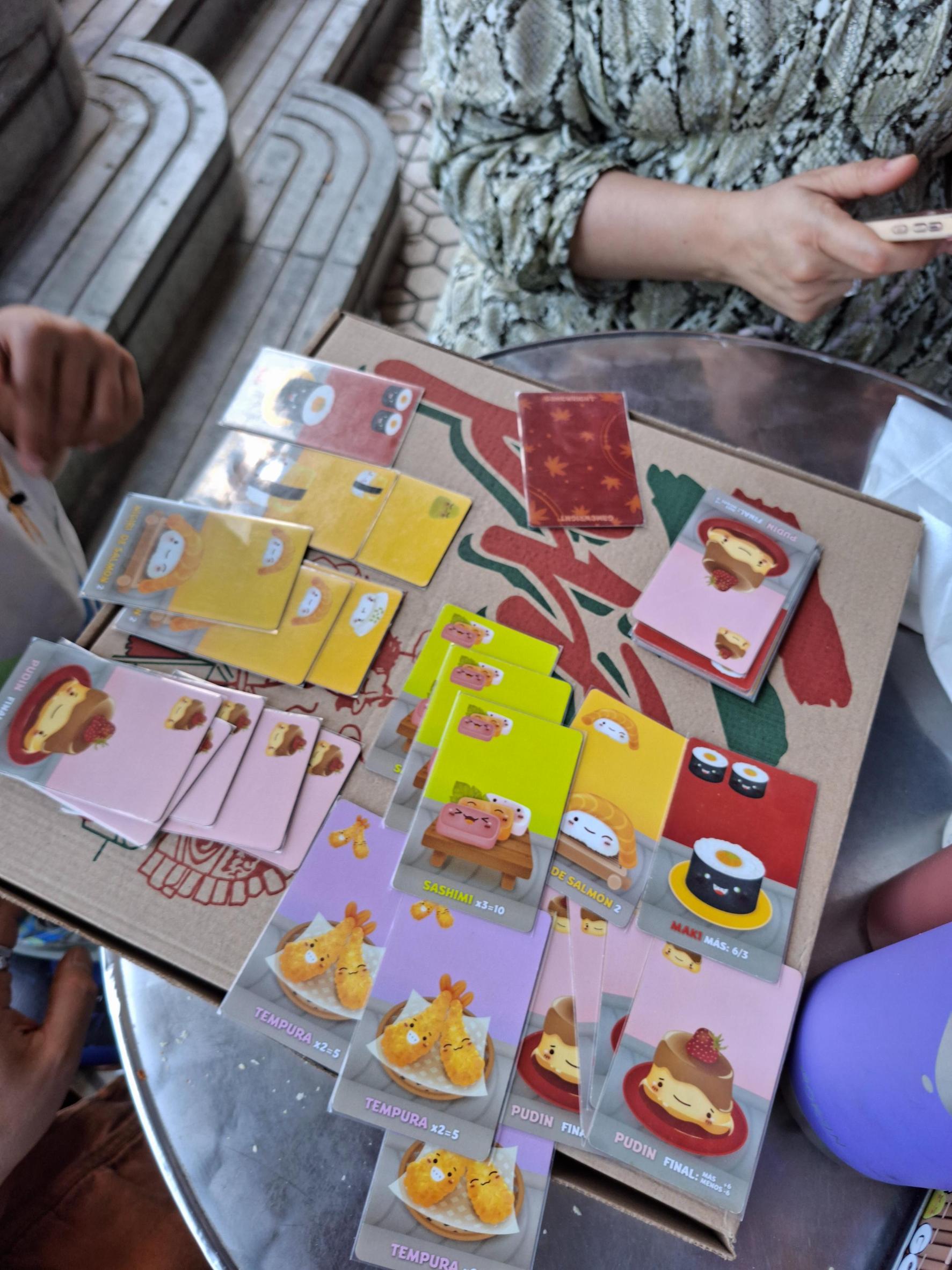
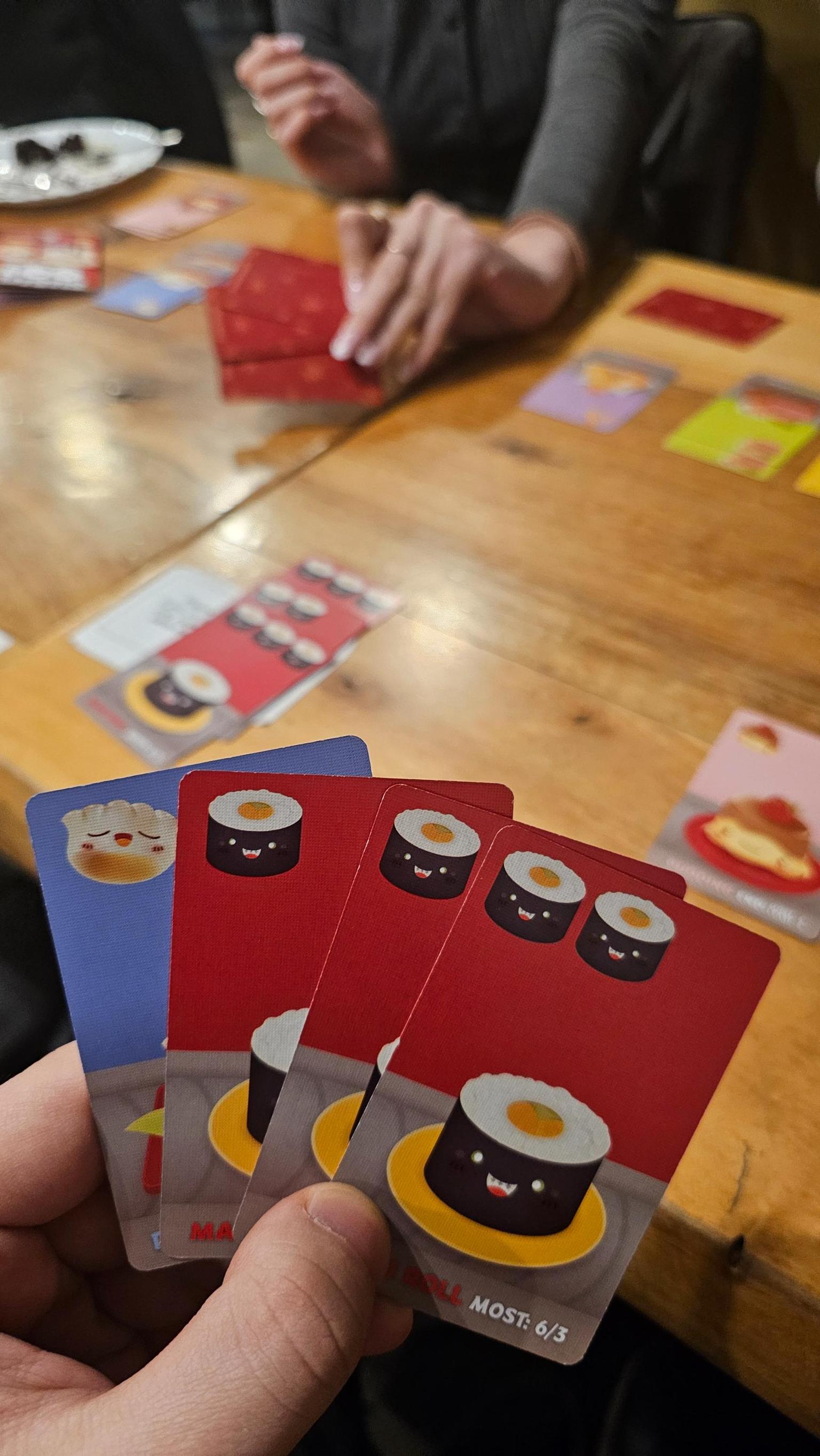
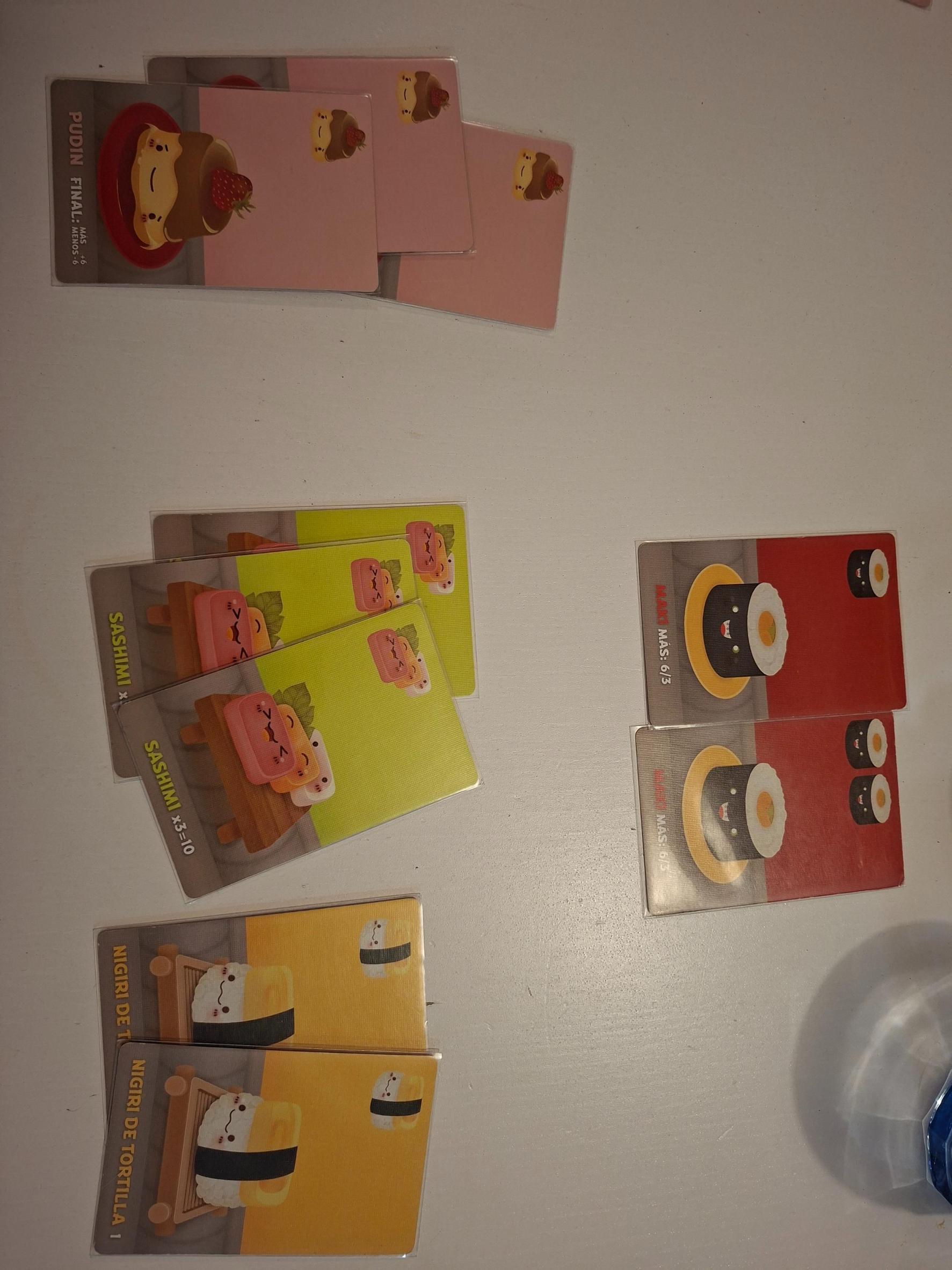
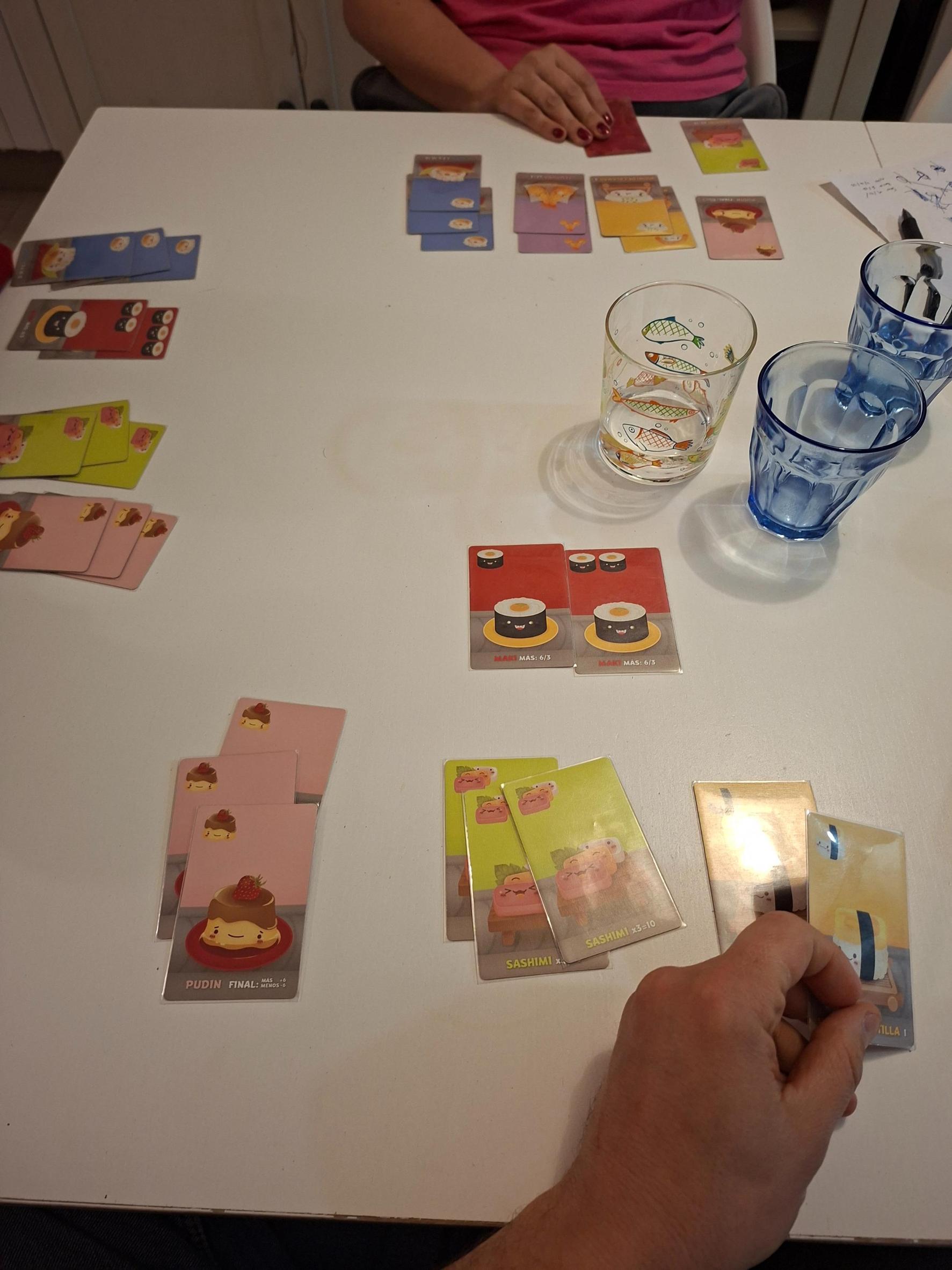
Where to buy it
Shop prices and second-hand copies, checked every day.
On Ludoya's tables
Full stats in Ludoya- 2,411
- Plays logged
- 1,645
- Players
- 14m 19s
- Average play
- 549
- In collections
- 7
- On wishlists
6.6/10
from 215 Ludoya reviews
Vic Granell7.0 One of my most played games, and a very good party/family one. Portable, fun, easy to teach and learn... I played the Party version once, I'd like to play it again to play at home but I appreciate the original's ability to be carried around when needed.
Mestremuten7.0 Rating: 4/5 Production value: 3/4 Is the game in my collection/Love to have?: 0/1

Rules questions
Answered from the rulebook by Ludoya's rules assistant.
How does drafting work — do we pick cards face-down or face-up, and which way do we pass the hands?
Each round everyone secretly chooses one card from their hand (face-down) and then all players reveal simultaneously; after revealing, pass the remaining hands to the left (standard) and repeat until hands are empty (Rulebook, p.4; summary list, p.12).
If I play a Wasabi, can I put more than one Nigiri on it or use it after playing other cards?
A wasabi triples the score of one subsequent nigiri only — you may place a single nigiri on a wasabi to get triple value (one nigiri per wasabi) (Rulebook, p.5; nigiri/wasabi scoring, p.9).
How do Chopsticks work — how do I take two cards and what happens to the Chopsticks card?
When you play Chopsticks you may later use it instead of taking one card to take two cards from your hand (announce 'Sushi Go!'), then return the Chopsticks card to your played area (Rulebook, p.6).
How are Maki rolls scored and what happens if players tie for first or second?
Count maki icons; the player with the most maki gets 6 points and the second-most 3 points; if players tie they split the combined points for those places (ignore remainders), and a player must have at least one maki to score (Rulebook, p.7).
When do we score Pudding and do they get discarded between rounds?
Puddings are scored only at the end of the game (after all rounds); the most puddings scores +6 and the fewest −6 (ties split), and they are not discarded between rounds — note the 2-player exception for negative scoring (Rulebook, p.9; end-of-game pudding scoring, p.10).
What happens to the last card in each hand at the end of a round — do we still play it?
Yes — when only one card remains in each hand players simultaneously place that final card into their play area, then score the round; after scoring all non-pudding cards are discarded to prepare for the next round (Rulebook, p.6; discard/pudding exception, p.9).
Score sheets and play helpers
- Kit de juego
- Sushi go
- Puntuació Sushi Go! 3 ronded











Free, on web, Android and iOS
Play Sushi Go! with Ludoya
- Keep it in your collectionTrack your copy and its expansions, lend it to friends, or put it on your wishlist and get told when the price drops.Add it to your collection
- Log every playScores, winners, timers and photos, then your stats: win rate, favourite player count, best score.Log a play
- Settle rules questionsAsk anything about the rules and get an answer from the rulebook, with the page to check it on.Ask the rules assistant
- Find people to play it withClubs, game nights and events near you that bring this game to the table.See events
Game facts (players, playing time, age, credits) from BoardGameGeek.