
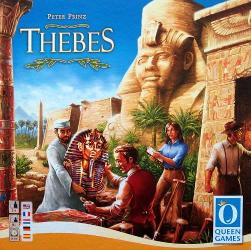
2007 · Exploration
Thebes
Players take the role of competing archaeologists who travel across Europe, North Africa, and the Middle East to research five ancient cultures, conduct excavations, and mount exhibitions. Actions—travel, study, and dig—consume time on a shared 52-week track; turn order is determined by who is furthest behind in time, so long digs or lengthy research allow others to act while the player waits. Excavation draws tiles from a bag that mixes artifacts with plain dirt, and investigated sites and acquired knowledge determine which exhibitions can be claimed. Victory goes to the archaeologist with the most knowledge, valuable artifacts, and exhibition points.
- Players
- 2–4 best 3
- Playing time
- 60 min
- Age
- 8+
- Complexity
- 2.2 / 5
About the game
- Design
- Publisher
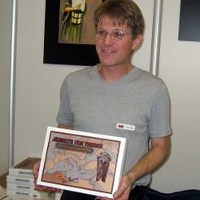
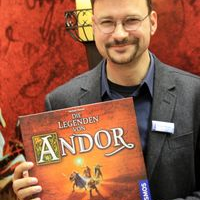

Photos from Ludoya tables
All photos in Ludoya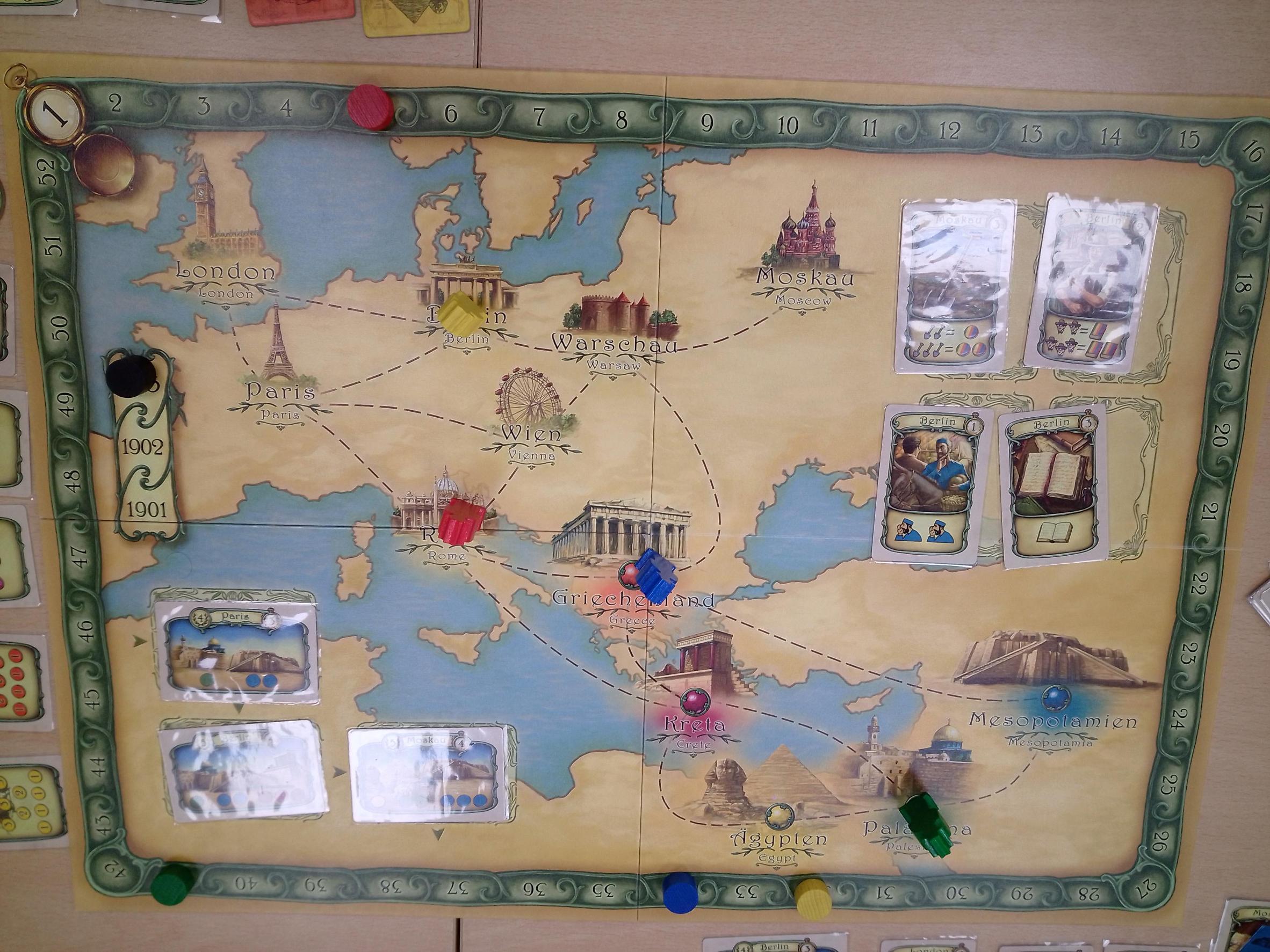
Where to buy it
Shop prices and second-hand copies, checked every day.
On Ludoya's tables
Full stats in Ludoya- 122
- Plays logged
- 141
- Players
- 1h 1m
- Average play
- 60
- In collections
- 7
- On wishlists
- 1
- Pre-ordered
7.0/10
from 36 Ludoya reviews
Mohasz7.0 I'm aware of its luck-driven nature, but some of the mechanisms look really interesting to me, plus I like the theme, so I'll give it a try. My fears has turned out to be true. It's way too swingy with all the dirt tokens mixed into the bags. Additionally, the board looks really bland. It's a shame because otherwise it has nice mechanisms.
Garfield2.0 This game wants to be strategic, but is pure luck. Revealing card is luck and drawing tiles from the bags are luck. Takes too long to finish.
Cool family game with some hand management mechanics and also lot of luck. The theme it's well implemented.
Rules questions
Answered from the rulebook by Ludoya's rules assistant.
Do I have to spend time to move between locations, and how does the time track determine player order?
Yes — moving between locations costs time which you advance on the time track, and player order is determined by the positions on that track (page 3).
If I take a researcher card, do I immediately move and pay time, and what about exhibitions and reshuffling?
Taking a researcher card requires moving to that location and paying the movement and card time cost; if that movement triggers an exhibition you resolve it immediately, and the researcher stack is reshuffled according to the rules when required (page 4).
When I exchange four cards, where do those cards go and does the action cost more time?
Exchanging four cards sends them to the Warsaw discard and the exchange action carries an increased time cost as specified (page 4).
What are the excavation requirements—how do special and general finds count?
Count special and general finds together to meet a site's requirement, but the number of general finds may never exceed the number of special finds (general ≤ special) (pages 5–6).
How do I use the time wheel to pick weeks and excavation tokens, and what happens to debris tokens?
When excavating you use the time wheel to select the week(s) and draw the corresponding excavation tokens; debris tokens drawn are returned to the supply as described when resolving the draw (page 6).
When do I get the first‑excavator bonus and how are exhibits executed, and what happens at year end?
The player who ends an excavation (the first to complete it) takes the first‑excavator bonus and any special card, exhibits are executed when their trigger occurs, and at year end you perform the reset actions for the new year as specified (page 7).






Free, on web, Android and iOS
Play Thebes with Ludoya
- Keep it in your collectionTrack your copy and its expansions, lend it to friends, or put it on your wishlist and get told when the price drops.Add it to your collection
- Log every playScores, winners, timers and photos, then your stats: win rate, favourite player count, best score.Log a play
- Settle rules questionsAsk anything about the rules and get an answer from the rulebook, with the page to check it on.Ask the rules assistant
- Find people to play it withClubs, game nights and events near you that bring this game to the table.See events
Game facts (players, playing time, age, credits) from BoardGameGeek.