
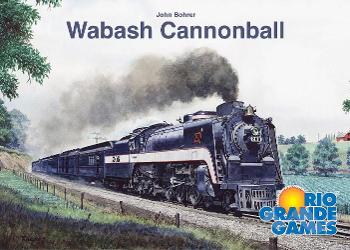
2007 · Economic
Wabash Cannonball
Players act as railroad investors and executives building lines across the eastern United States toward Chicago. On each turn a player auctions shares, expands a company’s rail network by placing track and locomotives, or develops a hex to increase future revenue; each action has a limited supply and rounds proceed until two actions exhaust, triggering a dividend phase that pays income to shareholders. The game runs up to eight rounds or until company pieces or shares run out, at which point the player with the most money wins. Play is deterministic and focuses on share investment, network expansion, and timing of dividends.
- Players
- 2–6 best 4
- Playing time
- 30–60 min
- Age
- 12+
- Complexity
- 2.8 / 5




Where to buy it
Shop prices and second-hand copies, checked every day.
On Ludoya's tables
Full stats in Ludoya- 117
- Plays logged
- 201
- Players
- 1h 15m
- Average play
- 37
- In collections
- 7
- On wishlists
6.6/10
from 28 Ludoya reviews
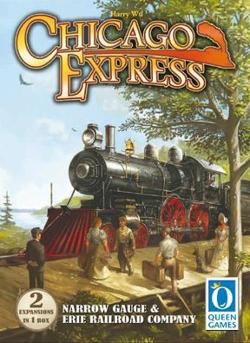
Tomol7.0 Incluye Narrow Gauge & Eire
Rules questions
Answered from the rulebook by Ludoya's rules assistant.
Do I have to implement the action I choose, or can I pick an action and then do nothing?
You do not have to implement the action you select — you choose an option and may then decide to do nothing; the indicator needle is still moved one space to the right when you select it (you can deliberately choose-but-not-act to force shortages). (p.4)
How is the minimum bid for an auction calculated?
The minimum bid equals the company’s current income divided by the number of sold shares including the one being auctioned, with any decimals rounded up. (p.4)
Can multiple companies place locomotives on the same hex, and what about Forest/Mountain hexes?
City, Industrial and Plain hexes may contain locomotives from multiple companies, but Forest and Mountain hexes may contain only one company’s locomotive (and no other company may build there); also only one locomotive from each company can be on any given hex. (p.5)
How are dividends calculated — do you round per share or after totaling?
Dividends are calculated per share as company income divided by the number of sold shares with decimals rounded up, and then each player’s payout is the sum of those per‑share amounts for their shares (so rounding is applied per share). (p.7)
What happens when a company reaches Chicago?
Placing a locomotive in Chicago triggers a Chicago Phase: the company’s income is updated and an immediate Chicago dividend is paid to its shareholders; Wabash is then opened (black loco to Fort Wayne and its income set), and the player who reached Chicago auctions the first Wabash share under the usual auction rules. (p.5, p.8)
When does the game end?
The game ends after the next General Dividend is paid once any one of four conditions is met: three or more companies have no locomotives on their Charter, three or more companies have no shares on their Charter, the general house supply has three or fewer houses, or Detroit’s income reaches 8. (p.8)
Similar games
 Trans-Siberian Railroad2015
 Irish Gauge2014
 The Old Prince 18712022
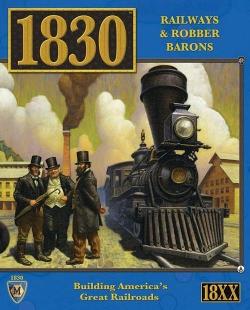 1830: Railways & Robber Barons1986
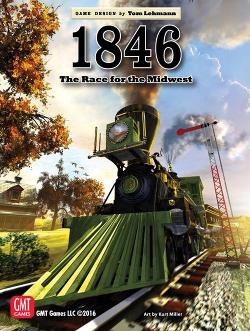 1846: The Race for the Midwest2005
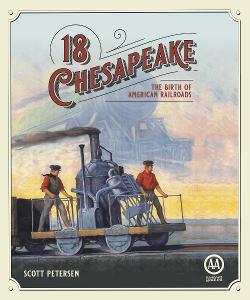 18Chesapeake2018
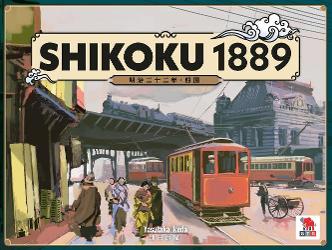 Shikoku 18892004
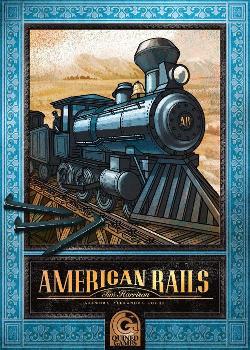 American Rails2009
 1849: The Game of Sicilian Railways1998
 Age of Rail: South Africa2011
 Iberian Gauge2017
 1861: Railways of the Russian Empire & 1867: Railways of Canada2020




Free, on web, Android and iOS
Play Wabash Cannonball with Ludoya
- Keep it in your collectionTrack your copy and its expansions, lend it to friends, or put it on your wishlist and get told when the price drops.Add it to your collection
- Log every playScores, winners, timers and photos, then your stats: win rate, favourite player count, best score.Log a play
- Settle rules questionsAsk anything about the rules and get an answer from the rulebook, with the page to check it on.Ask the rules assistant
- Find people to play it withClubs, game nights and events near you that bring this game to the table.See events
Game facts (players, playing time, age, credits) from BoardGameGeek.