
2010 · الاستنتاج
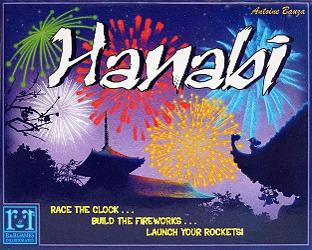
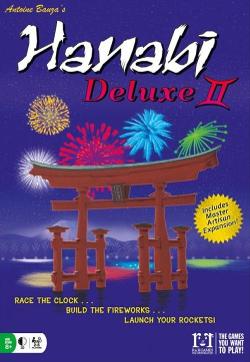
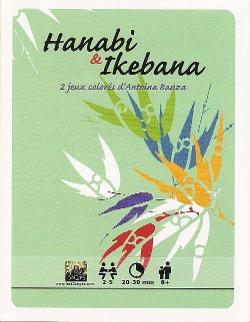
Hanabi
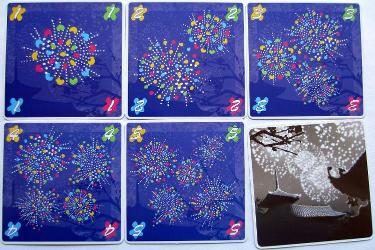
Players cooperate to build five colored sequences of cards from 1 to 5, representing a fireworks display. Each player holds their cards facing the table so only others can see them, and gives limited hints about either a card’s color or its number to guide teammates’ plays and discards. Teamwork and careful memory are required to play cards in the correct order and avoid mistakes before the draw deck runs out. An optional rainbow suit provides a variant for more advanced play.
- اللاعبون
- 2–5 الأفضل 4
- مدة اللعب
- 25 دقيقة
- العمر
- 8+
- التعقيد
- 1.7 / 5
عن اللعبة
- التصميم






التوسعات
شاهدها في Ludoya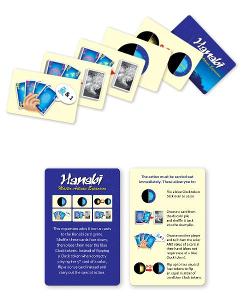
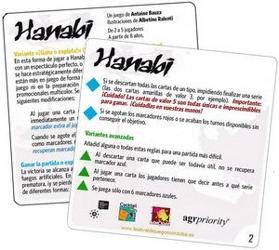
صور من طاولات Ludoya
كل الصور في Ludoya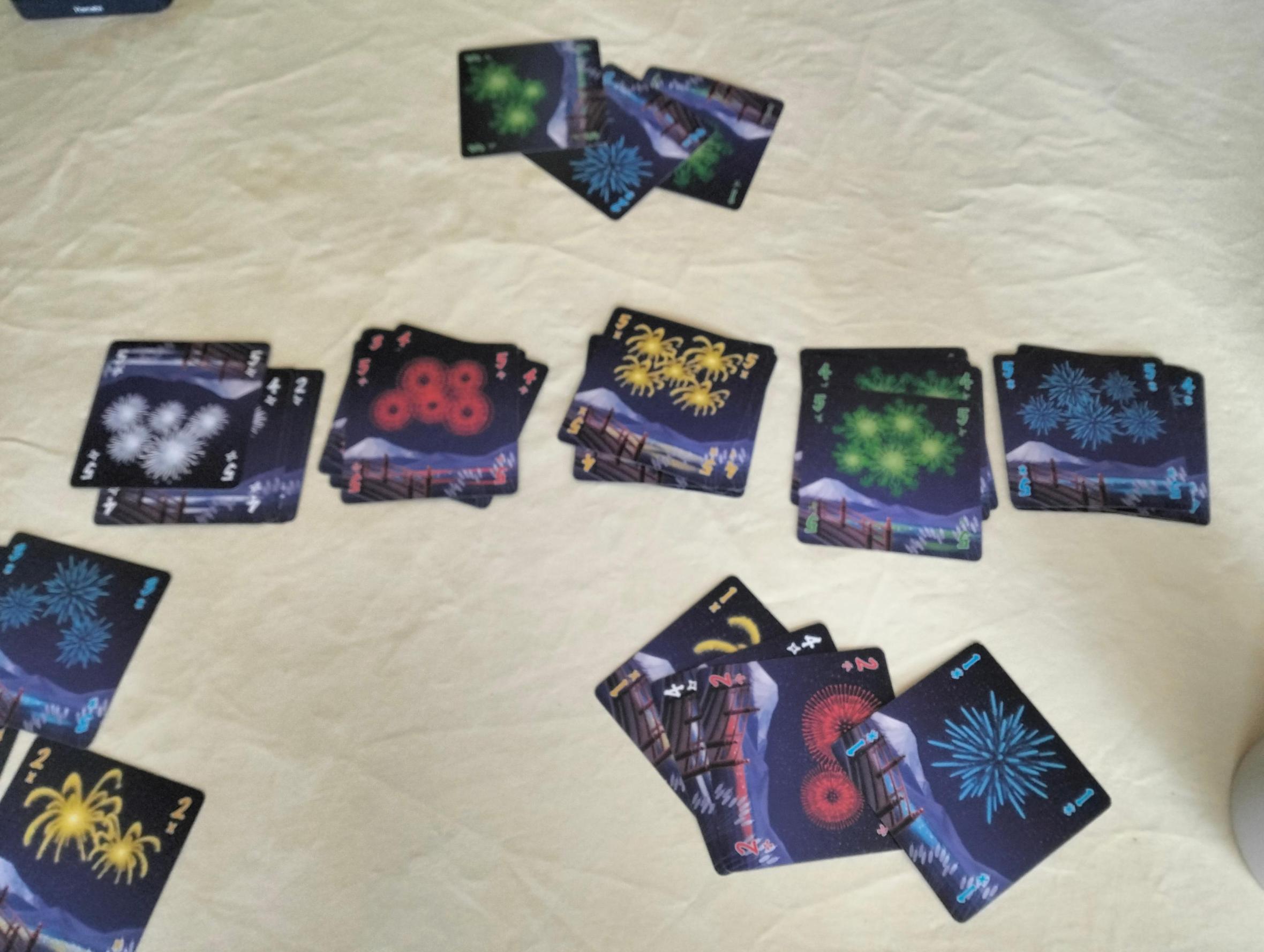
أين تشتريها
أسعار المتاجر والنسخ المستعملة، تُراجع كل يوم.
على طاولات Ludoya
الإحصاءات الكاملة في Ludoya- 6,459
- جلسات مسجّلة
- 1,287
- اللاعبون
- 19m 34s
- متوسط الجلسة
- 431
- في المجموعات
- 17
- في قوائم الرغبات
6.6/10
من 192 مراجعة على Ludoya
Martin Peral6.0 Me parece un diseño curioso, pero se me hace muy directo y con una toma de decisión escasa. Quizás no haya tenido las mejores partidas grupales, quizás el que la memoria sea un factor importante o puede que tan simplemente, que la gravedad de los errores decante tanto las partidas hace que no me llegue a funcionar
Iván Sanin7.0 Imagina un solitario de toda la vida a las cartas. Imagina además que lo juegas en equipo. Imagina también que tus cartas no las ves y que los demás no te pueden hacer más que algunas indicaciones no determinantes para que puedas elegir qué carta tirar. Si juntas todo esto en un juego bien estructurado, rápido y muy satisfactorio, obtienes este Hanabi, que para mi es una preciosidad. Muy recomendable.
Mestremuten6.0 Rating: 3/5 Production value: 3/4 Is the game in my collection/Love to have?: 0/1

أسئلة القواعد
إجابات من كتيّب القواعد يقدمها مساعد القواعد في Ludoya.
Can I look at the fronts of the cards in my hand?
No — players MUST NOT look at the fronts of the cards they were dealt; you hold them so others can see the fronts while you only see the backs (page 2).
What exactly am I allowed to say when I give information — can I say a color and a number at once?
You may give only one type of information on your turn: either a single color or a single value, and you must clearly point to the card(s) concerned (page 2).
If a player has multiple cards of the same color or number, do I have to indicate all of them?
Yes — information must be complete: if a player has, for example, two green cards you must point to BOTH green cards, not just one (page 2).
Can I tell someone “you have none” of a color or number, or point to nothing as a clue?
No — the informer must point to the actual card(s) being referenced, so saying someone has zero of something or pointing to nothing is not allowed (page 2).
What happens if I play a card that doesn’t fit the fireworks?
If a played card cannot begin, add to, or complete a firework it is discarded and you remove the top black fuse token to the lid (and the third fuse placed ends the game as a loss) (page 2).
How do we regain information tokens, and how does the game end and get scored?
You regain a blue token by discarding a card (it returns a token to the table) or as a bonus when a firework is completed (playing a 5 returns a token if not already full); the game ends immediately on the third fuse (loss), immediately if all fireworks are completed (25 points), or after the final round when the deck is exhausted, and scoring is the sum of the highest card for each firework (page 2).


مجاني، على الويب وAndroid وiOS
العب Hanabi مع Ludoya
- احتفظ بها في مجموعتكتابع نسختك وتوسعاتها، وأعرها لأصدقائك، أو أضفها إلى قائمة رغباتك ليصلك تنبيه عندما ينخفض السعر.أضفها إلى مجموعتك
- سجّل كل جلسة لعبالنقاط والفائزون والمؤقتات والصور، ثم إحصاءاتك: نسبة الفوز، وعدد اللاعبين المفضل، وأفضل نتيجة.سجّل جلسة لعب
- احسم أسئلة القواعداسأل أي شيء عن القواعد واحصل على إجابة من كتيّب القواعد، مع الصفحة التي يمكنك التحقق منها.اسأل مساعد القواعد
- اعثر على من تلعبها معهمأندية وأمسيات ألعاب وفعاليات قريبة منك تلعب هذه اللعبة.عرض الفعاليات
معلومات اللعبة (اللاعبون، مدة اللعب، العمر، فريق العمل) مأخوذة من BoardGameGeek.