

1986 · Political
Die Macher
Players manage national political parties contesting seven sequential regional elections across Germany. On each turn, players allocate limited resources to campaign, buy media influence, recruit membership, and adjust party platforms to score various types of victory points. Regions differ in size and value, so winning local elections yields region-specific points; media control in a region grants additional points; party membership growth provides ongoing points; and some editions award points for aligning platforms with national opinion. Gameplay emphasizes long-term planning across multiple elections, resource management, and tactical use of media and membership to maximize endgame scoring.
- Players
- 3–5 best 5
- Playing time
- 240 min
- Age
- 14+
- Complexity
- 4.3 / 5
About the game
- Design
- Publishers



Where to buy it
Shop prices and second-hand copies, checked every day.
On Ludoya's tables
Full stats in Ludoya- 37
- Plays logged
- 81
- Players
- 3h 51m
- Average play
- 35
- In collections
- 10
- On wishlists
7.3/10
from 15 Ludoya reviews
andycted8.8 Second game in and this is probably the best example of what modern tastes can't tolerate - great example of the nascent German mechanisms, still untouched by elegance, seasoned with relentless interference and interaction. The game does need a good understanding to be able to play the delicate balance of kicking down the right player or game aspect: the game itself doesn't do it at all ! It's all great but really needs for the player to step up their bash the leader management. The typical German today has a catch-up mechanism, a way to end the game without being eliminated and no way to interfere with other players choices, except than to make "better" ones. This is all the opposite. You can kill a player, but is it the right one to kill ? Or should you join him in a Koalition ? What if that opinion poll is extremely bad for you and you completely lose that region ? Should I really pay that amount of money ? Or should I have had invested more in the Media ? That's very swingy, yep. Not everybody cup of tea for sure, and the final experience is probably akin to John Company (Old) Just played one game, 4 newbies. Took 4h plus a 30 minutes explanation. Next game would probably end in 3.5h. Excellent classic - needs repeated plays. Opinion polls are swingy, and that's why you need money to control them !
Chris Davidson10.0 Shockingly fun and enjoyable for such a dull-sounding theme. After a single play (and with several rules misplayed), I can tell this is my #1 game. I feel its depth and complexity, the rich and daunting engineering marvel... I could continue in hyperbole, but these words will not aid you. Pro: A true gamer's game, requiring thought and forethought. While it is LONG, the time flies by and never drags. Shorter version available. Con: Opinion polls are very powerful, perhaps too much so; perhaps there is a variant to mitigate this? May be longer than you like, so plan ahead for this one. Don't make it the last game of the night. Complex play mechanics require at least one throw-away game unless playing with veterans. If you are all new to the game, re-read the rules carefully before AND AFTER playing. There's a lot going on. Bottom line: Long, yes. Complex, yes. Is it worth the trouble? Definitely YES. With the right group, Die Macher is a game that will become the centerpiece of your game nights. (This information based on the Valley Games version)
Evan2.5 The core idea here is you place cubes into regions and then those cubes become worth points based on how many of the issue cards in that region align to the issue cards in front of you. For having the most points in a region, you also get the special reward of trying to groom the endgame scoring requirements to match what issues you want them to be. The game has some decent amount of flip luck, and planning too much to set up future turns has a way of backfiring pretty easily as players slip the issues cards, and your multipliers out from under you. Ultimately I found this game a little too complicated, chaotic and long. :nostar: Art and components :nostar: Innovative mechanics :star: Handles 5 or more players :nostar: Good with different player counts :star: Low time between turns :nostar: Comfortable complexity :star: Re-playability :star::nostar::nostar: Enjoyment
Similar games
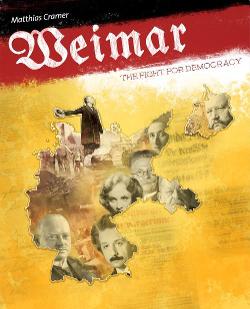 Weimar: The Fight for Democracy2023
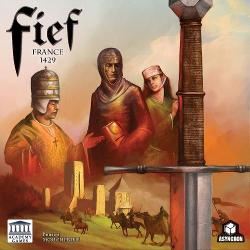 Fief: France 14292015
 Conquest & Consequence2021
 SHASN2021
 Hegemony: Lead Your Class to Victory2023
 Europa Universalis: The Price of Power (Deluxe Edition)2023
 Hegemony: Lead Your Class to Victory – Extended Edition2023
 God's Playground2009
 Colonial: Europe's Empires Overseas2011
 Rex: Final Days of an Empire2012
 Here I Stand: 500th Anniversary Edition2017
 Dune1979
Free, on web, Android and iOS
Play Die Macher with Ludoya
- Keep it in your collectionTrack your copy and its expansions, lend it to friends, or put it on your wishlist and get told when the price drops.Add it to your collection
- Log every playScores, winners, timers and photos, then your stats: win rate, favourite player count, best score.Log a play
- Score it without paperUse the community's score sheets and play helpers, and let Ludoya add up the points.Find score sheets
- Find people to play it withClubs, game nights and events near you that bring this game to the table.See events
Game facts (players, playing time, age, credits) from BoardGameGeek.