
1998 · Medieval
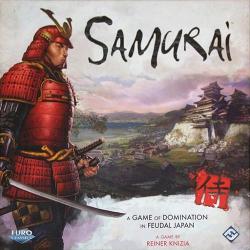
Samurai
Set in medieval Japan, players vie for influence among three factions—warriors, peasants, and priests—represented by helmet, rice paddy, and Buddha figures on a map of the islands. Competition unfolds via hexagonal tile placement that grants favor with one faction or multiple factions at once, plus tactical moves with mounted ronin and ships to surround and capture figures. Figures are awarded when surrounded, and play ends when all symbols of one type are removed or four figures are removed due to tied influence. At game end, players compare captured symbols to determine majorities in each faction, with ties broken by counting additional non-majority symbols.
- Players
- 2–4 best 3
- Playing time
- 30–60 min
- Age
- 10+
- Complexity
- 2.4 / 5
About the game
- Design
- Art
- Publishers



Photos from Ludoya tables
All photos in Ludoya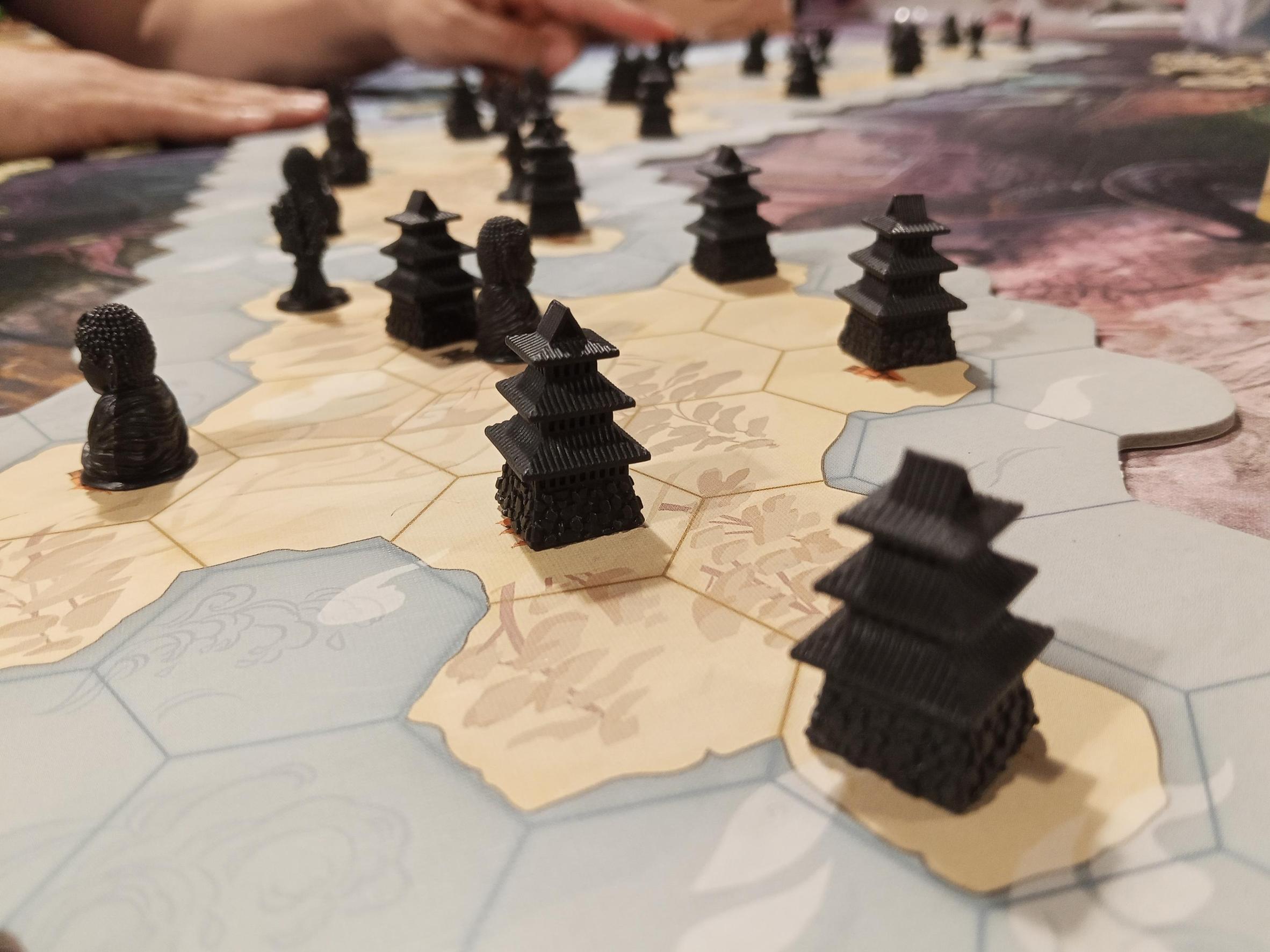
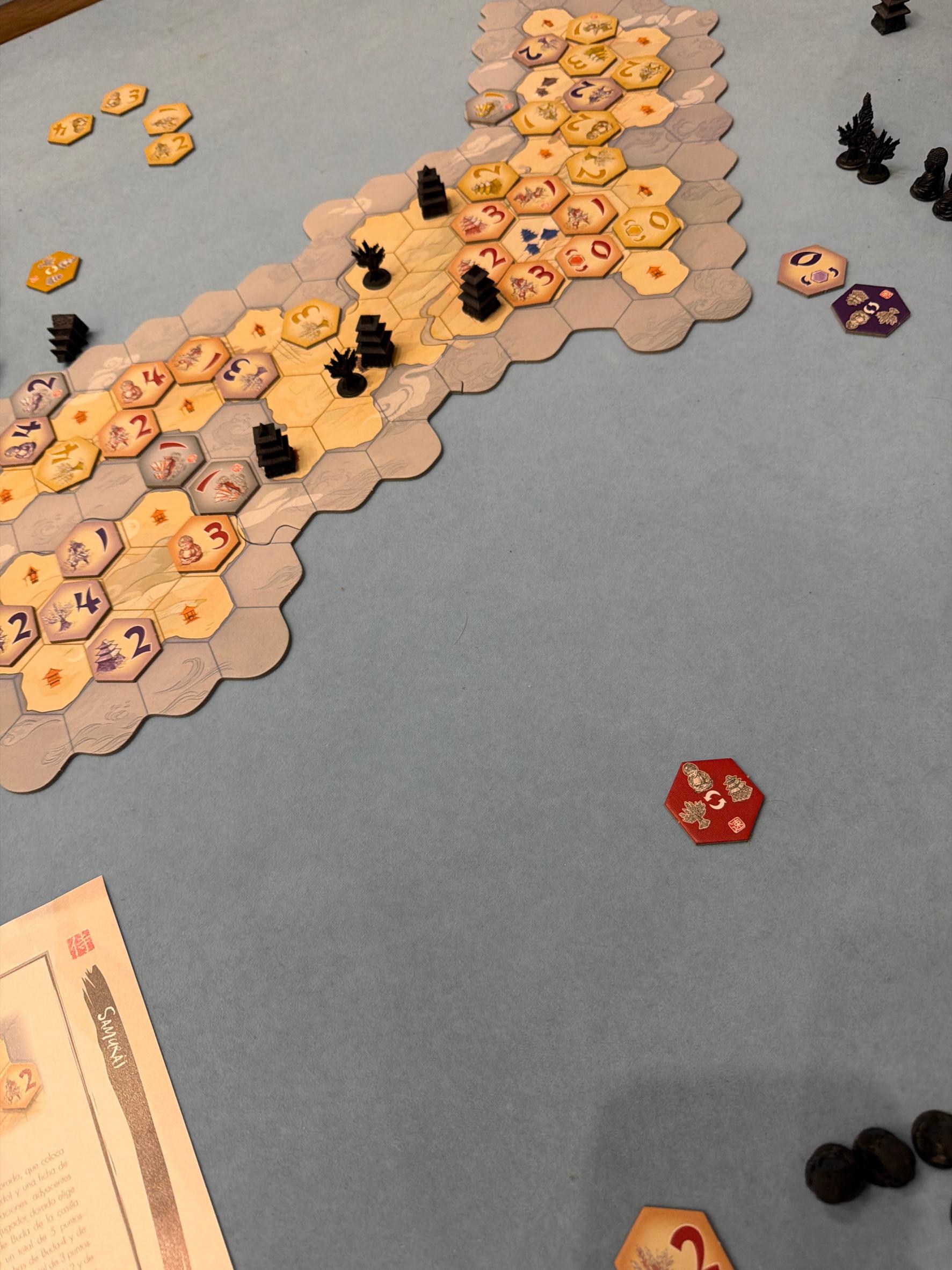
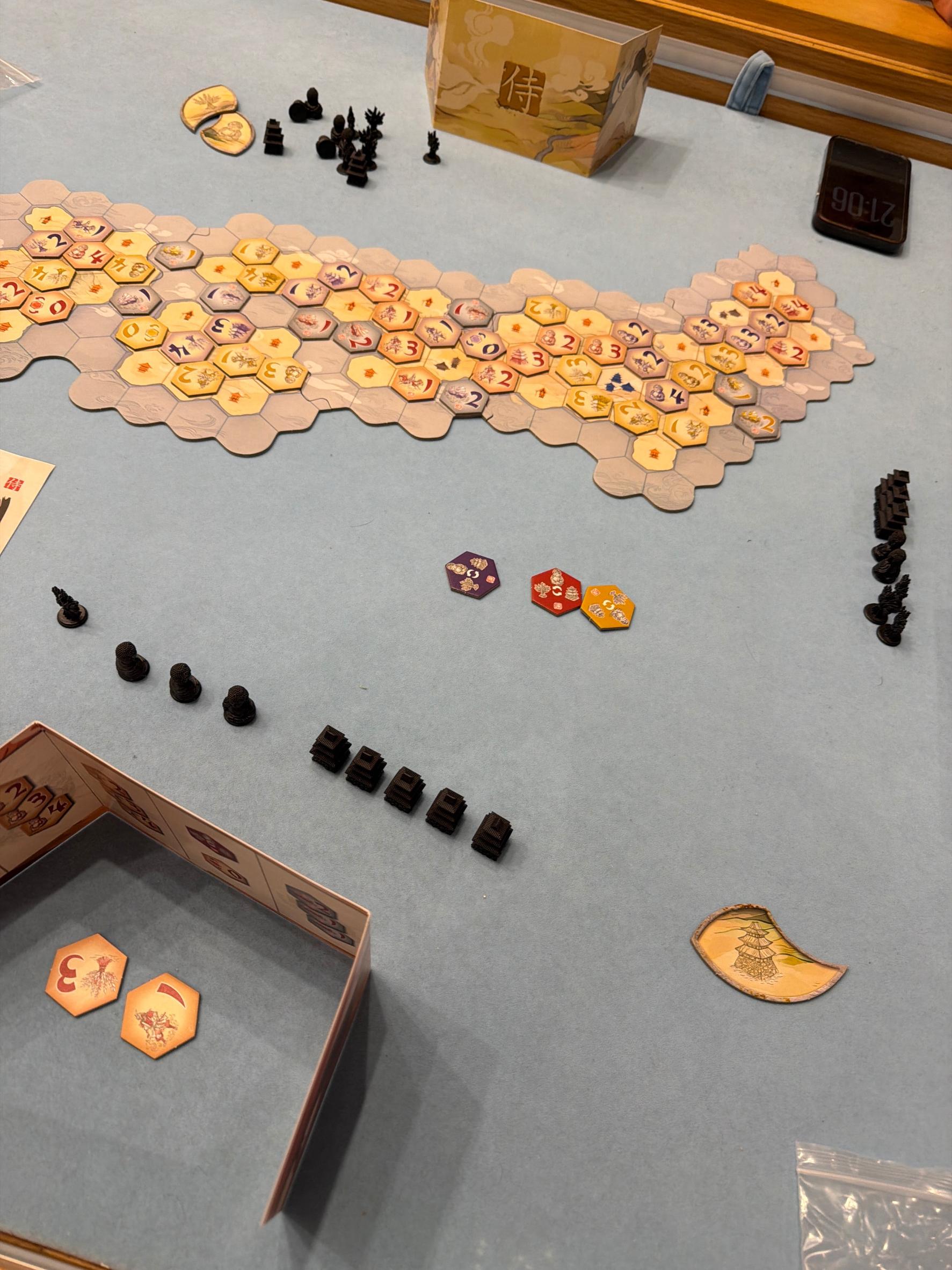
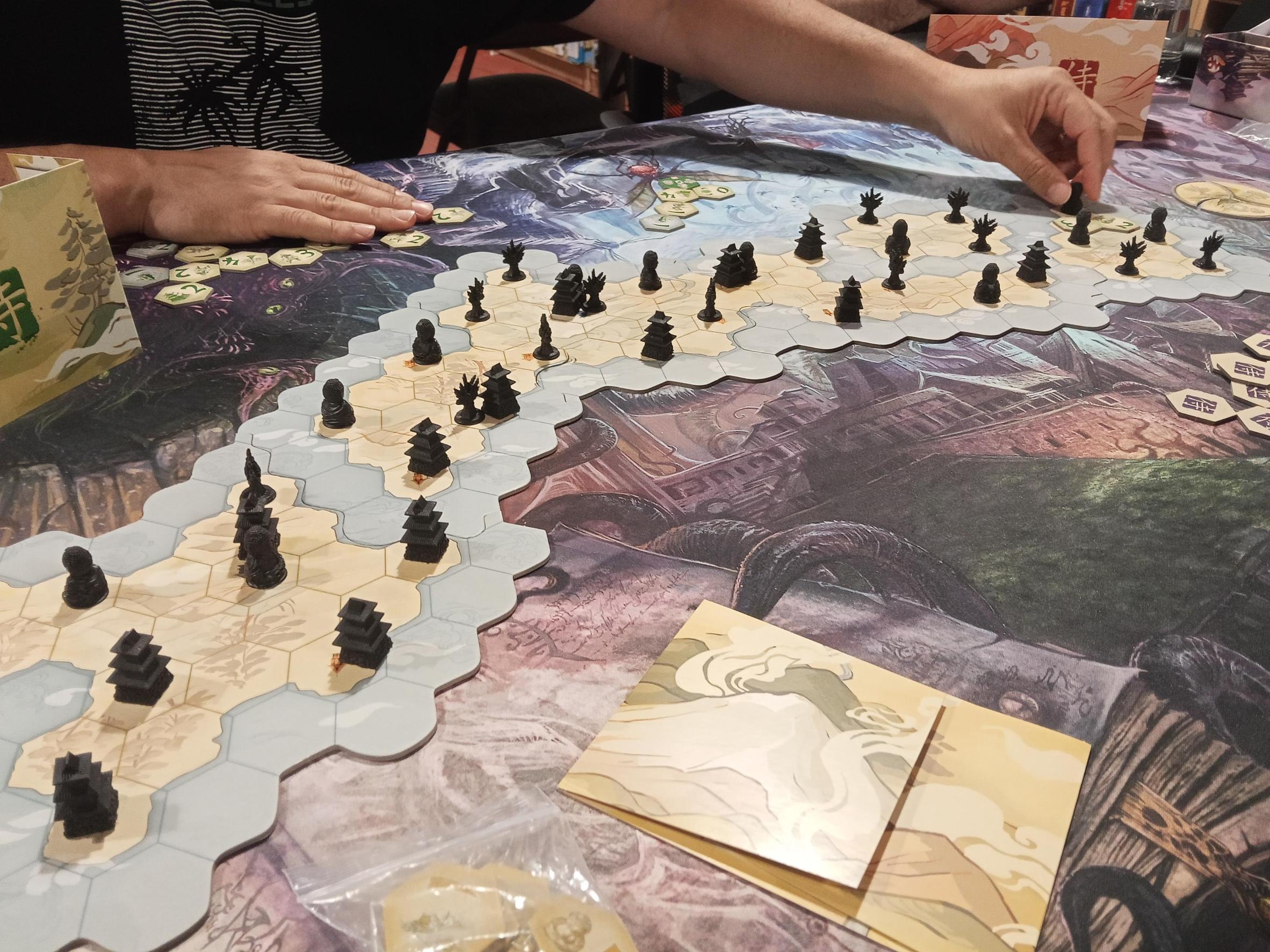
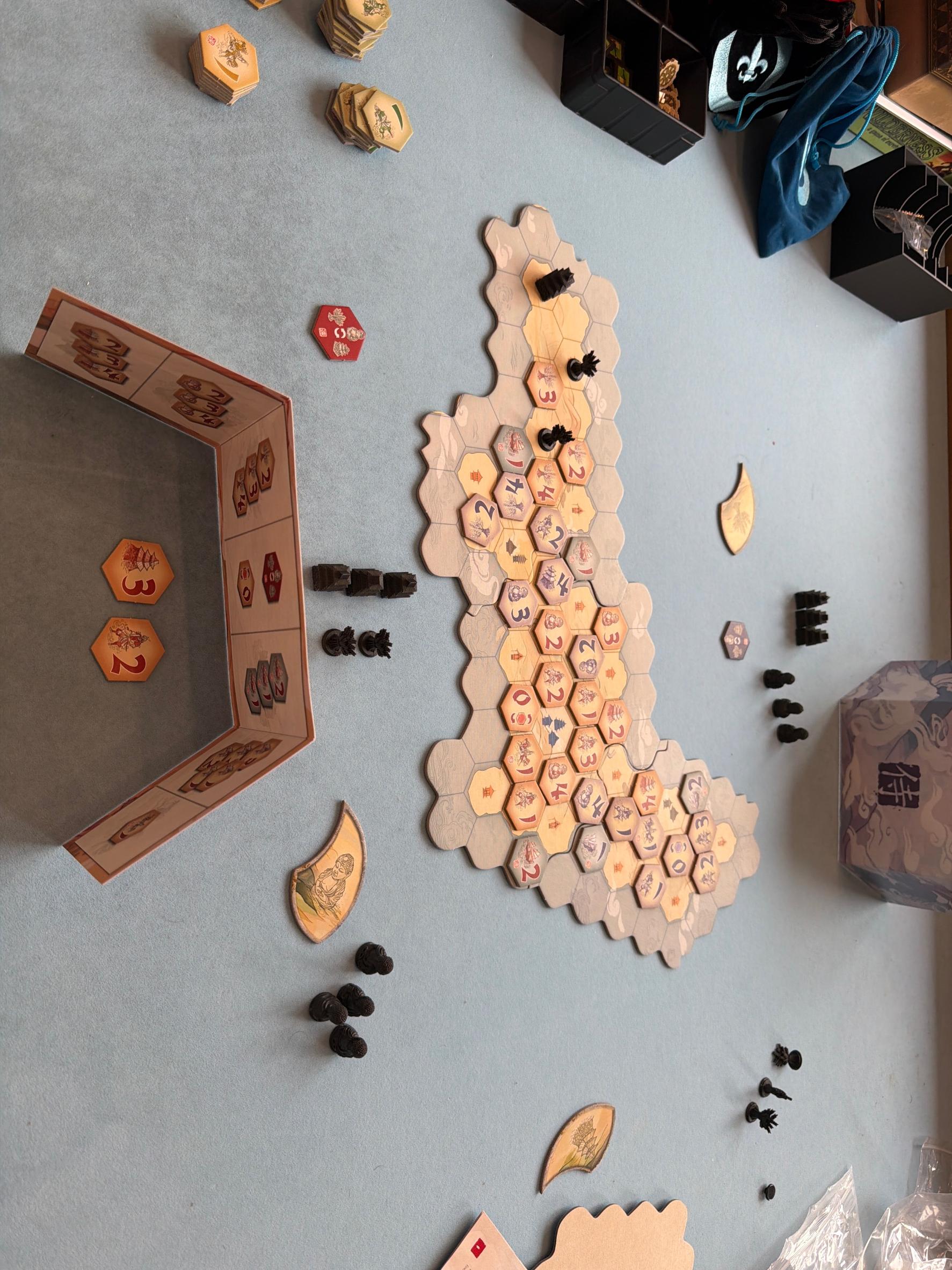
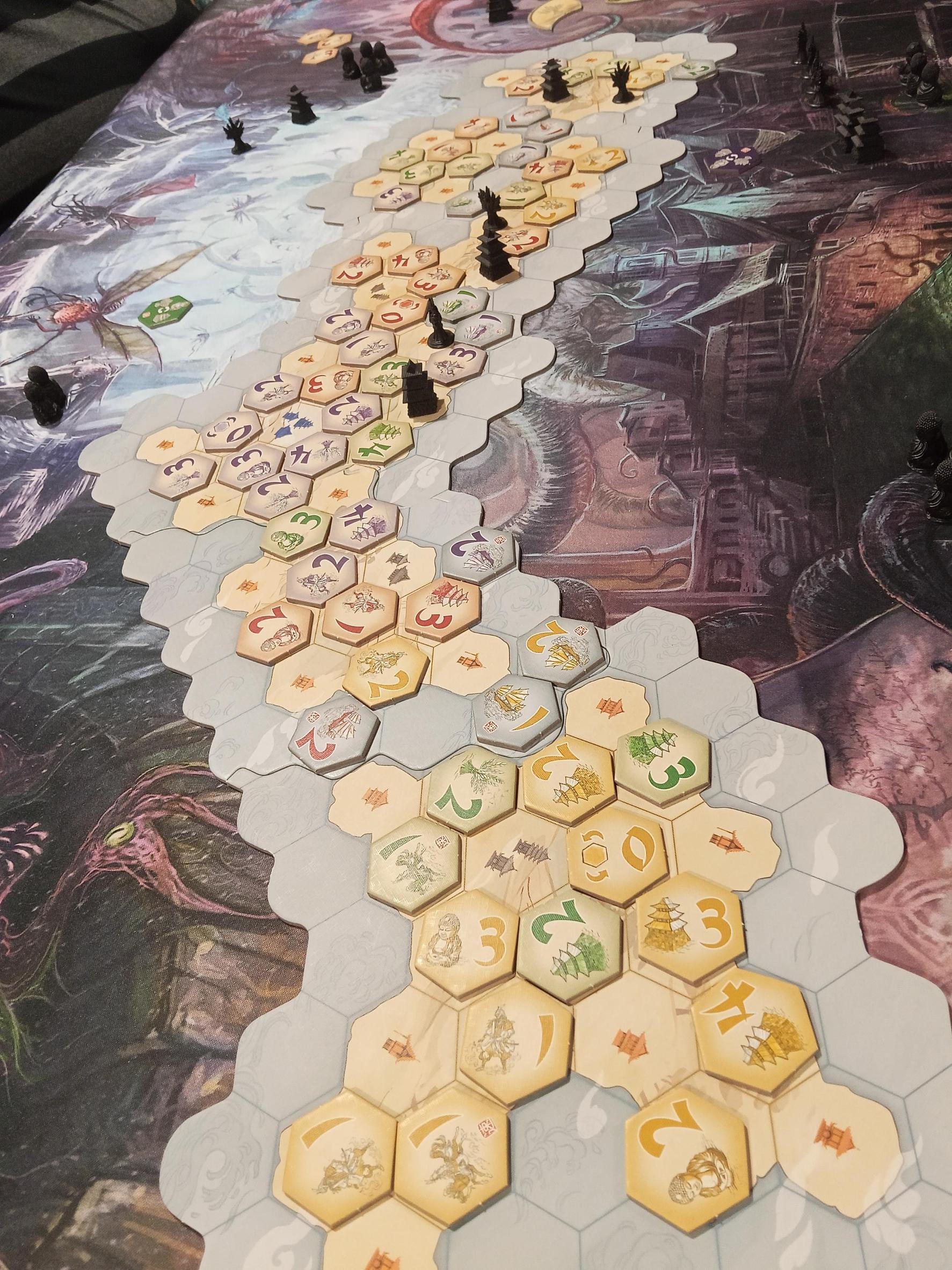
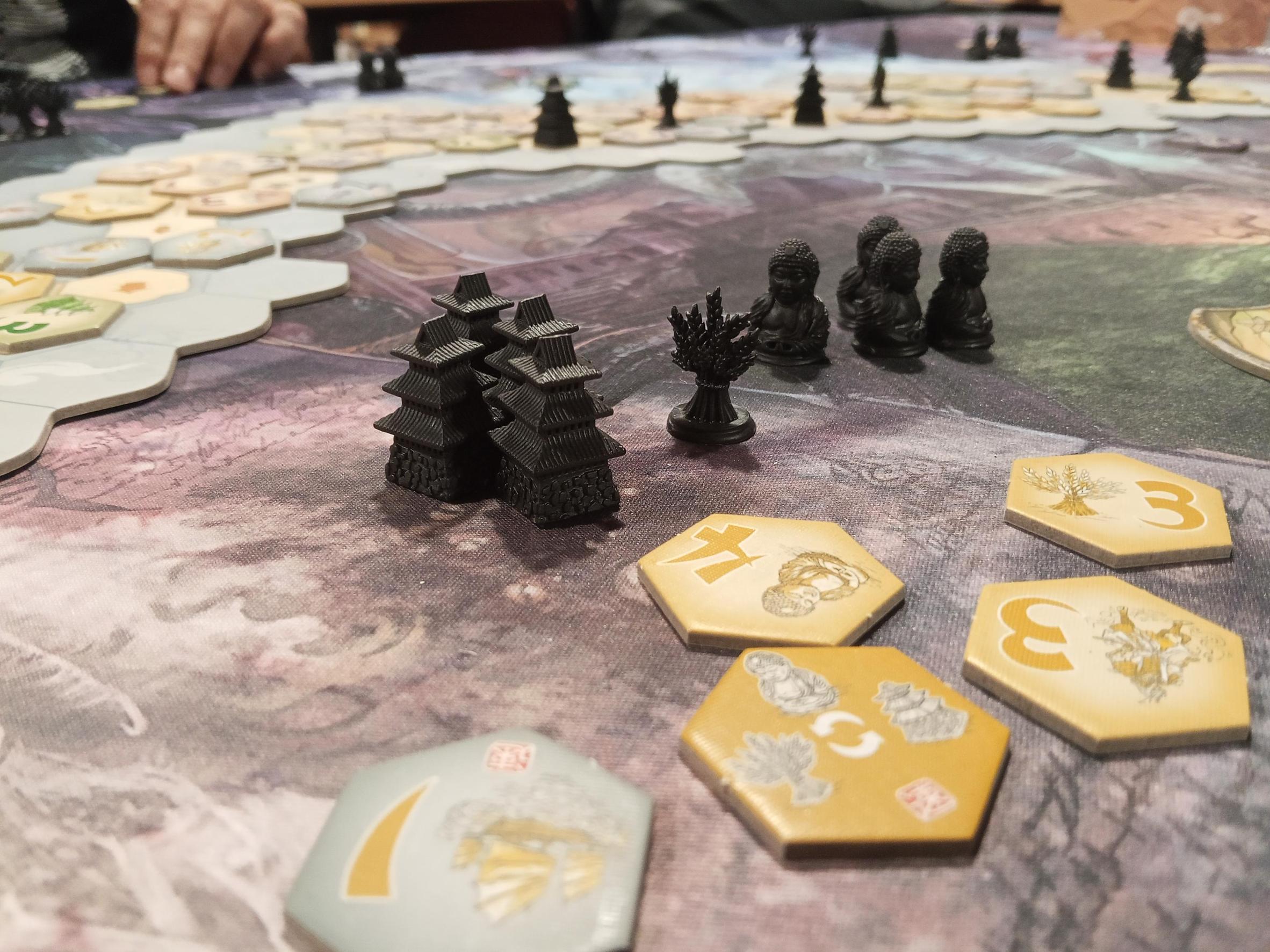
On Ludoya's tables
Full stats in Ludoya- 577
- Plays logged
- 517
- Players
- 36m 59s
- Average play
- 111
- In collections
- 24
- On wishlists
7.9/10
from 85 Ludoya reviews
Carlos8.0 Nice short game. Lot of sums needs to be done.

Rules questions
Answered from the rulebook by Ludoya's rules assistant.
How many tokens can I play on my turn?
You may play any number of tokens that have a Japanese character, but only one of the 15 tokens without Japanese characters per turn; you may combine both groups in the same turn (e.g. 1 non-character token + 2 character tokens). (p. 2)
When is a figure captured?
A figure is captured immediately when all land spaces adjacent to it are filled with tokens; the player with the strongest influence captures it, and if there is a tie for strongest the figure is placed beside the board and belongs to no one. (pp. 2–3)
How is influence on a figure calculated, and what happens on ties?
Each player totals the strength numbers of their adjacent tokens that affect that figure; the highest total wins the figure (placed behind the screen, or in front for 2 players); if two or more players tie for the strongest influence the figure is removed beside the board. (p. 3)
Where may I place tokens — can I put them on cities, villages, land or sea?
Ships may be placed only on empty sea spaces and other tokens only on empty land spaces, but tokens may not be placed on empty villages or cities; the Figure Exchange and Token Exchange are exceptions to the placement restrictions. (p. 3; p. 2)
How do the Figure Exchange and Token Exchange tokens work?
Figure Exchange lets you swap any two figures on the board regardless of distance (cities must still have two different figures), while Token Exchange replaces one of your already-deployed non-character tokens with the Token Exchange (strength 0) and you immediately redeploy the replaced token. (p. 2)
How is the winner determined at game end?
If a player has the most figures of 2 or 3 types they immediately win; otherwise only players who hold the clear 'most' of at least one type are eligible and among them the one with the most other figures wins, with further tiebreakers using total figures and shared victory if still tied; if no one holds any 'most', the player with the most total captured figures wins. (p. 4)










Free, on web, Android and iOS
Play Samurai with Ludoya
- Keep it in your collectionTrack your copy and its expansions, lend it to friends, or put it on your wishlist and get told when the price drops.Add it to your collection
- Log every playScores, winners, timers and photos, then your stats: win rate, favourite player count, best score.Log a play
- Settle rules questionsAsk anything about the rules and get an answer from the rulebook, with the page to check it on.Ask the rules assistant
- Find people to play it withClubs, game nights and events near you that bring this game to the table.See events
Game facts (players, playing time, age, credits) from BoardGameGeek.