
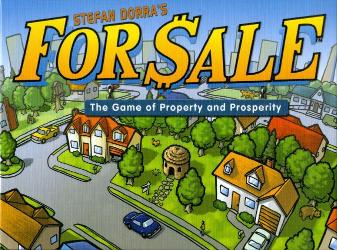
1997 · Card Game
For Sale
Players bid in an auction to acquire property cards, using escalating bids to win desirable bundles. After all properties are distributed, the game shifts to a selling phase where players simultaneously offer properties to convert them into money, aiming to maximize profit from the set they acquired. The two-phase structure emphasizes hand management and timing: bidding determines which properties a player has, and the sale order and combination of cards determine final payouts. Rules are compact and support 3–6 players, with simple bookkeeping for bids and sale values.
- Players
- 3–6 best 5
- Playing time
- 30 min
- Age
- 10+
- Complexity
- 1.2 / 5
About the game
- Design






Expansions
See them in Ludoya
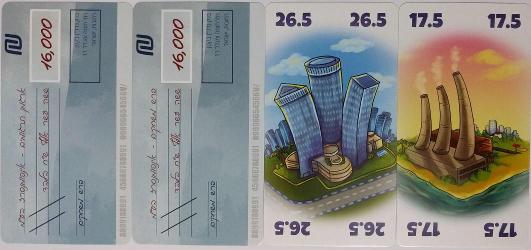
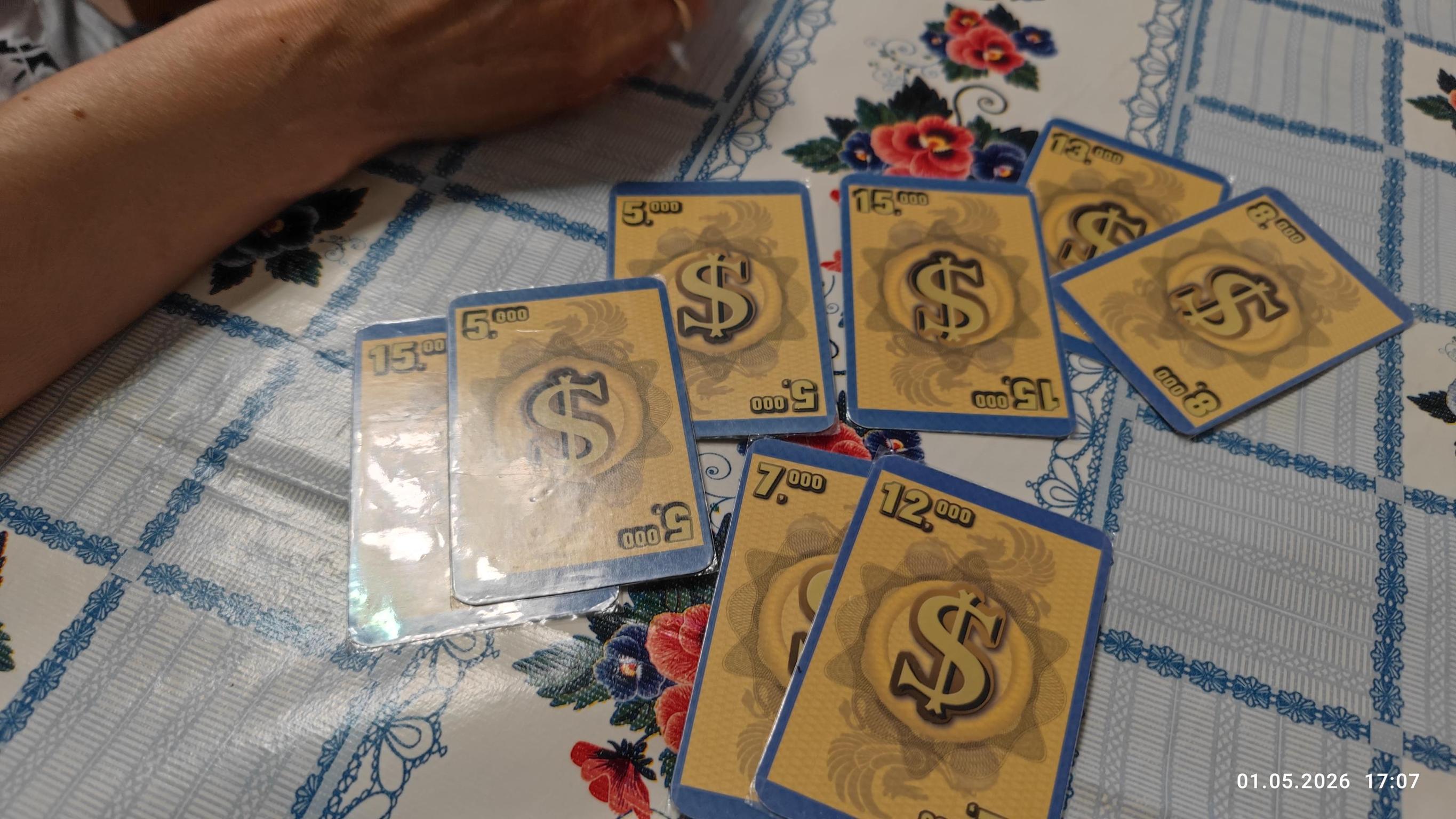
Photos from Ludoya tables
All photos in Ludoya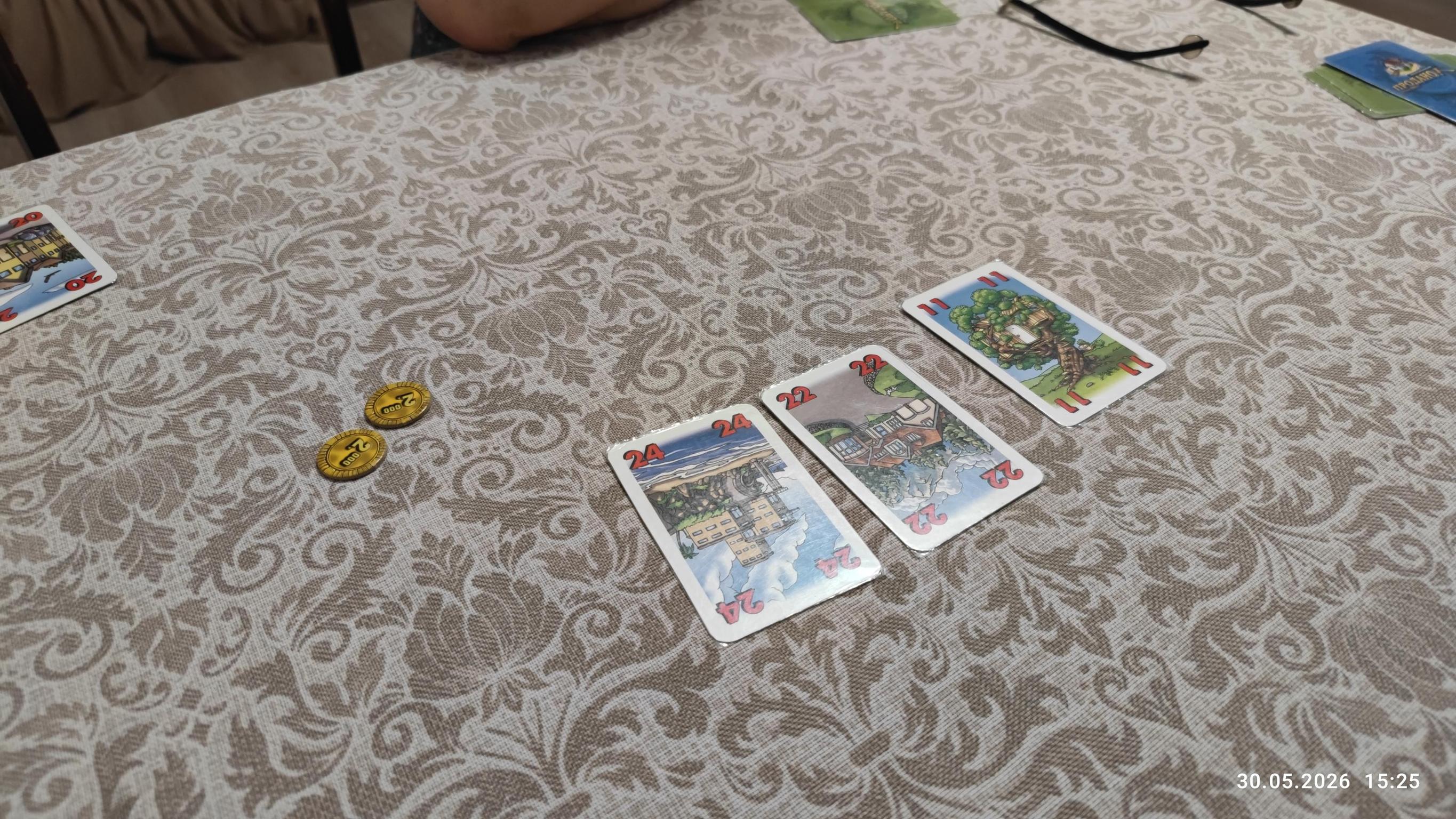
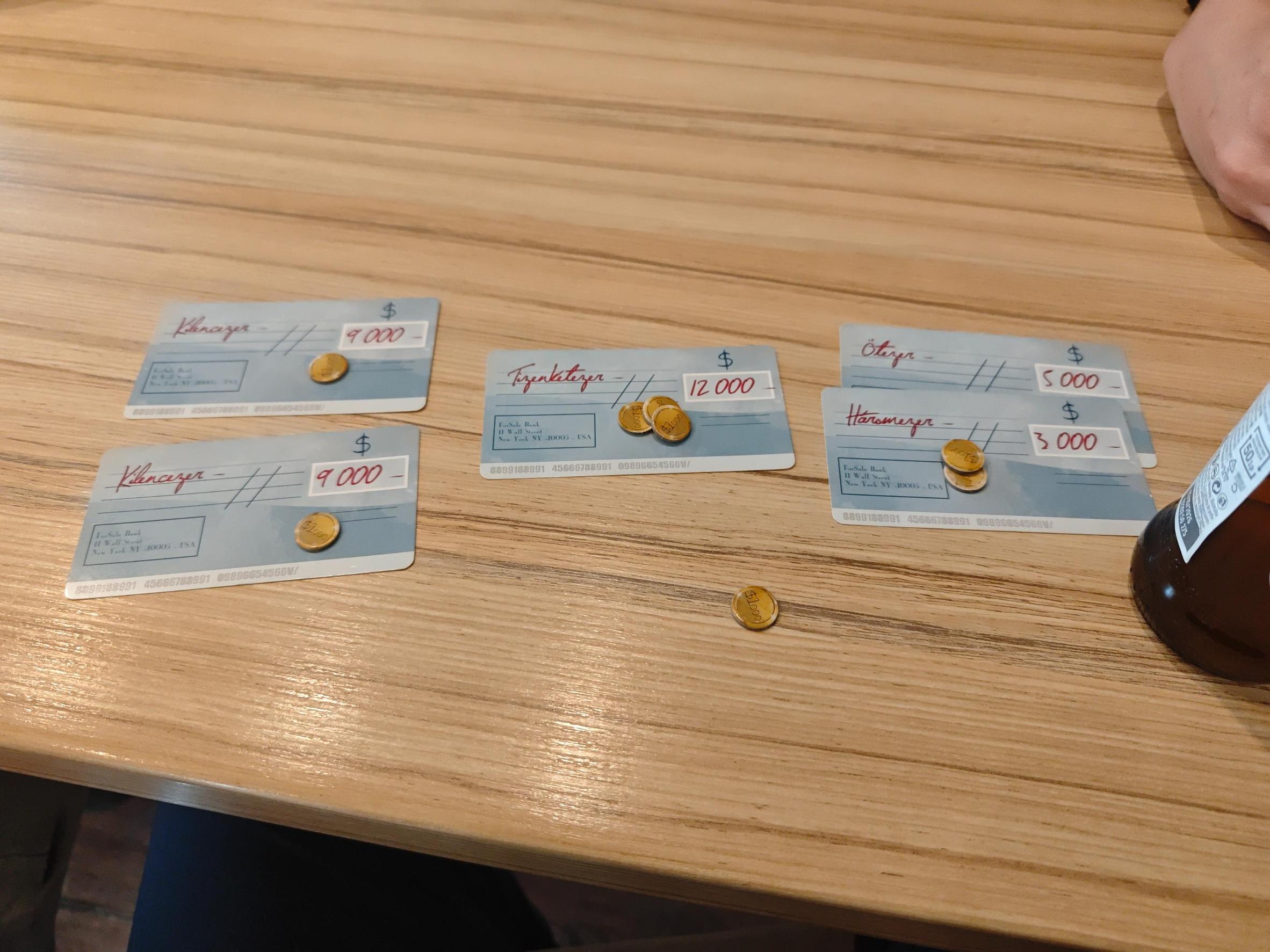
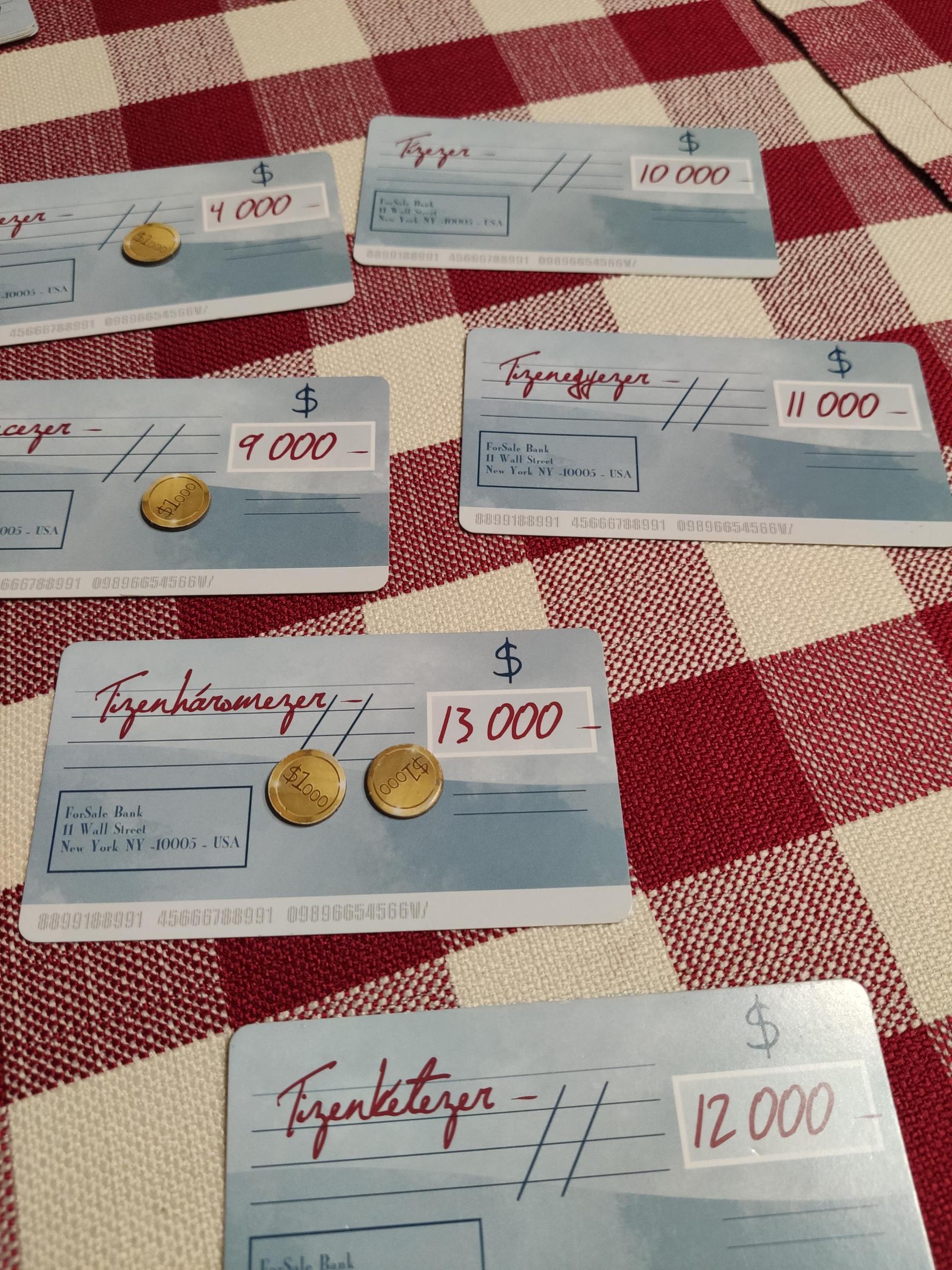
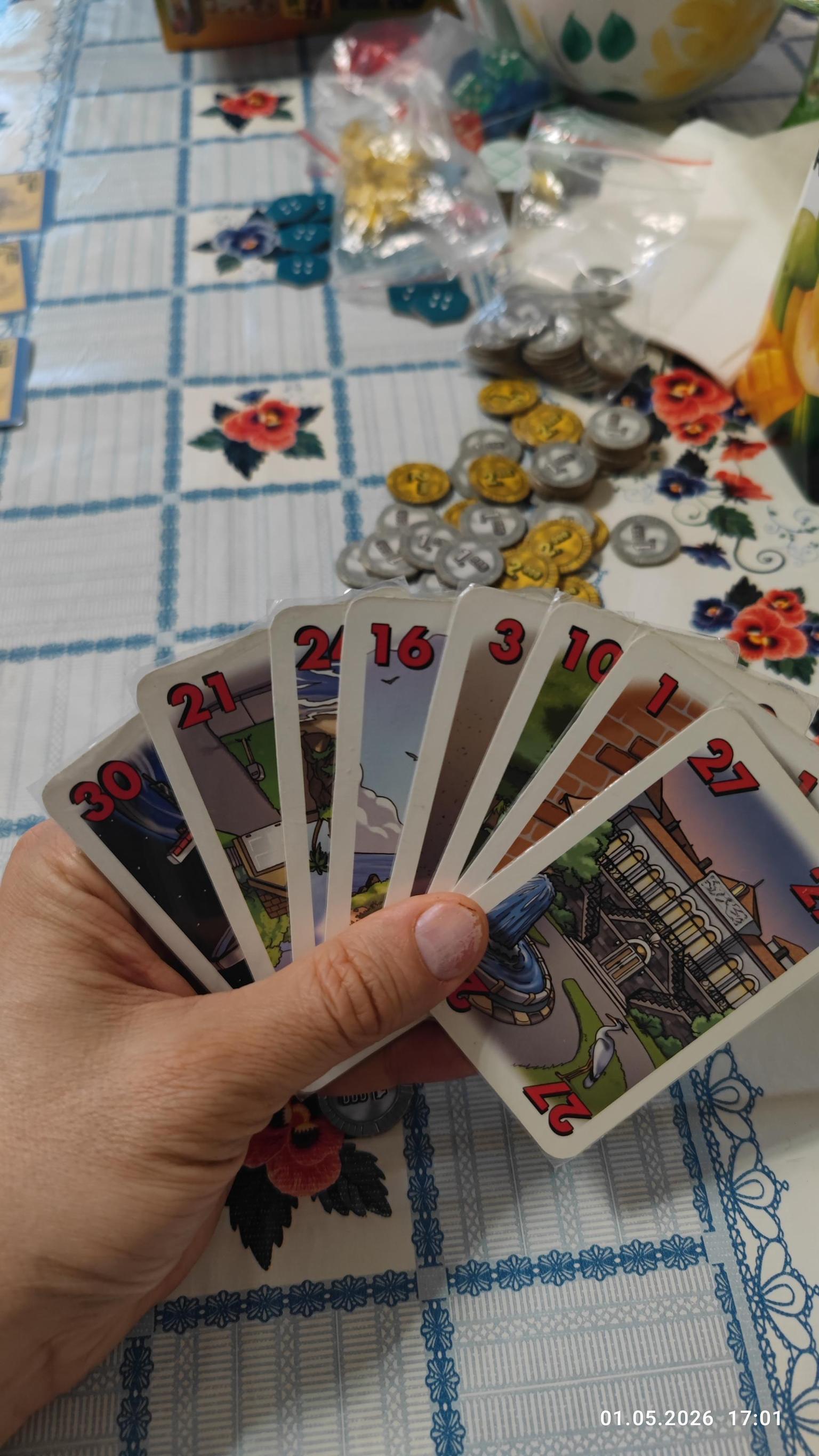
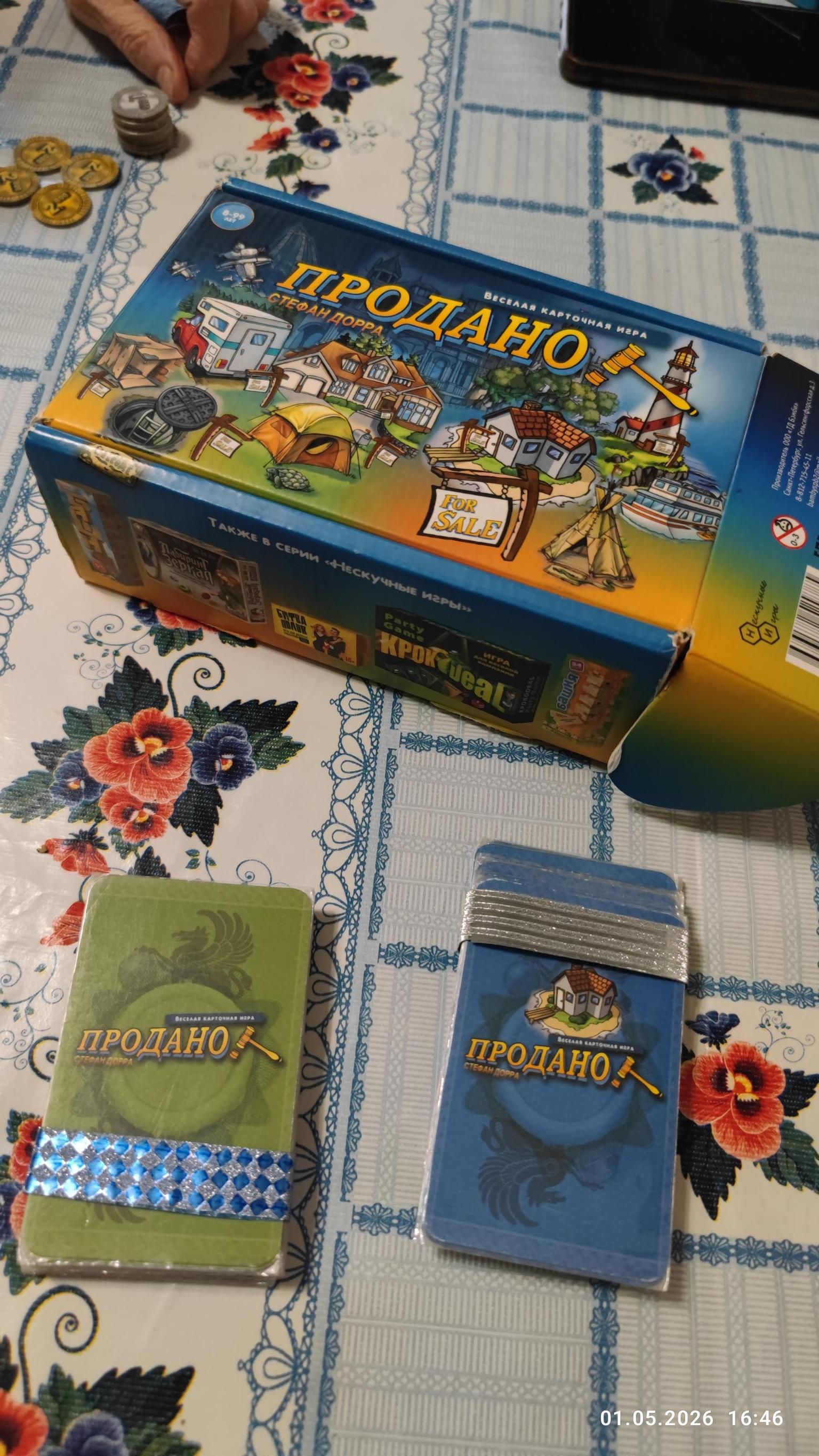
Where to buy it
Shop prices and second-hand copies, checked every day.
On Ludoya's tables
Full stats in Ludoya- 1,343
- Plays logged
- 1,187
- Players
- 15m 15s
- Average play
- 206
- In collections
- 20
- On wishlists
- 1
- Pre-ordered
6.8/10
from 109 Ludoya reviews
Mestremuten7.0 Rating: 4/5 Production value: 2/4 Is the game in my collection/Love to have?: 1/1
Rules questions
Answered from the rulebook by Ludoya's rules assistant.
If I pass during a buying round, can I bid again later in the same round?
No — when you pass you take the lowest-valued House, take back half of the Bills you bid (rounded down), and you cannot play for the rest of that round (p.5).
When I pass, how much of my bid do I get back?
You get back half of the Bills you bid (rounded down); the other half are returned to the box (p.5).
What happens to the last player who hasn't passed in a buying round?
The remaining player must put all the Bills they bid back in the box and take the single House left in the middle, and they become first player for the next round (p.6).
How are Checks assigned in the selling phase if multiple players reveal the same House value?
The rules state that the highest-valued House takes the largest Check, the second-highest the second-largest, and so on, but the rulebook does not specify a tie-breaking procedure for equal-valued Houses in the selling phase (p.8).
How much starting money does each player get?
Starting Bills per player are: 3 players — 28; 4 players — 21; 5 players — 16; 6 players — 14 (p.3).
What if there aren't enough Houses or Checks for everyone?
Use the variant: remove the specified Houses and Checks at setup, reveal one fewer House than players each buying round (the first passer gets back all their bid but no House), and in selling reveal Checks only for players who still have Houses — when one player remains they take all remaining Checks (p.11).

















Free, on web, Android and iOS
Play For Sale with Ludoya
- Keep it in your collectionTrack your copy and its expansions, lend it to friends, or put it on your wishlist and get told when the price drops.Add it to your collection
- Log every playScores, winners, timers and photos, then your stats: win rate, favourite player count, best score.Log a play
- Settle rules questionsAsk anything about the rules and get an answer from the rulebook, with the page to check it on.Ask the rules assistant
- Find people to play it withClubs, game nights and events near you that bring this game to the table.See events
Game facts (players, playing time, age, credits) from BoardGameGeek.