
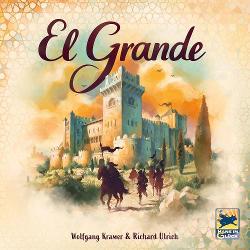
1995 · Medieval
El Grande
Players act as powerful nobles competing for influence across medieval Spain by drafting and deploying caballeros (knights). Each round, a power card determines turn order and how many caballeros move from the general supply into a player’s court; then an action card governs placement rules and special effects. Caballeros are placed into regions or a secretive tower (the castillo), with normal placement limited to areas adjacent to the king. One action option moves the king, and regions are scored every third round. Players score for majority presence in each region and for bonus points when their Grande or sole majority occupies key regions. The highest total after nine rounds wins.
- Players
- 2–5 best 5
- Playing time
- 60–120 min
- Age
- 12+
- Complexity
- 2.9 / 5
About the game
- Publisher
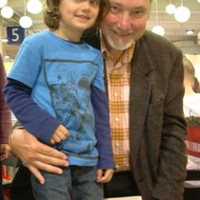




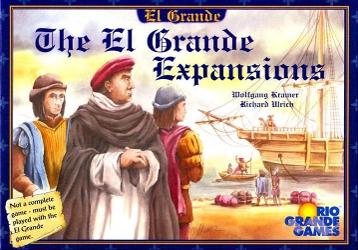
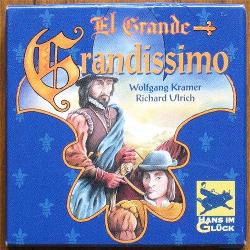
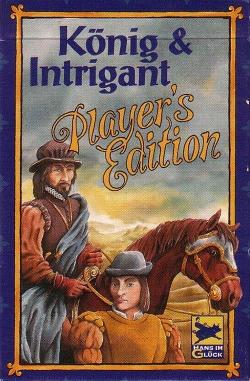
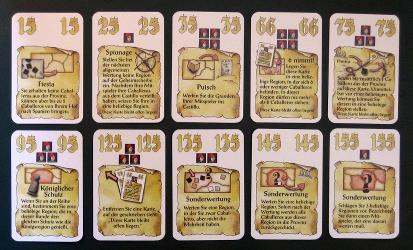
Expansions
See them in Ludoya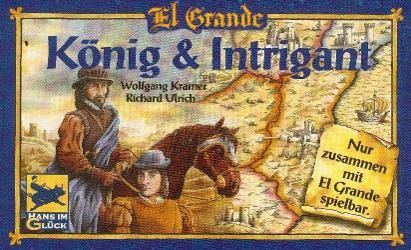
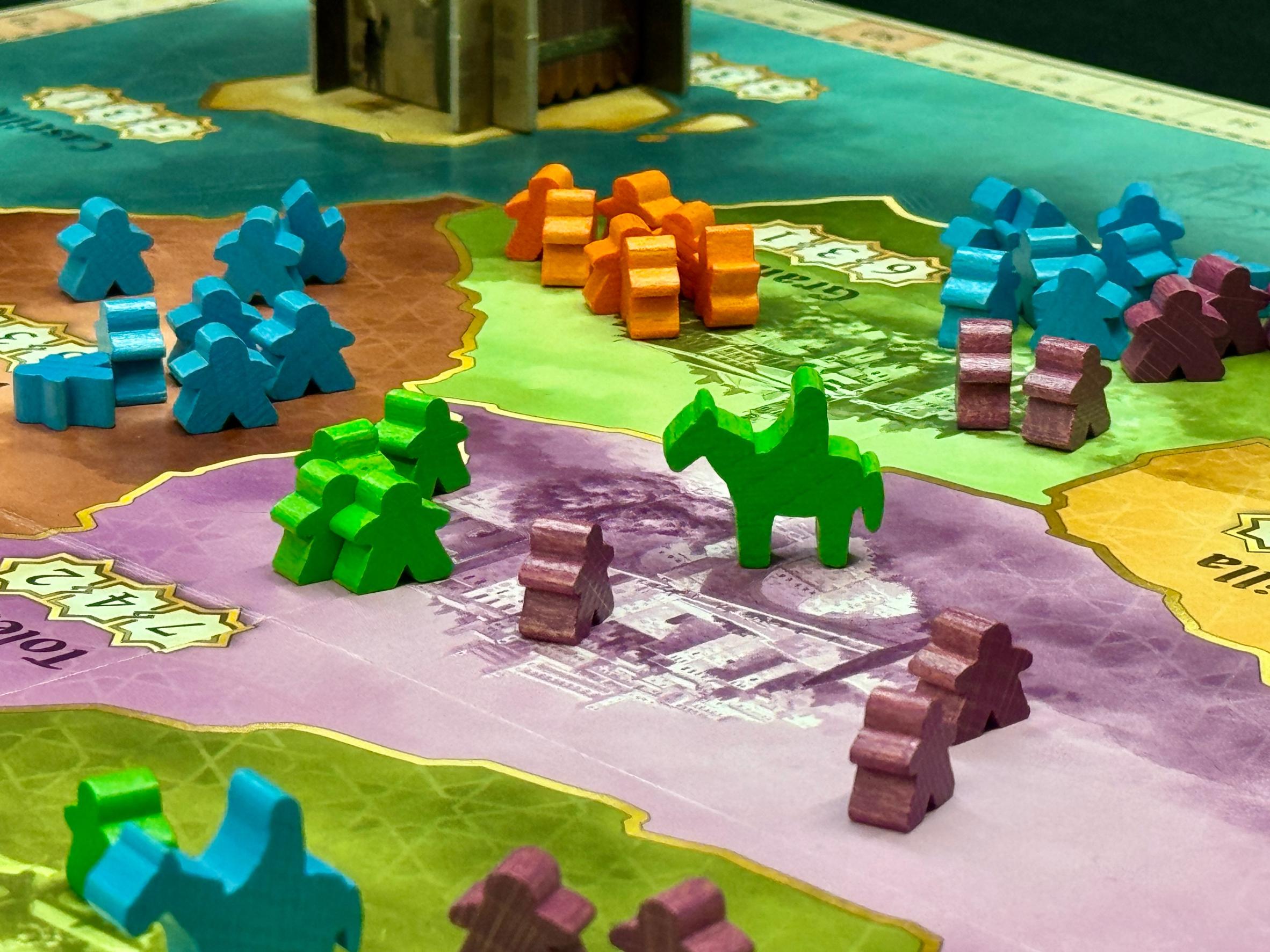
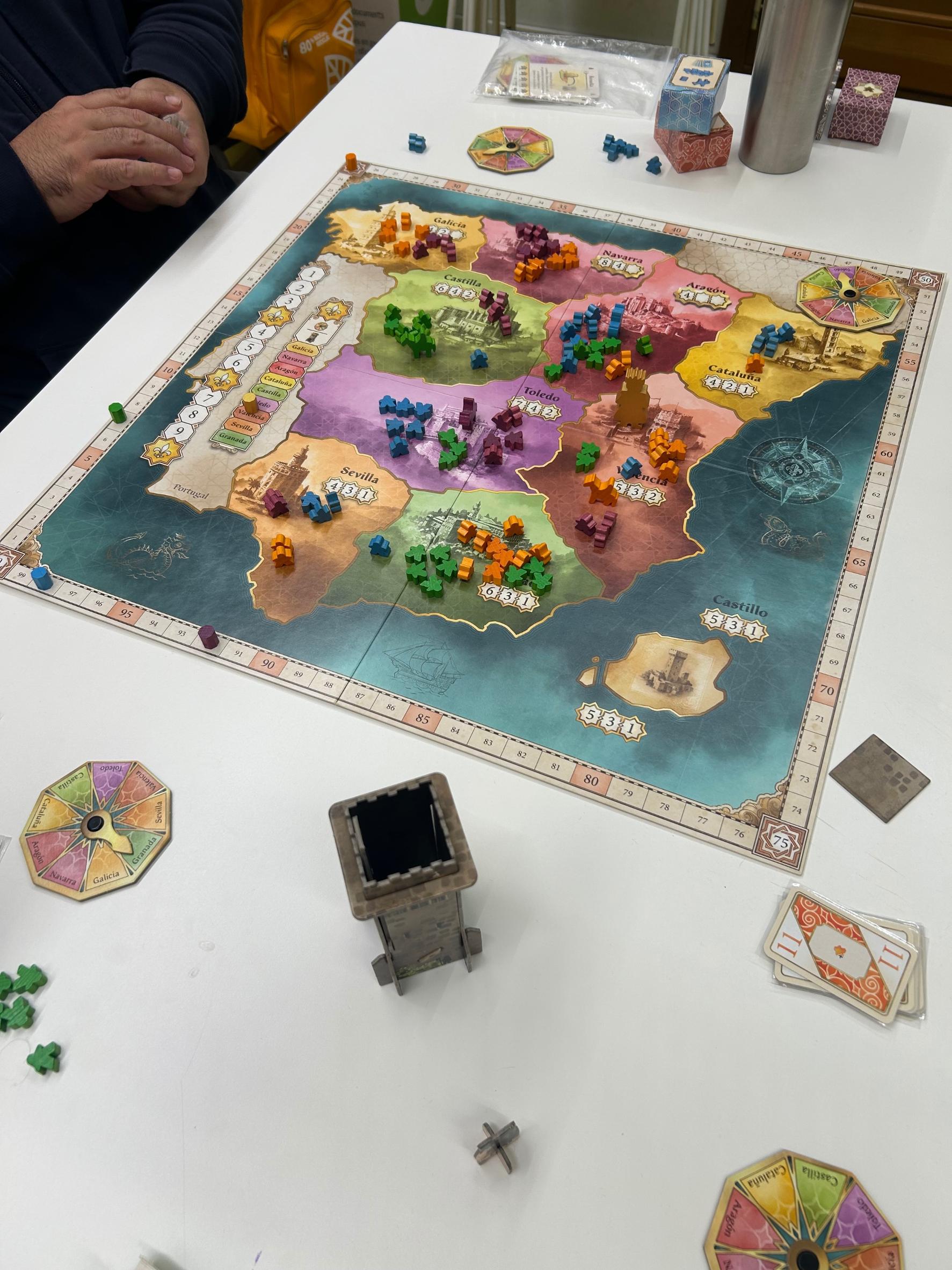
Photos from Ludoya tables
All photos in Ludoya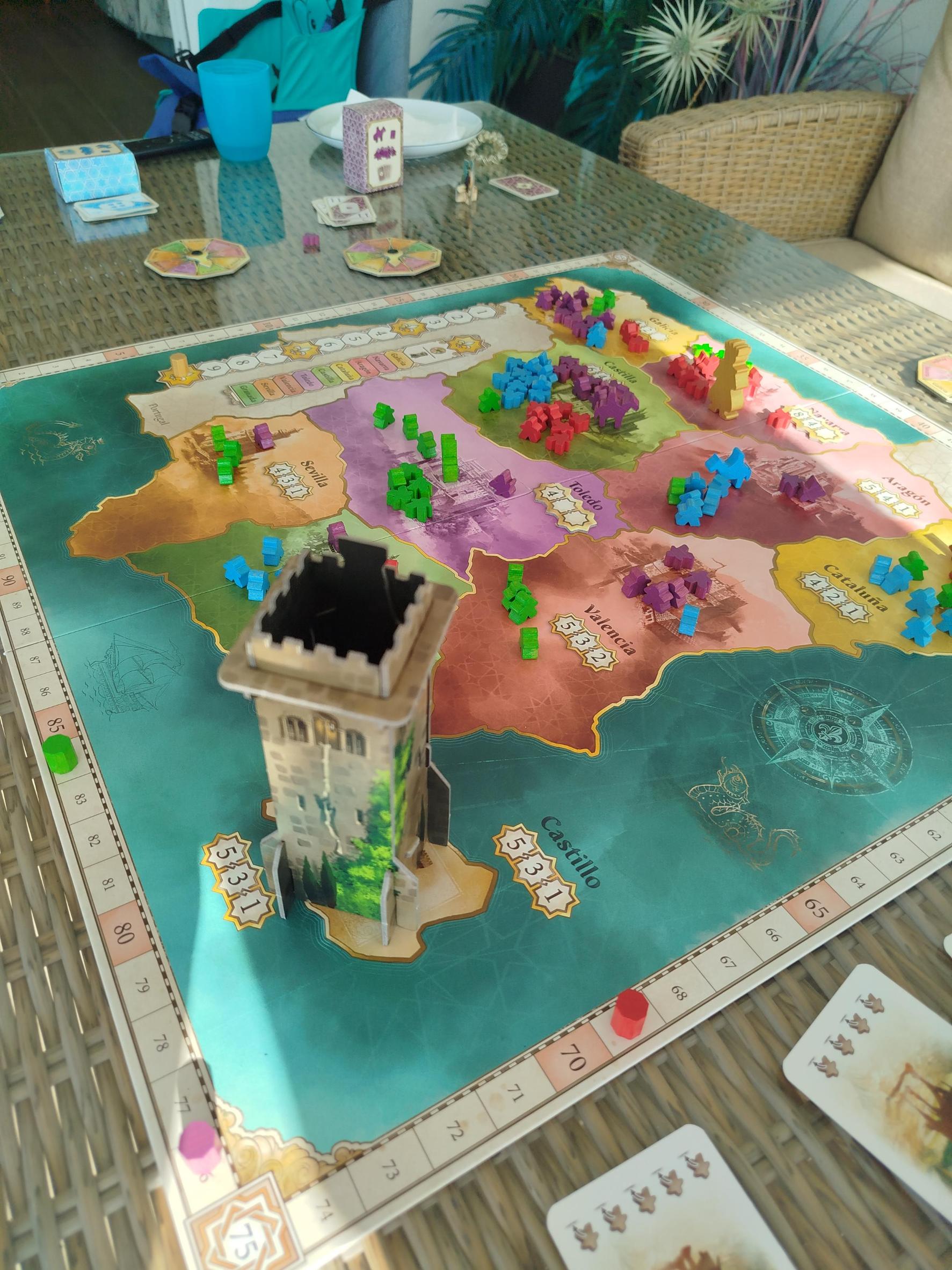
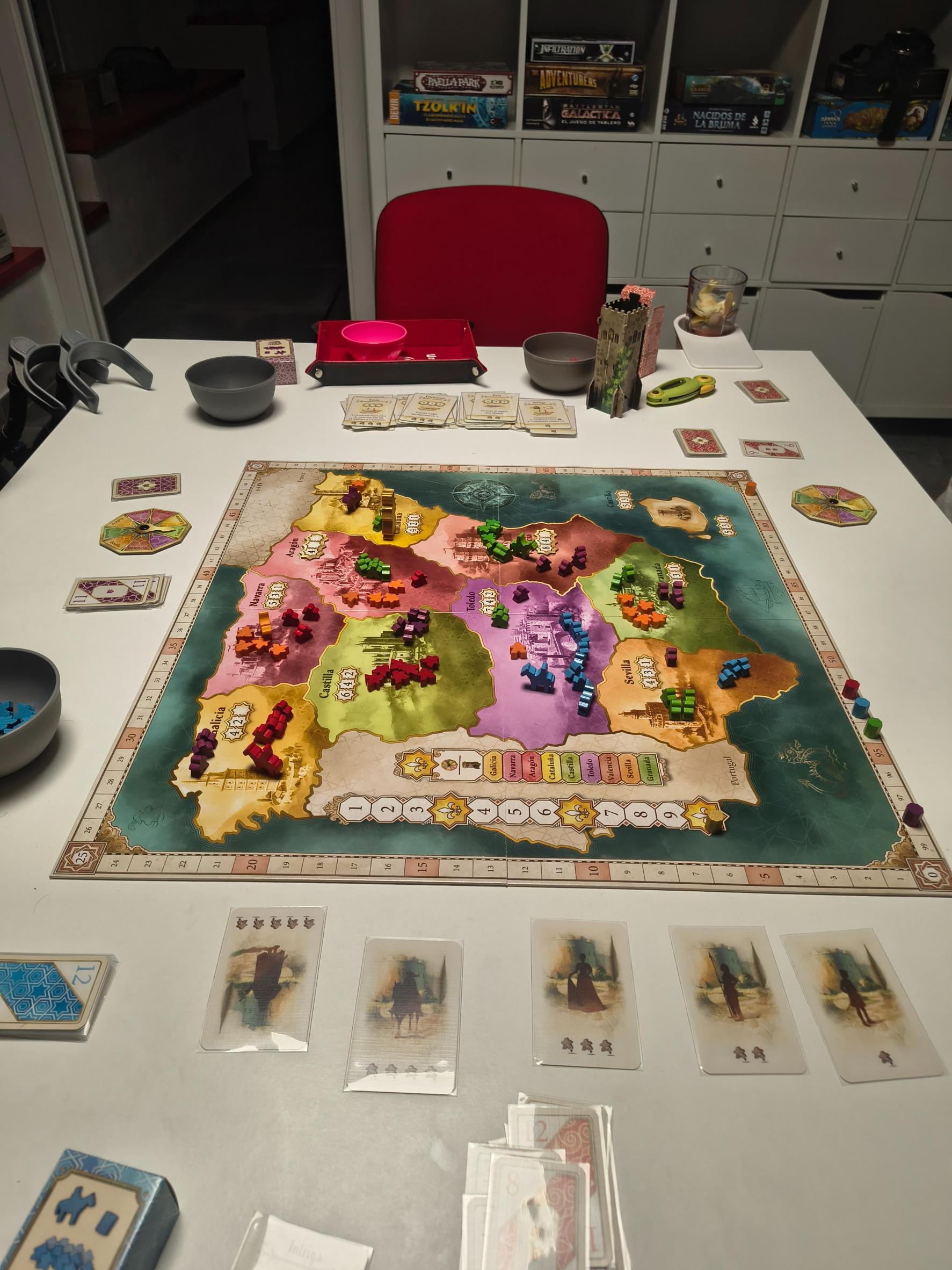
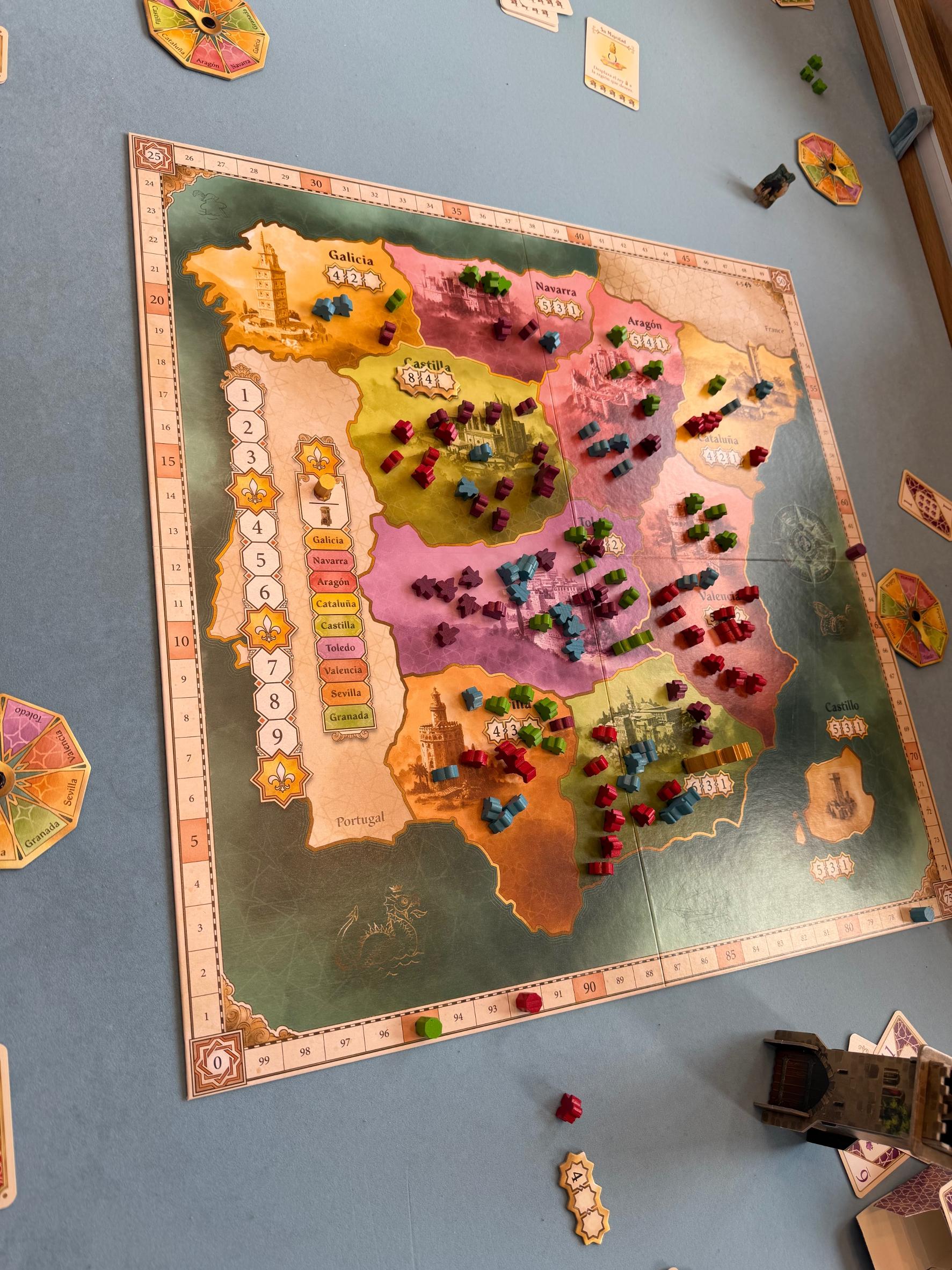
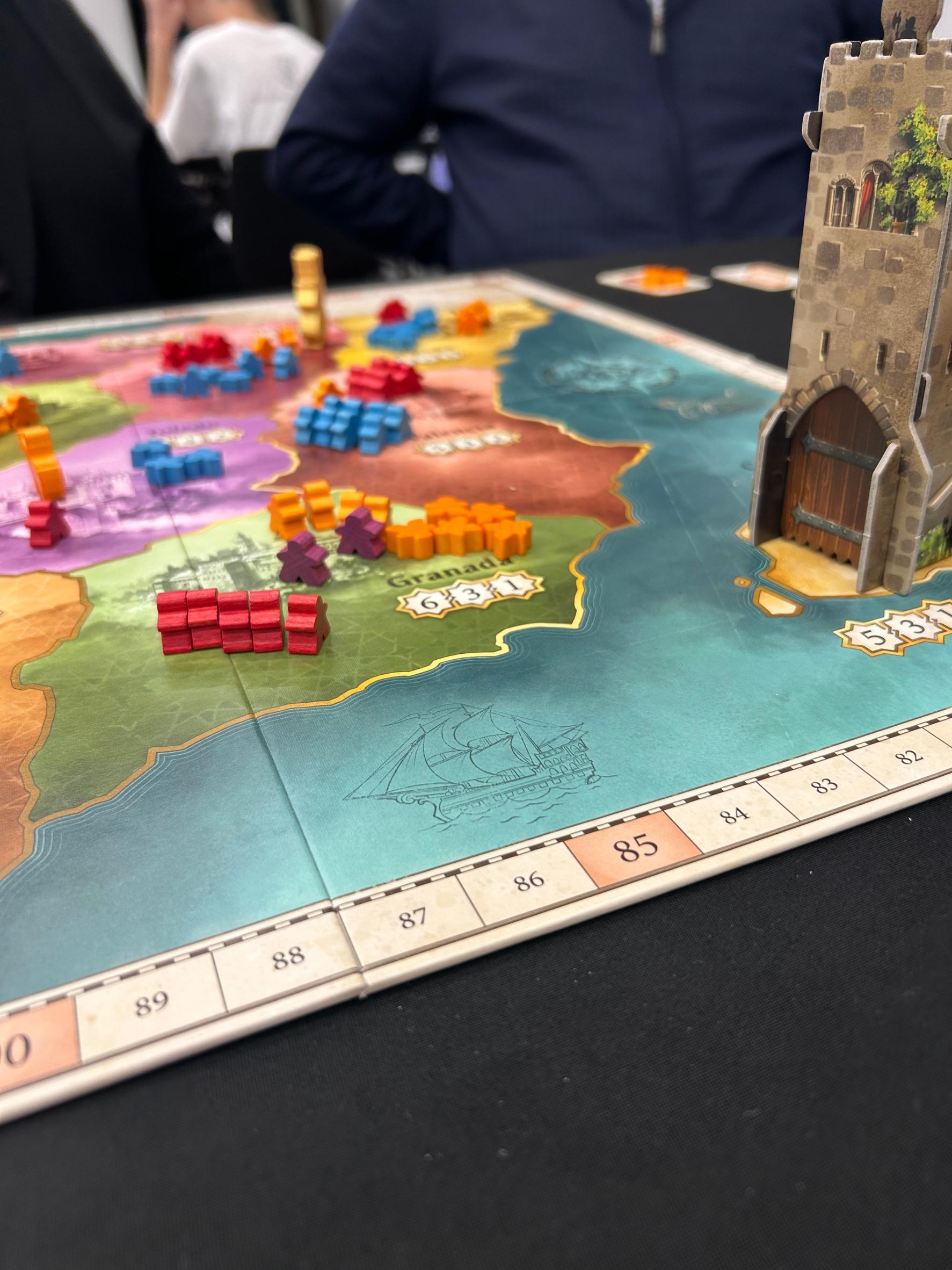
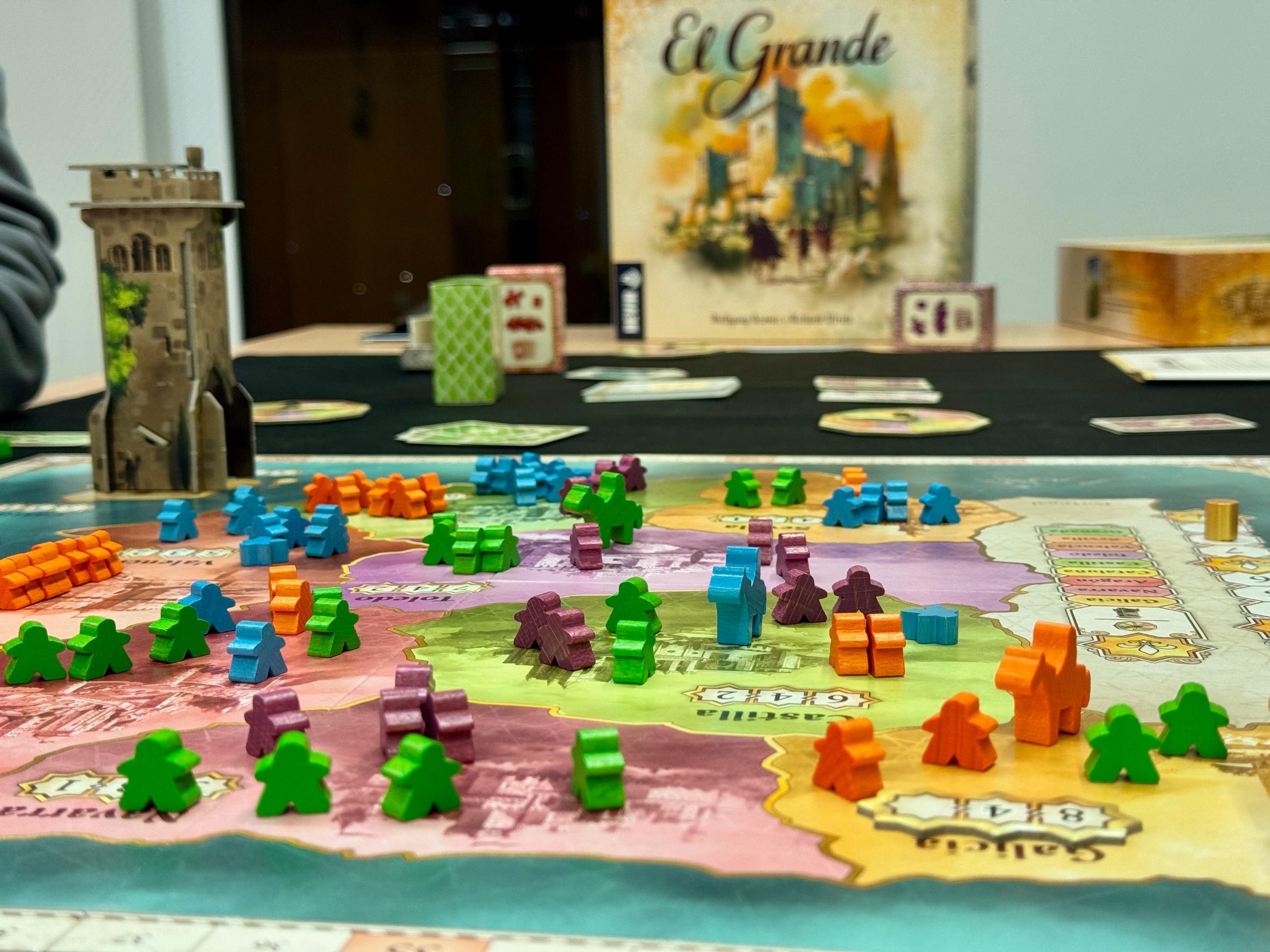
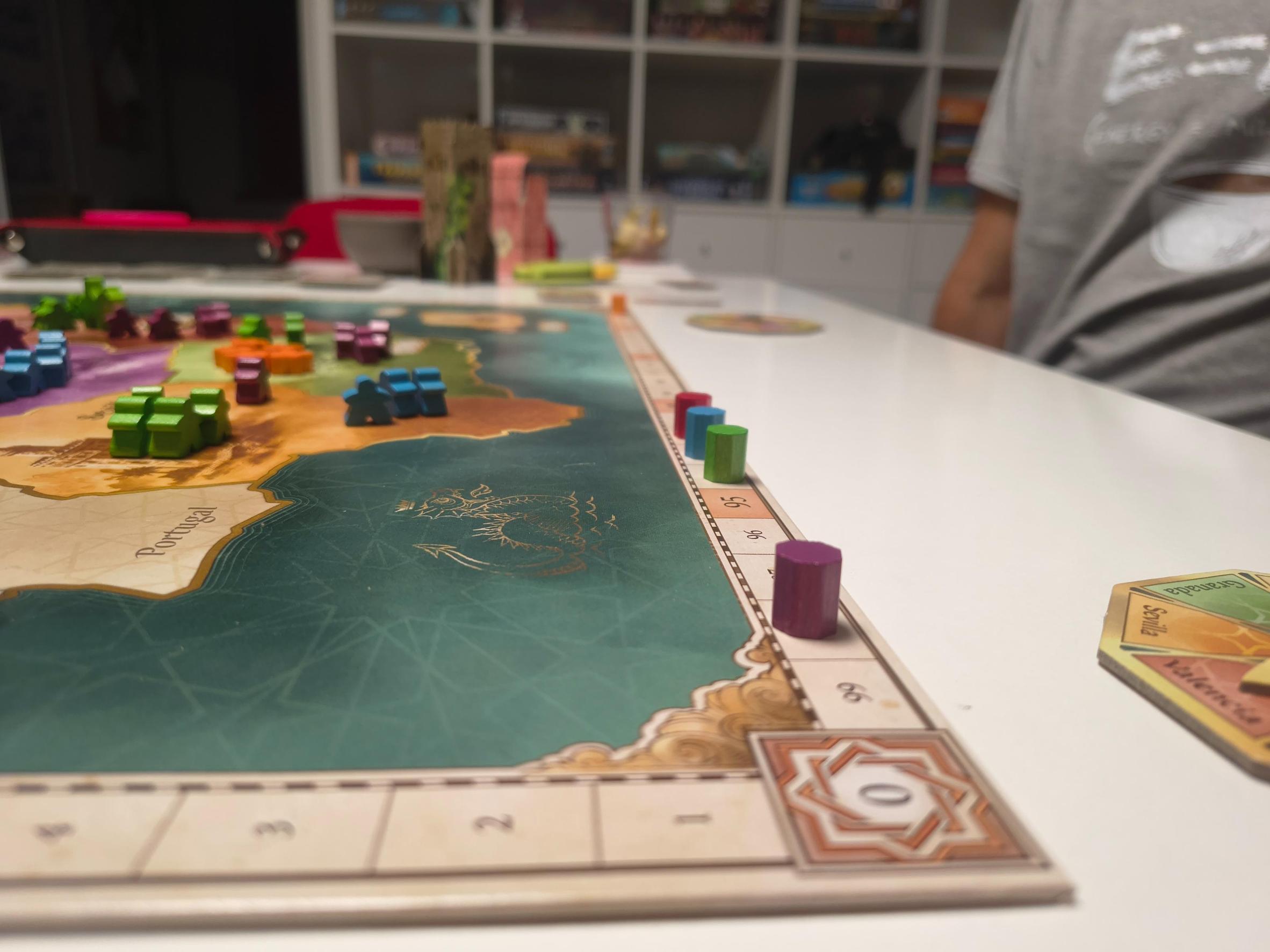
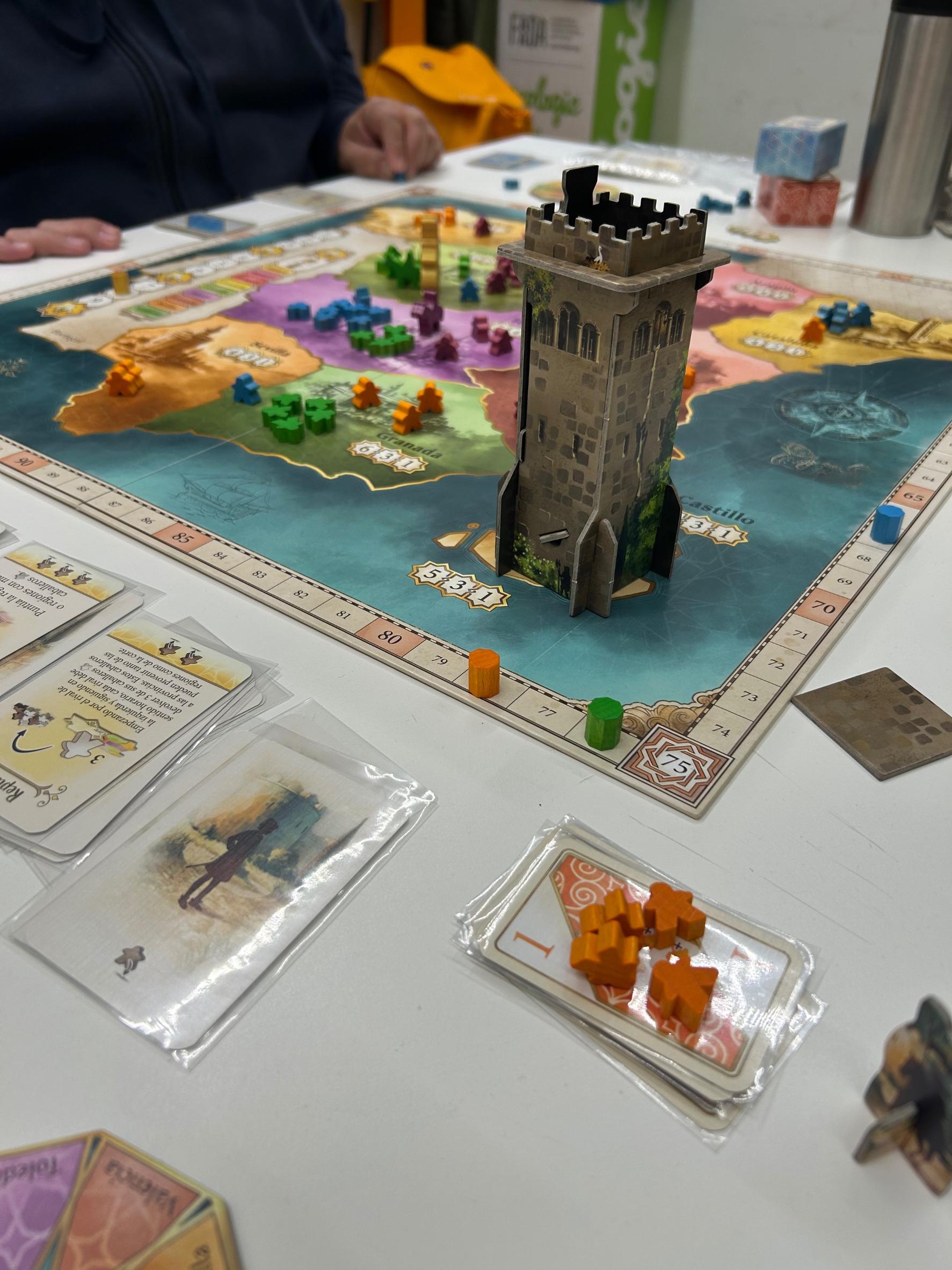
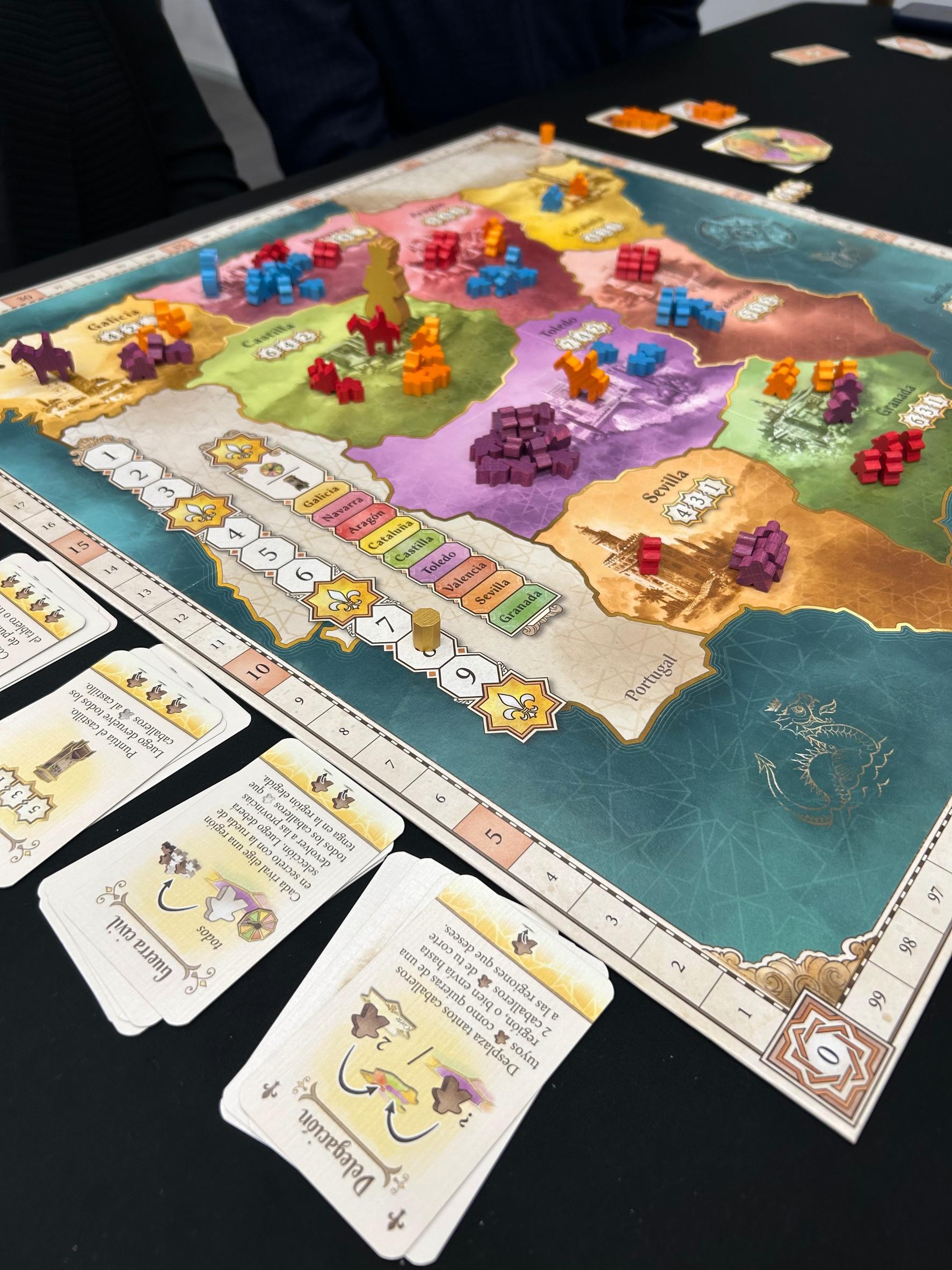
Where to buy it
Shop prices and second-hand copies, checked every day.
On Ludoya's tables
Full stats in Ludoya- 620
- Plays logged
- 1,019
- Players
- 1h 41m
- Average play
- 210
- In collections
- 48
- On wishlists
- 4
- Pre-ordered
7.9/10
from 122 Ludoya reviews
Daniel8.0 5
Mestremuten6.0 Rating: 4/5 Production value: 2/4 Is the game in my collection/Love to have?: 0/1
Tomol8.0 A great game of Majorities despite its lenght(about 2.30h with 4 people). Great Spanish theme

Upcoming events with this game
All eventsRules questions
Answered from the rulebook by Ludoya's rules assistant.
Do I have to play a Power card every round, and how is turn order determined?
Yes — in step 2 each player plays a Power card (starting with the start-player) and the highest Power card then takes the first turn in step 3 (you may not play a Power card value already played that round). (pp. 2–3)
Can I place or move Caballeros in the King's region?
No — the King's region is taboo: nothing (Caballeros, Grandes, or scoreboards) may be placed, moved, or removed there at any time. (p. 5)
When is the Castillo scored and what happens to the Caballeros inside it?
During a general scoring (after rounds 3, 6, and 9) you first choose secret regions, then the Castillo is lifted and scored (1st=5, 2nd=3, 3rd=1), and afterwards each player moves their Caballeros from the Castillo to the single region they chose (players who chose the King's region return them to their Court). (pp. 6–7)
How are ties handled when scoring a region or the Castillo?
Tied players receive the points of the next-lowest position (e.g., two players tied for first each score second-place points), and player-count rules (2‑ or 3‑player games) can limit which positions score. (pp. 6–7)
When I take my turn with an Action card, must I do the special action before placing Caballeros, and can I do only part of a special action?
You may choose whether to execute the special action before or after placing Caballeros, but you must complete each chosen step one at a time and you may not interleave them; some cards (e.g., certain Intrigue cards) explicitly allow partial execution and some special actions are optional. (pp. 3–4, 9)
If there aren't enough Caballeros in the Province, where may I take the remainder from?
If the Province lacks enough Caballeros you may take the remainder from regions on the board (but never from the Castillo), and you may also choose to take fewer than the Power card allows. (p. 3; p. 4)
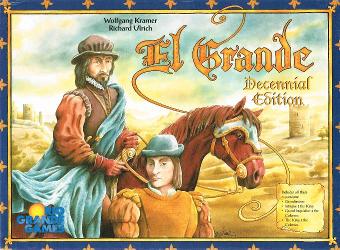
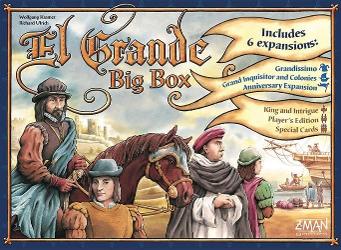
Similar games

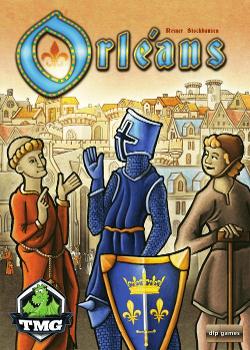
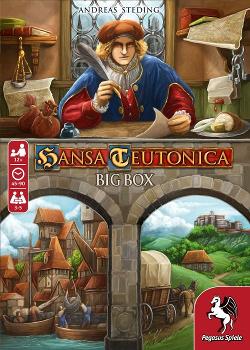


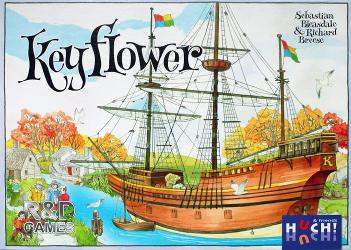

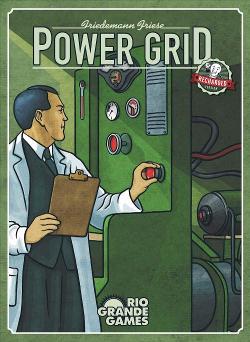
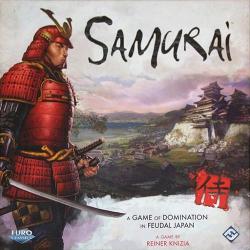
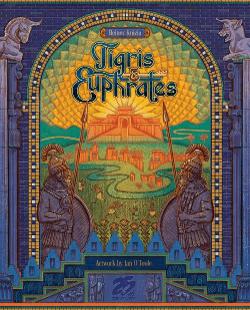

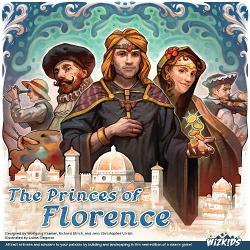
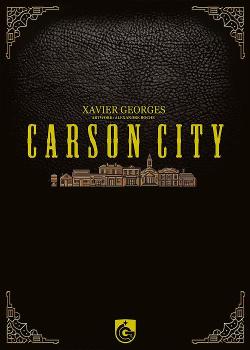

Free, on web, Android and iOS
Play El Grande with Ludoya
- Keep it in your collectionTrack your copy and its expansions, lend it to friends, or put it on your wishlist and get told when the price drops.Add it to your collection
- Log every playScores, winners, timers and photos, then your stats: win rate, favourite player count, best score.Log a play
- Settle rules questionsAsk anything about the rules and get an answer from the rulebook, with the page to check it on.Ask the rules assistant
- Find people to play it withClubs, game nights and events near you that bring this game to the table.See events
Game facts (players, playing time, age, credits) from BoardGameGeek.