

2017 · Card Game
Majesty: For the Realm
Players recruit and assign medieval characters to work in a growing realm, using each citizen’s abilities to generate gold and benefits. Cards or tiles represent workers such as millers, nobles, and warriors; players place them to create synergies, feed the population, develop resources, and launch actions that can hinder rivals. Turn-by-turn selection and placement drive engine-building and tactical interaction as players optimize combinations of characters to increase income and control. The player with the richest, most effectively organized domain wins.
- Players
- 2–4 best 4
- Playing time
- 20–30 min
- Age
- 7+
- Complexity
- 1.7 / 5
About the game
- Design
- Publisher



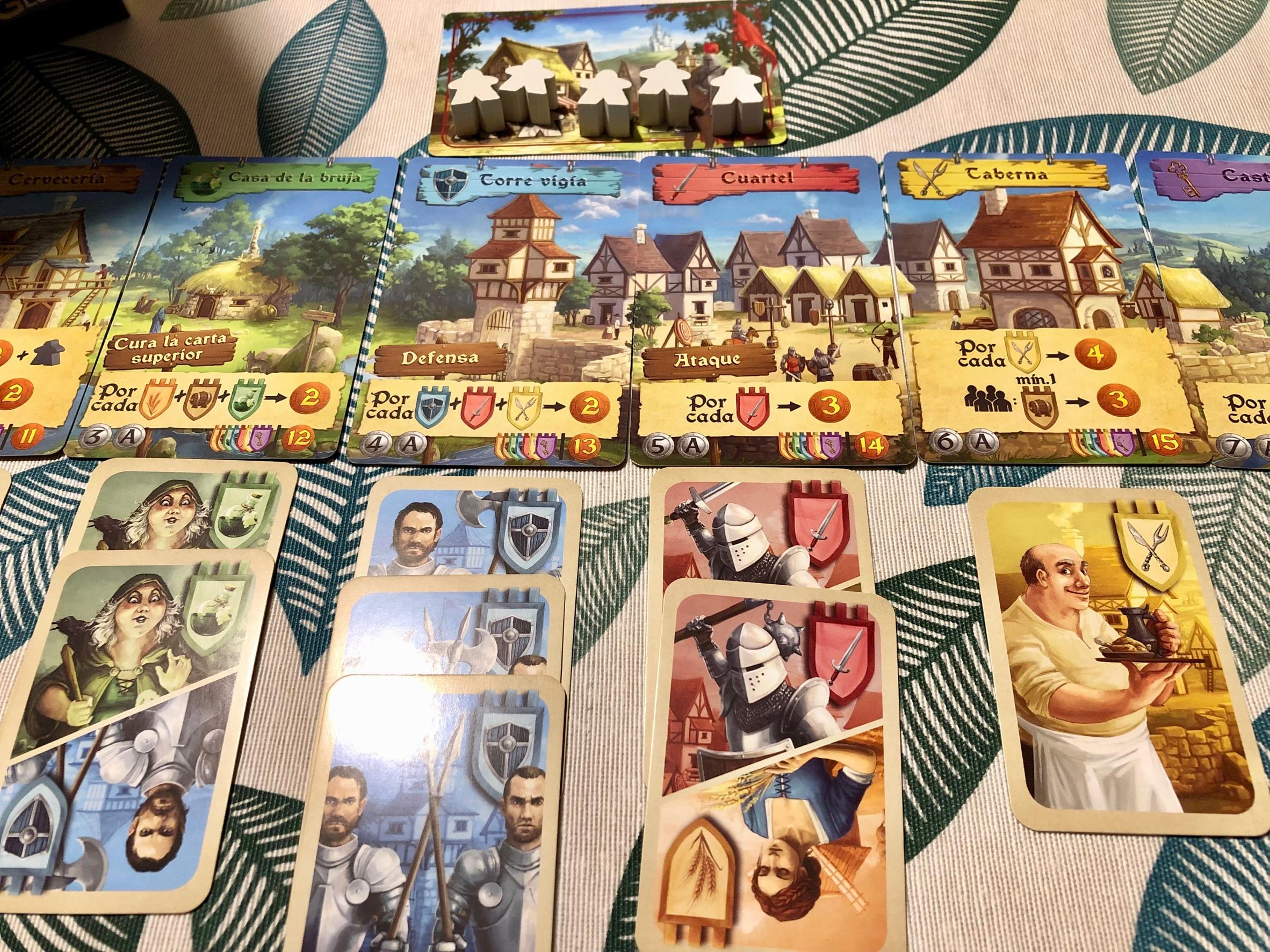
Photos from Ludoya tables
All photos in Ludoya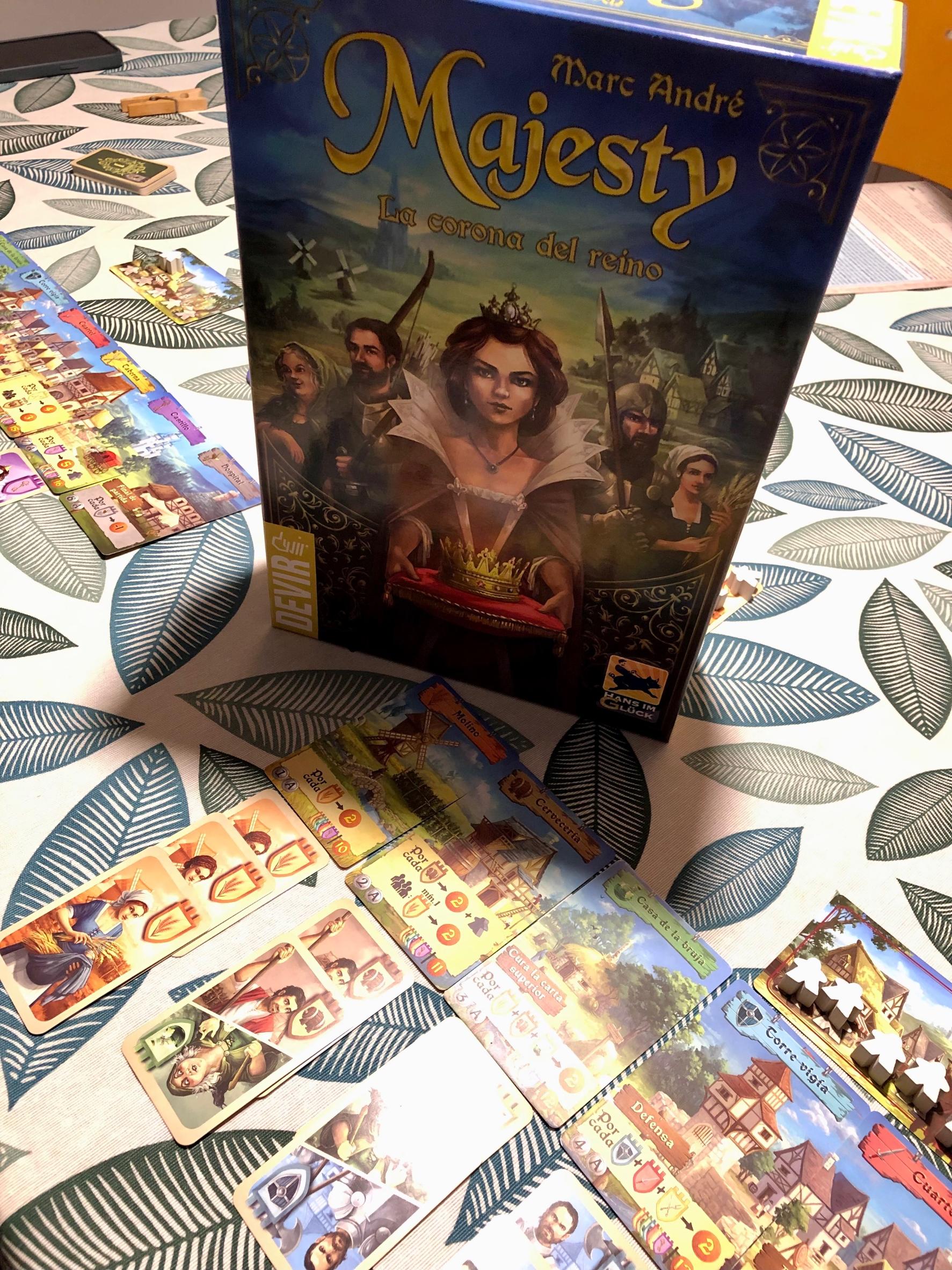
Where to buy it
Shop prices and second-hand copies, checked every day.
On Ludoya's tables
Full stats in Ludoya- 387
- Plays logged
- 296
- Players
- 27m 14s
- Average play
- 69
- In collections
- 4
- On wishlists
6.4/10
from 43 Ludoya reviews
Garfield6.0 A good easy to learn game, especially for beginners in board games. [c] Theme: ★★☆☆☆ <!-- size 7]Very little --> Gameplay: ★★☆☆☆<!-- size 7]A little bit too repetitive --> Interaction: ★☆☆☆☆ <!-- size 7]Just the rare attacks with soldiers --> Artwork: ★★★★☆ <!-- size 7]Very nice --> Luck: ★★★★☆ <!-- size 7]Random cards layed out --> Strategy: ★★☆☆☆ <!-- size 7]Obvious ones --> Components: ★★★★☆ <!-- size 7]The VPs are perfect, the rest is normal --> Play duration: ★★★★★ <!-- size 7]Perfect --> Easy to teach: ★★★★☆ <!-- size 7]Easy --> Rules quality: <!-- size 7]not read --> Setup time: ★★★★☆ <!-- size 7]Very quick --> No downtime: ★★★★★ <!-- size 7]Almost no downtime --> Replay value: ★★☆☆☆ <!-- size 7]Very little --> [/c]
Very good familiar eurogame from the same author as Splendor. On the same line, but for me, much more interesting. More thematic, more interaction, more funny.
Evan4.6 In this game, there is a conveyor belt of cards. Players take turns buying one of the cards, then adding the card they bought to that card's matching building and then activating the ability of the building, which tends to give a better effect the more cards you've stacked under it. This creates some nice tension with the endgame scoring process, where you get points based on how many different buildings you put cards under. The game part of the game is you get a special budget of meeples that you can use to take a card further up the belt, but when you do so you money-up the cards you skipped over. There's also a type of card that attacks other players for not having gotten defense cards, so you need to keep an eye on what other players are going for in that respect at least. This is a nice, light game. One of the things I find most compelling is the way the game keeps you attuned to what other players are up to by offering another end game scoring criteria which is a majority calculation for each type of cards. Good overall, great for a quick meaty filler. ★ Art, Iconography and components functional ★ Clever or interesting mechanisms ★ Reasonably low downtime between turns with mildly AP players ☆ Multiple plays stay interesting ★ Low or mitigatable luck elements ★★★☆☆ Raw enjoyment

Rules questions
Answered from the rulebook by Ludoya's rules assistant.
Do meeples I place on cards in the display stay there until those cards are taken?
Yes — meeples placed on display cards remain on those cards until the card is taken from the display (see page 4).
Can I take more than one character on my turn?
No — on your turn you must take exactly one character from the display, place it at its matching location, and then resolve that location (see pages 3–4).
If I gain more meeples than fit on my worker card, what happens to the extras?
Place as many meeples as will fit on your worker card and keep any extra next to your worker card until the end of your turn; at end of turn return those extras to the supply and gain 1 point for each returned meeple (see pages 4–5; Brewery example page 9).
If I heal a card from the Infirmary (with a Witch), does returning it activate that location?
No — when you heal a card from the Infirmary you return it to its matching location without activating that location, though the healed card can still count for the rest of the Cottage’s resolution because healing is resolved first (see pages 6 and 9).
When I place a Knight, how do attacks work and how do Guards affect them?
Placing a Knight triggers an individual attack on each opponent: if an opponent has fewer Guards than your Knights the attack succeeds and that opponent moves their leftmost character to the Infirmary (only one character per opponent); if they have equal or more Guards the attack fails (see page 6).
What happens to wounded characters at game end and how are they scored?
At final scoring you lose 1 point for each character in your Infirmary (A-side) and then return those cards to the box; on B-side Infirmary you lose 2 points per wounded character and the player with the most wounded loses an additional 10 points (see pages 7 and 10).











Free, on web, Android and iOS
Play Majesty: For the Realm with Ludoya
- Keep it in your collectionTrack your copy and its expansions, lend it to friends, or put it on your wishlist and get told when the price drops.Add it to your collection
- Log every playScores, winners, timers and photos, then your stats: win rate, favourite player count, best score.Log a play
- Settle rules questionsAsk anything about the rules and get an answer from the rulebook, with the page to check it on.Ask the rules assistant
- Find people to play it withClubs, game nights and events near you that bring this game to the table.See events
Game facts (players, playing time, age, credits) from BoardGameGeek.